Barbell Bench Press Knees At 90 Degrees
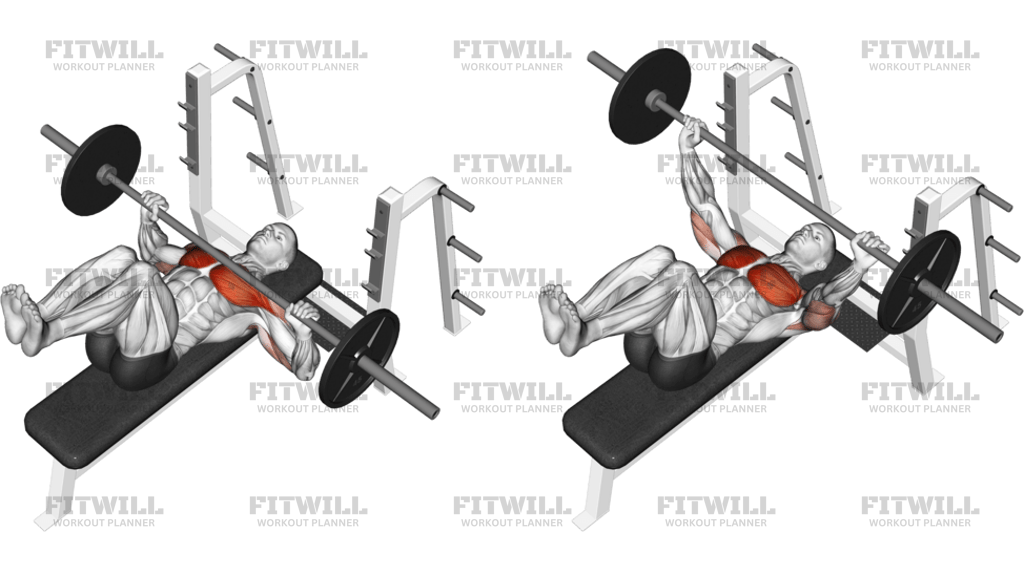
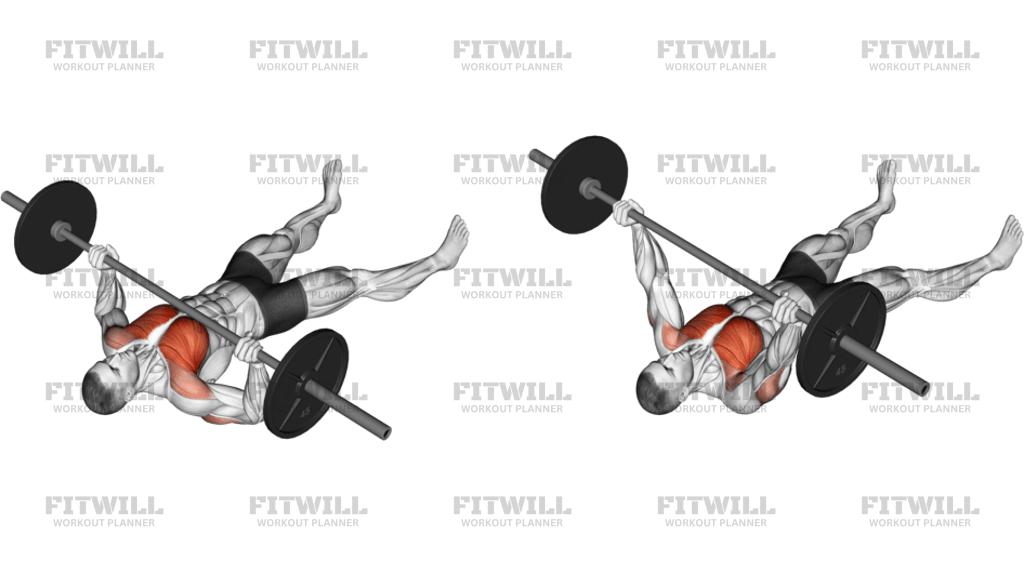
Barbell Bench Press Knees At 90 Degrees is a flat bench pressing variation that keeps the legs lifted and bent so the lifter cannot use leg drive to help the bar. That change makes the rep more dependent on chest, front-shoulder, triceps, and upper-back control, while the trunk has to stay braced so the torso does not twist or overarch under the bar.
The setup matters more here than in a standard bench press. Lie on the bench with your eyes under the bar, shoulder blades pulled back and down, chest gently up, and the feet held off the floor with the hips and knees bent to roughly 90 degrees. That leg position is not decoration: it removes the push from the ground and forces you to keep the press clean from the unrack through the lockout.
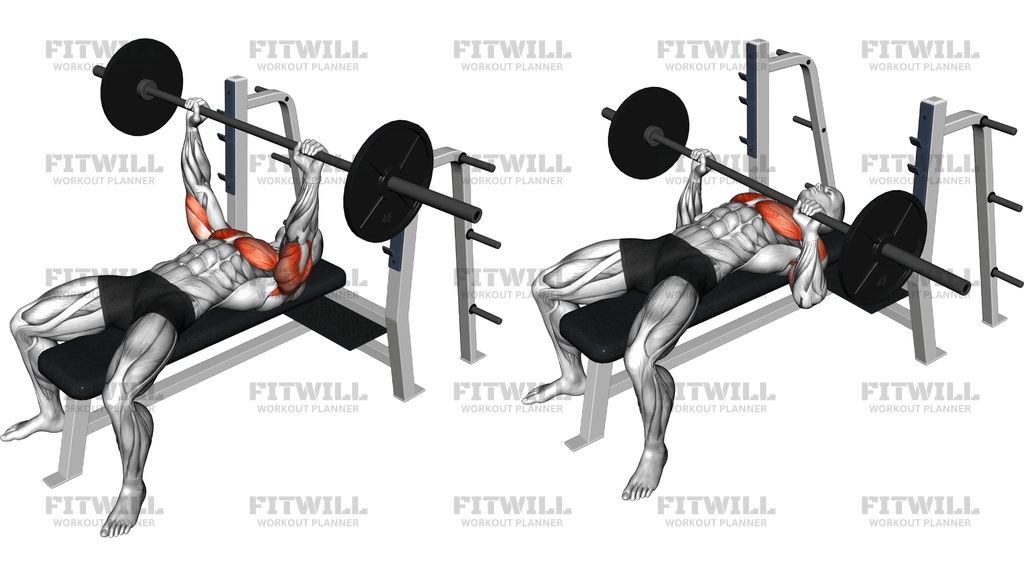
Grip the bar a little wider than shoulder width, stack the wrists over the forearms, and unrack the bar so it sits over the shoulder line. Lower it under control to the lower chest or nipple line with the elbows angled slightly out from the torso, then press back up in a small diagonal path so the bar finishes above the shoulders again. The bar should stay smooth and steady; if it bounces, drifts, or wobbles, the setup or load is usually too aggressive.
Because the legs are raised, this version is often used to build pressing strength without relying on leg drive and to clean up bar path and torso control. It can be a good accessory press after heavier bench work, or a technique-focused variation for lifters who need a stricter chest-to-triceps stimulus. It is also useful when you want to make the core and upper back work harder to stabilize the body on the bench.
Keep the repetition pain-free and controlled. If the shoulders feel pinched, narrow the grip slightly, reduce the depth a little, or use a lighter load until the bar path and scapular position stay consistent. A spotter or a well-set rack is a smart choice, because the lifted-leg position makes balance less forgiving if the rep slows down.
Fitwill
Log Workouts, Track Progress & Build Strength.
Achieve more with Fitwill: explore over 9600 exercises with images and videos, access built-in and custom workouts, perfect for both gym and home sessions, and see real results.
Start your journey. Download today!




Instructions
- Lie on a flat bench with your eyes under the bar, shoulders pulled back and down, and your chest gently lifted.
- Raise your knees so the hips and knees stay bent around 90 degrees, with the feet off the floor and the legs held still.
- Grip the bar slightly wider than shoulder width and stack your wrists over your forearms before you unrack it.
- Unrack the bar and hold it directly above the shoulder joints with locked elbows and a tight upper back.
- Lower the bar under control to the lower chest or nipple line, keeping the elbows angled slightly away from the torso.
- Touch the chest lightly or stop just above it without bouncing the bar.
- Press the bar up and slightly back until it finishes over the shoulders again, exhaling through the hardest part of the rep.
- Keep the legs raised, the ribs controlled, and the torso steady for every repetition.
- Rack the bar only after the final rep is fully locked out and stable.
Tips & Tricks
- Pick a grip that lets your forearms stay close to vertical at the bottom of the rep.
- Keep the shoulder blades pinned to the bench so the chest stays high without shrugging.
- Use less load than your regular bench press, because the raised legs remove the help from leg drive.
- Let the bar touch the same spot on the chest each rep so the path stays repeatable.
- If the bar drifts toward your face on the press, bring it back over the shoulders instead of forcing a straight-up line.
- Keep the knees and feet quiet in the air; swinging the legs usually turns into torso wobble.
- Pause briefly on the chest if you want to make the variation stricter and remove any bounce.
- Stop the set when your shoulders start rolling forward or the bar speed collapses.
- Use a spotter or safety arms if you are training close to failure.
Frequently Asked Questions
What muscles does Barbell Bench Press Knees At 90 Degrees work?
The chest does the main work, with the front shoulders and triceps assisting. The upper back and core help keep the bench position stable.
Why are the knees held at 90 degrees?
That leg position removes leg drive and makes the press more strict. It also forces you to keep the torso stable instead of pushing from the floor.
Where should the bar touch on this bench press variation?
Most lifters should lower it to the lower chest or nipple line. The exact touchpoint can shift slightly with arm length and grip width, but it should stay consistent rep to rep.
Should my feet be on the floor?
No. In this variation the legs stay lifted with the knees bent, so you do not get a push from the ground.
Is this harder than a regular barbell bench press?
Usually yes. Removing leg drive makes the lift less stable and usually lowers the amount of weight you can use.
Can beginners use this exercise?
Yes, but it should start light. Beginners often need to learn the bar path and upper-back setup before loading it heavily.
What is the most common mistake?
Letting the legs move or using a big bounce off the chest. Both make the lift less strict and can hide weak control in the press.
How should I progress this movement?
Add load only after you can repeat the same chest touchpoint, bar path, and raised-leg position for every rep.