Resistance Band Rear Fly
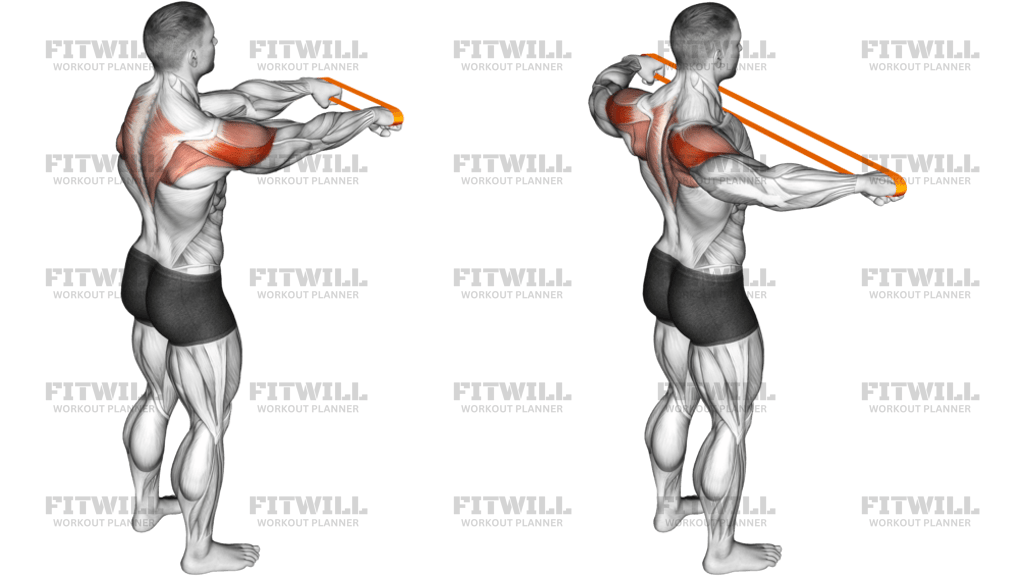
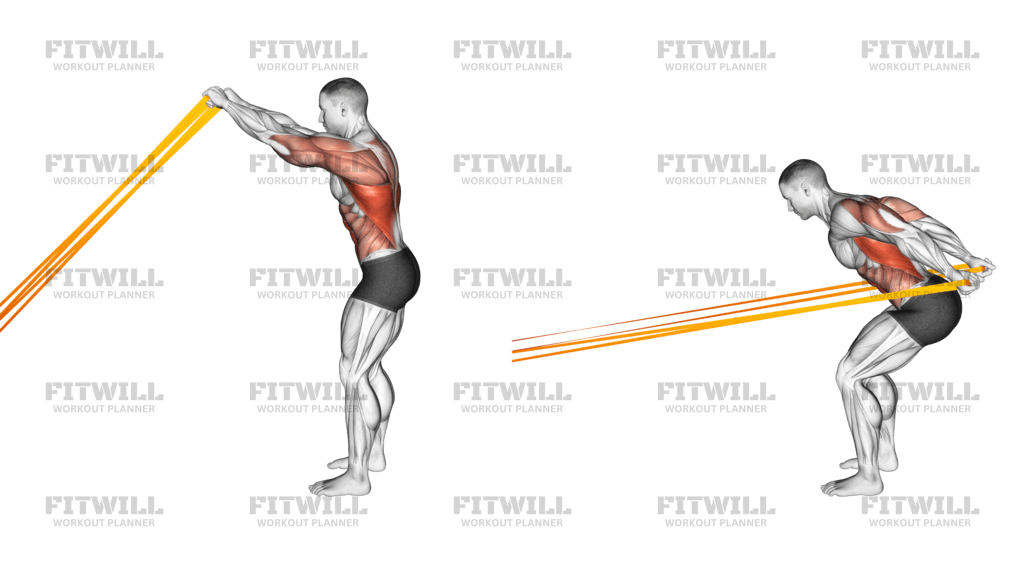
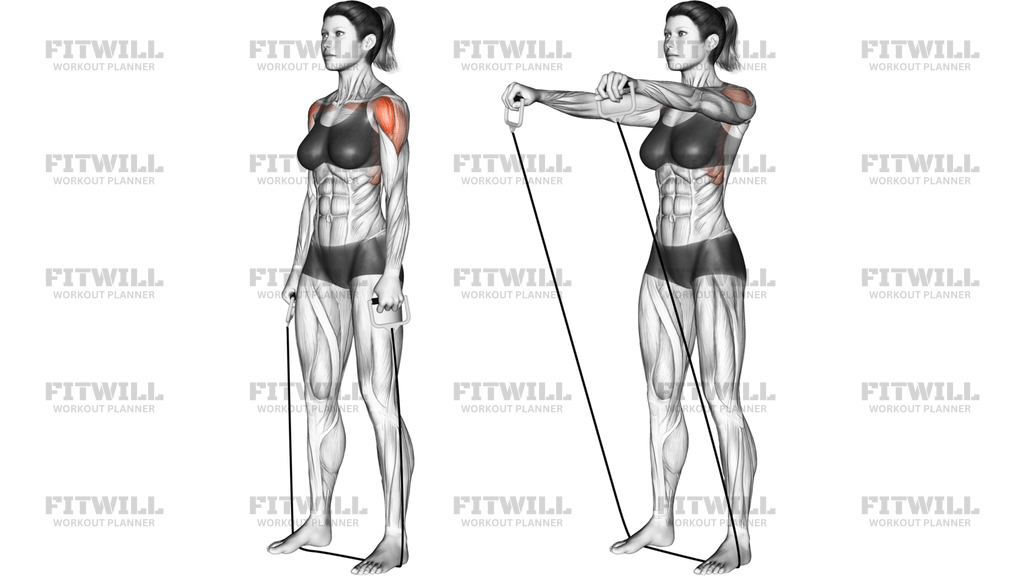
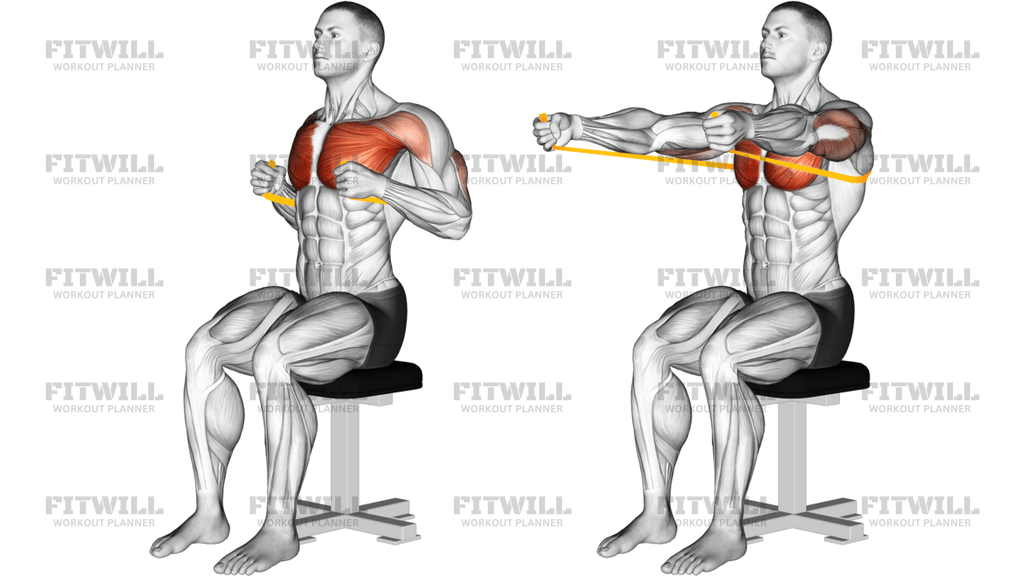
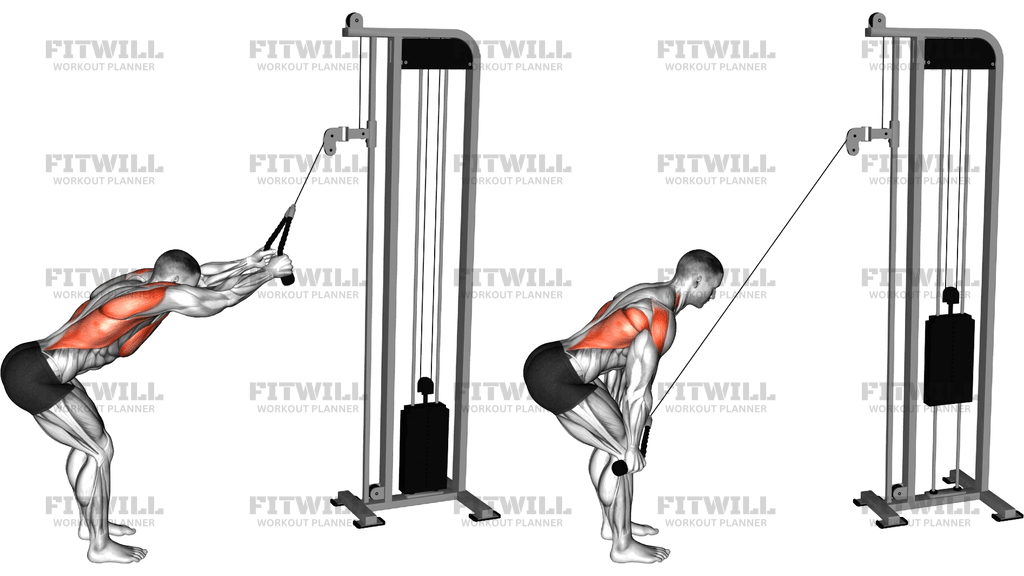
Resistance Band Rear Fly is a standing upper-body isolation exercise that uses a band to train horizontal shoulder abduction and scapular control. The movement is built around the rear delts, mid traps, and rhomboids, with the upper back helping to keep the shoulder blades organized as the arms open. It is especially useful when you want direct posterior-shoulder work without heavy loading or joint stress.
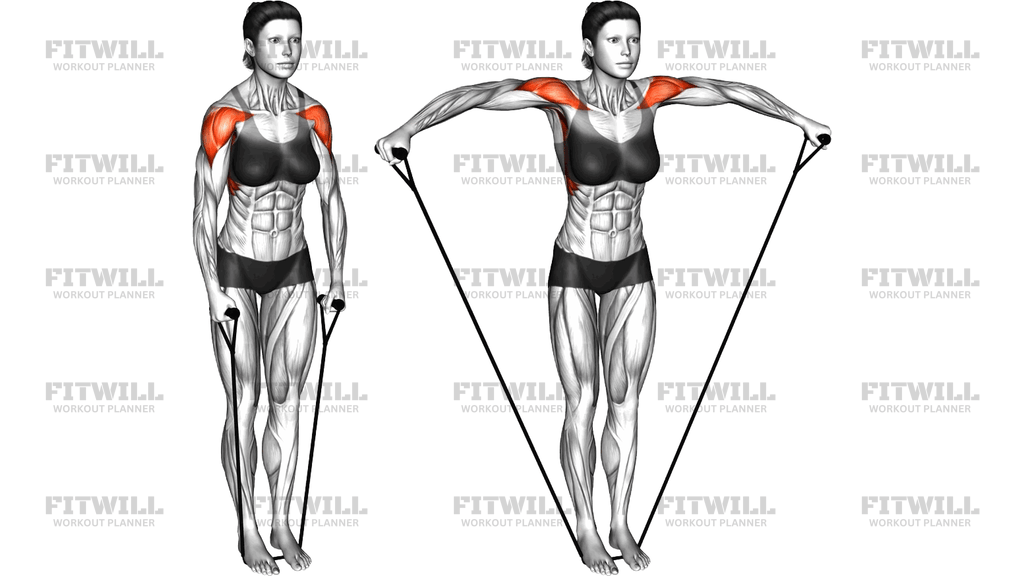
The setup matters because the band should already be under tension before the first rep begins. In the image, the arms stay roughly at shoulder height while the hands move from a forward, narrow position into a wider open position. That makes this a clean rear-delt pattern: the chest stays tall, the ribs stay down, and the shoulders move without turning the set into a shrug or a body swing.
Each rep should feel like a controlled opening action, not a yank. Open the arms smoothly until the hands line up out to the sides and you can feel the back of the shoulders work. Then return slowly so the band keeps pulling the arms forward under control. If the band is too heavy, the neck tightens, the lower back arches, or the elbows bend and the torso starts to cheat. A lighter band with cleaner mechanics is the better choice.
Use this exercise as accessory work, in a shoulder-focused warmup, or as part of a pulling or posture block. It pairs well with rows, face pulls, external rotations, and other scapular-control drills. Beginners can use it safely because the load is easy to scale, but the movement still rewards precision. Keep the motion smooth, keep the shoulder blades controlled, and stop the set when the rear delts are no longer doing the work.
[ Workout Log & Planner ]
Put your next workout in Fitwill
Keep your plan and training log ready when you are.


Instructions
- Stand tall with your feet about hip-width apart and hold the band at shoulder height with a slight bend in the elbows.
- Start with your hands forward and close together, keeping the band lightly tensioned before you begin.
- Set your ribs down, soften your knees, and keep your neck long so the shoulders can move cleanly.
- Pull the hands outward in a wide arc until your arms open to the sides and the shoulder blades come together.
- Keep the elbows nearly fixed so the rear delts and upper back do the work instead of a big elbow bend.
- Pause briefly in the open position without shrugging or leaning back.
- Return the hands forward in a slow, controlled path and keep tension on the band the whole time.
- Breathe out as you open the arms, then inhale as you come back to the start.
- Repeat for the planned number of reps and reset before the next set if the shoulders start to rise.
Tips & Tricks
- Choose a band that lets you open the arms without turning the last few reps into a shrug.
- Keep the hands at roughly shoulder height; if they drift too high, the upper traps take over.
- Think about moving the upper arms out and back, not pulling with the wrists.
- A small elbow bend is fine, but locking the elbows hard often makes the shoulders feel jammed.
- Do not arch the lower back to fake a bigger range; the ribs should stay stacked over the pelvis.
- If the band snaps you forward on the return, slow the eccentric and shorten the range slightly.
- Keep the chin tucked slightly so the neck does not crane forward as fatigue builds.
- Stop the set when you can no longer keep the shoulder blades controlled at the open position.
Frequently Asked Questions
What muscles does Resistance Band Rear Fly target most?
It mainly targets the rear delts, with the rhomboids and mid traps helping to control the shoulder blades.
Can beginners perform this exercise?
Yes. A light band and a short, controlled range make it very beginner-friendly.
Where should my hands travel during the rep?
Your hands should open outward in a wide arc at about shoulder height, not drop low or swing behind your torso.
What is the most common mistake with the band?
Using too much tension and turning the rep into a shrug, a lean-back, or a jerking pull.
Should I keep my elbows straight?
Keep a soft bend in the elbows. That protects the joints and helps the rear delts stay in charge.
Do I need to pause at the open position?
A brief pause helps you feel the rear delts and prevents the band from pulling you through the rep.
How should my body stay during the set?
Keep your ribs down, chest tall, and torso quiet so the movement comes from the shoulders, not momentum.
What can I pair this with in a workout?
It pairs well with rows, face pulls, and other shoulder-prehab or posture-focused pulling exercises.