Dumbbell Hamstring Curl
Dumbbell Hamstring Curl is a prone leg curl variation performed face down on a flat bench with a dumbbell held securely between the feet. It trains the hamstrings through knee flexion while the hips stay pressed into the bench, so the movement stays focused on the back of the thigh instead of turning into a low-back swing. The bench support also changes the line of pull compared with standing or cable curls, which makes the setup and grip on the dumbbell the main factors that determine whether the repetition feels smooth or awkward.
The exercise is most useful when you want direct hamstring work without a machine. Because the load hangs from the feet, the feet, ankles, and calves have to stabilize the dumbbell while the hamstrings bend the knees. That makes the movement feel simple on paper but demanding in practice: if the dumbbell shifts, the ankles loosen, or the pelvis lifts off the bench, the rep turns into a compensation pattern instead of a clean curl.
A good setup starts with the knees just off the edge of the bench, the hips heavy against the pad, and the dumbbell clamped tightly between the soles or heels of the shoes. From there, curl the lower legs upward by bending the knees, then lower the weight slowly until the knees are nearly straight again. Keep the thighs in contact with the bench, avoid jerking the weight off the bottom, and use a controlled tempo so the hamstrings stay loaded through the entire arc.
This variation is especially useful as an accessory movement after squats, deadlifts, or sprint work, or as a lower-load option when you want hamstring isolation without a machine. It works best with moderate or light loads because the dumbbell is harder to secure than a machine pad. If the feet cannot hold the dumbbell confidently through the full range, the load is too heavy or the setup needs adjustment.
Treat the rep as a stability exercise as much as a curl. The more the torso stays still, the more the hamstrings have to do the work. A controlled eccentric, a tight clamp on the dumbbell, and a bench position that lets the knees move freely are what make this movement productive and safe.
[ Workout Log & Planner ]
Put your next workout in Fitwill
Keep your plan and training log ready when you are.


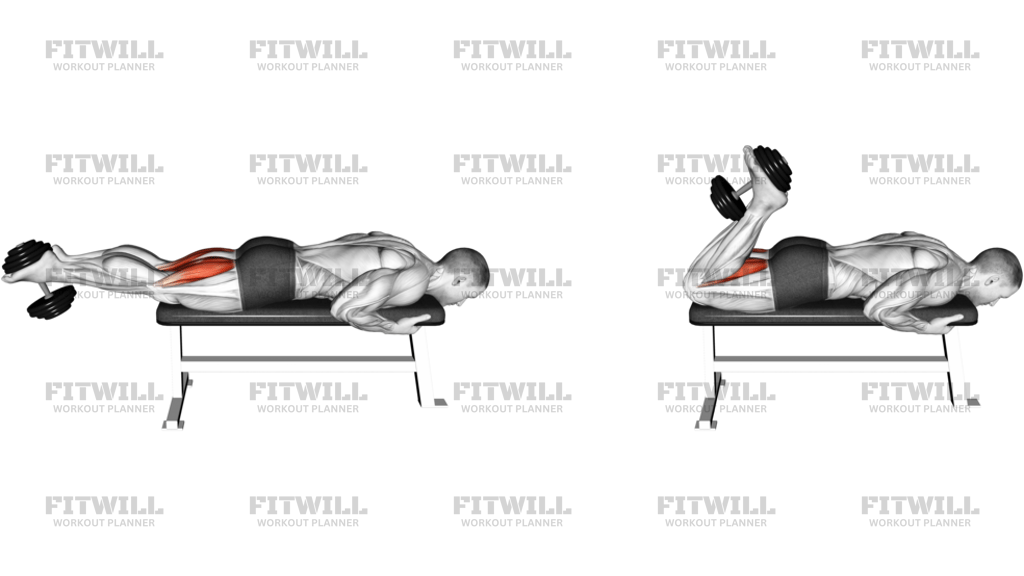
Instructions
- Lie face down on a flat bench with your hips and stomach supported and your knees just beyond the edge.
- Hold a dumbbell between your feet or shoes so it is clamped securely before you start the set.
- Let your legs hang straight down with your knees nearly extended and your thighs pressed into the bench.
- Brace your midsection and keep your pelvis heavy on the pad so your lower back does not arch.
- Curl the dumbbell upward by bending your knees and bringing your heels toward your glutes.
- Keep the dumbbell steady between your feet and stop the curl when your lower legs are close to vertical.
- Squeeze the hamstrings briefly at the top without lifting your hips off the bench.
- Lower the dumbbell slowly until your knees are almost straight again, keeping tension on the hamstrings.
- Breathe out as you curl up, inhale as you lower, and reset the clamp on the dumbbell before the next rep.
Tips & Tricks
- Use a dumbbell you can hold securely between your feet without needing to squeeze so hard that your calves cramp.
- Keep your hips glued to the bench; if they lift, the weight is too heavy or the range is too aggressive.
- Let the knees move, not the spine. A swinging low back usually means you are trying to create momentum instead of knee flexion.
- Lower the dumbbell slowly for a stronger hamstring stimulus; the eccentric is where this variation gets difficult.
- Keep the bench edge under the hip crease, not under the thighs, so the knees can move freely off the end of the pad.
- If the dumbbell slips, switch to a lighter load or a pair of shoes with a firmer sole and better friction against the handles.
- Do not force the heels all the way to the glutes if the dumbbell starts to drift or your hips peel up.
- Use a smooth, even tempo rather than kicking the weight up from the bottom.
- Stop the set when your feet can no longer clamp the dumbbell evenly through the full range.
Frequently Asked Questions
What muscle does Dumbbell Hamstring Curl target most?
The main target is the hamstrings, especially the portion that bends the knee. The calves and foot stabilizers help keep the dumbbell pinned in place.
How do I hold the dumbbell on a prone hamstring curl?
Clamp it between your feet or shoes before you start the set and keep constant pressure on the handle. If it feels unstable, the load is too heavy for this variation.
Why are my hips coming off the bench?
That usually means you are curling too heavy or trying to shorten the rep by arching. Keep the pelvis heavy on the pad and reduce the load until the movement stays strict.
How high should I curl the dumbbell?
Curl until your lower legs are close to vertical or until the dumbbell becomes hard to control. There is no benefit to forcing extra height if the clamp loosens.
Is this exercise good for beginners?
Yes, but only with a very light dumbbell and a stable bench setup. Beginners should first learn to keep the dumbbell secure and the hips down through the full range.
What is the most common mistake with this movement?
Letting the dumbbell swing and using momentum from the hips or low back. The curl should come from knee flexion, not a body throw.
What can I use instead if I do not trust the dumbbell grip?
A lying leg curl machine, banded hamstring curl, or Swiss ball leg curl is usually a better choice if the dumbbell will not stay secure between your feet.
Should I move fast or slow on this curl?
Use a controlled curl up and an even slower lowering phase. Fast reps make the dumbbell harder to control and usually shift work away from the hamstrings.