Shrimp Squat
Shrimp Squat is a bodyweight single-leg squat that challenges the hips, glutes, quads, and balance at the same time. One foot stays planted while the rear leg is held behind the body, which removes a lot of support and forces the working leg to control the descent, the bottom position, and the drive back up. That makes it useful for unilateral strength work, knee control, and lower-body coordination without needing external load.
This exercise is especially good when you want to build leg strength with a long range of motion and very little equipment. Because the movement is narrow and unstable, the setup matters more than with a regular squat. A stable standing foot, a tall chest, and a controlled reach with the free arm help keep the torso from collapsing forward or twisting as you descend.
The working leg should lower the body under control until the back knee gets close to the floor, then press the floor away to stand back up. The front knee will travel forward over the toes, but it should stay lined up with the foot instead of caving inward. Most people get more from this movement by keeping the descent slow and the ascent deliberate rather than trying to bounce out of the bottom.
Shrimp Squat can be used as an accessory strength exercise, a progression toward pistol squat work, or a balance and mobility drill for the lower body. It is demanding even with body weight alone, so quality matters more than repetition count. If your ankle, knee, or hip starts to wobble, shorten the range slightly and keep the rep clean instead of forcing depth.
For most lifters, the biggest benefit is the combination of strength and control in one leg at a time. That helps expose side-to-side differences, builds confidence in single-leg positions, and carries over to running, jumping, lunging, and change-of-direction work. It is also a useful checkpoint for symmetry because each leg has to own the same bottom position before you stand. The goal is a smooth rep where the planted leg does the work and the torso stays organized from start to finish.
Fitwill
Log Workouts, Track Progress & Build Strength.
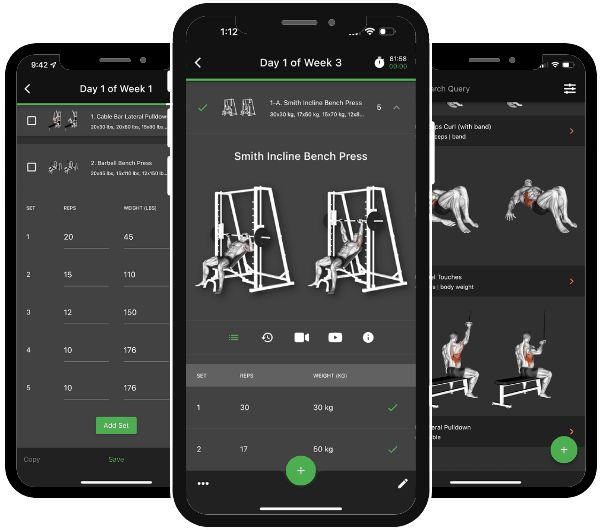
Achieve more with Fitwill: explore over 5000 exercises with images and videos, access built-in and custom workouts, perfect for both gym and home sessions, and see real results.
Start your journey. Download today!


Instructions
- Stand on one foot and bend the other leg behind you so the rear foot is held close to your glute by the same-side hand.
- Reach the opposite arm forward at shoulder height to help counterbalance and keep your torso facing straight ahead.
- Plant the standing foot firmly, spread the toes, and set your weight over the middle of that foot before you descend.
- Lower yourself by bending the standing knee and hip, keeping the rear knee tucked behind you as the torso leans forward slightly.
- Keep the standing knee tracking in line with the toes and let the front heel stay grounded as long as possible.
- Descend until the rear knee is close to the floor or your hip reaches the deepest controlled position you can own.
- Drive through the standing foot to rise, keeping the chest lifted and the free arm steady as you return to standing.
- Finish each rep by fully regaining balance before starting the next repetition or switching sides.
Tips & Tricks
- Keep the standing foot tripod locked down so the big toe, little toe, and heel all stay active through the rep.
- If the front knee dives inward, slow the descent and think about driving it over the middle toes.
- A small forward torso lean is normal; losing your chest position usually means you are reaching too deep too soon.
- Hold the rear foot close to the glute instead of letting the lower leg swing wide behind you.
- Use the forward arm as a counterweight, not as a pull to yank yourself off balance.
- Pause briefly near the bottom if you tend to bounce out of the hole or lose control.
- Reduce depth if the heel lifts early or the standing foot starts rolling to the outside edge.
- Treat the lowering phase as the hard part and keep it slow enough that the standing leg stays in charge.
Frequently Asked Questions
What muscles does Shrimp Squat train most?
It mainly trains the quads, glutes, and hip stabilizers of the standing leg, with the calves and core helping to keep you balanced.
Is Shrimp Squat good for beginners?
Yes, but it is challenging even with body weight. Many beginners need a shallow range, a light fingertip support, or a slower tempo before they can do full reps cleanly.
How do I hold my rear leg during Shrimp Squat?
Keep the rear foot tucked behind you and hold it close to the glute so the knee stays bent and the leg does not swing away from the body.
Why does my standing foot wobble so much in Shrimp Squat?
The exercise narrows your base of support on purpose, so some wobble is normal. Keep pressure on the big toe, little toe, and heel, and slow the descent until the foot feels more stable.
How low should I go in Shrimp Squat?
Go as low as you can while keeping the standing heel down, the knee tracking over the toes, and the torso controlled. Depth is useful only if you can own it without collapsing.
Can I use something for balance with Shrimp Squat?
Yes. A rack upright, wall, or light fingertip support can help you learn the pattern without turning the movement into a balance test.
What is the most common mistake in Shrimp Squat?
Most people drop too fast and let the front knee cave inward or the torso twist. A slower eccentric and a steady forward reach usually fix both problems.
How can I make Shrimp Squat harder?
Progress by increasing depth, slowing the lowering phase, pausing at the bottom, or adding a light load only after bodyweight reps are stable and symmetrical.