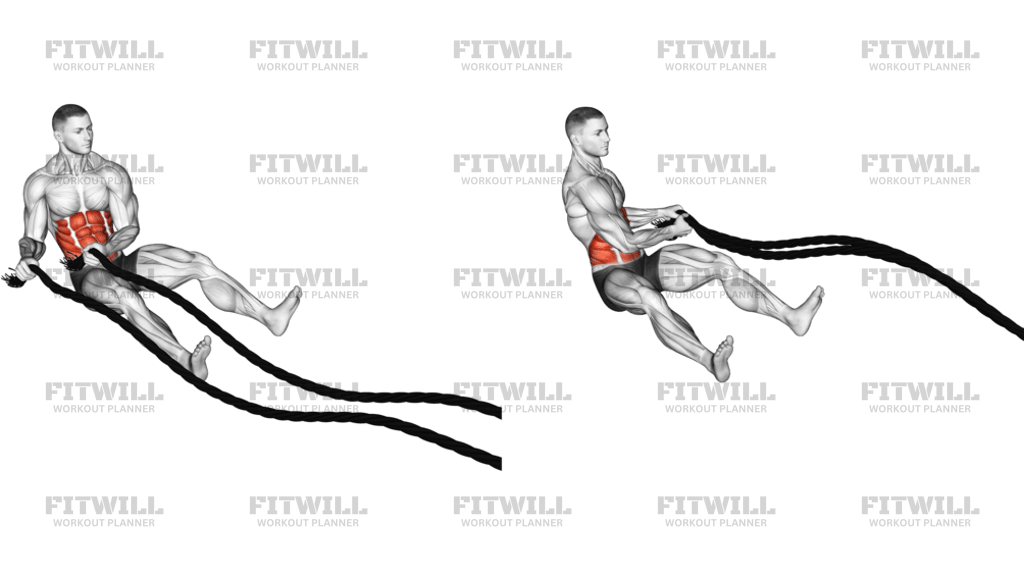
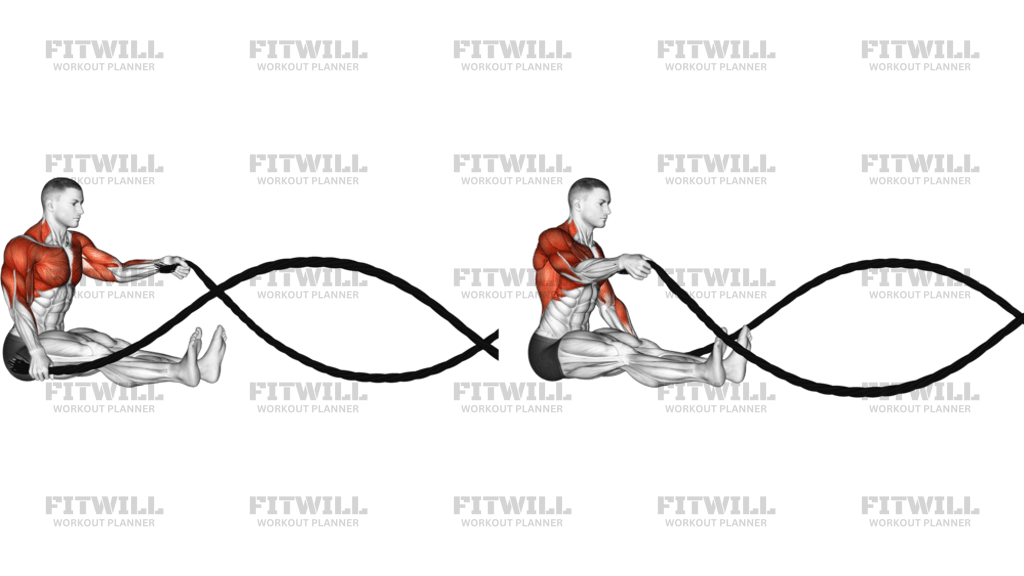
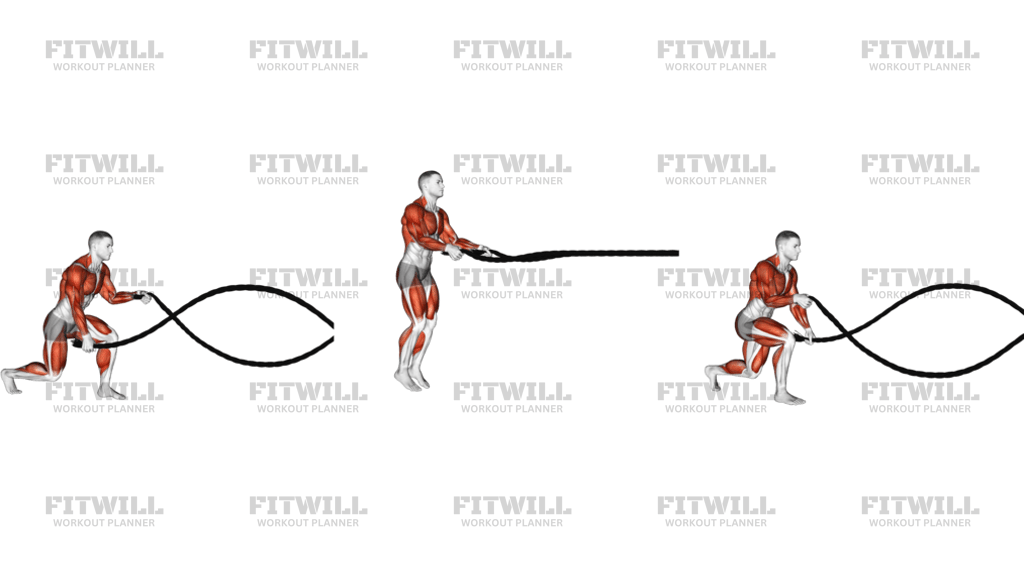
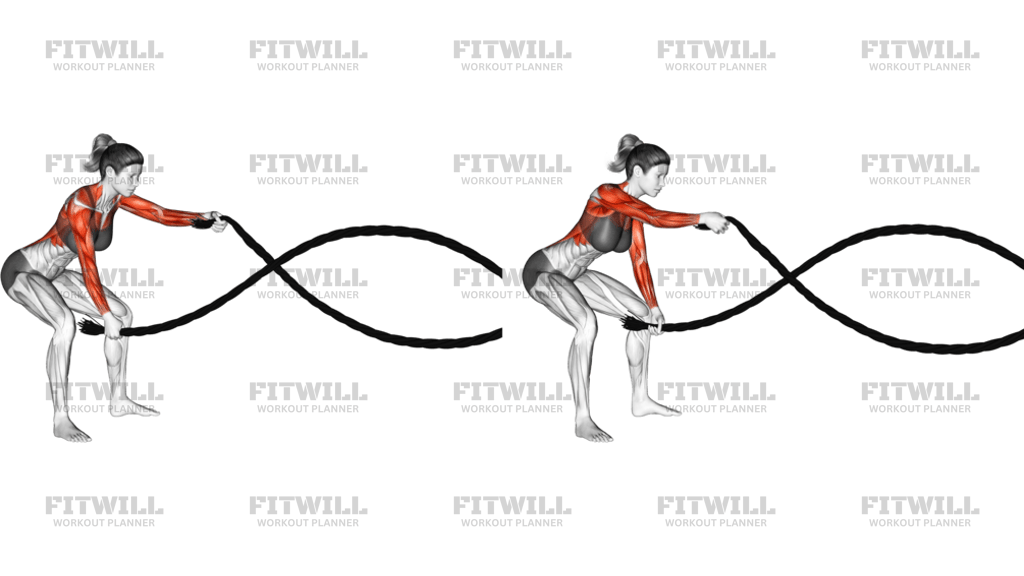
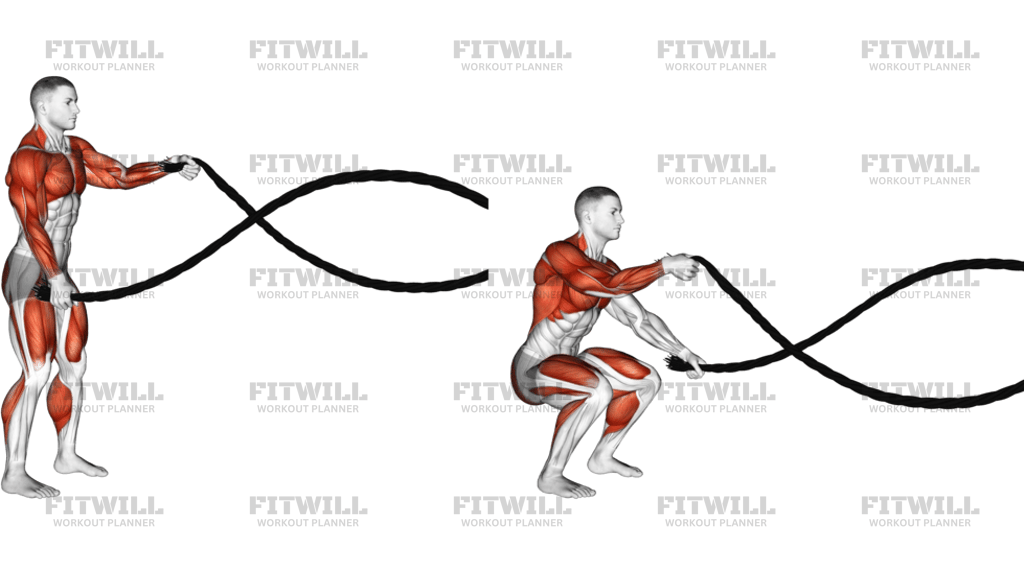
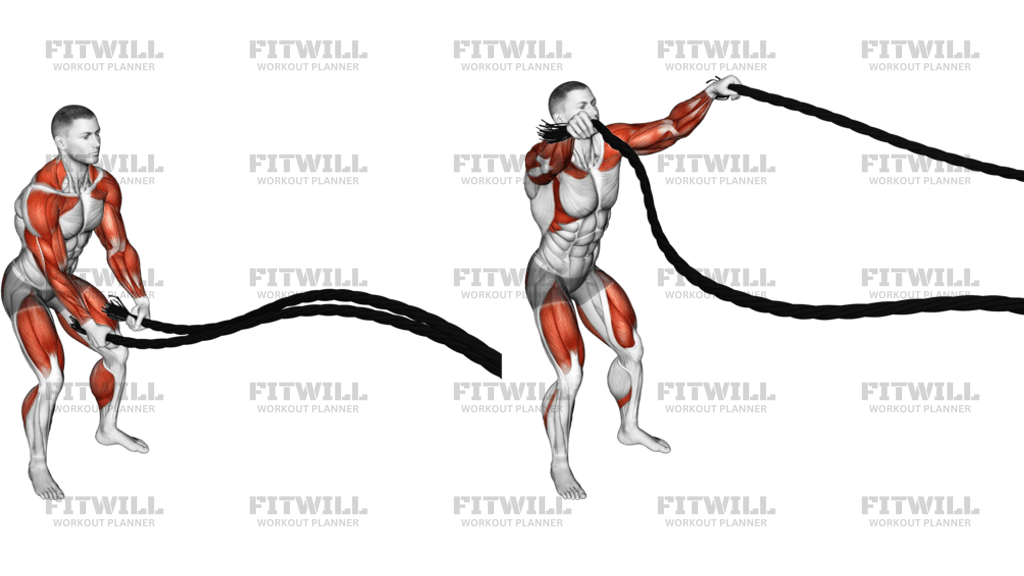
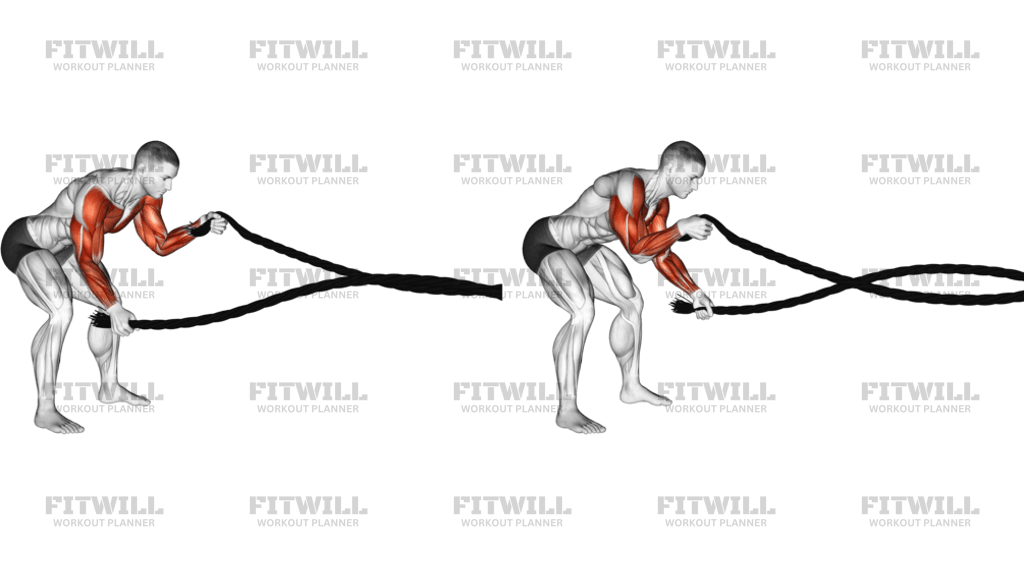
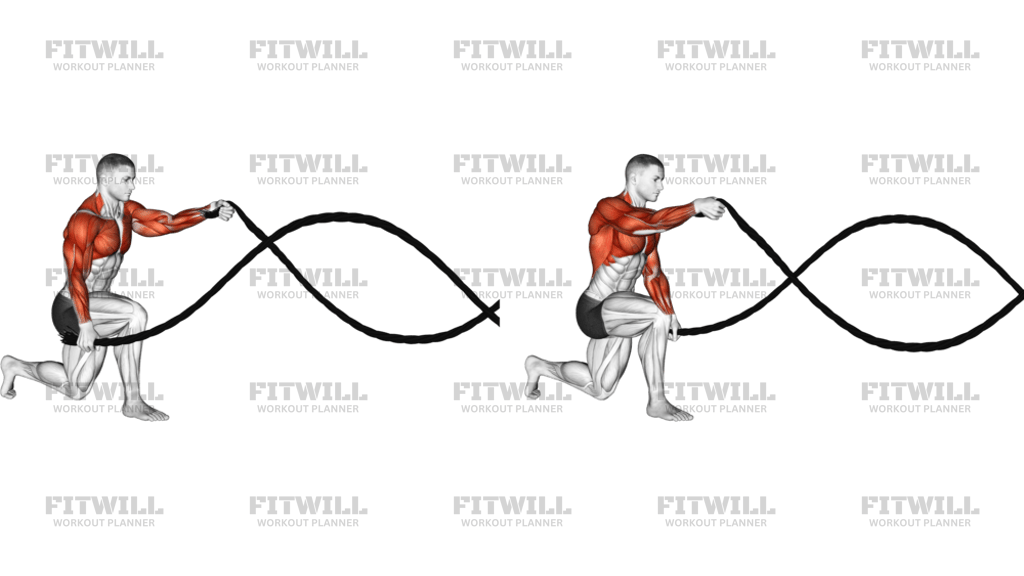
Battling Ropes Side To Side Arms
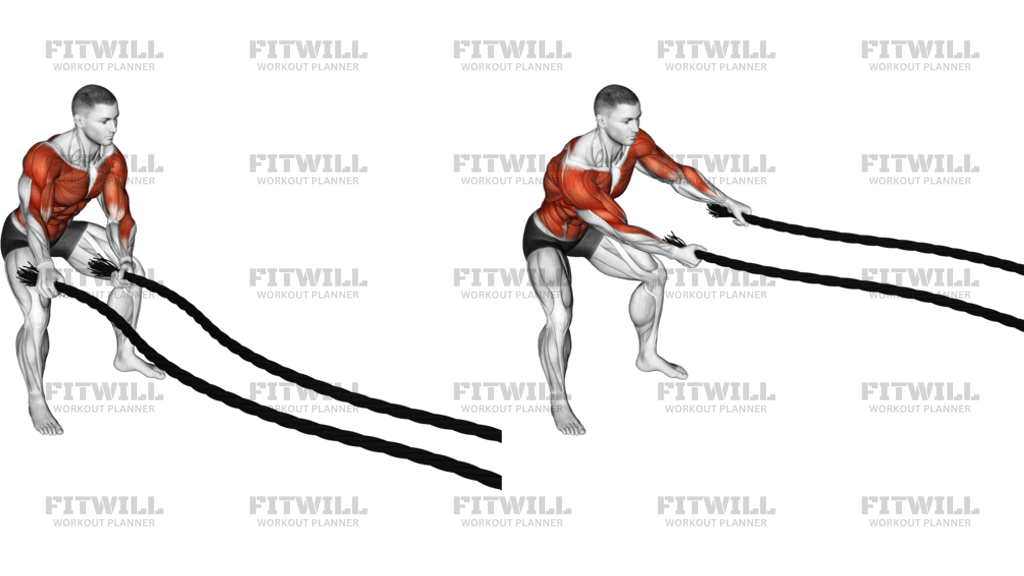
Battling Ropes Side To Side Arms is a rope conditioning drill performed from a low athletic stance with the rope anchored in front of you. The goal is to drive the handles through a controlled lateral path so the rope moves side to side while the shoulders, upper back, arms, grip, and trunk work to keep the pattern clean and repeatable.
Unlike a big rope slam, this variation rewards sharp direction changes and steady posture. The hands travel across the body in quick alternating arcs while the torso stays organized, the ribs stay stacked over the pelvis, and the neck remains relaxed. That makes the exercise useful for training upper-body endurance and coordination without turning it into a full-body sway drill.
Setup matters because the rope path is only as good as your stance. Stand close enough to the anchor that you can keep a soft bend in the elbows and keep tension in the rope without leaning forward or reaching too far. A staggered stance or slightly wider athletic stance helps you stay balanced while the hands move laterally. If the rope pulls you out of position, the anchor distance or load is probably off.
During each rep, think about directing the handles cleanly from one side to the other instead of muscling the rope with shrugging shoulders or twisting the torso. The work should feel rhythmic and controlled, with the arms initiating the motion and the core preventing excess rotation. Short, crisp waves are usually better than huge sweeping swings, especially if you want repeatable conditioning work instead of sloppy momentum.
This exercise fits well in warm-ups, conditioning circuits, and accessory work for people who need shoulder endurance and grip demand in a standing pattern. It is beginner-friendly when the rope is light enough to control and the intervals are short, but it should still feel challenging enough that you must stay braced and focused. Stop the set if the movement becomes a spine twist, the shoulders creep toward the ears, or the rope path loses its side-to-side rhythm.
[ Workout Log & Planner ]
Put your next workout in Fitwill
Keep your plan and training log ready when you are.


Instructions
- Anchor the battling rope low in front of you and stand facing the anchor in a stable athletic stance with one foot slightly forward if needed.
- Hinge slightly at the hips, soften your knees, and keep your chest tall with your ribs stacked over your pelvis.
- Hold both rope ends with a neutral grip, hands in front of your thighs, and keep a soft bend in your elbows.
- Set your shoulders down away from your ears and brace your midsection before the first swing.
- Drive one hand out to the side while the other hand crosses your body, creating a fast side-to-side rope path.
- Keep the torso mostly quiet as the arms guide the rope, and avoid twisting your whole body to generate momentum.
- Continue alternating the rope path with a smooth rhythm, breathing out as you drive the waves.
- Slow the rope under control and place it down safely when the set is finished.
Tips & Tricks
- Keep the rope anchor low enough that the handles stay in a comfortable lane in front of your hips instead of pulling you up toward your chest.
- Short, crisp side-to-side swings usually work better than big sweeping arcs that force you to shrug or lean.
- If your front foot starts bouncing, the rope is probably too far away or too heavy for the cadence you chose.
- Think about moving the hands across the midline, not rotating the shoulders and ribs to chase the rope.
- Keep the wrists straight so force transfers through the forearms instead of collapsing into the hands.
- A slight knee bend and athletic hinge help you absorb the rope without locking out the hips or knees.
- If your low back tightens first, reduce the swing size and re-stack your ribs over your pelvis before continuing.
- Choose intervals you can repeat with the same posture from the first second to the last, not just the same speed.
Frequently Asked Questions
What does Battling Ropes Side To Side Arms train?
It mainly challenges the shoulders, upper back, arms, grip, and core while also giving you a strong conditioning effect.
Is this the same as a standard battle rope wave?
No. The hands travel laterally across the body, so the rope moves side to side instead of straight up and down.
How close should I stand to the rope anchor?
Close enough that you can keep a soft elbow bend and a clean lateral path without reaching, leaning, or losing balance.
Should my torso twist while I move the ropes?
A little shift is normal, but the torso should stay mostly quiet. If you are rotating hard, the rope is probably too heavy or the swings are too large.
Can beginners use this exercise?
Yes, if the rope is light enough to control and the intervals are short enough to keep the side-to-side pattern clean.
What is the most common mistake?
Shrugging the shoulders and turning the drill into a whole-body sway instead of a controlled arm-driven rope pattern.
How can I make the movement harder?
Use longer intervals, a thicker rope, or a slightly farther stance from the anchor while keeping the same side-to-side rhythm.
When should I stop the set?
Stop when the rope path becomes uneven, the shoulders creep up, or the torso starts twisting to keep the movement going.