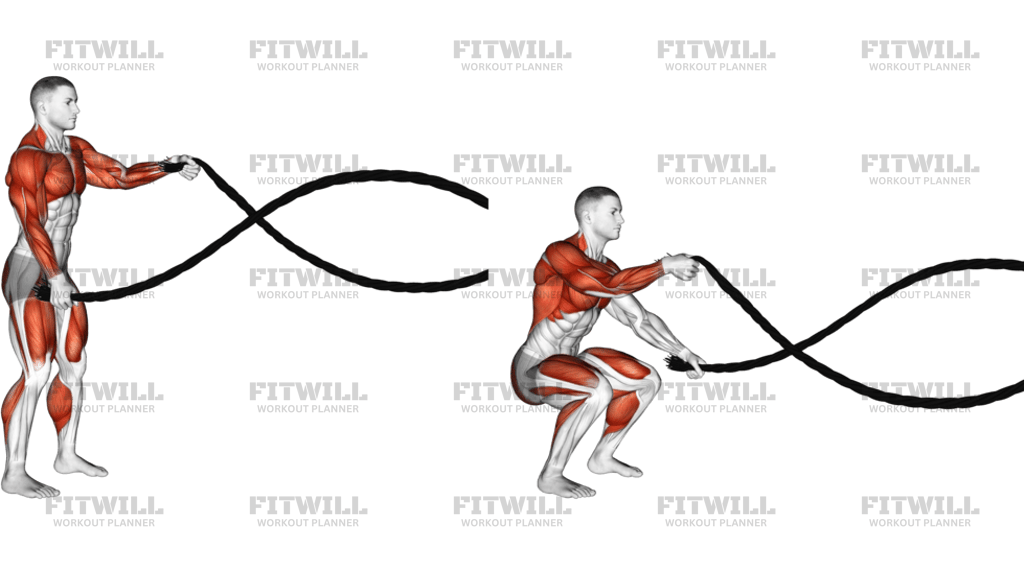
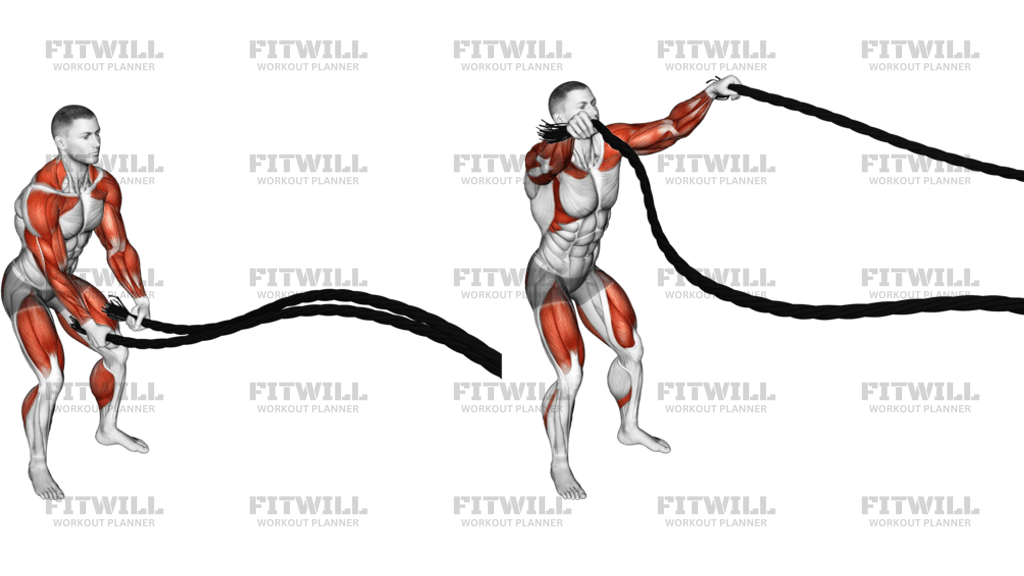
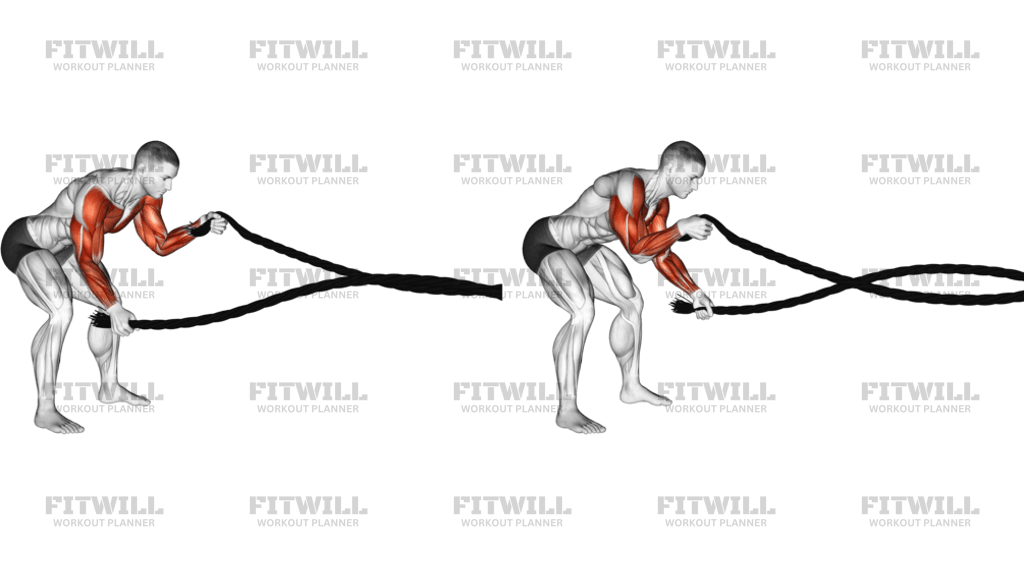
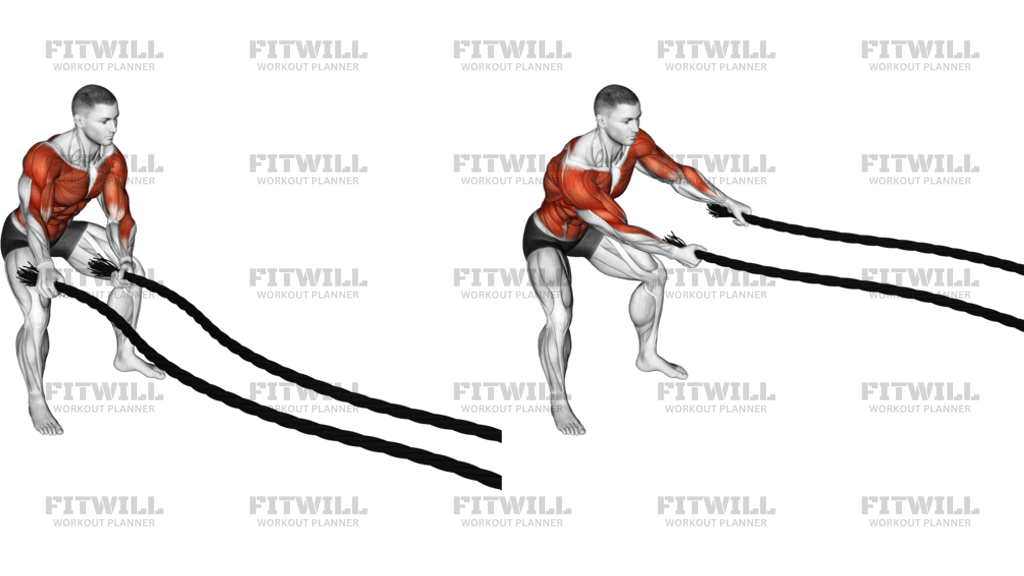
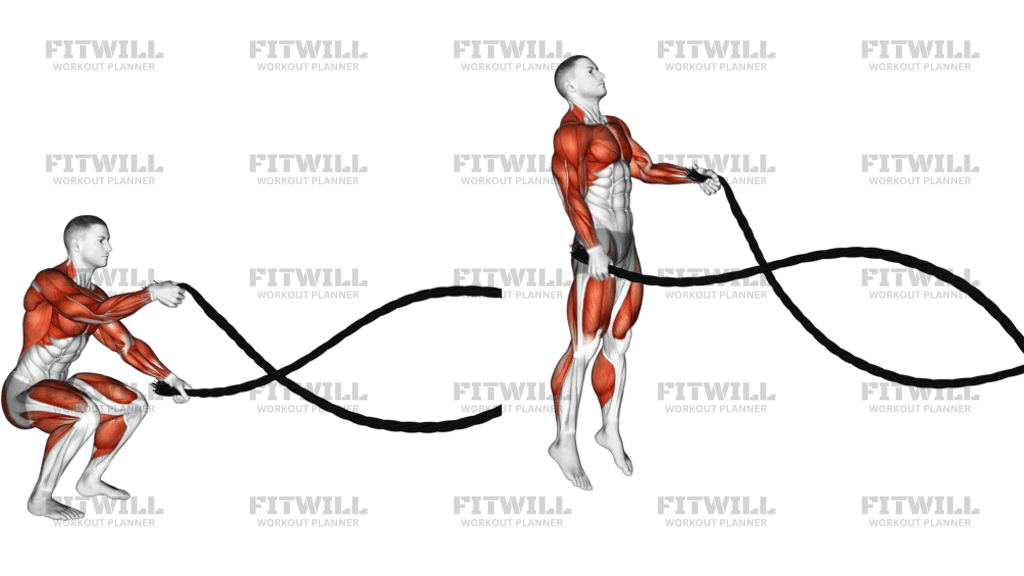
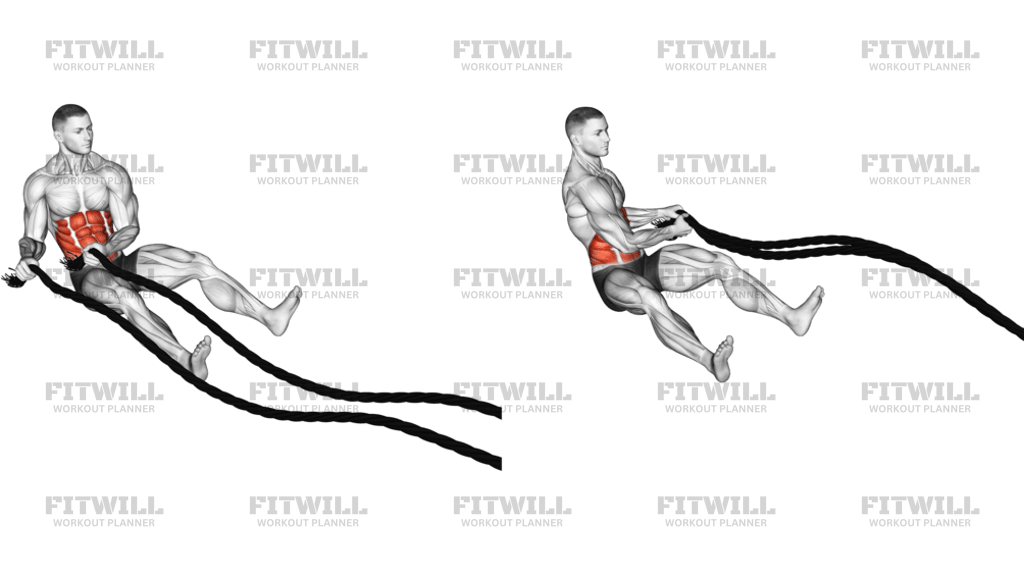
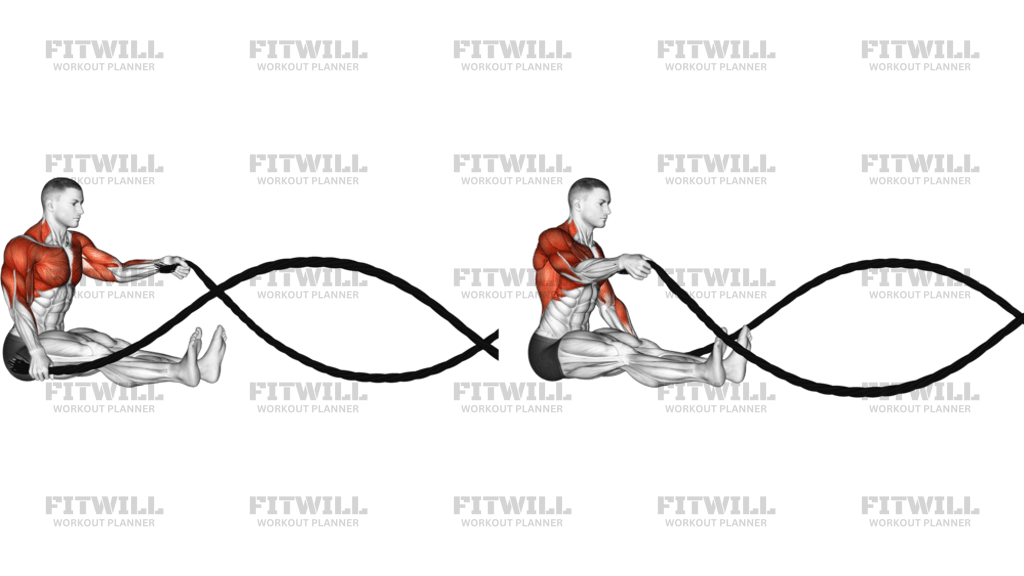
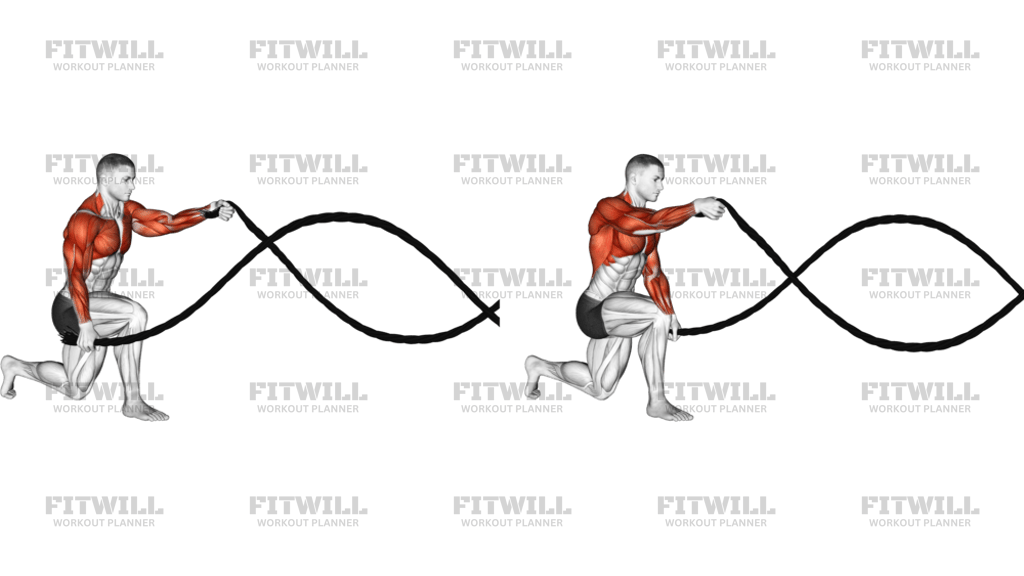
Rear Lunge With Battling Ropes
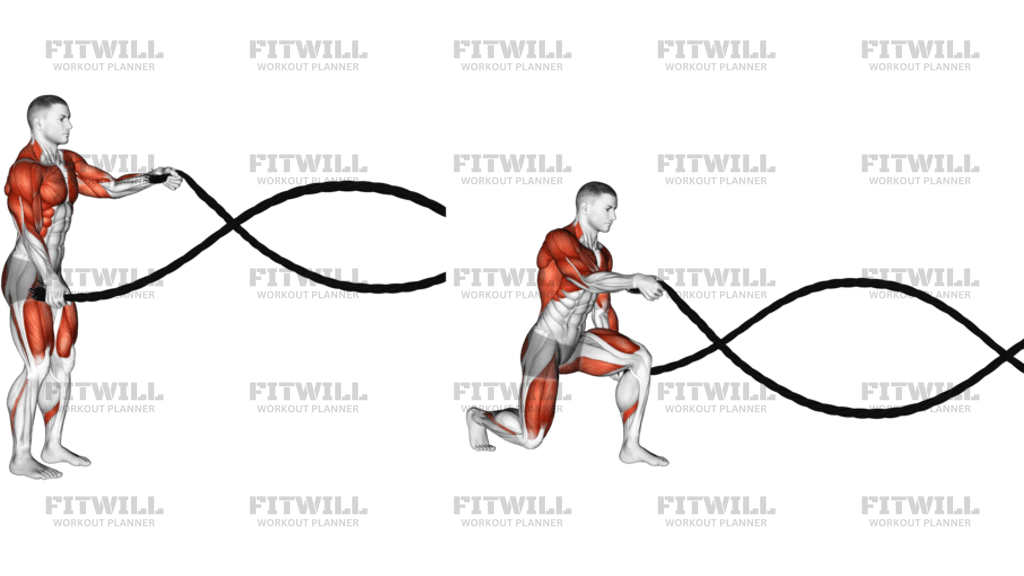
Rear Lunge With Battling Ropes combines a reverse lunge with rope waves, turning one rep into a lower-body stability drill and a conditioning pattern at the same time. The legs have to control the step back and the descent, while the shoulders, arms, grip, and trunk keep the rope moving without letting the body twist or collapse.
The setup matters because rope tension changes the whole feel of the exercise. Stand tall with the rope ends in front of you, feet about hip-width apart, and enough distance from the anchor that the line stays active without pulling you forward. From there, step one leg straight back, keep the front heel planted, and lower into a split stance until the back knee hovers close to the floor.
Each repetition should look smooth and repeatable. The torso stays stacked over the hips, the front knee tracks with the toes, and the ropes keep a controlled wave rhythm while you descend and rise. Drive up through the front heel and the ball of the back foot, then bring the feet back under you before the next rep. If the rope pattern gets too aggressive, reduce the wave size instead of letting the shoulders yank the body out of position.
This movement fits well in conditioning circuits, athletic warmups, and accessory lower-body work when you want unilateral leg training with an added upper-body and core demand. It is also a useful coordination drill for keeping posture organized under fatigue. Choose a rope cadence and stance length you can repeat cleanly, and stop the set when balance, knee tracking, or torso position starts to slip.
[ Workout Log & Planner ]
Put your next workout in Fitwill
Keep your plan and training log ready when you are.


Instructions
- Stand tall facing the rope anchor with your feet about hip-width apart and a rope end in each hand at hip to chest height.
- Keep your elbows softly bent, wrists neutral, and shoulders down so the rope tension stays under control.
- Step one leg straight back into a reverse lunge, landing on the ball of the back foot.
- Lower until the back knee hovers just above the floor and the front shin stays close to vertical.
- Keep your chest stacked over your hips and your hips square as you create small, steady rope waves.
- Drive through the front heel and the back toes to stand back up.
- Bring your feet back under your hips before the next rep or switch sides according to the plan.
- Exhale as you drive up and inhale as you lower into the lunge.
Tips & Tricks
- Smaller rope waves usually make the lunge cleaner; big waves tend to pull the torso forward.
- Keep the front foot flat and tripod-loaded so the knee does not cave inward.
- Let the back knee travel down rather than forward so the stance stays long enough for hip space.
- If your shoulders burn first, lower the wave height and smooth out the rhythm.
- Use a distance from the anchor that keeps the ropes taut without yanking your arms forward at the bottom.
- Think quiet torso, active arms so the lunge and rope pattern do not fight each other.
- If balance is shaky, slow the step back and pause briefly at the bottom before standing.
- Stop the set if you start twisting toward the ropes or bouncing out of the bottom position.
Frequently Asked Questions
What muscles does Rear Lunge With Battling Ropes work most?
Glutes and quads drive the lunge, while hamstrings, calves, shoulders, upper back, grip, and core help you control the ropes and stay upright.
Should the ropes keep moving during the lunge?
Yes, but the waves should stay controlled. The goal is to keep the rope moving without letting it drag your torso forward or twist your hips.
Is this the same as a reverse lunge?
It starts with a reverse lunge step back, then adds rope work at the same time. The moving rope pattern is what makes it more demanding than a plain lunge.
Can beginners do this exercise?
Yes, if they use smaller rope waves, a slower tempo, and a short set. Beginners can also practice the lunge first with the ropes held still.
How do I keep my front knee safe?
Keep the front heel down, point the knee in the same direction as the toes, and avoid letting the knee cave inward when you drive up.
Why do I feel this mostly in my shoulders?
The ropes add a lot of upper-body work, especially if the waves are large or fast. Reduce the amplitude and keep the elbows softly bent if the shoulders take over.
Do I alternate legs every rep?
You can alternate sides each rep or complete a set on one leg before switching. Pick the version that matches your goal and keeps the rope rhythm consistent.
What should I change if I lose balance?
Shorten the step back, slow the rep, and reduce the wave size. If needed, practice the lunge without rope waves until your stance feels stable.