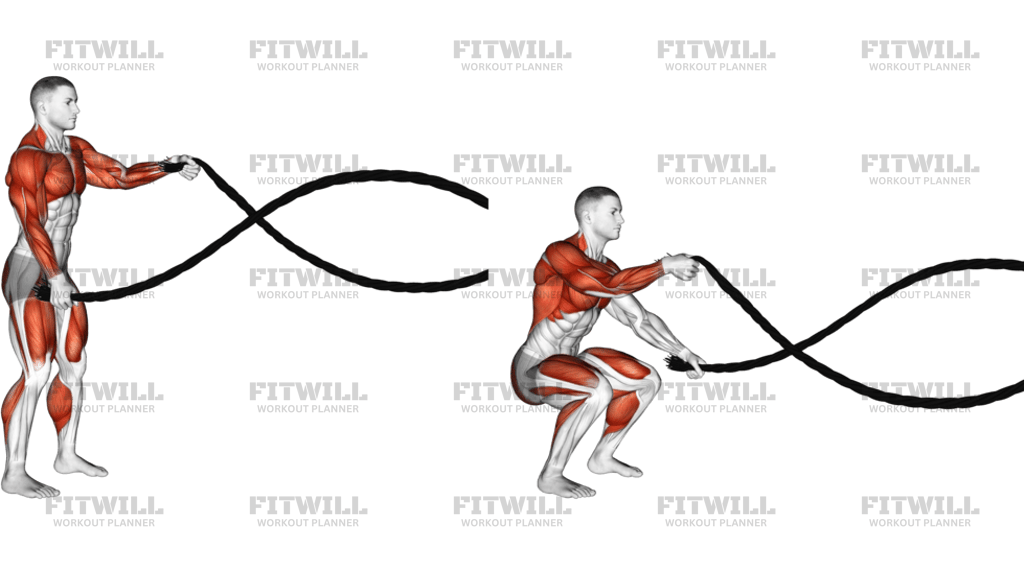
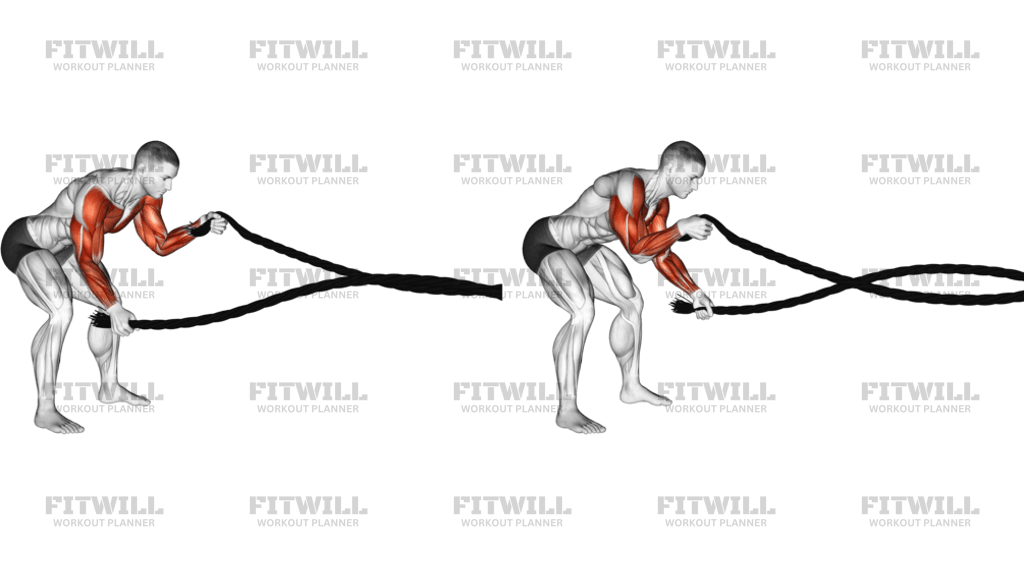
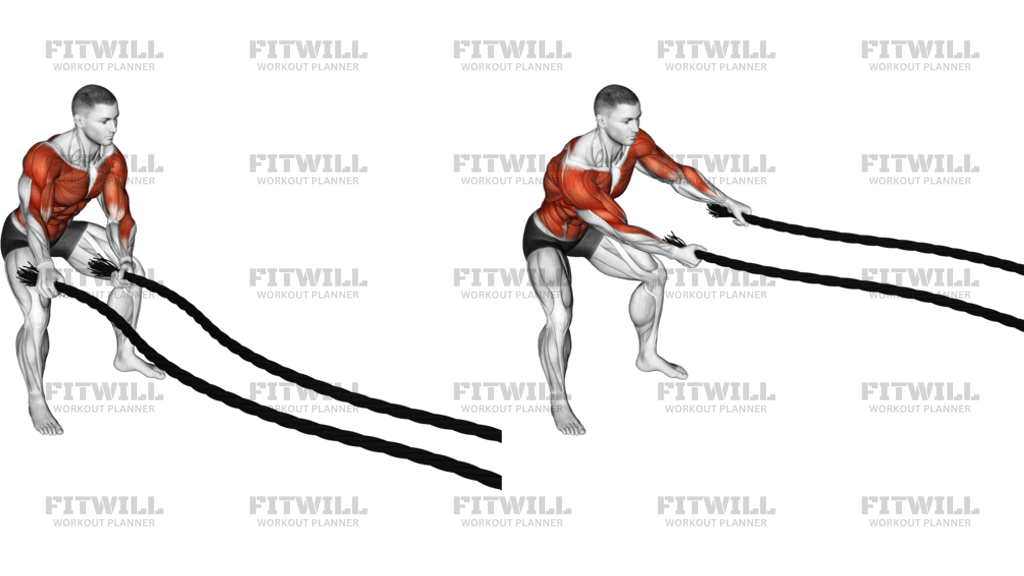
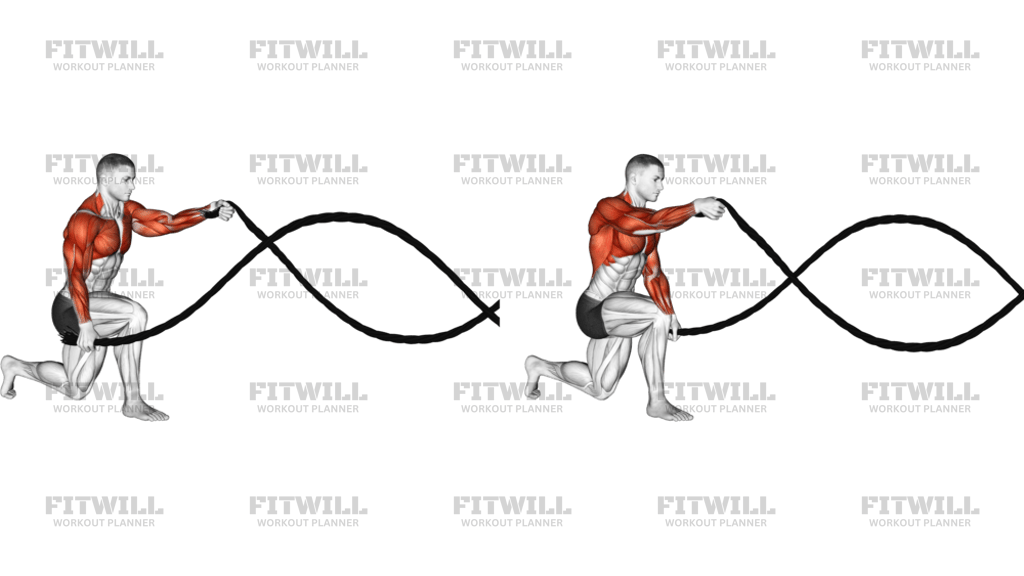
Battling Ropes Inside Circle
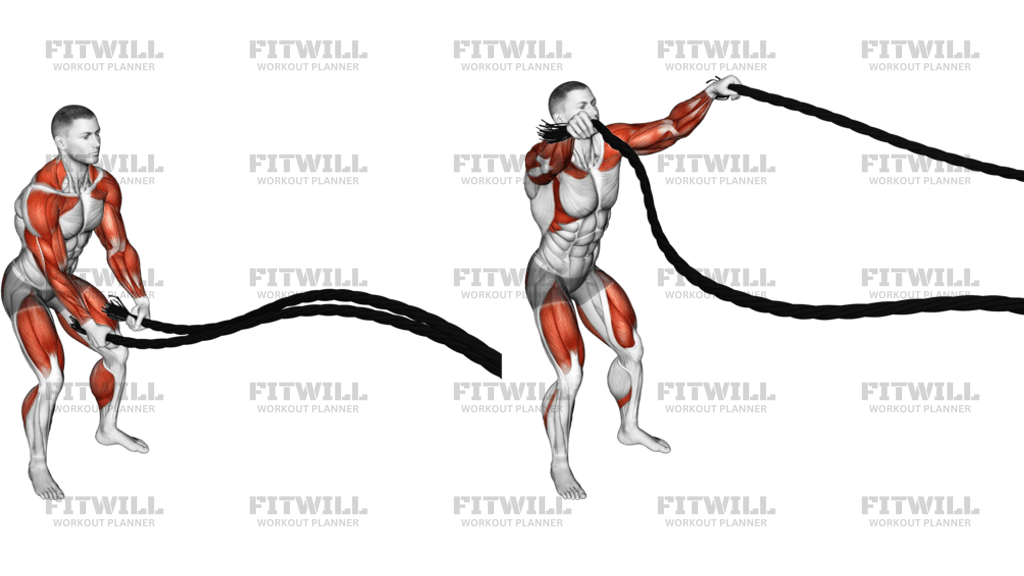
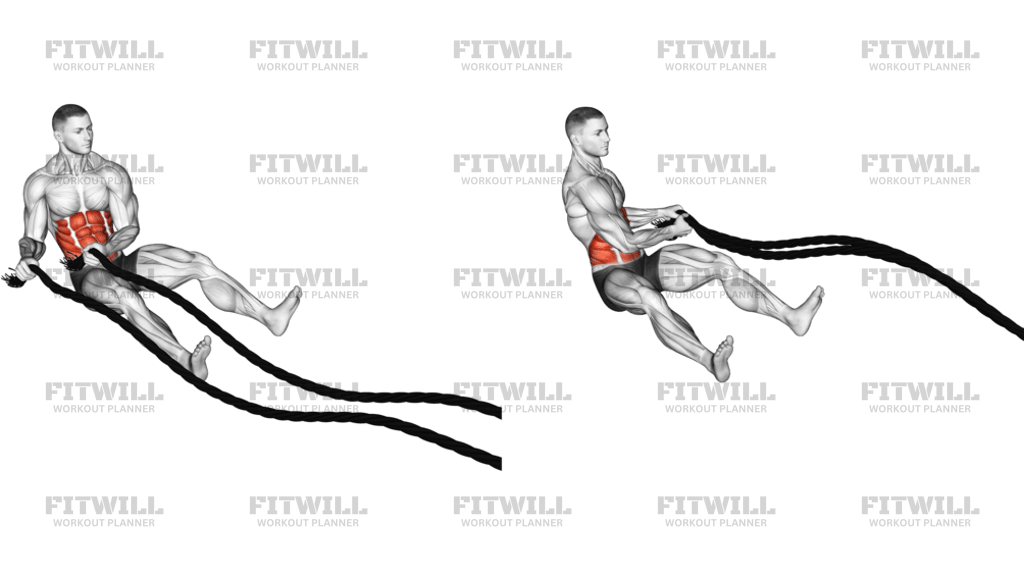
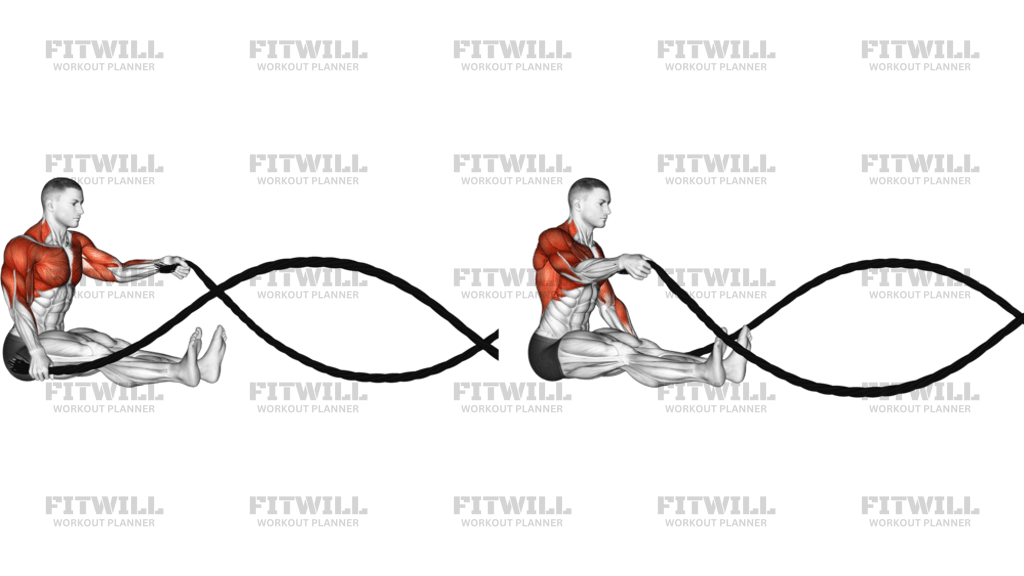
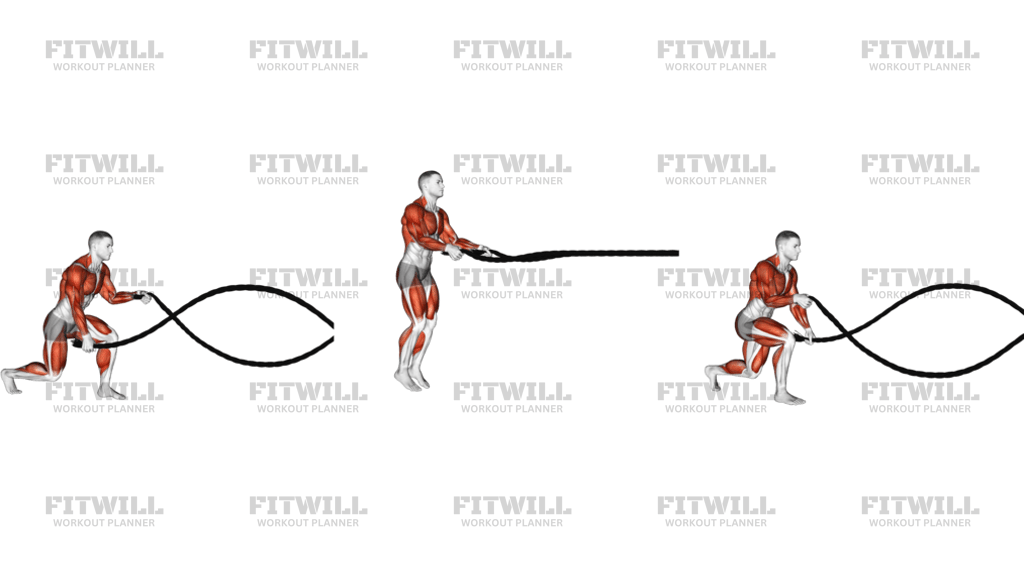
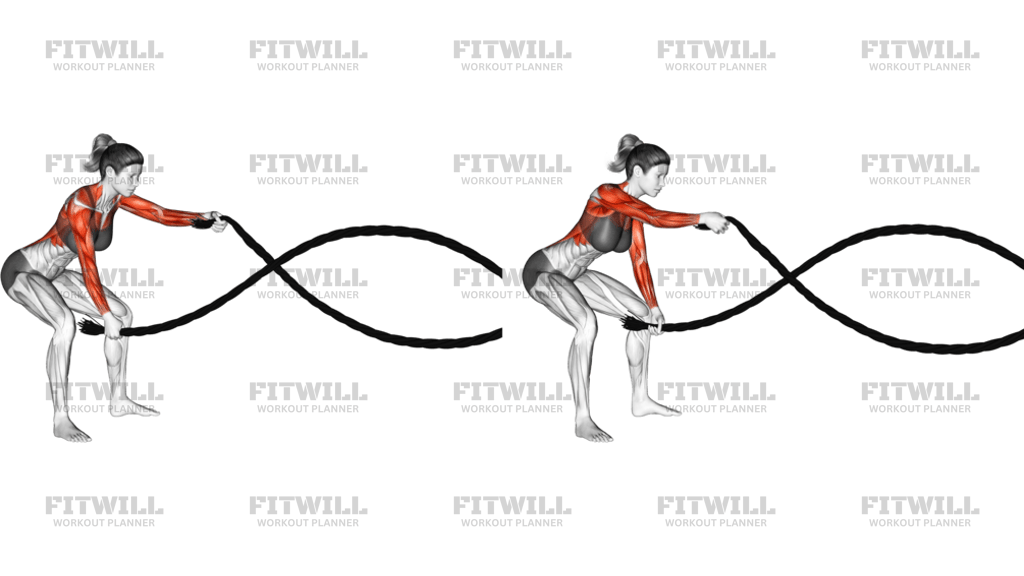
Battling Ropes Inside Circle is a standing rope drill that uses inward circular hand paths to create continuous tension through the shoulders, arms, upper back, and trunk. Instead of simple up-and-down waves, each hand traces a small circle so the rope keeps moving around the body in a controlled loop. That makes the exercise useful for conditioning, shoulder endurance, coordination, and any workout that needs upper-body work without heavy joint loading.
The setup matters because the circles get sloppy as soon as the stance is loose. Stand in a light athletic squat with your feet about shoulder-width apart, hold one rope end in each hand, and face the anchor so the rope stays under tension before the first rep. Keep your chest tall, ribs stacked over your pelvis, and your shoulders set down rather than shrugged up toward your ears.
Each rep should feel like a clean, repeated pattern rather than a frantic fight with the rope. The hands travel in smooth inward circles in front of the torso, with one arm rising as the other lowers and the rope path staying even on both sides. If the circles are too big, the trunk will twist and the rope will whip around your body instead of working the target muscles.
Battling Ropes Inside Circle is often programmed as a finisher, interval drill, or warm-up for the upper body because it creates a lot of work in a short time. It can also fit into conditioning circuits where you want to challenge grip, shoulder stamina, and core control at the same time. Lighter ropes and shorter intervals are better for beginners, while heavier rope drag and longer sets increase the stamina demand.
Safety and control come from staying organized through the torso and shoulders. Keep your wrists neutral, breathe steadily, and stop the set before your posture turns into a shrugging, leaning, or twisting pattern. If the rope path starts to wander, shorten the circle and slow the cadence until both hands move in a smooth, repeatable loop again.
[ Workout Log & Planner ]
Put your next workout in Fitwill
Keep your plan and training log ready when you are.


Instructions
- Stand facing the anchor with one rope end in each hand, feet about shoulder-width apart, knees softly bent, and the rope already under light tension.
- Set your weight evenly through both feet and hinge slightly at the hips so your chest stays lifted and your ribs stay stacked over your pelvis.
- Wrap your thumbs around the handles, keep your wrists straight, and let your elbows stay slightly bent instead of locked out.
- Start the first inward circle by bringing one hand up and across the front of your body while the other hand drops down and out.
- Continue the motion so both hands trace smooth, small circles in front of your torso, keeping the rope moving in a continuous loop.
- Keep the circles even on both sides and avoid letting the rope crash into the floor or swing wide around your hips.
- Breathe rhythmically through the set, exhaling as you drive the circles and inhaling as the hands pass back through the bottom of the loop.
- Finish the set by slowing the circles, lowering both hands, and stepping forward only after the rope is under control.
Tips & Tricks
- Smaller circles are usually better; once the hands travel too far apart, the rope starts to whip and the trunk twists to compensate.
- Keep your shoulders packed down and away from your ears so the upper traps do not take over the whole set.
- If your low back arches, shorten the stance and soften the knees a little more before restarting.
- Aim for even speed in both hands instead of forcing one arm to do all the work.
- The rope should stay under tension the whole time; if it goes slack at the bottom, step back or take a shorter setup.
- Do not let the wrists bend back as the circles speed up, especially when the rope gets heavy.
- Use shorter intervals if your forearms burn out before your shoulders and upper back do.
- If the rope slaps the floor loudly every rep, slow the cadence until the circle path is smooth again.
- Keep your head neutral and eyes forward so you do not chase the rope with your neck.
Frequently Asked Questions
What muscles does Battling Ropes Inside Circle work?
It mainly hits the shoulders, arms, upper back, grip, and core while the trunk keeps the circle pattern organized.
Can beginners do Battling Ropes Inside Circle?
Yes. Start with a lighter rope, smaller circles, and short intervals so you can learn the path without losing posture.
How far should my hands travel during the circle?
Keep the path compact in front of your torso. If the hands drift wide, the rope becomes harder to control and the trunk starts rotating.
What is the most common mistake with Battling Ropes Inside Circle?
The usual problem is making the circles too large and shrugging the shoulders. Shorter, smoother loops keep the work where it belongs.
Should I stay in a squat the whole time?
Stay in a light athletic squat, not a deep sit. The slight bend in the knees helps you keep tension on the rope without bouncing.
Is this more of a strength or conditioning exercise?
It can do both, but it is usually used as a conditioning drill or finisher because the continuous rope motion raises the workload quickly.
What should I do if the rope starts slapping the floor?
Slow the cadence and shorten the circles until the rope path is smooth again. Loud slaps usually mean the hands are moving faster than the setup can support.
How do I make Battling Ropes Inside Circle harder?
Use a thicker rope, extend the interval, or keep the same tempo with cleaner circles. You can also step a little farther back to keep more tension in the line.