Battling Ropes Split Jump
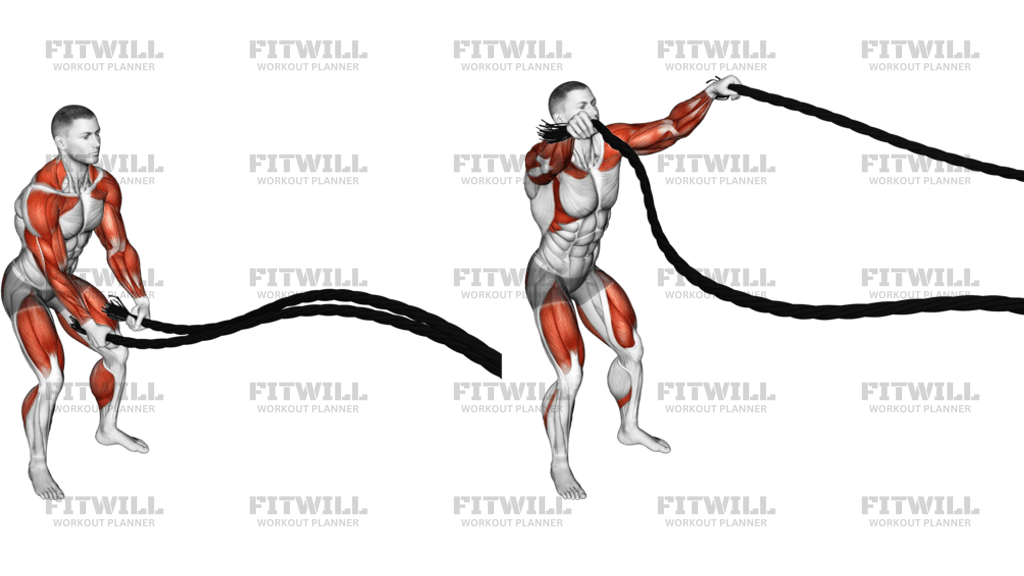
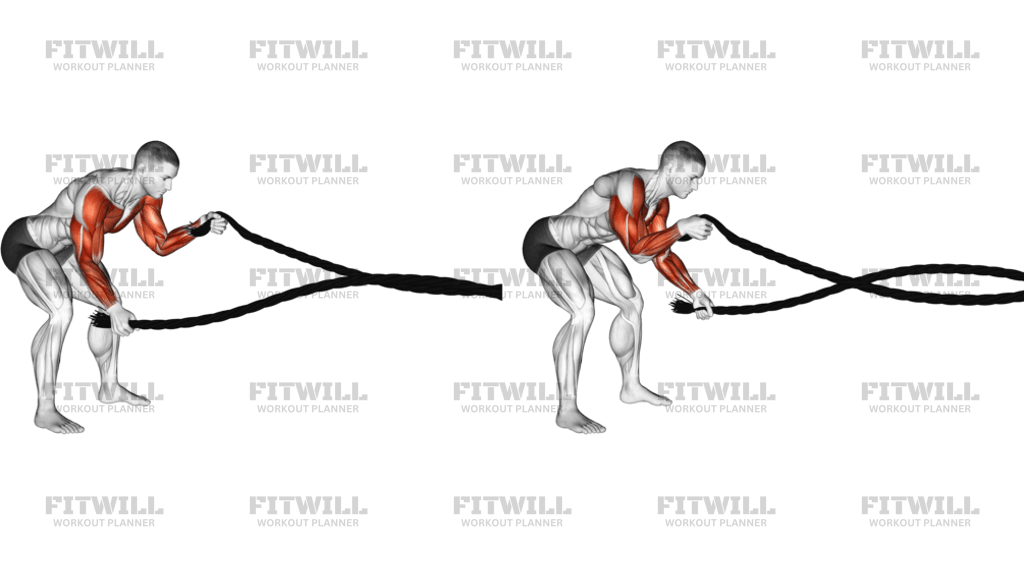
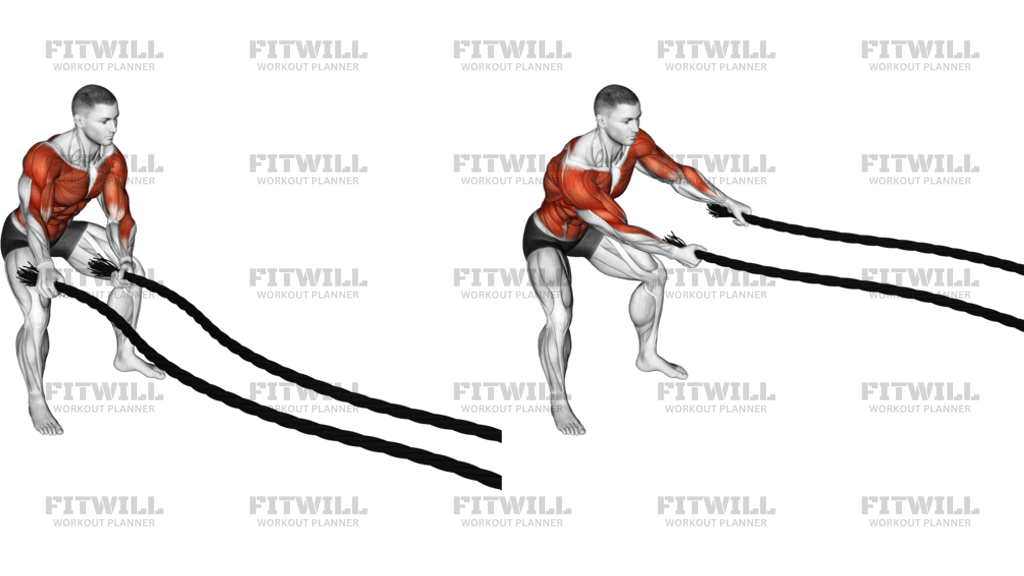
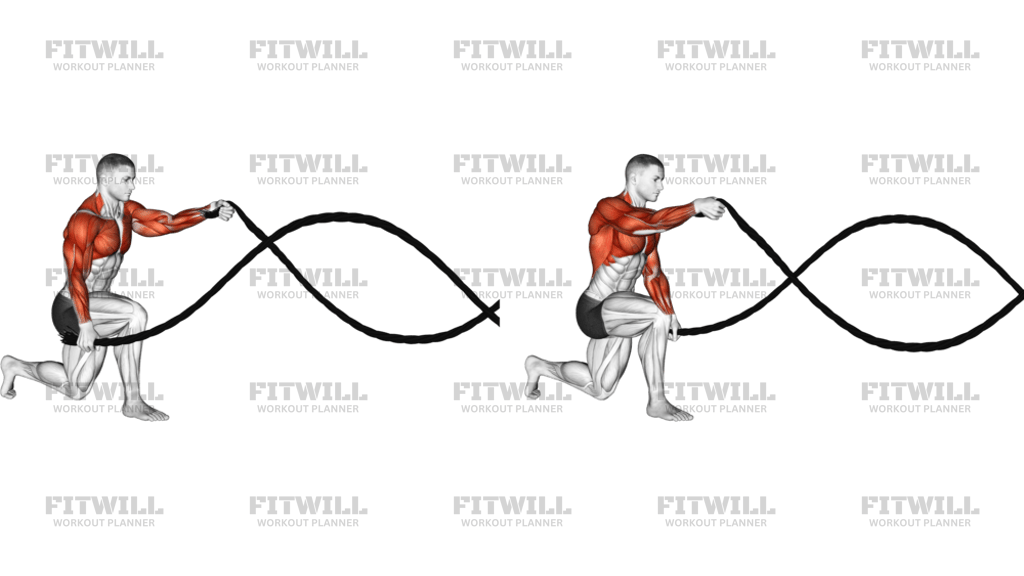
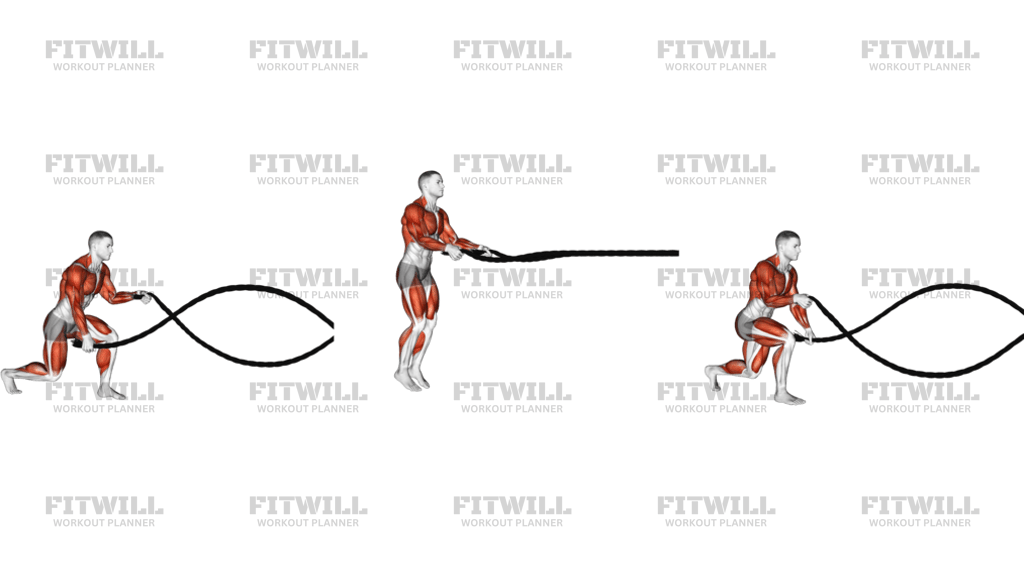
Battling Ropes Split Jump is a fast conditioning drill that pairs rope waves with a split-stance hop. The exercise asks you to keep the upper body active while the legs switch positions underneath you, so it builds coordination, repeatability, and power endurance more than pure strength. The rope anchor, stance width, and landing quality matter because the movement is only useful when you can keep the waves moving without losing balance or letting the torso get pulled forward.
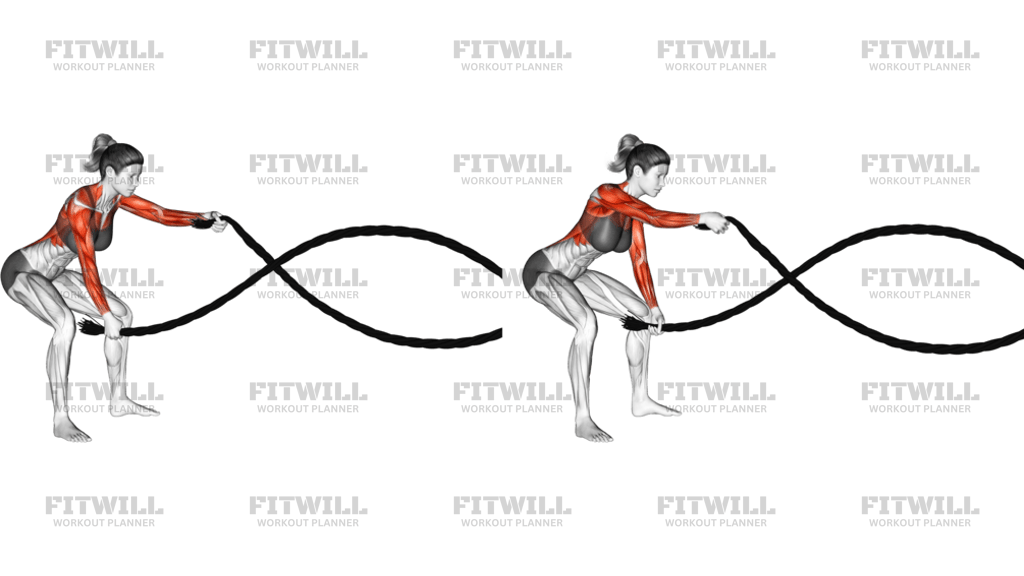
The setup starts a step or two away from the anchor with one foot forward and the other back, knees bent, ribs stacked over the pelvis, and both hands holding the rope ends or handles. The split stance gives you a stable base to load into, then transfer force into the jump. If the stance is too narrow, the landing gets wobbly; if it is too long, the jump turns into a reach and the front knee takes extra stress. A clean setup makes the rep feel springy instead of chaotic.
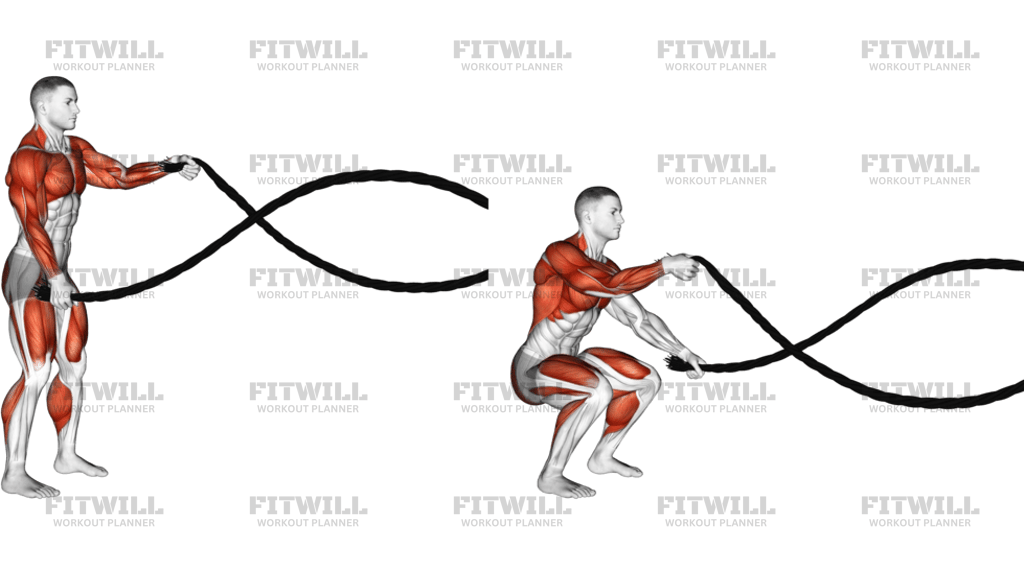
From there, dip slightly, drive through the floor, and switch feet in the air while snapping the ropes. Land softly in the opposite split stance with quiet feet, a tall chest, and bent knees that absorb the impact. Keep the rope rhythm controlled enough that each rep is crisp; the goal is to coordinate leg drive, shoulder endurance, and trunk stiffness at the same time, not to throw the biggest waves possible.
This movement fits athletic warm-ups, conditioning blocks, and finishers where you want a high-output drill without loading a barbell or machine. It challenges the calves, glutes, quads, shoulders, arms, upper back, and core, but the training effect comes from maintaining shape while fatigued. Short sets keep it explosive. Longer intervals turn it into a demanding metabolic test.
Use a lower jump and smaller rope waves if the landings get loud, the anchor yanks your shoulders, or the torso starts folding forward. If a full split jump is too much, practice the same rope rhythm from a split stance without leaving the floor, then progress to a light hop and finally a true switch jump. The exercise should look quick, balanced, and repeatable from the first rep to the last.
[ Workout Log & Planner ]
Put your next workout in Fitwill
Keep your plan and training log ready when you are.


Instructions
- Stand a step or two from the rope anchor and hold one rope end in each hand with your elbows slightly bent.
- Step into a split stance with one foot forward and the other back, then bend both knees and stack your ribs over your pelvis.
- Set your shoulders down and keep your chest tall before the first rep.
- Dip a few inches to load the legs without collapsing into the front knee.
- Drive through the floor and jump to switch your feet in the air while you keep the ropes moving.
- Land softly in the opposite split stance with quiet feet and both knees bent to absorb the impact.
- Let the ropes snap in a steady rhythm through each rep instead of letting them slack.
- Exhale on the jump, inhale as you settle into the next split stance, and keep alternating sides for the planned set.
Tips & Tricks
- Make the split stance long enough to feel stable, but not so long that the front knee reaches ahead of the toes on every landing.
- Keep the rope waves small and fast; oversized waves usually make the jump late and pull the shoulders up.
- Land like you are trying not to wake anyone up, because noisy landings usually mean the hips are not absorbing the force.
- Keep the torso stacked instead of folding forward toward the ropes, especially when the set gets tiring.
- If the anchor yanks you forward, shorten the rope rhythm before you chase more speed.
- Use the balls of the feet to load and switch, but let the heels settle enough on landing to stabilize the stance.
- Start with short intervals so the jump stays explosive; this drill loses its value once the footwork turns sloppy.
- If coordination breaks down, practice the same split stance with rope waves on the floor before adding the hop.
Frequently Asked Questions
What does Battling Ropes Split Jump train most?
It is mainly a conditioning and coordination drill for the legs, shoulders, arms, upper back, and core.
Can beginners perform this exercise?
Yes, but beginners should start with a split stance and rope waves on the floor before adding the jumping switch.
How high should the jump be?
Just high enough to switch feet cleanly. The goal is a quick, controlled hop, not a maximal jump.
What is the biggest form mistake?
Letting the ropes and the jump fight each other. If the waves get messy or the torso leans forward, the rep is too fast for your current control.
Where should I feel this exercise?
You should feel the legs driving the switch, the shoulders and arms controlling the ropes, and the trunk stabilizing the landing.
Do the ropes need to keep moving every rep?
For conditioning, yes, keep a steady wave rhythm. If you are learning the drill, it is fine to pause briefly between reps.
How do I scale it if the landing feels unstable?
Use a smaller hop, shorten the stance slightly, and reduce the rope wave size until you can land quietly and stay stacked.
What is a good use for this exercise in a workout?
It works well in warm-ups, conditioning blocks, or finishers where you want a high-output drill without heavy loading.