Battling Ropes High Waves
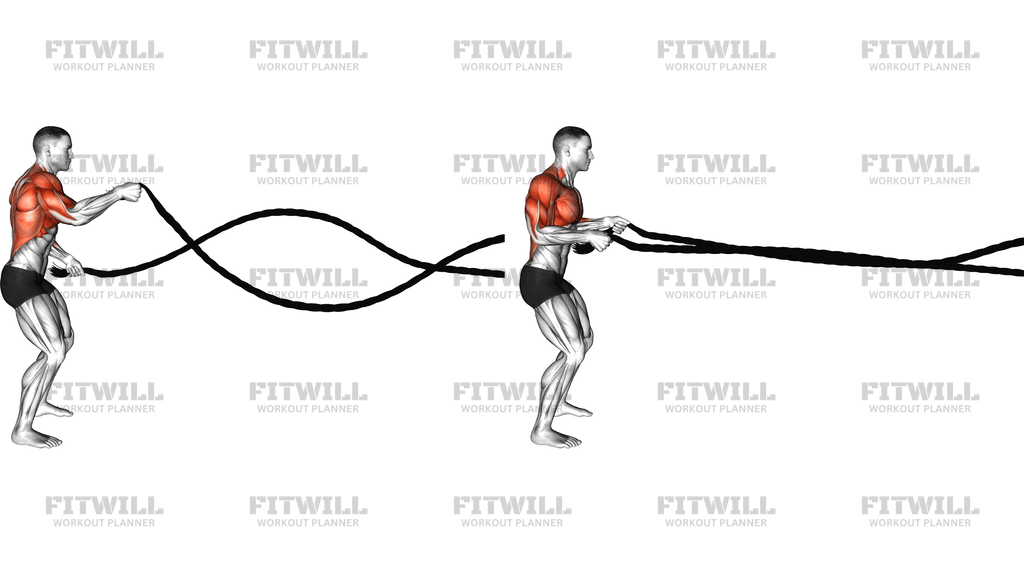
Battling Ropes High Waves is a standing rope-conditioning exercise that uses fast alternating arm drives to build power, shoulder endurance, upper-back stability, and trunk control. The goal is not just to make the rope move, but to create clear, rhythmic waves while the torso stays organized. Because the rope is anchored in front of you, every rep demands coordination between the arms that are working and the core, hips, and legs that keep the body from getting pulled out of position.
This variation places a strong demand on the shoulders, upper back, arms, and grip, with the core acting as the main stabilizer. The rope pattern should look sharp and repeatable from rep to rep: one hand rises as the other drives down, then they switch without losing tension. That alternating rhythm is what makes the exercise useful for conditioning, sport-specific power, and total-body work capacity.
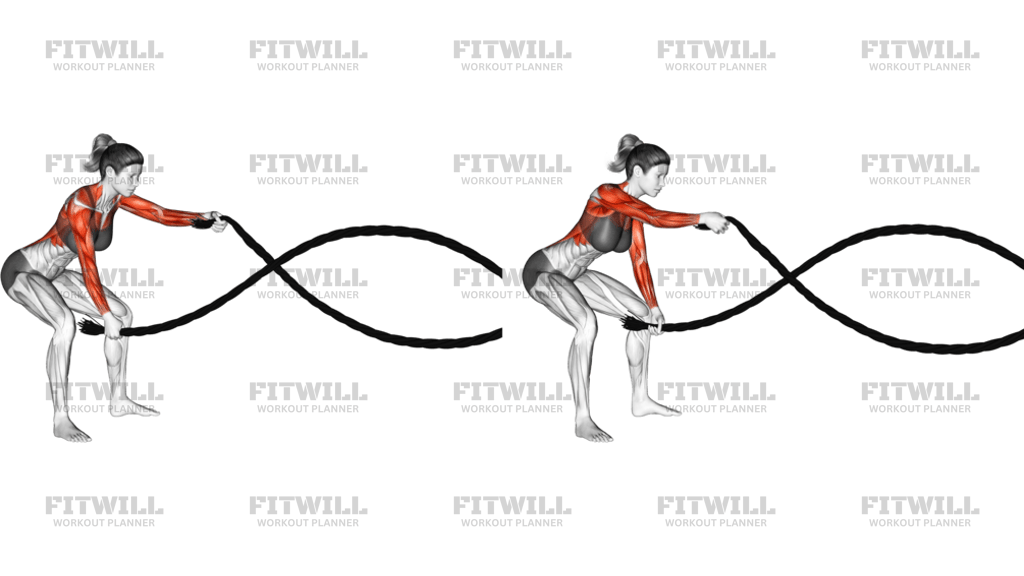
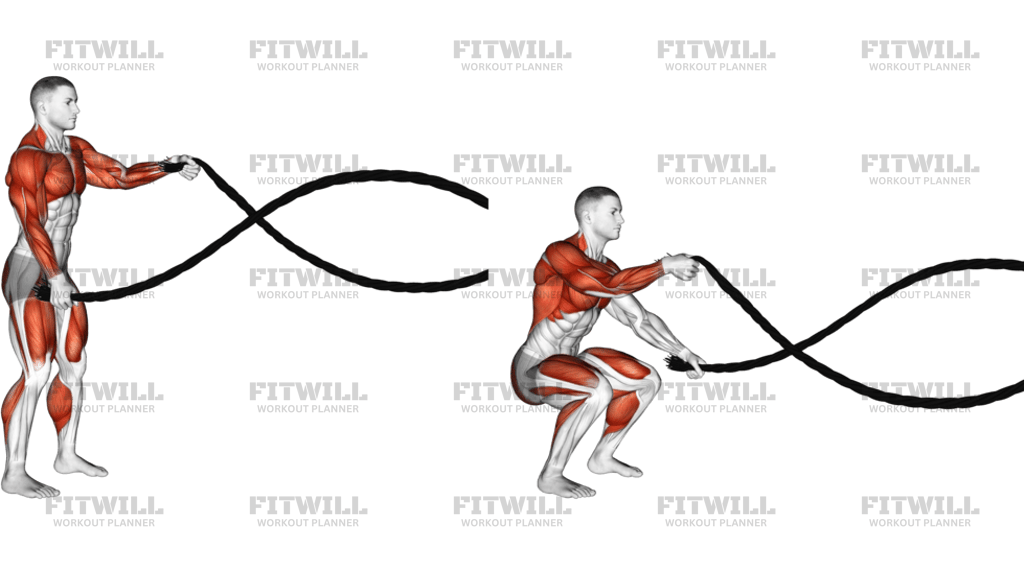
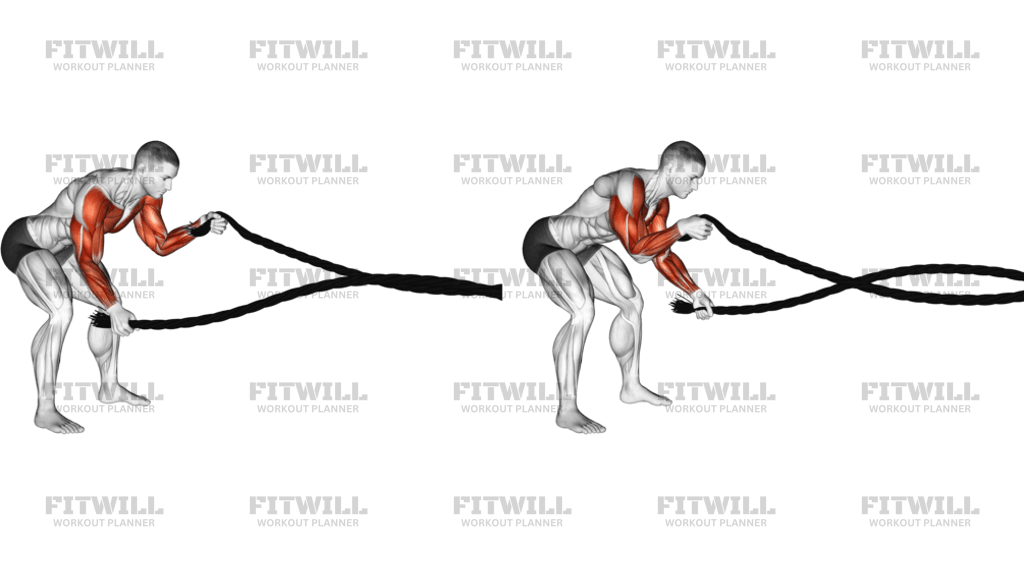
Setup matters because the rope will expose any weakness in stance or posture immediately. Stand far enough from the anchor that the ropes have tension, then settle into a slight athletic hinge or squat with soft knees, a braced midsection, and a tall chest. Keep your shoulders down, wrists neutral, and hands slightly in front of the body so you can whip the rope without shrugging or leaning backward to fake the motion.
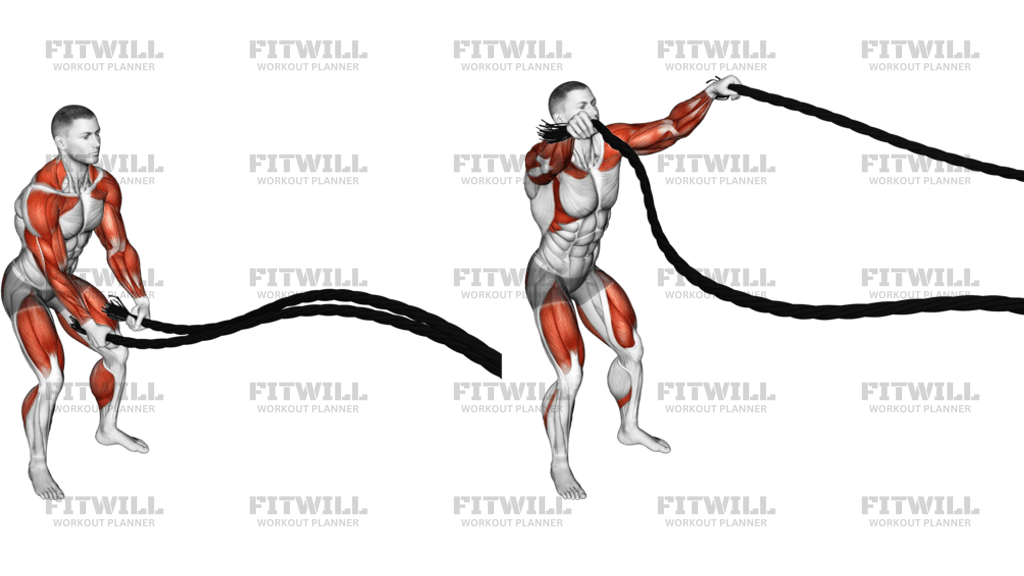
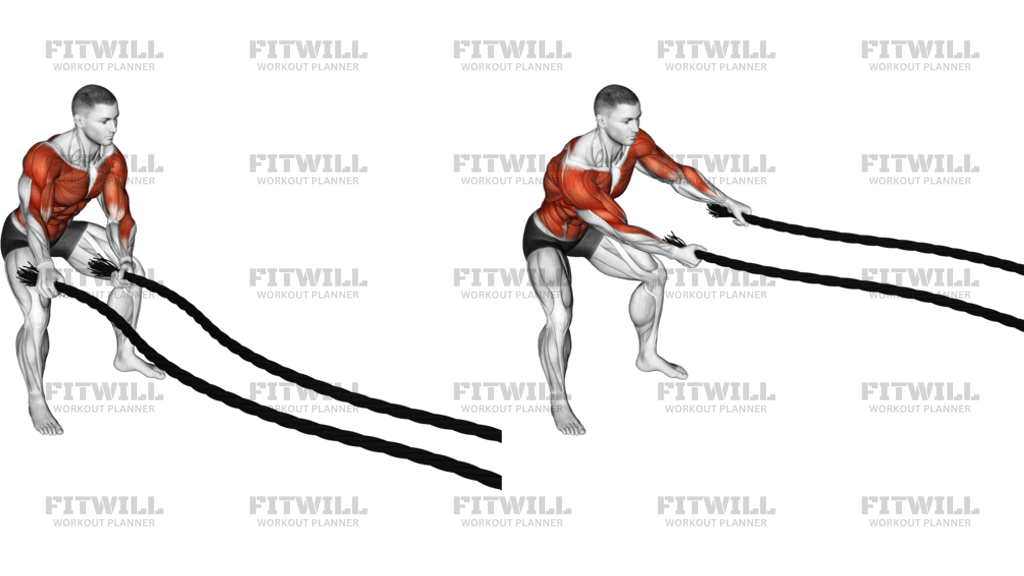
Each repetition should start from a stable base and finish with the rope traveling in a clean wave pattern, not a flailing slosh. Drive one hand up quickly while the other hand snaps down, then reverse the action in a smooth alternating cadence. Exhale as you drive the rope and keep the return controlled enough that the next wave starts from position rather than momentum. If the waves get smaller, your posture changes, or your low back starts doing the work, shorten the set or reduce the pace.
Use Battling Ropes High Waves when you want a conditioning drill that still rewards good mechanics. It fits well in warm-ups, intervals, athletic circuits, or finishers where you need heart rate, shoulder endurance, and trunk stiffness at the same time. Keep the movement crisp, keep the stance honest, and treat the rope as a power output tool rather than a random cardio exercise.
[ Workout Log & Planner ]
Put your next workout in Fitwill
Keep your plan and training log ready when you are.


Instructions
- Face the rope anchor and hold one rope end in each hand with your arms slightly in front of your thighs.
- Step back until the rope has tension, then set your feet about hip- to shoulder-width apart.
- Drop into a slight athletic hinge or squat with soft knees, a tall chest, and your ribs stacked over your pelvis.
- Brace your midsection and keep your shoulders down away from your ears before the first wave.
- Drive one hand up quickly while the other hand snaps down to create a clean alternating wave.
- Keep the waves moving away from the anchor with a fast, rhythmic arm action instead of shrugging the shoulders.
- Let the rope return under control just enough to keep the next wave sharp and continuous.
- Breathe out through the work and keep your torso from rocking forward, backward, or side to side.
- Stop the set when the wave height drops, your stance collapses, or your posture starts to change.
Tips & Tricks
- Stand far enough from the anchor that the ropes stay under tension even before you start the first wave.
- Keep your hands slightly in front of your body; reaching too far forward makes the shoulders take over.
- Use a quick up-and-down arm snap rather than large circular swings if you want clean high waves.
- Do not let the shoulders creep toward the ears; the wave should come from the arms, not a shrug.
- Keep your knees soft and your hips set so the low back does not turn the set into a hinge endurance drill.
- If the rope slaps flat instead of forming waves, shorten the range and sharpen the arm speed.
- Choose a pace that lets you keep the alternating rhythm for the full interval instead of starting too fast.
- Grip the rope ends firmly but avoid crushing them, because over-gripping can make the forearms fail before the shoulders do.
Frequently Asked Questions
What muscles work hardest in Battling Ropes High Waves?
The shoulders, arms, upper back, and grip do most of the work, while the core keeps the torso from swaying.
How is a high wave different from other rope waves?
A high wave uses a sharper alternating arm drive and a more obvious vertical rope crest, rather than a relaxed, low-amplitude wave.
Should I squat deeply for this exercise?
No. A slight athletic hinge or mini-squat is usually enough; going too low makes the set more about leg endurance than rope control.
Why do the ropes need to stay under tension before I start?
Pre-tension keeps the waves crisp from the first rep and prevents you from yanking the rope out of a slack setup.
Can beginners do Battling Ropes High Waves?
Yes, if they start with short intervals, a light rope, and a stance they can hold without leaning or shrugging.
What is the most common form mistake?
People often shrug, lean back, or swing the torso to make the rope look bigger instead of keeping the waves driven by the arms.
Where should I feel the exercise if I'm doing it correctly?
You should feel a strong burn in the shoulders, forearms, and upper back, with the core working to keep the body steady.
How can I make the set harder without changing the rope?
Increase wave speed, extend the interval, or hold a cleaner stance with less torso movement so the same rope demand becomes more challenging.