Dumbbell Full Swing
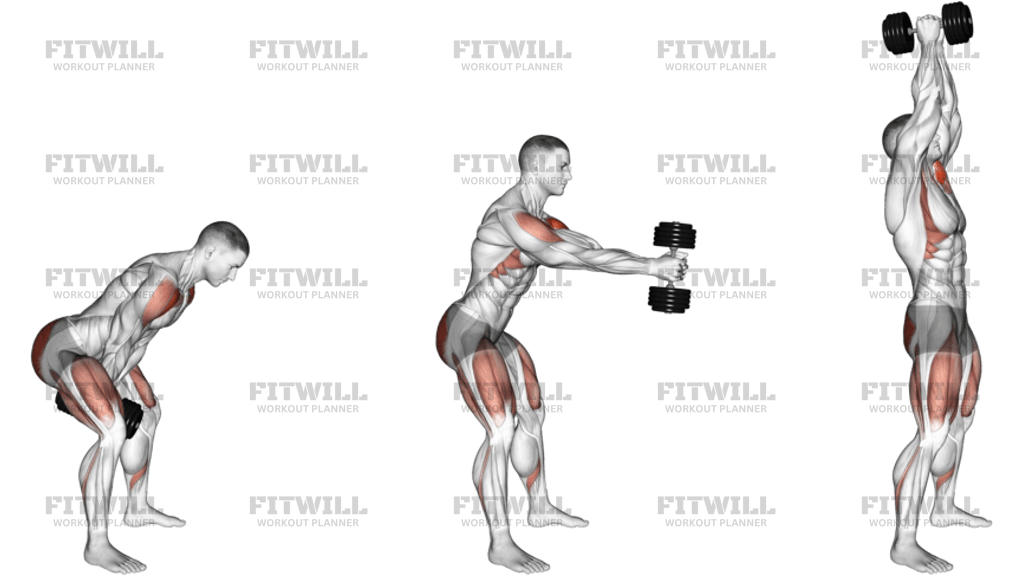
Dumbbell Full Swing is a hinge-driven power exercise that uses one dumbbell to train the glutes, hamstrings, core, shoulders, and grip through a long, controlled swing to an overhead finish. It sits somewhere between a hip hinge drill and a dynamic full-body power movement, so the quality of the rep depends on timing, posture, and how well you transfer force from the hips into the bell.
The main training target is the posterior chain, especially the glutes and hamstrings, with the core working hard to keep the ribs stacked over the pelvis as the dumbbell travels. The shoulders and upper back help guide the implement at the top, but they should not be doing the work that the hips are meant to produce. That is why the exercise is useful for building explosive hip extension without losing control of the trunk.
The setup matters because the swing starts from a loaded hinge, not from a squat or a front raise. A good rep begins with the feet rooted, knees softly bent, spine neutral, and the dumbbell close to the body as it travels back between the thighs. From there, the hips snap forward to send the weight upward in a smooth arc. If the bell drifts away from you or the back arches, the exercise stops being a clean power drill and turns into a compensation pattern.
At the top, the dumbbell should finish overhead with the arms straight, the ribs down, and the glutes tight enough to keep the body tall without leaning back. That overhead finish is the part that makes this a full swing rather than a shorter hip snap, so control matters more than load. If your shoulders cannot stay stacked or your lower back wants to extend to reach the finish, shorten the range until you can own every rep.
Use Dumbbell Full Swing when you want a dynamic conditioning or power movement that still rewards disciplined technique. It works well in warmups, accessory circuits, athletic preparation, and posterior-chain focused sessions. Keep the load conservative, especially at first, because the overhead path magnifies mistakes quickly. Clean reps should feel powerful, crisp, and repeatable, not wild or rushed.
[ Workout Log & Planner ]
Put your next workout in Fitwill
Keep your plan and training log ready when you are.


Instructions
- Stand with your feet about shoulder-width apart and hold one dumbbell with both hands in front of your thighs.
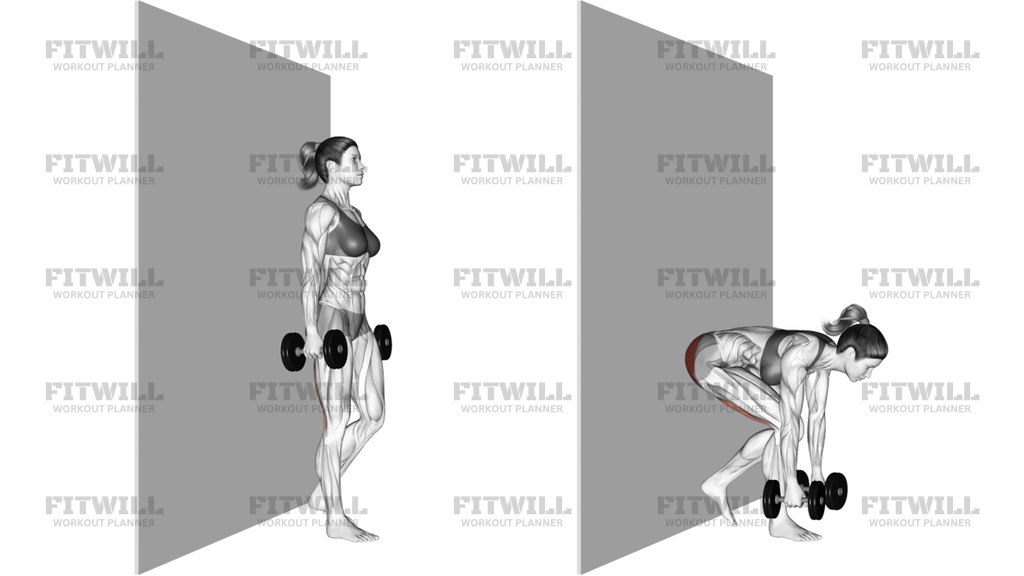
- Hinge your hips back, soften your knees, and let the dumbbell travel between your legs while keeping your chest long and spine neutral.
- Keep the weight close to your inner thighs and feel the hamstrings load before you start the next drive.
- Snap your hips forward to swing the dumbbell out and up, letting momentum come from hip extension rather than from your arms.
- Guide the dumbbell through the arc until it reaches an overhead finish with your elbows straight and shoulders stacked.
- Squeeze your glutes at the top, keep your ribs down, and avoid leaning backward to fake the lockout.
- Let the dumbbell fall back under control as you hinge again, keeping it close to your body on the way down.
- Exhale on the upward drive, inhale on the backswing, and repeat for the planned number of reps.
Tips & Tricks
- Choose a light dumbbell first; the overhead portion gets demanding fast and exposes sloppy timing.
- Keep the dumbbell path tight to your body so you do not turn the swing into a forward reach.
- The hips should create the force, while the arms only steer the bell into position.
- If the dumbbell pulls your shoulders forward at the bottom, you are dropping too loosely into the hinge.
- Finish tall without arching your lower back or thrusting your ribs forward to chase the overhead position.
- Think of the top as a stacked plank with the weight overhead, not a backward lean.
- Lower the range to eye level if your shoulders cannot stay stable overhead.
- Stop the set when the swing turns into a squat, a curl, or a press instead of a hinge.
Frequently Asked Questions
What muscles does Dumbbell Full Swing train most?
The glutes and hamstrings do the main work, with the core, shoulders, and grip helping control the overhead finish.
Is this the same as a dumbbell front raise?
No. The power should come from the hip hinge and hip snap, not from lifting the dumbbell with your shoulders.
Should I squat down to start each rep?
No. Keep the knees soft and load the hips back like a hinge so the hamstrings can store tension before the drive.
How high should the dumbbell go?
In this version it finishes overhead, but only if you can keep your ribs down and your shoulders stacked. If not, shorten the arc.
Can beginners do Dumbbell Full Swing?
Yes, but only with a light dumbbell and a short, controlled set. The overhead path makes poor form obvious quickly.
Where should I feel the movement?
You should feel the load in the glutes and hamstrings during the hinge and in the trunk and shoulders as you stabilize overhead.
What is the biggest form mistake?
Letting the dumbbell drift away from the body or leaning back at the top to force the overhead finish.
How do I make it more challenging?
Add load only after the swing stays crisp, the hinge stays clean, and the overhead finish remains stacked and controlled.