Standing W-Raise
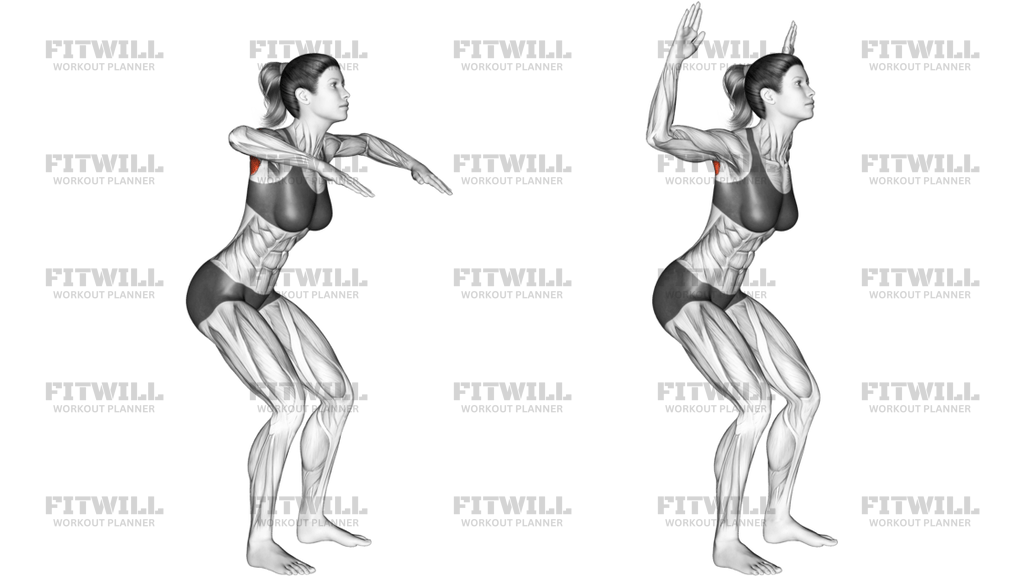
Standing W-Raise is a bodyweight shoulder-control drill that moves from a forward reach into a bent-elbow "W" shape. It is commonly used to wake up the upper back, rear shoulders, and scapular stabilizers before pressing, pulling, or overhead work. The goal is not to create a big rep count, but to move cleanly enough that the shoulder blades, ribs, and neck stay organized through the whole range.
In the image, the torso stays slightly hinged with soft knees while the arms travel from shoulder-height in front of the body to a goalpost-like W position beside the shoulders. That pattern asks the upper back to retract and depress the shoulder blades while the arms externally rotate. Because it is a standing version, the trunk has to stay braced so the motion comes from the shoulders and upper back rather than from arching the low back or swinging the torso.
This exercise is useful when a lifter needs better posture, better shoulder mechanics, or a lower-intensity activation drill before heavier training. It can also fit into rehab-style sessions, mobility circuits, and warmups for people who spend a lot of time rounded forward. The movement should feel controlled and precise, with even pressure through both feet and no shrugging into the ears as the elbows rise.
The setup matters because the exercise is easy to cheat with momentum. A small hip hinge, neutral neck, and steady breath make the shoulders do the work instead of the spine. If the chest flares hard or the ribs pop forward, the range is too aggressive. If the elbows drift too far behind the body, the motion stops being a clean W-raise and turns into a loose shoulder swing.
Use this exercise to train quality, not fatigue. Each rep should look nearly identical, with a smooth return to the starting reach and a brief pause when the W position is strongest. When performed well, Standing W-Raise teaches the body how to open the chest, retract the scapulae, and rotate the arms without losing posture. That makes it a practical primer for pressing days, posture-focused accessories, or any session where clean shoulder positioning matters.
[ Workout Log & Planner ]
Put your next workout in Fitwill
Keep your plan and training log ready when you are.


Instructions
- Stand tall with your feet about hip-width apart, soften your knees, and hinge slightly at the hips so your torso leans forward without rounding your lower back.
- Reach both arms straight in front of you at shoulder height with your palms facing down or slightly inward, keeping your neck long and your ribs stacked over your pelvis.
- Brace your midsection and keep your shoulder blades gently set, not shrugged, before you start the lift.
- Drive your elbows out and back while bending them to about 90 degrees, pulling the arms into a W shape beside your shoulders.
- Rotate the upper arms as you lift so the forearms stay tall and the chest opens without over-arching the low back.
- Pause briefly at the top and squeeze the shoulder blades together and down, keeping the chin tucked and the neck relaxed.
- Lower the arms slowly back to the forward reach under control, keeping the torso steady and the elbows from dropping suddenly.
- Reset your posture before the next rep and repeat for smooth, even repetitions.
Tips & Tricks
- Keep the hinge small; if your torso keeps drifting lower, your back is doing the work instead of your shoulders.
- Think about pulling the shoulder blades back and down, not just flaring the elbows outward.
- Stop the rep before the ribs flare or the low back arches to chase a bigger W position.
- Move both arms together and at the same speed so one shoulder does not dominate the rep.
- Hold the top position long enough to feel the rear shoulders and mid-back, not just a quick bounce.
- Keep the hands light and the fingers relaxed so the forearms do not take over the movement.
- Use a slower return than the lift if you want more control and cleaner scapular motion.
- If you feel the upper traps taking over, reduce the range and keep the neck tall instead of shrugging.
- Treat the exercise like a posture drill, not a strength test; crisp reps matter more than speed.
Frequently Asked Questions
What muscles does Standing W-Raise work?
It mainly trains the rear shoulders, mid-back, and the muscles that control scapular retraction and external rotation.
Is Standing W-Raise beginner friendly?
Yes. It is usually a good beginner drill because it uses body weight and a small, controlled range of motion.
How should my torso be positioned during the raise?
Keep a slight hip hinge with soft knees and a neutral spine, rather than standing fully upright and arching the low back.
Where should I feel the exercise most?
You should feel it in the rear delts, upper back, and the muscles between and below the shoulder blades, not in the neck.
Why is it called a W-raise?
At the top, the bent arms form a W shape with the elbows out and the hands higher than the shoulders.
What is the most common mistake?
Shrugging the shoulders or arching the ribs up to force a bigger range are the two biggest form leaks.
Can I add weight to Standing W-Raise?
Usually it works best as a bodyweight activation drill, but very light dumbbells or bands can be used if the shoulders stay controlled.
When should I use this exercise?
It fits well in a warmup, posture circuit, rehab-style session, or accessory block before pressing and pulling work.