Step-Up On Chair
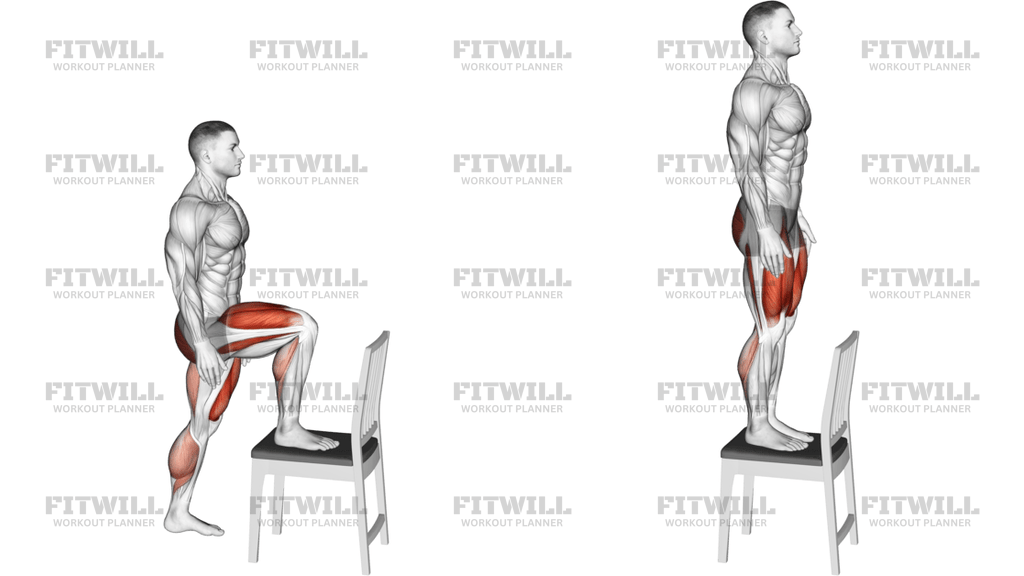
Step-Up On Chair is a bodyweight single-leg lower-body exercise that builds glute strength, hip stability, and usable leg drive. The working foot steps onto a sturdy chair, bench, or box, then the body is lifted until both hips and knees are fully extended. Because the task is to control your own body over a raised surface, this movement is as much about balance and alignment as it is about force production.
The main training emphasis is the glutes, with the front-leg quadriceps, hamstrings, calves, and trunk helping to stabilize the pelvis and keep the torso upright. In anatomy terms, the primary work centers on the Gluteus maximus, supported by Biceps femoris, Rectus abdominis, and Erector spinae. That makes the exercise especially useful when you want hip extension strength without the equipment demands of a loaded barbell movement.
Setup matters because the chair must be stable and the working leg has to take the load cleanly. Place the whole foot on the seat, keep the chest tall, and let the standing leg help only as much as needed to start the first rep. As you rise, drive through the midfoot and heel of the leg on the chair, keep the knee tracking in line with the toes, and avoid letting the pelvis twist toward the free leg. The top position should look tall and stacked, not leaned back or pushed forward.
On the way down, control the lowering phase instead of dropping off the chair. Reach the free foot to the floor softly, then reset the stance before the next rep. That controlled eccentric is what helps turn the step-up into a true strength and coordination drill rather than a quick hop onto a seat. If the chair is too high, the pelvis will tilt, the knee will collapse inward, and the lower back will start compensating.
This exercise is a good choice for warm-ups, accessory lower-body work, unilateral strength training, and rehab-style conditioning when a simple step height is enough. It can be made easier by using a lower step and a slower tempo, or harder by adding a dumbbell, slowing the descent, or pausing at the top. Keep the motion smooth, the surface secure, and the range pain-free so each rep trains the glutes and legs without turning into a balance scramble.
[ Workout Log & Planner ]
Put your next workout in Fitwill
Keep your plan and training log ready when you are.


Instructions
- Place a stable chair, box, or bench in front of you and stand close enough that your working foot can land fully on the seat.
- Set the entire working foot on the chair with your heel down, torso tall, and the other foot planted lightly on the floor.
- Brace your midsection, keep your chest lifted, and look straight ahead before you start the rep.
- Drive through the heel and midfoot of the foot on the chair to lift your body up until the working hip and knee are straight.
- Keep the knee of the working leg tracking over the toes instead of collapsing inward as you rise.
- Bring the free leg up under control and finish in a tall standing position on the chair without leaning backward.
- Lower yourself slowly by bending the working hip and knee and returning the free foot to the floor with control.
- Reset your stance after each rep, then repeat for the planned number of repetitions on the same leg before switching sides.
Tips & Tricks
- Use a chair or step that lets you stand up without bouncing or pushing off hard from the floor leg.
- Keep the whole working foot on the seat; hanging the heel off the edge makes balance and force transfer worse.
- Think about driving the floor away with the leg on the chair instead of pulling yourself up with the trailing leg.
- If your pelvis turns toward the free leg at the top, lower the step height or slow the tempo until the rep stays square.
- A slight forward torso angle is fine, but avoid folding at the waist or rounding the lower back to reach the top.
- Control the descent for at least as long as the rise so the glutes and hamstrings stay loaded through the full rep.
- Choose a height that keeps the knee in line with the toes; if the knee caves in, the chair is probably too high for now.
- Light fingertip support on a wall or rack is acceptable for beginners if it helps you keep the working leg honest.
- Stop the set if the chair shifts, squeaks, or rocks, because a moving surface changes the exercise from strength work to a fall risk.
Frequently Asked Questions
What muscles do Step-Up On Chair work most?
The main driver is the glute of the leg on the chair, with the quadriceps, hamstrings, calves, and core helping you stand tall and stay balanced.
Why does the chair height matter so much?
If the chair is too high, you have to yank yourself up with the back leg or twist the pelvis to finish the rep. A lower, stable step keeps the glutes doing the work.
Should my whole foot stay on the chair seat?
Yes. Keeping the full foot on the seat gives you a steadier base and makes it easier to drive through the heel and midfoot without slipping.
Can I use my back leg to push off?
A little help during setup is fine for beginners, but the working leg should do most of the lift. If the back leg is launching you up, the chair is probably too high.
What is the most common mistake with this exercise?
Rushing onto the chair and collapsing the knee inward are the biggest issues. Both usually mean the step is too high or the rep is moving too fast.
Is Step-Up On Chair good for beginners?
Yes, if the chair is low and stable. Beginners should keep the tempo slow and use the wall or a rack for balance if needed.
Should I feel this in my glutes or quads more?
You should feel both, but the working side glute should help finish the hip extension while the quad helps you stand up from the bent-knee position.
How can I make this exercise harder?
Increase the chair height only if your form stays clean, or add dumbbells, a slower descent, or a pause at the top to increase the demand.