Dumbbell Side Lunge Version 3
Dumbbell Side Lunge Version 3 is a goblet-style lateral lunge that trains the hips, glutes, adductors, and trunk while asking one leg to accept most of the load. The dumbbell is held close to the chest, which helps keep the torso more upright than a free-hanging weight and makes it easier to sit the hips back into the side lunge with control. This version is especially useful when you want a simple, repeatable lower-body pattern that still challenges balance, hip mobility, and frontal-plane strength.
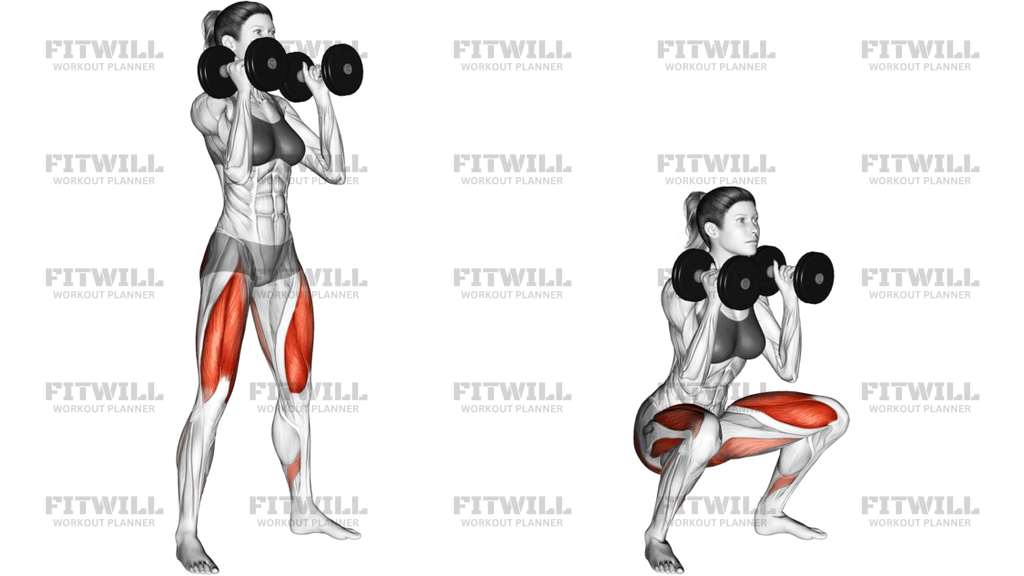
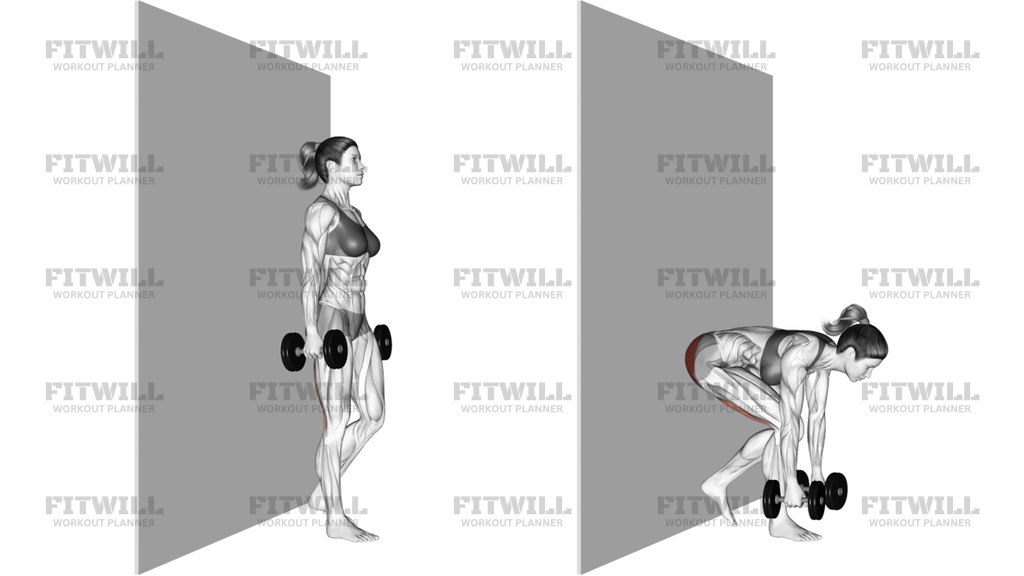
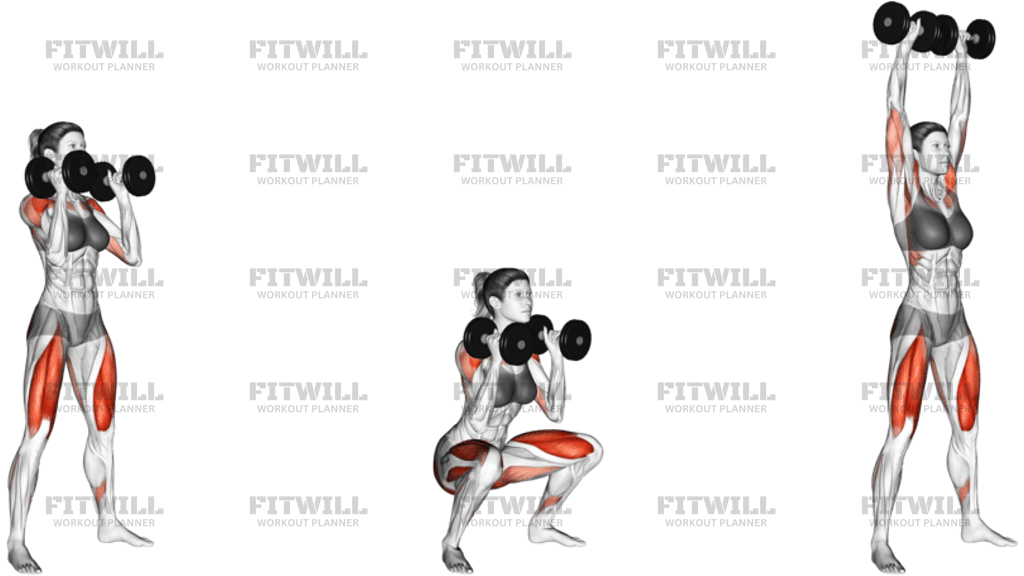
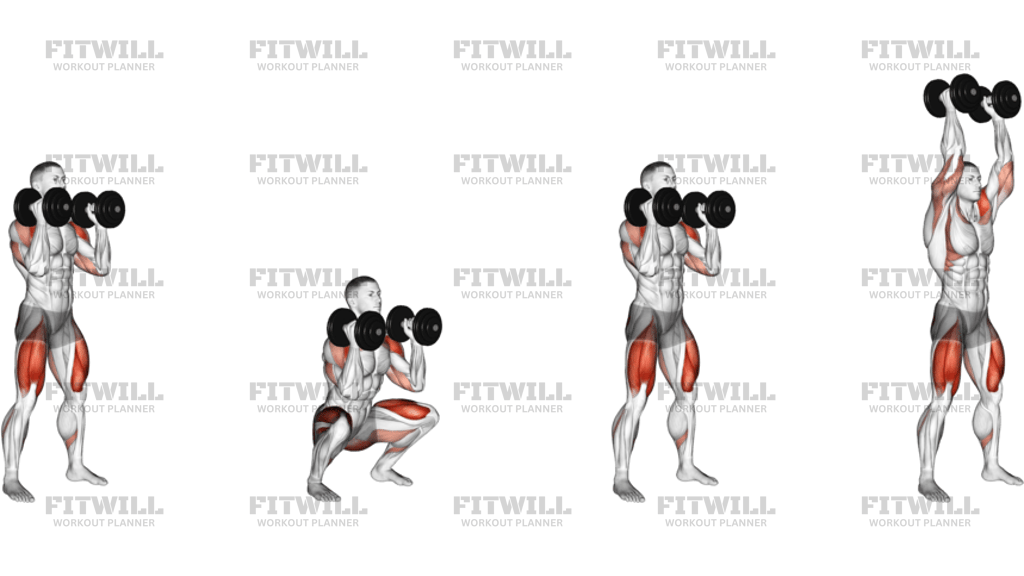
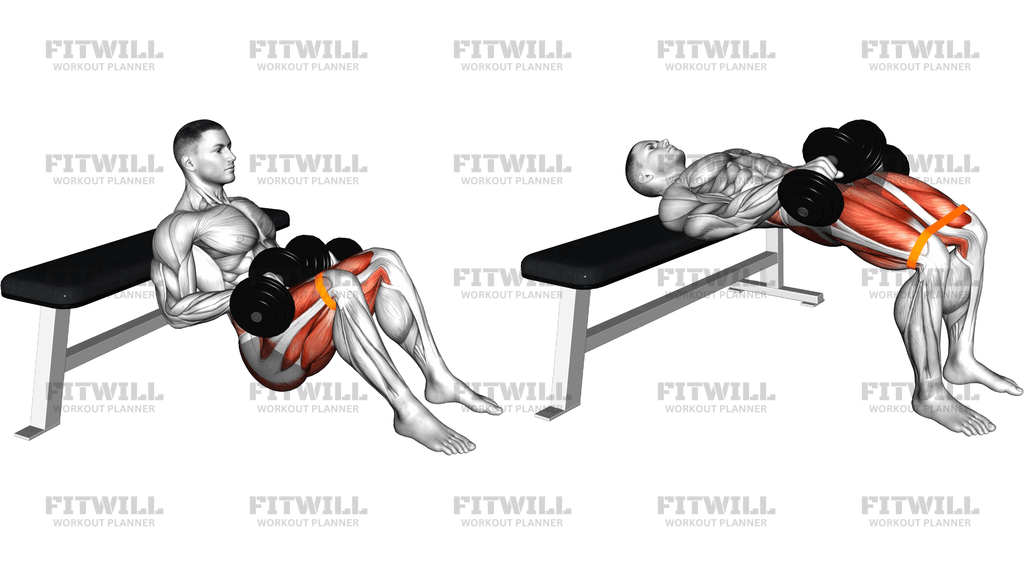
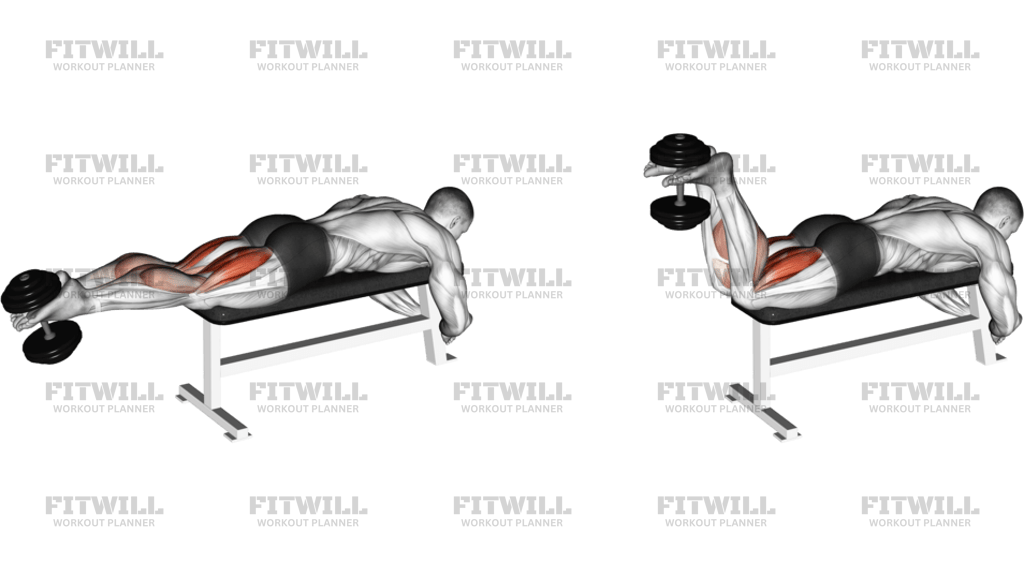
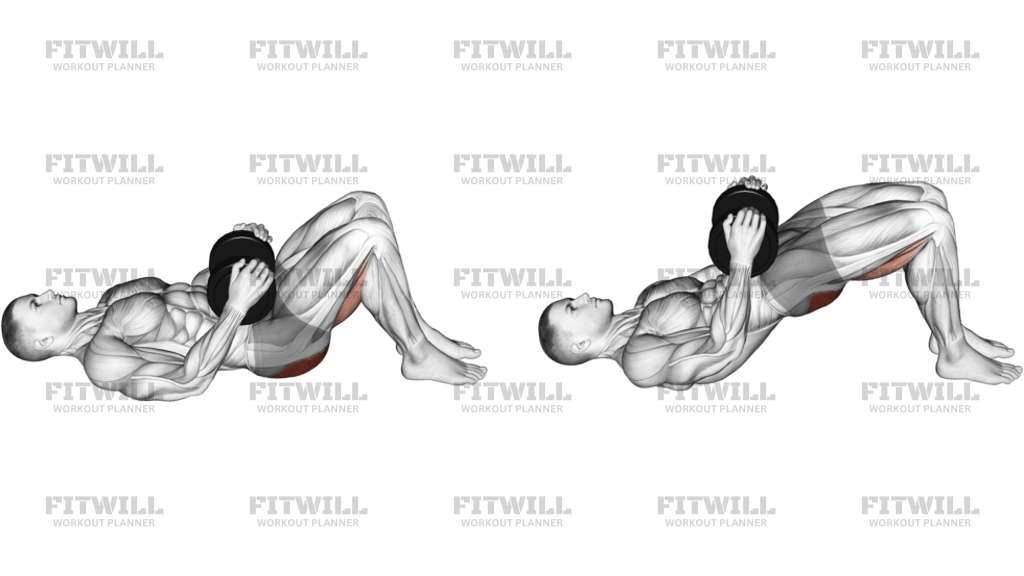
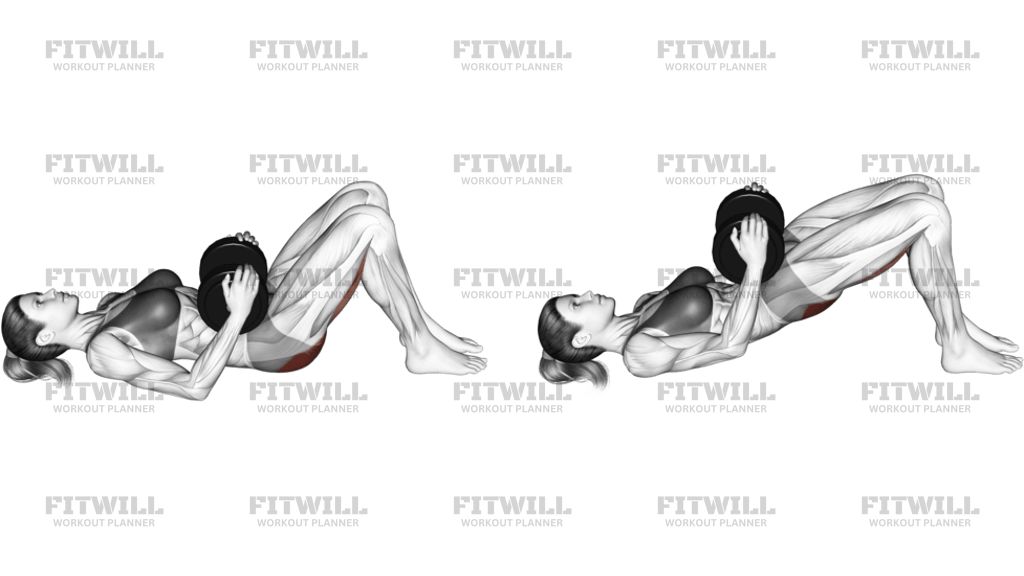
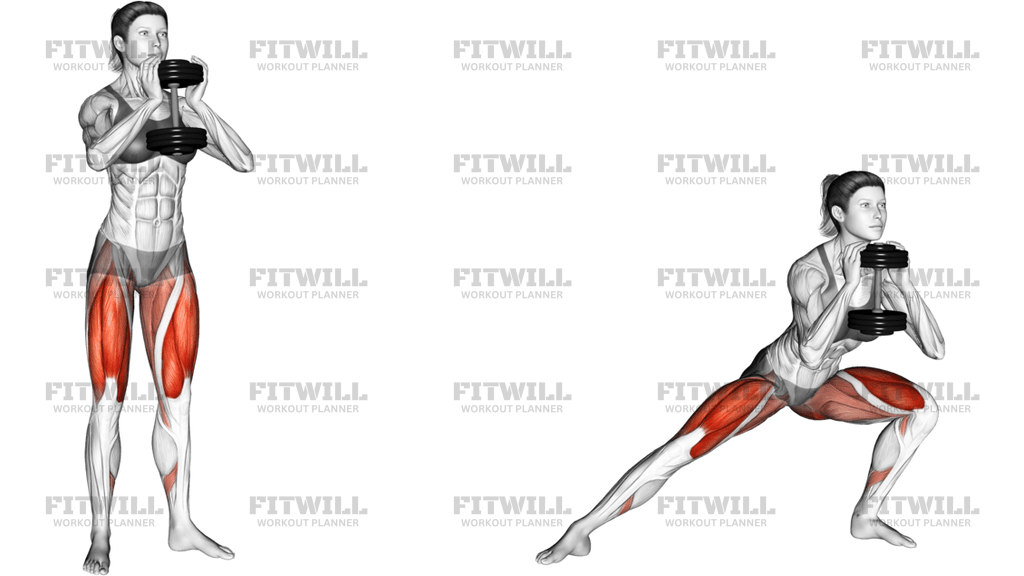
The image shows the lifter standing tall before shifting into a deep lunge to one side. That setup matters because the exercise works best when the chest stays lifted, the loaded-side foot stays flat, and the opposite leg lengthens instead of collapsing inward. With the weight anchored at the chest, the body can use the hips rather than tipping forward, which keeps more of the work on the leg and hip muscles instead of the lower back. The primary emphasis is glutes, with strong help from the inner thigh of the bent leg, quadriceps, hamstrings, and core.
As you descend, step out to the side and sit the hips back toward the lunge leg until the knee bends and the other leg stays long. The goal is not to drift forward into a squat; it is to load one hip while the other leg remains extended. A good rep feels grounded through the whole foot on the working side, with the knee tracking in line with the toes and the torso staying braced. The returning phase should be deliberate as you push the floor away and bring the feet back underneath you.
This movement fits well in lower-body accessory work, athletic warmups, or strength circuits where you want unilateral leg training without complex setup. It is also a practical choice when the goal is to build lateral control and hip strength for walking, cutting, or change-of-direction work. Beginners can use a light dumbbell or even bodyweight first, but the rep should still look clean and stable. If the knee caves in, the heel lifts, or the torso folds, shorten the range and reduce the load before adding more volume.
Fitwill
Log Workouts, Track Progress & Build Strength.
Achieve more with Fitwill: explore over 9600 exercises with images and videos, access built-in and custom workouts, perfect for both gym and home sessions, and see real results.
Start your journey. Download today!




Instructions
- Stand tall with your feet about hip-width apart and hold one dumbbell vertically at chest height with both hands, elbows tucked close under the weight.
- Brace your torso, keep your chest lifted, and point both feet mostly forward before you start the first rep.
- Step one foot out to the side so the stance becomes wide enough to shift into a side lunge without losing balance.
- Sit the hips back toward the stepping leg and bend that knee while keeping the other leg long and the opposite foot flat.
- Lower until the working thigh is close to parallel or until you feel a strong stretch in the inner thigh and glute of the bent leg.
- Keep the dumbbell close to your sternum and your spine neutral as you settle into the bottom position.
- Drive through the whole foot of the bent leg to push the floor away and return to the starting stance under control.
- Reset your stance between reps, then repeat on the same side or alternate sides according to your program.
- Inhale on the way down and exhale as you stand back up.
Tips & Tricks
- Keep the dumbbell pressed close to your chest; letting it drift forward usually makes the torso tip and shifts stress away from the hips.
- Choose a side step that lets the working knee bend while the opposite leg stays long, not a narrow stance that turns the move into a squat.
- Let the working foot stay rooted through heel, big toe, and little toe so the knee can track cleanly over the toes.
- Think about sending the hips back toward the loaded side instead of reaching the knee forward first.
- A slight toe-out on the lunge leg is fine if it helps the knee track, but do not let the knee collapse inward.
- Stop the descent before the pelvis tucks or the opposite heel starts to peel off the floor.
- If the inner thigh feels too sharp or crampy, shorten the range and slow the lowering phase before adding more load.
- Use a lighter dumbbell first if you cannot keep the torso tall through the full side-to-side shift.
Frequently Asked Questions
What does Dumbbell Side Lunge Version 3 work most?
It primarily targets the glutes and the inner thigh of the bent leg, with the quads, hamstrings, and core helping stabilize the movement.
Why is the dumbbell held at the chest?
The goblet hold keeps the torso more upright and makes it easier to load the hips without folding forward.
Should the opposite leg bend during the side lunge?
It should stay long with the foot planted so the working side can take most of the load.
How far should I step out to the side?
Step far enough that you can sit into one hip without losing balance or turning the movement into a regular squat.
What are the most common mistakes with this exercise?
The biggest issues are letting the chest collapse, allowing the knee to cave in, and losing the flat-footed stance on the working side.
Can beginners do Dumbbell Side Lunge Version 3?
Yes. Start with bodyweight or a light goblet hold and focus on clean side-to-side control before adding load.
How low should I go in the lunge?
Go only as low as you can while keeping the working foot flat, the spine neutral, and the opposite leg long.
Is this a good exercise for hip mobility?
Yes, it can build useful side-to-side hip mobility, but only if the range stays controlled and pain-free.