Warming-Up In Lunge One
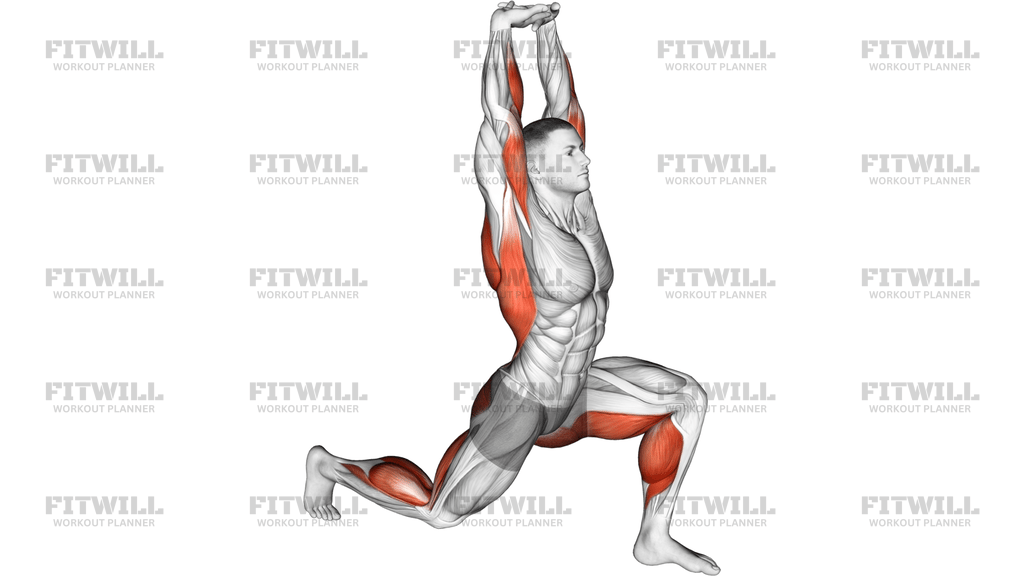
Warming-Up In Lunge One is a half-kneeling mobility drill that opens the hip flexors, quads, and front-of-hip tissues on the kneeling side while teaching a tall, stacked torso. The image shows a front-foot-down, back-knee-down lunge with both arms reaching overhead, which puts the exercise in the category of a warm-up stretch rather than a strength lift. It is useful before lower-body training, sprinting, overhead pressing, or any session where you want the hips and trunk to move without feeling locked up.
The setup matters more than the size of the stretch. A clean half-kneeling position gives you a stable base: front foot flat, front knee bent, back knee cushioned on the floor, pelvis facing forward, and ribs kept down instead of flaring. From there, the overhead reach lengthens the front of the body and encourages the hip on the kneeling side to open without letting the low back take over. If the pelvis tips forward or the chest arches hard, you turn the drill into a lumbar extension stretch instead of a proper hip warm-up.
This exercise should feel like controlled pressure, not a forced split. As you hold or gently pulse in the position, think about squeezing the glute of the kneeling leg, shifting the hips slightly forward, and keeping the front shin and front foot stable. The arms stay active overhead so the shoulders, lats, and trunk stay connected to the lower-body position. That makes the drill especially useful when you need your hips open and your overhead posture organized at the same time.
Use a slower, more deliberate version before training and a slightly more active version when you are finishing a dynamic warm-up. The goal is better joint position, not maximum depth. When the position is correct, you should be able to breathe smoothly, stay balanced, and feel the stretch through the front of the hip and thigh on the kneeling side. If the knee, hip, or low back complains, shorten the stance, reduce the reach, or come out of the stretch sooner.
For most people, this is best treated as preparation work rather than a high-fatigue exercise. It fits well in warm-up circuits, mobility sessions, or recovery days when you want to restore hip extension and reinforce upright posture. Done consistently, it can make squats, lunges, running, and overhead work feel less restricted because the body learns to stack the pelvis, ribs, and shoulders in a more efficient position.
Fitwill
Log Workouts, Track Progress & Build Strength.
Achieve more with Fitwill: explore over 9600 exercises with images and videos, access built-in and custom workouts, perfect for both gym and home sessions, and see real results.
Start your journey. Download today!




Instructions
- Kneel on one knee with the other foot planted in front so both legs form a long split stance and the front foot stays flat.
- Square your hips and bring your torso tall over the pelvis before you reach overhead.
- Tuck the pelvis slightly under and squeeze the glute of the kneeling leg to keep the stretch out of your low back.
- Lift both arms overhead and bring the hands together or reach them straight up without losing the stacked torso position.
- Gently shift the hips forward until you feel a stretch in the front of the kneeling-side hip and thigh.
- Hold that position or make small controlled pulses forward while keeping the front knee steady over the foot.
- Keep the ribs down, chin neutral, and shoulders active so the overhead reach stays connected to the trunk.
- Breathe slowly through the stretch, then ease the hips back to the start and switch sides.
Tips & Tricks
- If the stretch moves into the low back, shorten the stance and re-tuck the pelvis before you reach higher.
- Squeezing the kneeling-side glute is the quickest way to turn this into a true hip-flexor opener instead of a passive slump.
- Keep the front foot fully planted; rolling onto the toes usually means the hips are drifting too far forward.
- Reach up through the fingertips, not by flaring the ribs, so the shoulders and trunk stay stacked over the pelvis.
- Use a thicker pad under the back knee if floor pressure makes it hard to stay relaxed and upright.
- A smaller forward shift held for longer is usually more useful than forcing a deep lunge you cannot control.
- Keep the front knee tracking in line with the second or third toe to avoid twisting the pelvis open.
- If overhead mobility is limited, keep the hands slightly forward of the ears instead of forcing them straight back.
Frequently Asked Questions
What does Warming-Up In Lunge One train?
It primarily opens the hip flexors and front thigh on the kneeling side while teaching a stacked, upright torso with an overhead reach.
Is this exercise a strength move or a warm-up stretch?
It is best used as a mobility warm-up. The image shows a half-kneeling lunge hold with an overhead reach, so the focus is on position and control rather than loading.
Where should I feel the stretch?
You should feel it in the front of the hip and upper thigh of the kneeling leg, with some length through the side body and shoulders if the overhead reach is solid.
Why do I need to tuck the pelvis in this lunge?
The slight posterior pelvic tilt keeps the stretch out of the low back and puts it where you want it: the hip flexors and quads.
Can I do this if my overhead position feels tight?
Yes. Keep the arms slightly in front of the ears or reduce the reach height until you can stay tall without arching your ribs.
What is the most common mistake with this lunge warm-up?
Letting the lower back arch while the hips drift forward is the usual problem. That reduces the hip stretch and makes the position less useful.
How long should I hold each side?
Hold long enough to breathe and settle into the position, usually several slow breaths, then switch sides.
When is this exercise most useful?
It works well before squats, lunges, running, and overhead pressing when you need better hip extension and a more upright torso.