Standing Balance Outer Hip Stretch
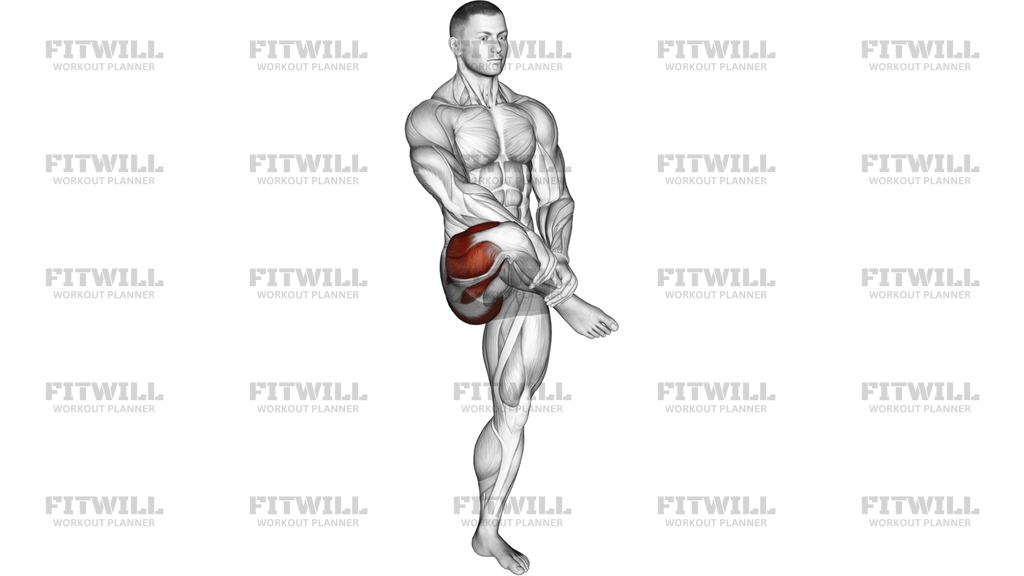
Standing Balance Outer Hip Stretch is a standing figure-four style mobility drill that opens the outer hip, glute, and deep rotators on the lifted leg while also challenging balance on the support leg. The standing position makes the stretch more active than a floor variation because you have to organize the pelvis, trunk, and ankle while you hold the end range.
The exercise is useful when the outer hip feels tight after lifting, running, squatting, or long periods of sitting. The crossed-leg position targets the side of the glute and hip capsule on the raised leg, while the support leg and core work to keep the torso tall and the standing foot stable. That balance demand is part of the exercise, not a side effect.
Setup matters here. If the pelvis twists open or the standing knee collapses inward, the stretch shifts away from the target tissues and becomes harder to control. The goal is to keep the chest long, the standing foot grounded, and the lifted leg gently drawn across the body without forcing the knee or hip into a sharp range.
Move into the stretch slowly, then hold the position with calm breathing until the outer hip eases. A clean rep should feel like steady pressure around the glute and the outside of the hip, not a pinch in the front of the hip or a wobble through the standing leg. If you need support from a wall or rack, use it so the stretch stays smooth and repeatable.
Use this movement as part of a warm-up, cooldown, or recovery session when you want to restore hip comfort and single-leg control. It is beginner-friendly if the range stays small at first, but it should always remain pain-free and balanced. Quality matters more than forcing the leg higher or holding longer than you can stay organized.
Fitwill
Log Workouts, Track Progress & Build Strength.
Achieve more with Fitwill: explore over 9600 exercises with images and videos, access built-in and custom workouts, perfect for both gym and home sessions, and see real results.
Start your journey. Download today!




Instructions
- Stand tall on one leg on an exercise mat and place the opposite ankle across the standing thigh in a figure-four position.
- Keep the standing foot flat and rooted, then square your hips and chest before you begin to fold into the stretch.
- Hold the lifted leg with both hands and gently draw the shin or knee toward your torso until you feel the outer hip open.
- Keep the torso long as you sit the hips back slightly; do not let the standing knee cave inward.
- Use the hands and the support leg together to keep your balance while you settle into the stretch.
- Breathe slowly and let the lifted-side glute and outer hip relax without bouncing.
- Hold the end position for the prescribed time, keeping the stretch in the hip rather than the low back or knee.
- Release the lifted leg under control, return to an upright stance, and switch sides if the workout calls for bilateral work.
Tips & Tricks
- Use the wall or a rack lightly if the balance demand keeps you from settling into the hip stretch.
- Keep the standing knee soft, but avoid letting it drift far past the toes as you sink into the position.
- Think about pulling the crossed leg across the body, not yanking the knee upward.
- If the front of the hip on the lifted leg pinches, reduce the angle of the figure-four and stand a little taller.
- Keep the pelvis level; twisting open usually turns the movement into a balance drill instead of an outer-hip stretch.
- A slow exhale often lets the glute relax more than pushing harder with the hands.
- Short, steady holds work better than bouncing or repeatedly pumping the leg.
- If the standing foot starts rolling to the outside edge, reset before continuing.
Frequently Asked Questions
What does Standing Balance Outer Hip Stretch target?
It mainly targets the outer hip and glute of the lifted leg, especially the deep rotators that feel tight in a figure-four position.
Why is it called a balance stretch?
Because one leg has to support your body weight while the other leg is crossed over, so the standing foot, ankle, and core have to stay organized.
Should I keep my torso upright or lean forward?
Stay tall first, then make only a small hip hinge if needed to deepen the stretch. A rounded back usually shifts the work away from the outer hip.
Where should the stretch feel strongest?
You should feel it in the glute and outside of the hip on the raised leg, not as a sharp pull in the knee or a pinch in the front of the hip.
Can I hold onto something for support?
Yes. A wall, rig, or rack is useful if you need help staying balanced so you can focus on the hip stretch instead of wobbling.
What is the most common setup mistake?
Letting the lifted knee drift too far outward or twisting the pelvis open, which usually reduces the stretch in the outer hip.
Is this a good warm-up or cooldown exercise?
It works well for both. Use a smaller range in the warm-up and a longer, calmer hold after training.
What should I do if the stretch hurts my knee?
Back off the range immediately, keep the lifted leg lower, and use support. The sensation should stay in the hip, not the joint.