Lying Leg Tuck Hip Stretch Wth Overhead Hands
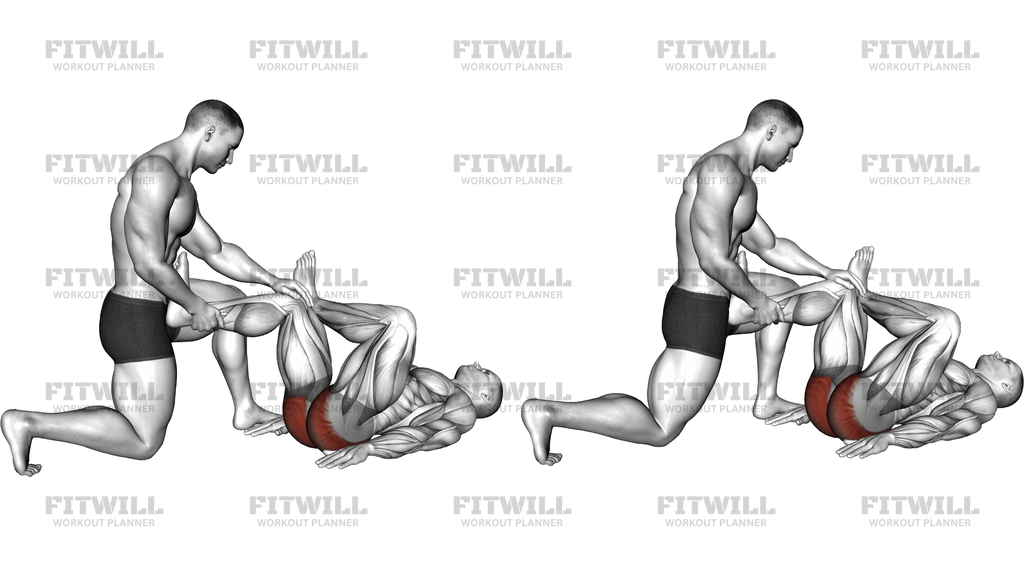
Lying Leg Tuck Hip Stretch Wth Overhead Hands is a floor-based hip mobility drill performed from a long split-kneeling lunge with the torso upright and the hands clasped overhead. The position shown in the image emphasizes the front of the rear hip, the rear quad, and the tissues that limit hip extension when you sit too much, run, or spend a lot of time in flexed positions. It is more of a controlled stretch than a strength exercise, but the quality of the setup determines whether you feel a clean hip-opening line or just dump tension into the low back.
The big training value comes from the relationship between the pelvis, ribcage, and overhead reach. When the rear glute stays engaged and the pelvis stays slightly tucked, the stretch shifts toward the front of the hip and thigh instead of collapsing into lumbar extension. The overhead hand position adds a line through the lats, side body, and shoulders, so this movement can also be useful when you want to open the torso after pressing, pulling, squatting, or a long day at a desk. That means the posture matters as much as the depth of the lunge.
Set the front foot flat, keep the front knee roughly over the ankle, and lower the back knee and the top of the back foot to the mat. From there, stack the ribs over the pelvis, reach the hands overhead, and gently shift the hips forward until you find a stretch that is strong but still calm. The image shows a tall torso and a long line from hip to hands, which is the goal. If the range feels cramped, shorten the stance first rather than forcing a bigger stretch.
Use steady breathing and small position changes to make the rep more effective. A quiet exhale helps the pelvis stay tucked and keeps the ribs from flaring. A slow inhale expands the side ribs without losing the upright position. This is ideal in a warm-up, cooldown, mobility block, or recovery circuit, especially when you want to prepare the hips for lunges, split squats, running, or overhead work. If the knee is sensitive, pad it well; if the low back feels pinched, reduce the forward shift and keep the stretch focused on the front of the hip.
Fitwill
Log Workouts, Track Progress & Build Strength.
Achieve more with Fitwill: explore over 9600 exercises with images and videos, access built-in and custom workouts, perfect for both gym and home sessions, and see real results.
Start your journey. Download today!




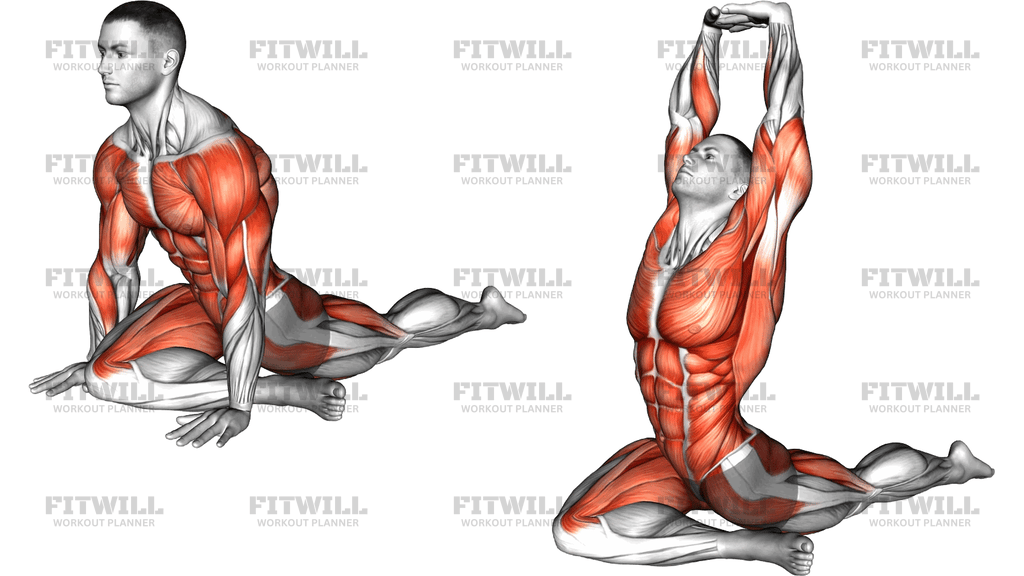
Instructions
- Kneel on a mat in a long split-kneeling stance with your front foot flat, your back knee down, and the top of the back foot resting on the floor.
- Square your hips toward the front and keep your front knee stacked roughly over the ankle so the stance feels stable before you move.
- Bring your torso upright, lift your chest, and clasp your hands overhead so your arms are straight and close to your ears.
- Gently tuck your pelvis by squeezing the back-side glute so the stretch stays in the front of the rear hip instead of the low back.
- Shift your hips forward a few inches until you feel a clear stretch in the rear hip flexor and quad while keeping the front foot planted.
- Keep the ribs stacked over the pelvis as you reach upward; do not lean back to fake a bigger range.
- Hold the end position and breathe slowly, letting each exhale soften the stretch without bouncing or pulsing.
- Ease out by bringing the hips back a little, then reset before repeating or switching sides.
Tips & Tricks
- If the stretch lands in your low back, shorten the lunge and make the pelvic tuck more obvious.
- The rear glute should stay active; that is what turns this from a back bend into a true hip-flexor stretch.
- Keep the front heel down and the front knee from drifting far past the toes if the stance starts to feel unstable.
- A small forward shift is enough; do not chase depth by collapsing into the front knee or lumbar spine.
- Reach long through the fingertips, but keep the shoulders down so the neck does not take over.
- If the back knee is tender, place a thicker pad or folded towel under it before you start the hold.
- Exhale fully when you settle into the stretch because that usually lets the pelvis stay tucked more easily.
- If you feel pinching in the front of the rear hip, reduce the stride length and bring the torso a little more upright.
Frequently Asked Questions
What does Lying Leg Tuck Hip Stretch Wth Overhead Hands work most?
It primarily targets the front of the rear hip and the rear thigh, with the overhead reach adding a stretch through the lats and side body.
Is this a good beginner hip stretch?
Yes, as long as the stance is shortened and the back knee is padded. Beginners should keep the torso tall and avoid forcing depth.
Where should I feel the stretch?
You should feel it in the front of the rear hip and the rear quad, not as a pinch in the low back.
Why are the hands overhead?
The overhead clasp lengthens the torso and side body, which helps stack the ribs over the pelvis and makes the hip stretch cleaner.
What is the most common mistake with this stretch?
Leaning back and arching the low back instead of tucking the pelvis and shifting the hips forward from the hip joint.
Can I change the setup if my knee hurts?
Yes. Put a thicker pad under the back knee and shorten the stance so you do not have to sink as low.
When is this stretch most useful?
It works well before split squats, lunges, running, overhead pressing, or as part of a cooldown after lower-body training.
How do I make it more intense without bouncing?
Keep the pelvis tucked, reach a little higher, and hold the position longer instead of forcing deeper range.