Split Sprinter Low Lunge
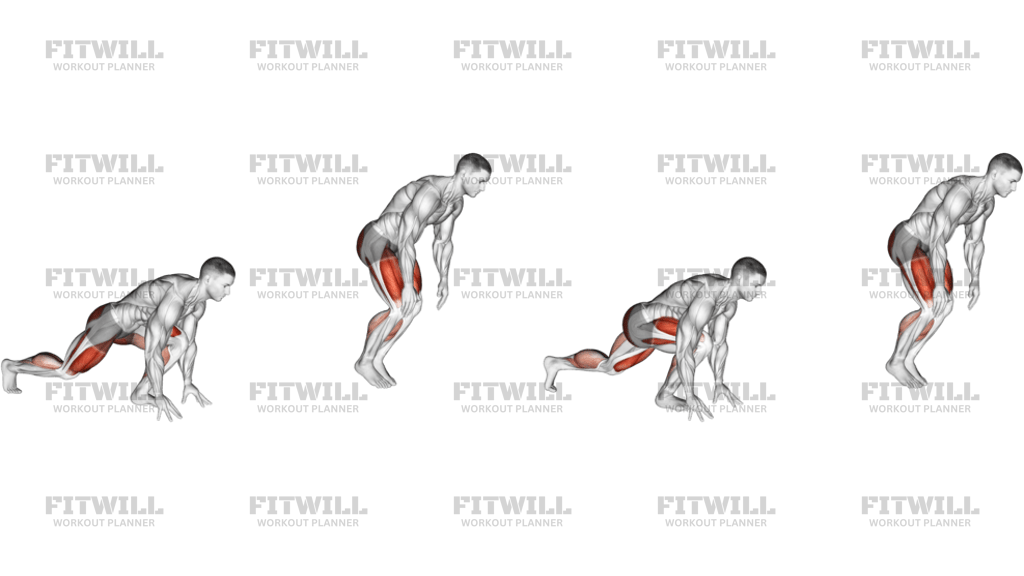
Split Sprinter Low Lunge is a bodyweight floor-to-stand drill that moves between a supported low lunge and a tall sprinter-style split stance. The image shows the hands on the floor in the lowered position, which tells you this is not just a static stretch. It is a controlled transition drill that teaches the hips, glutes, and core to organize the body while the legs change shape under load.
The main training value comes from the way the exercise asks one hip to open while the other leg drives and stabilizes. That makes it useful for glute activation, hip extension, single-leg balance, and cleaner trunk control. In anatomy terms, the main work centers on the Gluteus maximus, with help from the Biceps femoris, Rectus abdominis, and Erector spinae. It also asks the front leg to manage knee alignment and foot pressure while the torso stays long instead of folding at the waist.
The setup matters because this movement can become sloppy fast if the stance is too short, too narrow, or too rushed. In the low position, the hands should give enough support to keep the chest steady and the pelvis square. In the tall sprinter position, the front foot needs to stay planted and the standing side should feel organized, not wobbly. If the lower back takes over, shorten the range and make the transition slower.
A clean rep feels like a smooth transfer of weight from the supported lunge into the tall balance position and back again. The front glute should help you rise, the core should keep the ribs from flaring, and the rear leg should move with control instead of flinging through the motion. Breathing should stay calm enough that each side switch or repeat looks the same.
This exercise fits well in a warm-up, movement prep block, or lower-body accessory circuit when you want hips that feel open and ready without passively hanging in a stretch. It can also be used by beginners because the floor contact makes the pattern easier to control, but the drill still rewards precision. Keep the motion pain-free, stay balanced over the front foot, and stop the set when the transition starts to lose shape.
Fitwill
Log Workouts, Track Progress & Build Strength.
Achieve more with Fitwill: explore over 9600 exercises with images and videos, access built-in and custom workouts, perfect for both gym and home sessions, and see real results.
Start your journey. Download today!




Instructions
- Start in a low split lunge with both hands on the floor inside the front foot and the back leg stretched long behind you.
- Place the front foot flat, keep the front knee tracking over the toes, and make sure your hips stay square enough to feel stable.
- Brace your trunk and keep the chest long so the support from your hands does not turn into a collapse through the shoulders.
- Press through the whole front foot and begin to lift your torso out of the low lunge.
- Drive the rear leg forward into the tall sprinter-style balance without letting the front knee cave inward.
- Stand tall with the pelvis controlled, the ribs stacked over the hips, and the front glute doing most of the work.
- Reverse the path by hinging back down, placing the hands to the floor, and sliding the rear leg back into the low lunge.
- Switch sides or repeat on the same side for the planned number of reps, keeping the transition smooth and deliberate.
- Exhale as you rise, inhale as you lower, and reset your balance before the next rep.
Tips & Tricks
- Keep the front heel heavy as you stand; if the toes do all the work, the balance phase will feel shaky.
- Let the hands support the low position, but do not dump your weight into the shoulders or round the upper back.
- If the front knee drifts inward, narrow the range before you add speed or extra reps.
- Think about driving the hips forward and up, not just lifting the chest, so the lower back does not take over.
- A slightly longer stance usually gives more room for the hip and hamstring to work without pinching the front knee.
- Pause for a beat in the tall sprinter position if you want more balance and glute control.
- Keep the rear leg active as it moves through the transition instead of letting it trail loosely behind you.
- Slow the descent if the exercise turns into a drop; the lowering phase should still look organized.
Frequently Asked Questions
What muscles does Split Sprinter Low Lunge work most?
It mainly trains the glutes, with help from the hamstrings, core, and hip stabilizers during the transition.
Is this more of a stretch or a strength drill?
It is both. The low lunge opens the hips while the stand-up phase teaches the glutes and core to control the body.
Should my hands stay on the floor the whole time?
No. The hands support the lowered lunge, then you rise into the tall sprinter position before returning to the floor.
How do I keep my front knee safe in the low lunge?
Keep the front foot planted, let the knee track over the toes, and shorten the stance if the knee feels crowded.
What should I feel in the tall sprinter position?
You should feel the front glute, the front foot, and a steady trunk, not a pinch in the low back.
Can beginners do this exercise?
Yes. The floor support makes it easier to control, as long as the transition stays slow and balanced.
What if I feel it more in my lower back than my hips?
Shorten the stance, keep the ribs stacked over the hips, and make the rise smoother instead of forcing height.
When is this exercise most useful?
It works well in warm-ups, movement prep, sprint drills, or lower-body circuits where hip control matters.