Downward Facing Dog Spine Mobility
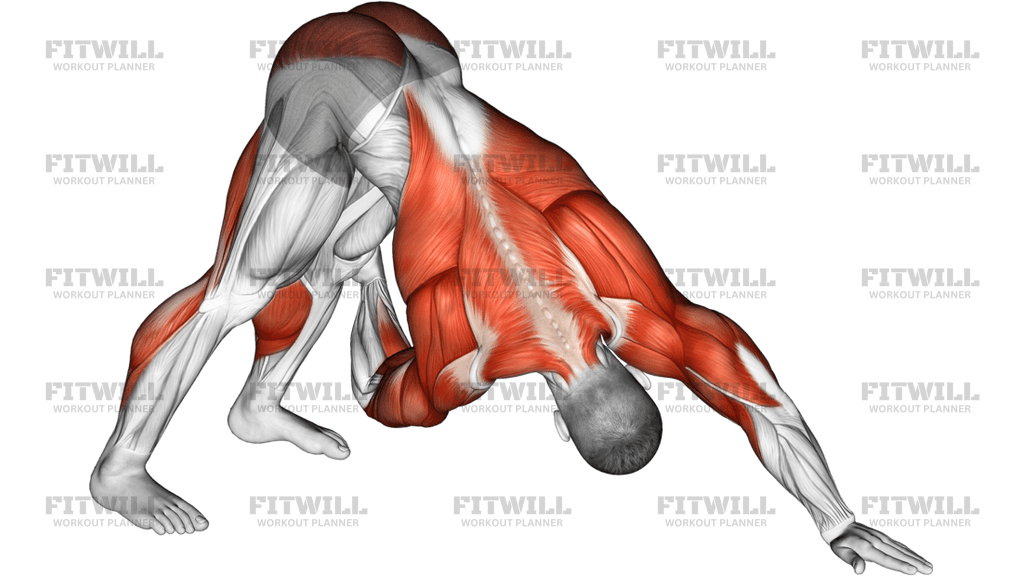
Downward Facing Dog Spine Mobility is a bodyweight mobility drill built around the inverted down-dog position. It is used to open the shoulders, lengthen the spine, and move the hips and legs through a gentle alternating stretch pattern. The exercise works best when the hands stay rooted, the arms stay long, and the torso keeps its shape while the knees and heels shift to create motion.
The image shows a classic down-dog setup with one knee bending while the opposite leg reaches long, which is why this drill feels more like an active mobility sequence than a passive hold. That alternating pattern helps create space through the hamstrings, calves, lats, and upper back without forcing a hard end range. The spine should stay long and organized as the pelvis shifts and the legs trade positions.
Setup matters because small errors change the whole feel of the drill. Place the hands shoulder-width apart, spread the fingers, and press the floor away so the shoulders do not collapse into the ears. Set the feet hip-width apart and lift the hips high enough that the back can lengthen. If the hamstrings are tight, keep both knees softly bent so you can keep the torso long instead of rounding through the lower back.
During each repetition, alternate bending one knee as the other heel reaches toward the floor. Let the hips shift slightly and let the spine lengthen with each switch, but do not rush into a bounce or an aggressive stretch. Exhale into the long position, inhale as you change sides, and keep the neck relaxed so the head hangs naturally between the arms.
This movement is useful as a warm-up, recovery drill, or low-intensity mobility block when the goal is to reduce stiffness and restore smoother overhead and hip motion. It is also a practical way to prepare the calves, hamstrings, and shoulders before more demanding training. Use a smaller range on tight days, and stop short of any pinching in the wrists, shoulders, or low back.
[ Workout Log & Planner ]
Put your next workout in Fitwill
Keep your plan and training log ready when you are.


Instructions
- Start on your hands and feet in a high inverted V with your hands shoulder-width apart, fingers spread, and hips lifted high.
- Press firmly through the palms and especially the base of the index finger so the shoulders stay active instead of sinking.
- Walk the feet to about hip-width and keep a soft bend in both knees if your hamstrings are tight.
- Lengthen the spine by sending the sit bones up and back while keeping the ribs from flaring forward.
- Bend one knee and let the opposite heel drift toward the floor, keeping the arms straight and the chest open between the shoulders.
- Switch sides smoothly, letting the hips shift just enough to create a new stretch without wobbling the torso.
- Exhale as you settle into the longer side and inhale as you change legs or reset the position.
- Keep the neck relaxed and the gaze toward the floor so the head hangs naturally between the arms.
- Repeat for the planned number of alternating reps, then pause in a balanced down-dog hold or walk the feet forward to stand.
Tips & Tricks
- If the heels will not reach the floor, bend the knees more and keep the spine long instead of forcing the stretch.
- Keep pressure even through both hands so the wrists do not take all of the load on each shift.
- Think about lifting the hips more than dropping the chest; the shape should stay like an inverted V, not a plank.
- Make the leg changes slow enough that the torso does not sway side to side.
- Let the ankle of the straight leg stay relaxed so the calf can lengthen instead of bracing hard.
- If your shoulders pinch, walk the hands slightly wider and rotate the upper arms outward before continuing.
- Use the exhale to help the ribs soften down and the low back lengthen.
- Shorten the range on tight days; the goal is smooth spinal motion, not the deepest possible heel stretch.
- Stop the drill if you feel sharp wrist pain, a pinch in the front of the shoulder, or an uncomfortable pull in the low back.
Frequently Asked Questions
What does Downward Facing Dog Spine Mobility train?
It mainly improves shoulder opening, spinal length, and posterior-chain mobility through the hamstrings, calves, and lats.
Can beginners perform this exercise?
Yes. Beginners usually do well with a shorter range, softer knees, and slower side-to-side leg changes.
Should my heels touch the floor in the down-dog position?
Not necessarily. Reach the heels down only as far as you can while keeping the spine long and the shoulders active.
Why do my shoulders feel crowded in this position?
That usually means the hands are too close together or the shoulders are collapsing. Spread the fingers, press the floor away, and widen the hands slightly if needed.
Is this more of a stretch or a strength exercise?
It is mainly a mobility drill. The body supports itself, but the goal is smooth movement and joint range rather than loading strength.
What should I feel during the alternating knee bend?
You should feel length in the calf and hamstring on the straight leg, plus a light opening through the shoulders and side body.
What is the most common mistake with this drill?
Bouncing through the legs or letting the chest collapse forward. Keep the movement controlled and the spine long.
Can I modify it if my wrists hurt?
Yes. Put the hands on a bench, box, or wall to reduce wrist angle, or keep the set shorter and slower.
When is this exercise useful in a workout?
It fits well in a warm-up, recovery block, or cooldown when you want to restore shoulder and posterior-chain motion.