Barbell Banded Squat
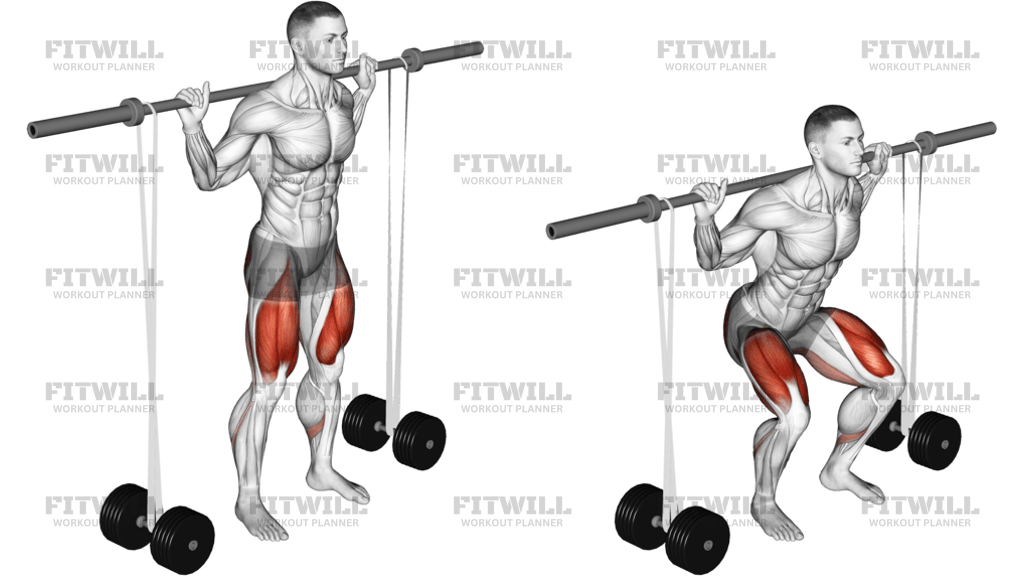
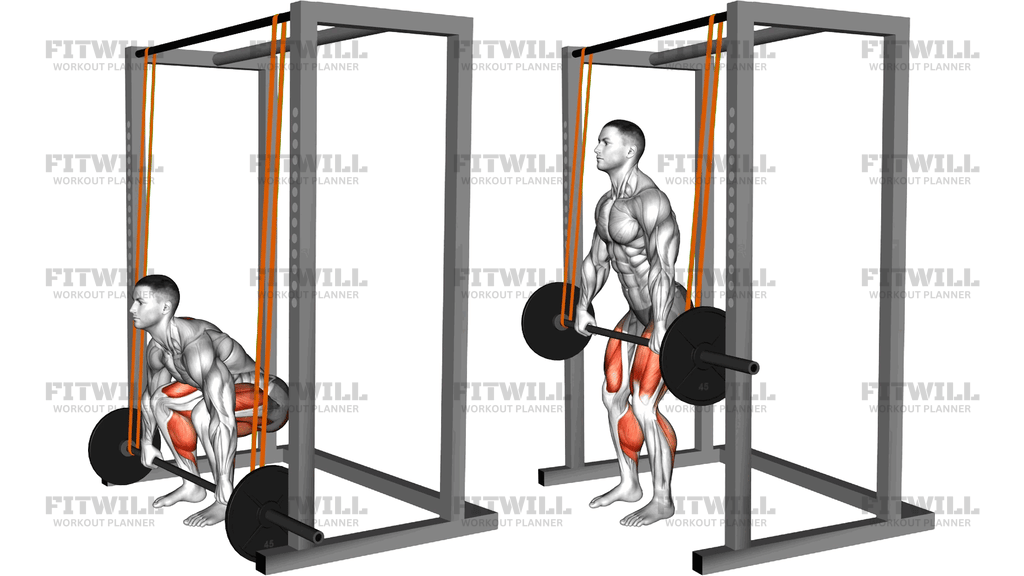
Barbell Banded Squat is a back-squat variation that adds band resistance to the barbell so the lift gets harder as you stand up. That changes the feel of the set immediately: the bottom is controlled, then the top demands a stronger drive through the glutes and hips. It is a useful option when you want more tension through lockout without simply piling on more plates.
The setup matters because the bands change the line of pull. When both sides are anchored evenly and the bar stays centered over the midfoot, the exercise feels smooth and stable; when the anchors are uneven or loose, the bar can twist and the rep turns sloppy fast. Barbell Banded Squat is most useful for lifters who already know how to squat with a solid brace and want to challenge their glutes, thighs, and core with a different loading curve.
A good rep starts before the descent. Set the bar across the upper back, take the slack out of the bands, and plant the feet in a stance that lets the knees track over the toes without collapsing inward. From there, sit between the heels, keep the ribcage stacked over the pelvis, and lower under control until you reach a depth you can own without the lower back rounding or the heels peeling up.
The ascent should feel deliberate rather than explosive. Drive the floor away, keep the knees pressing out against the band pull, and let the chest rise with the hips so the bar travels in a steady line. The bands add the most resistance near the top, so that is where posture often breaks down first; stay tight through the last part of the rep instead of leaning back or turning it into a good-morning.
Barbell Banded Squat works well in lower-body strength blocks, glute-focused sessions, or as a variation after your main squat work. It can also be a useful teaching tool because the bands expose knee cave, uneven pressure, and rushed reps very quickly. Keep the anchors stable, choose band tension that matches your strength, and stop the set if one side starts to shift or the bar begins to rotate.
[ Workout Log & Planner ]
Put your next workout in Fitwill
Keep your plan and training log ready when you are.


Instructions
- Set a band on each barbell sleeve and anchor the ends securely to heavy dumbbells or another stable floor anchor, then place the bar across your upper back.
- Unrack the barbell, step back to a shoulder-width stance, and make sure the bands have even tension on both sides before you start.
- Plant your whole foot, turn the toes slightly out, and keep the bar stacked over the midfoot with your hands squeezed tight on the bar.
- Take a breath into your belly and brace your torso before you descend.
- Sit your hips down and back between your heels while letting the knees travel over the toes and out against the bands.
- Lower until your thighs reach the depth you can hold without rounding your lower back or shifting onto your toes.
- Drive up by pushing the floor away, keeping the chest and hips rising together as you press the knees outward against the band pull.
- Finish the rep tall with the glutes tight, then re-rack the bar carefully and reset the band anchors if needed.
Tips & Tricks
- Match the band length and anchor position on both sides so the bar does not twist as you stand.
- If your knees cave inward, think about spreading the floor apart on the way up rather than forcing the knees straight ahead.
- Keep enough tension on the bar before each rep that the bands do not go slack at the top of the squat.
- Use a stance that lets you reach your squat depth without your heels lifting or your lower back tucking under.
- Do not let the dumbbell anchors slide when you descend; a shifting anchor changes the load from rep to rep.
- Keep your elbows and upper back locked in place so the bar stays pinned to your back instead of rolling.
- If the top of the rep feels unstable, reduce band tension before adding more bar weight.
- A controlled lowering phase makes the banded resistance more useful; bouncing out of the bottom defeats the point of the variation.
Frequently Asked Questions
What muscles does Barbell Banded Squat work most?
Barbell Banded Squat mainly trains the glutes, with strong help from the hamstrings, core, and lower back for stability.
Why add bands to Barbell Banded Squat?
The bands make the top half of the squat harder, so you have to keep driving through the glutes and hips instead of relaxing as you stand.
Is Barbell Banded Squat beginner-friendly?
It is better for lifters who already know how to squat with solid balance and bracing. Beginners should learn a normal back squat first, then add bands once their setup is consistent.
How should the bands be set up on Barbell Banded Squat?
Each band should be anchored evenly and securely so both sides pull the bar the same way. If one side is looser or higher, the bar can rotate and throw off your squat path.
What is the most common mistake with Barbell Banded Squat?
Letting the knees collapse inward as the bands pull outward is a big one. Keep pressing the knees out so the feet stay planted and the bar stays centered.
Should my heels stay down during Barbell Banded Squat?
Yes. If the heels lift, your stance is usually too narrow, the depth is too deep for your mobility, or the load is pulling you forward.
Can I use Barbell Banded Squat instead of a regular back squat?
It can replace a regular back squat for accessory work or overload work, but it usually should not be your only squat pattern if you want a balanced strength program.
Where should I feel Barbell Banded Squat most?
You should feel the glutes and thighs doing most of the work, with the core staying tight to keep the torso from tipping forward.