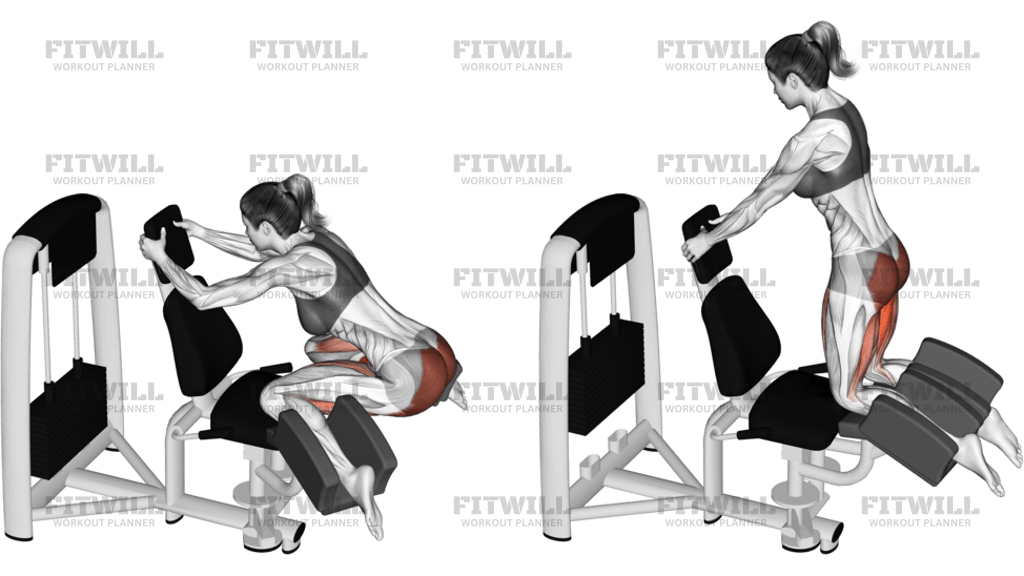
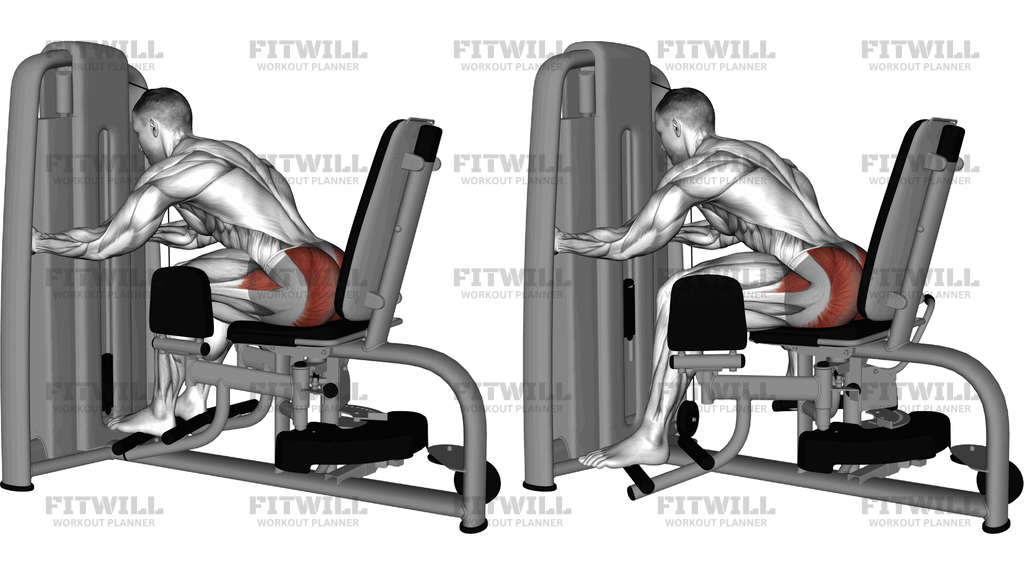
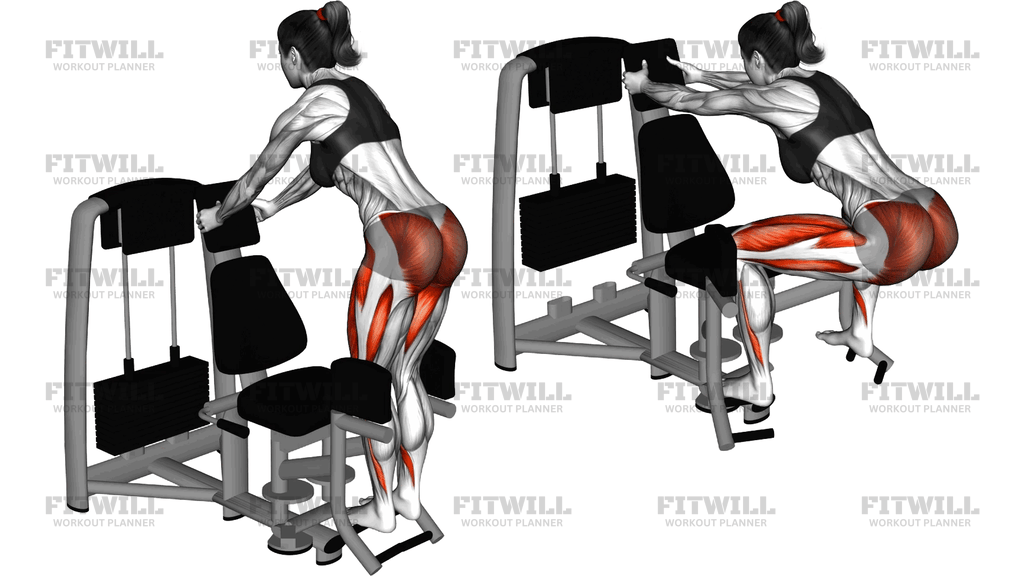
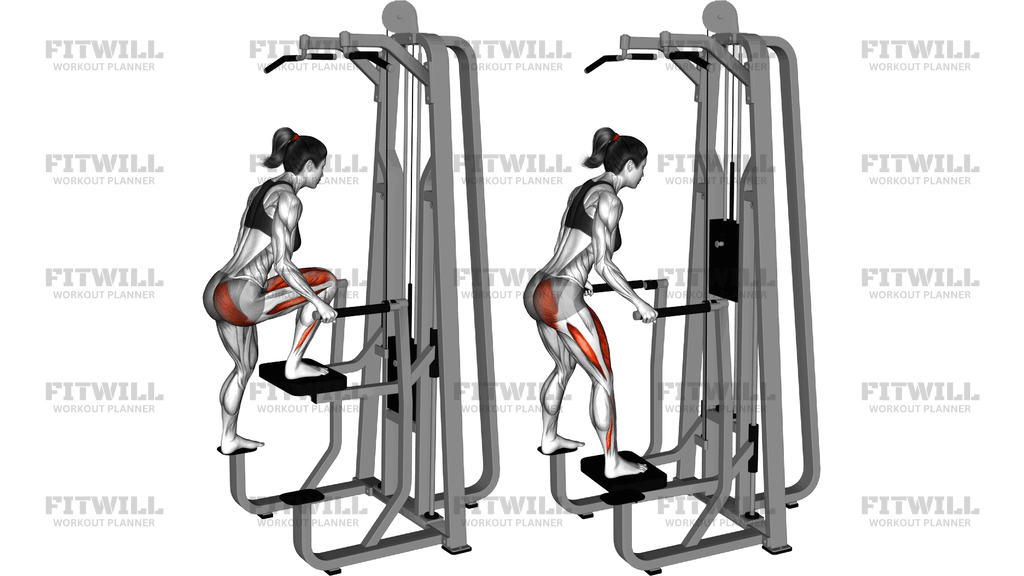
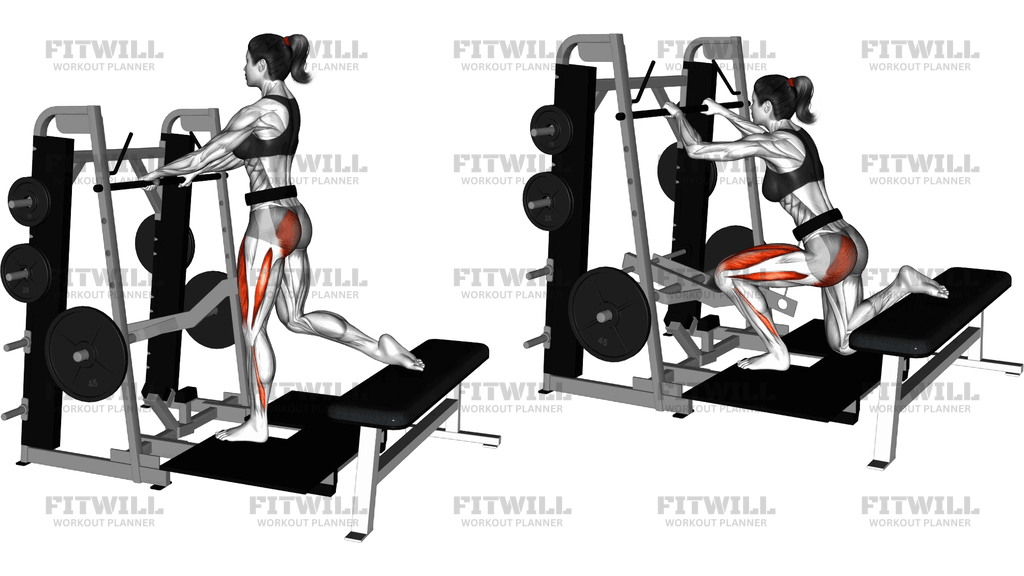
Lever Hip Thrust Plate Loaded
Lever Hip Thrust Plate Loaded is a machine-based glute exercise built around a strong hip extension pattern. The plate-loaded lever gives you a guided line of resistance, which makes it easier to load the glutes hard while keeping the torso and pelvis organized. It is useful for lifters who want a stable way to train hip drive without balancing a barbell across the hips.
The main target is the glutes, with the hamstrings helping to extend the hips and the core working to keep the ribs from flaring. In anatomy terms, the primary mover is the Gluteus maximus, supported by the Biceps femoris, Rectus abdominis, and Erector spinae. That makes Lever Hip Thrust Plate Loaded a strong option for lower-body strength work, glute-focused hypertrophy, and accessory training after squats or deadlift variations.
The setup matters because this movement is strongest when the machine pad, foot position, and upper-back support line up before the first rep. Sit into the machine so your upper back is supported, place your feet flat and roughly hip-width apart, and set your shins so they can stay close to vertical near the top. If the feet are too close, the knees travel too far forward and the quads take over; if they are too far away, the hamstrings tend to dominate and the hips lose power.
Each repetition should feel like a controlled hip hinge that finishes in a solid glute squeeze, not a lower-back arch. Drive the hips up until the torso and thighs form a strong line, pause briefly, then lower the lever under control before the next rep. Keep the chin tucked, ribs down, and pressure through the heels and midfoot so the pelvis stays stable instead of tipping forward at lockout.
Lever Hip Thrust Plate Loaded works well in strength blocks, glute-specific sessions, or as a safer high-tension alternative when you want the feel of a heavy hip thrust without setting up a barbell bench station. Beginners can use it because the machine guides the path, but the machine does not replace good setup. The most productive sets are the ones where the hips do the work, the lower back stays quiet, and every rep returns to the start under control.
[ Workout Log & Planner ]
Put your next workout in Fitwill
Keep your plan and training log ready when you are.


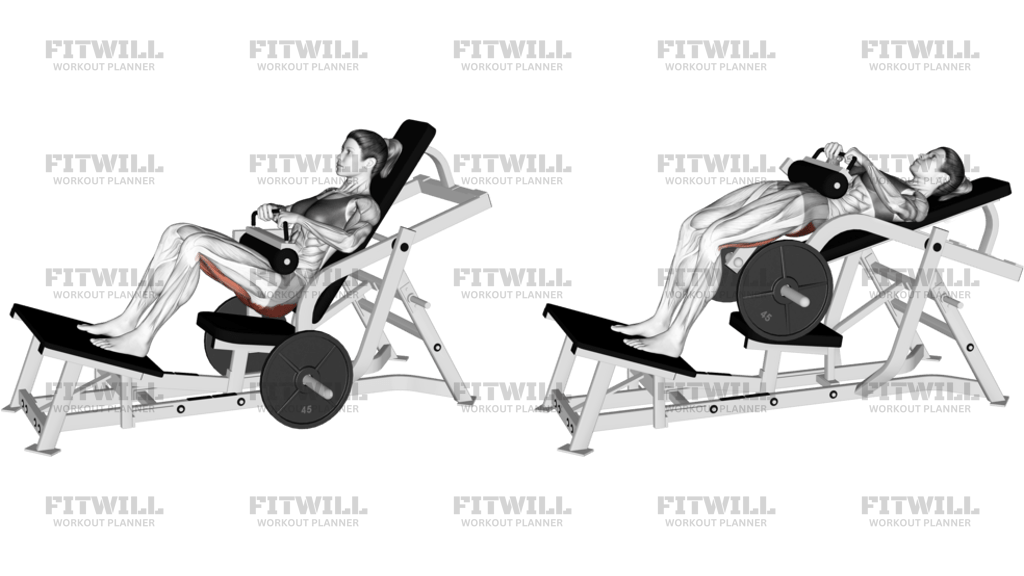
Instructions
- Sit on the machine with your upper back supported on the pad, your hips lined up with the lever pad, and your feet flat on the floor about hip-width apart.
- Set your feet so your shins can stay close to vertical when your hips are fully extended.
- Hold the side handles or the seat edge if available, then tuck your chin slightly and pull your ribs down to lock in your torso.
- Brace your core, press through your heels and midfoot, and drive your hips upward until your torso and thighs form one strong line.
- Squeeze your glutes at the top without pushing your lower back into an arch.
- Pause for a brief count at lockout while keeping your knees tracking over your toes.
- Lower the lever slowly until your hips come back down with tension still on the glutes and hamstrings.
- Reset your breath at the bottom and repeat for the planned reps without bouncing off the start position.
- After the last rep, lower the lever fully and step out only when the machine is stable.
Tips & Tricks
- Use a foot position that lets your shins stay nearly vertical at the top; that is usually the easiest way to keep the glutes dominant.
- If you feel the movement mostly in your hamstrings, move your feet a little farther from the machine.
- If your lower back takes over at lockout, stop the hip drive when your torso and thighs are in line instead of chasing a higher finish.
- Keep your chin lightly tucked so the ribcage does not flare as the lever rises.
- Drive through the heels and midfoot, but keep the toes planted so the feet do not slide during the rep.
- A one-second pause at the top makes the glutes work harder than bouncing through fast reps.
- Use a load that lets you lower the lever under control; if the weight drops quickly, the set is too heavy.
- If your knees cave inward, reduce the load and think about spreading the floor as you thrust.
- Stop the set when you can no longer reach the top without arching or shifting your weight onto your toes.
Frequently Asked Questions
What does Lever Hip Thrust Plate Loaded train most?
It mainly trains the glutes, with the hamstrings and core helping to stabilize the hip drive.
How should my feet be placed on the Lever Hip Thrust Plate Loaded machine?
Start with your feet about hip-width apart and adjust them until your shins are close to vertical at the top.
Should I feel Lever Hip Thrust Plate Loaded in my lower back?
No, the lower back should stay quiet. If it feels like the back is doing most of the work, shorten the top position and brace harder through the ribs.
Is Lever Hip Thrust Plate Loaded good for beginners?
Yes. The machine guides the path, so beginners can learn hip extension with less balance demand than a barbell hip thrust.
How is Lever Hip Thrust Plate Loaded different from a barbell hip thrust?
The machine gives you a fixed resistance path and a supported setup, while a barbell version requires more bench and bar control.
What is the most common mistake on this machine?
Most people either place their feet too close or finish by arching the lower back instead of squeezing the glutes.
Can I use Lever Hip Thrust Plate Loaded after squats or deadlifts?
Yes, it works well as an accessory lift after heavier lower-body work because it trains the hips without as much spinal loading.
How do I progress Lever Hip Thrust Plate Loaded safely?
Add weight only when you can keep the same foot position, top pause, and controlled lowering for every rep.