Lying T-Spine Mobility Stretching
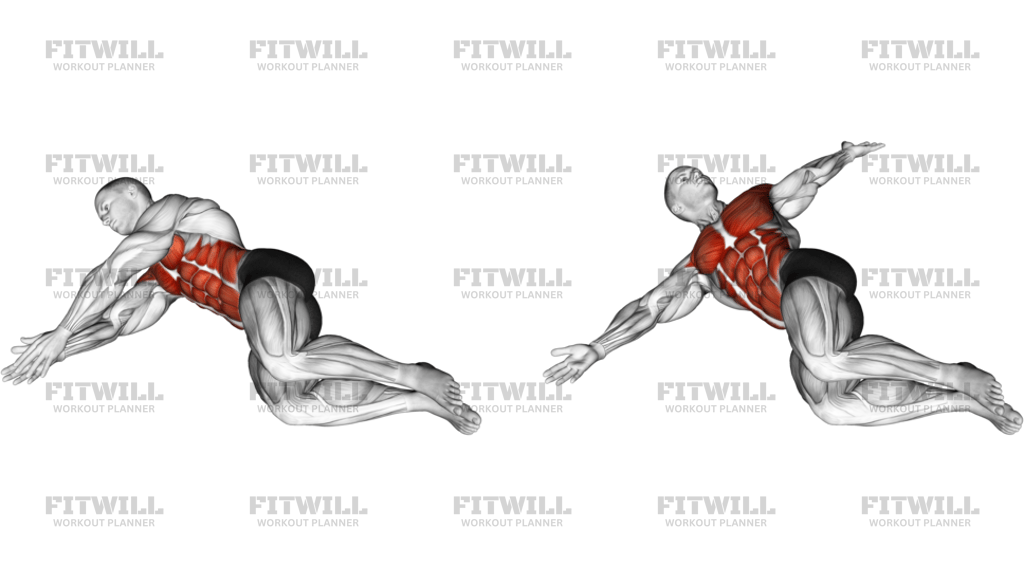
Lying T-Spine Mobility Stretching is a floor-based thoracic rotation drill that opens the upper back, ribcage, chest, and shoulders without asking the low back to do all the work. It is a bodyweight mobility exercise performed on an exercise mat, and the point is not to force a big twist. The goal is to create clean rotation through the mid-back while the pelvis, ribs, and breathing stay organized.
The position matters because the floor gives you clear feedback. When the shoulders stay heavy and the hips stay quiet, the thoracic spine has to contribute instead of the whole body rolling together. That makes this a useful choice for people who feel stiff after pressing, pulling, desk work, or long periods of sitting, especially when rotation feels limited in the upper back.
Use the stretch slowly and deliberately, with enough control to feel the opening without losing the setup. Exhale as you rotate, let the ribs soften, and pause in the open position for a breath or two before returning. The motion should look smooth and wide, not jerky or forced, and the best range is the one you can repeat comfortably on both sides.
This movement is well suited to warm-ups, recovery work, and accessory mobility blocks where you want to free the thoracic spine before harder training. It can also help lifters who need better overhead reach, cleaner pressing positions, or a more comfortable setup in rotational work. Keep the lower back relaxed, do not chase the floor with a painful range, and treat each rep as a controlled reset rather than a passive flop.
[ Workout Log & Planner ]
Put your next workout in Fitwill
Keep your plan and training log ready when you are.


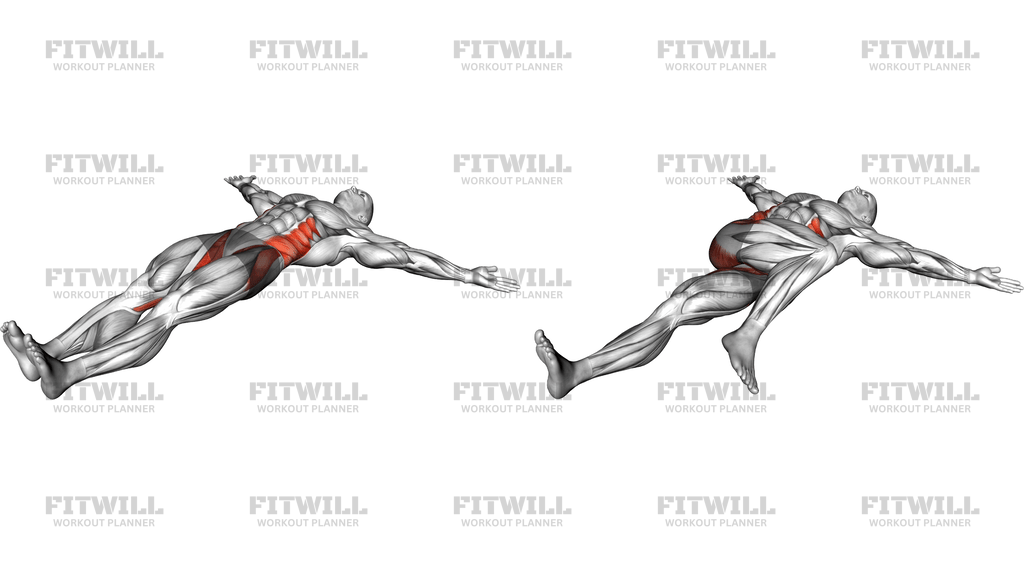
Instructions
- Lie on your back on a mat with one knee bent and the other leg long, then extend both arms out from the shoulders to make a T.
- Set your shoulder blades and upper back on the floor before you move, and keep the neck relaxed.
- Lightly brace your midsection so the ribs do not flare as you start the rotation.
- Let the bent knee drift across the body while the chest opens and the top arm reaches in a wide arc.
- Keep the opposite shoulder heavy on the floor and stop the twist before the low back starts to take over.
- Exhale as you settle into the open position, then take one or two calm breaths at the end range.
- Return slowly to the center without yanking the knee back into place.
- Switch sides and repeat with the same tempo and range on the other side.
Tips & Tricks
- Think about rotating the ribcage, not just dropping the knee across your body.
- If the bottom shoulder comes off the mat, shorten the range until it stays grounded.
- Keep the reaching arm long and open; bending the elbow usually turns the stretch into a shoulder shrug.
- A long exhale often gives you more rotation than forcing the chest open with effort.
- If you feel the low back taking over, reduce how far the knee travels and keep the pelvis quieter.
- Move both sides evenly, but spend an extra breath on the tighter side instead of pushing harder.
- Use the mat as a limit, not a target. Touching the floor is optional if the shoulder and spine stay organized.
- Sharp shoulder pinching usually means the arm angle is too aggressive or the torso is rotating too far.
Frequently Asked Questions
What does Lying T-Spine Mobility Stretching work?
It mainly targets thoracic spine rotation, with a stretch through the upper back, ribcage, chest, and shoulders.
Is this the same as a lower-back twist?
No. The low back should stay relatively quiet while the rotation comes from the thoracic spine and ribcage.
Should my knee touch the floor on every rep?
Only if it happens without forcing the shoulder or low back. Use the floor as feedback, not a goal to chase.
Can beginners do this stretch?
Yes. Beginners should use a smaller range, slower breathing, and a relaxed tempo until the position feels natural.
Why do my shoulders want to lift off the mat?
Usually the twist is too big or the arm is reaching too aggressively. Keep the opposite shoulder heavy and reduce the range.
When is the best time to use this exercise?
It fits well in warm-ups, between strength sets, or as recovery work after pressing, pulling, or overhead training.
What should I do if I feel pinching in my shoulder?
Shorten the arm arc, keep the elbow soft if needed, and stop before the shoulder feels jammed.
How should I breathe during the stretch?
Exhale as you rotate open, then take slow breaths in the end position so the ribs can settle into the stretch.