Barbell Glute Bridge Two Legs On Bench
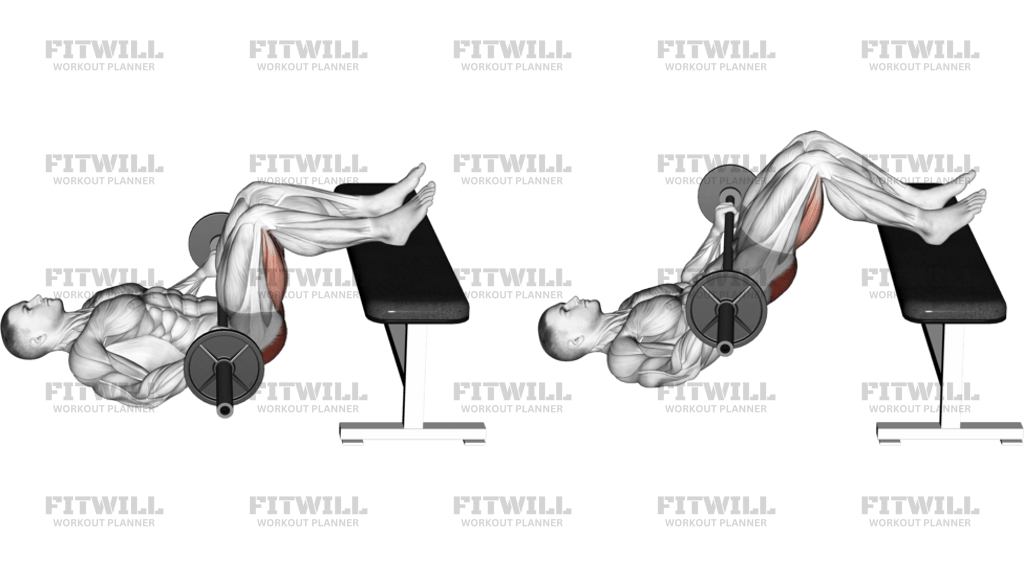
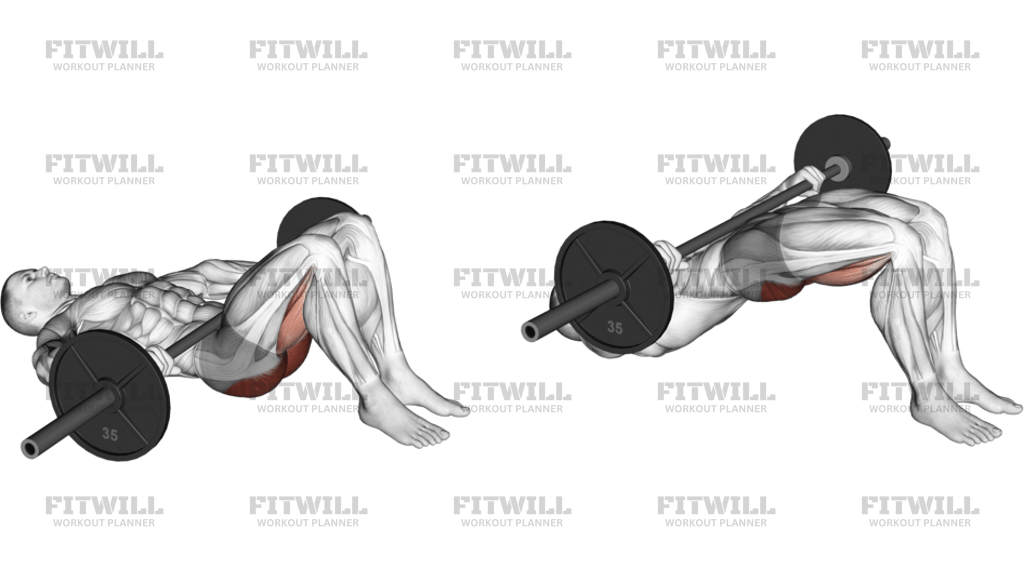
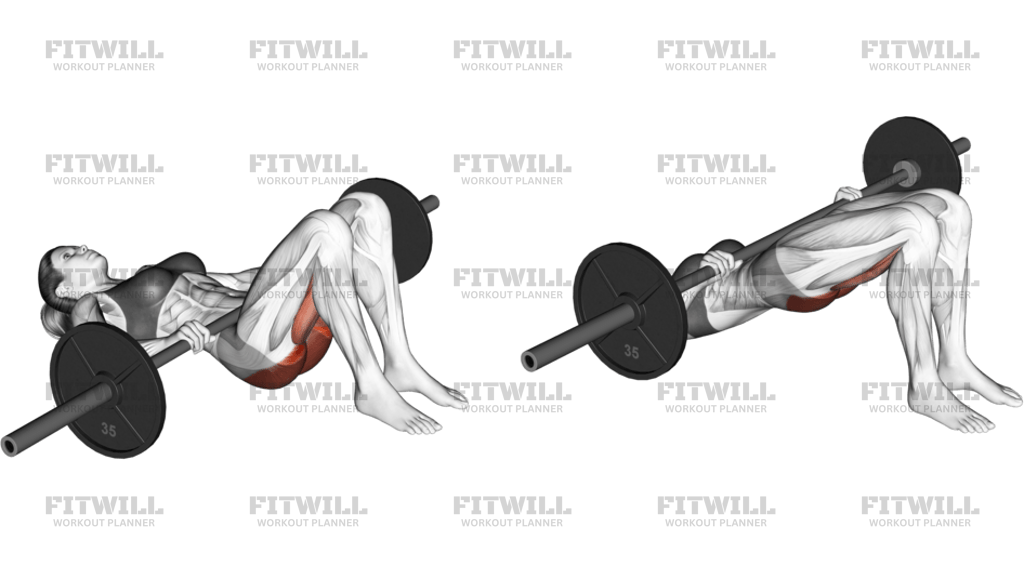
Barbell Glute Bridge Two Legs On Bench is a floor-based hip extension exercise that loads the glutes hard while the feet stay elevated on a bench. With the shoulders and upper back anchored on the floor, the barbell rests across the hip crease and the bench changes the leverage enough to make each rep demand clean pelvis control, steady foot pressure, and a deliberate lockout.
The exercise is built around hip extension, so the glutes do most of the work, with the hamstrings and core helping stabilize the torso and keep the ribs from flaring. Because the feet are supported on the bench, the body has to organize itself before the lift: if the feet slide, the knees drift, or the lower back takes over, the bridge turns into a compensation drill instead of a glute-focused strength movement.
That setup is what makes the movement useful. The bench elevation shortens the distance between the feet and the hips, changes the tension profile, and usually increases the demand on the posterior chain compared with a standard floor bridge. The result is a strong accessory lift for glute growth, hip drive, and lockout strength, especially when you want to train the glutes without the balance demands of a standing hinge or lunge pattern.
Perform it by keeping the bar centered, the chin tucked, and the ribs down as you drive the hips up. The top position should come from squeezing the glutes, not arching the lower back. A controlled descent matters just as much as the lockout, because losing tension on the way down makes the next rep less stable and usually shifts the work away from the hips.
Use this exercise when you want a focused posterior-chain accessory that is easy to load and simple to track. It works well in strength sessions, glute-building blocks, or as a technical bridge variation before heavier hip thrusts or deadlift work. Start light enough to keep the bench steady, the feet planted, and the hip path clean from the first rep to the last.
[ Workout Log & Planner ]
Put your next workout in Fitwill
Keep your plan and training log ready when you are.


Instructions
- Sit on the floor in front of a stable bench, roll a padded barbell into the hip crease, and place both heels on top of the bench about hip-width apart.
- Lie back with your shoulder blades and upper back on the floor, bend the knees so the shins are angled comfortably, and keep the feet flat on the bench.
- Grip the bar just outside your hips, tuck your chin slightly, and brace your ribs down before the first rep.
- Press through your heels to drive the hips up until your torso and thighs form a strong straight line.
- Finish by squeezing the glutes and keeping the pelvis neutral instead of arching the lower back.
- Lower the hips under control until the bar returns close to the floor and the glutes stay under tension.
- Keep the knees tracking in line with the toes and avoid letting the feet slide on the bench.
- Breathe out as you lift and inhale as you lower, then repeat for the planned reps.
Tips & Tricks
- Center the bar on the hip crease and use a pad so the load does not roll or dig into the pelvis.
- Keep the bench stable and non-slip; if the feet slide, the rep loses glute tension immediately.
- Set the feet so the shins stay close to vertical at the top, which usually keeps the load on the glutes instead of the hamstrings or low back.
- Do not push the hips so high that the ribs flare and the lower back takes over the lockout.
- Think about driving through the heels and midfoot together, not just smashing the toes into the bench.
- Pause for a brief squeeze at the top when the pelvis is level and the bar is steady.
- Lower slowly enough that you can keep the torso braced and the knees from drifting inward or outward.
- If the hamstrings cramp, bring the feet a little closer and shorten the range before adding more weight.
Frequently Asked Questions
What does Barbell Glute Bridge Two Legs On Bench train most?
The main target is the glutes, with the hamstrings and core helping stabilize the rep.
Why are both feet placed on the bench?
The elevated feet change the leverage of the bridge and make the hip extension demand feel different from a standard floor bridge.
Should I feel this more in my glutes or hamstrings?
You should feel the glutes driving the lockout most strongly, with the hamstrings assisting but not dominating the movement.
How do I keep my lower back from taking over?
Keep the ribs down, stop the hip lift when the torso is straight, and avoid cranking into a hard lumbar arch at the top.
Is this the same as a hip thrust?
No. A hip thrust usually uses the upper back on a bench, while this version keeps the shoulders on the floor and the feet elevated on the bench.
Can beginners use this exercise?
Yes, as long as the bench is stable and the load stays light enough to control the bar and pelvis cleanly.
What is the best foot position on the bench?
Place the feet about hip-width apart and adjust them so the knees stay stacked over the ankles near the top of the bridge.
How can I make the movement harder without just adding weight?
Use a slower lowering phase, add a brief pause at the top, or slightly tighten the foot position so the bridge stays strict.