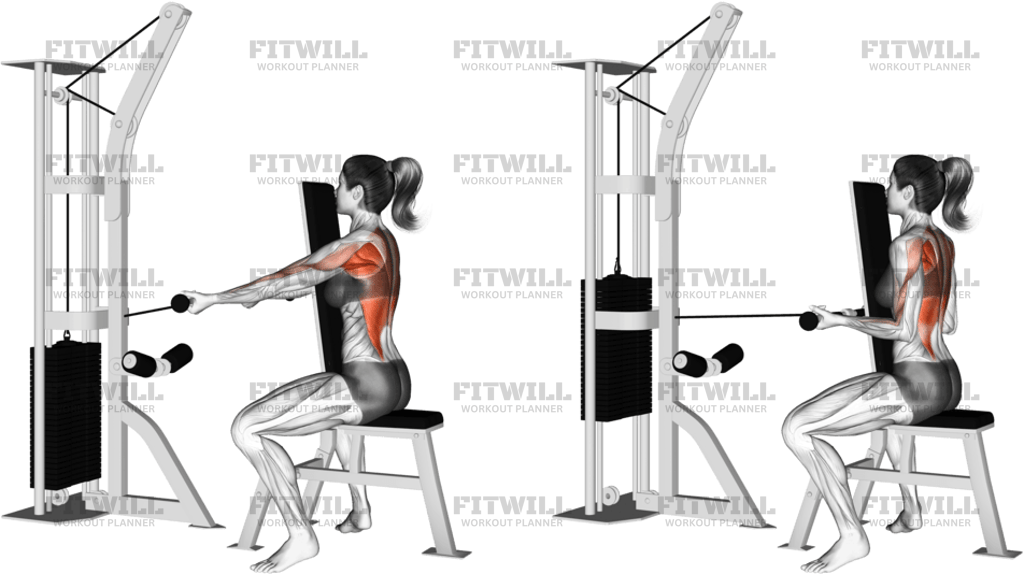
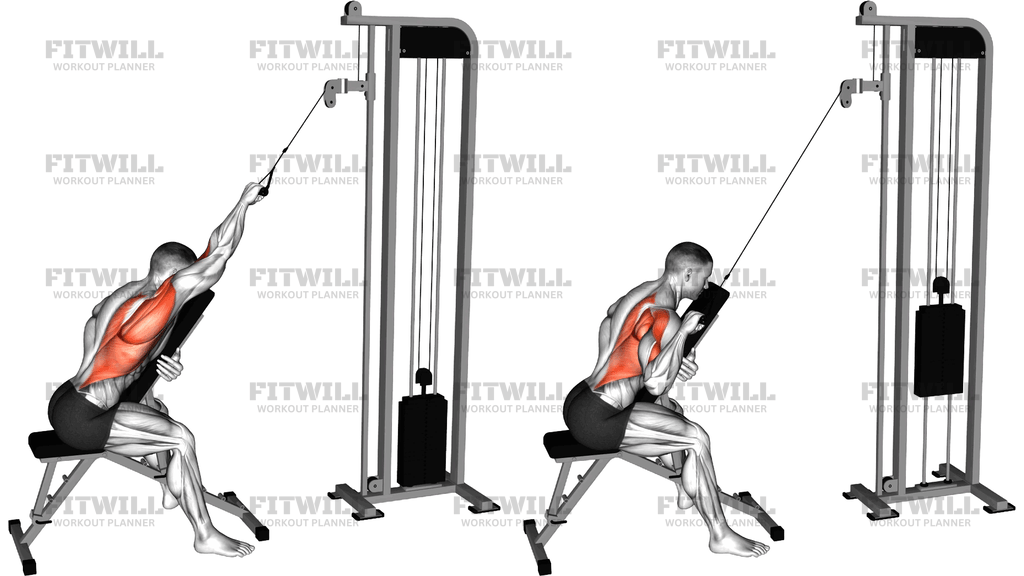
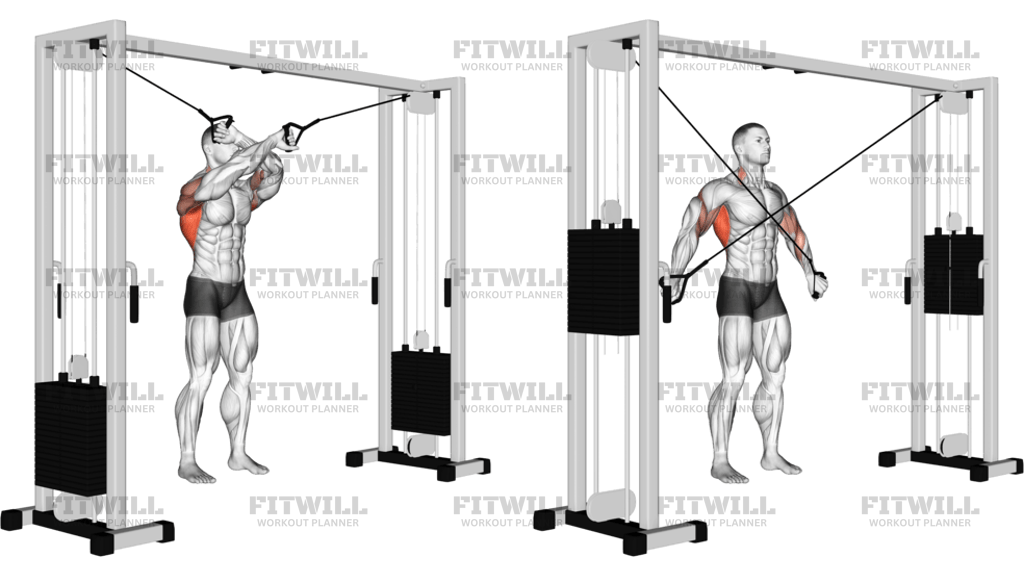
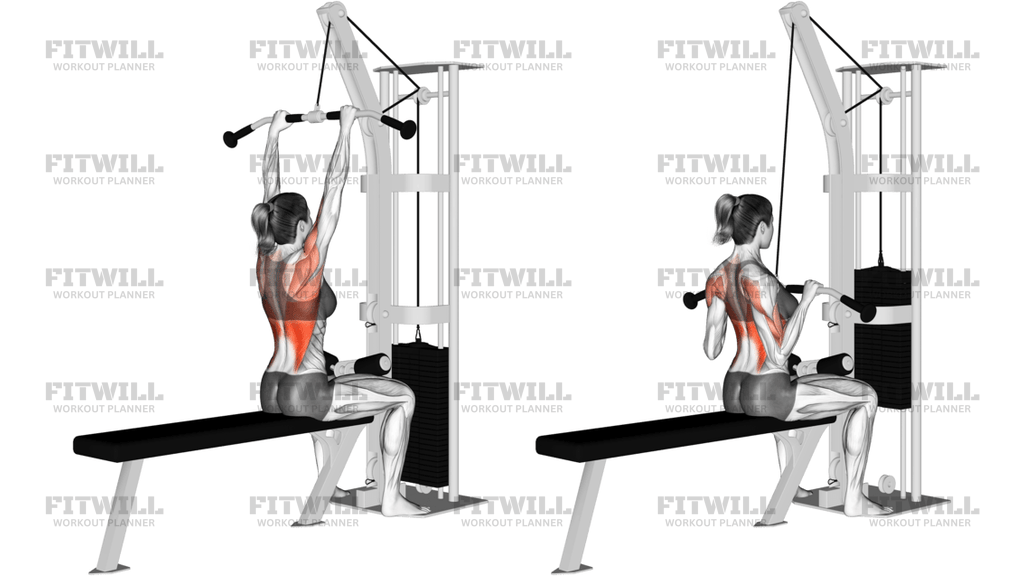
Cable One-Arm Pulldown
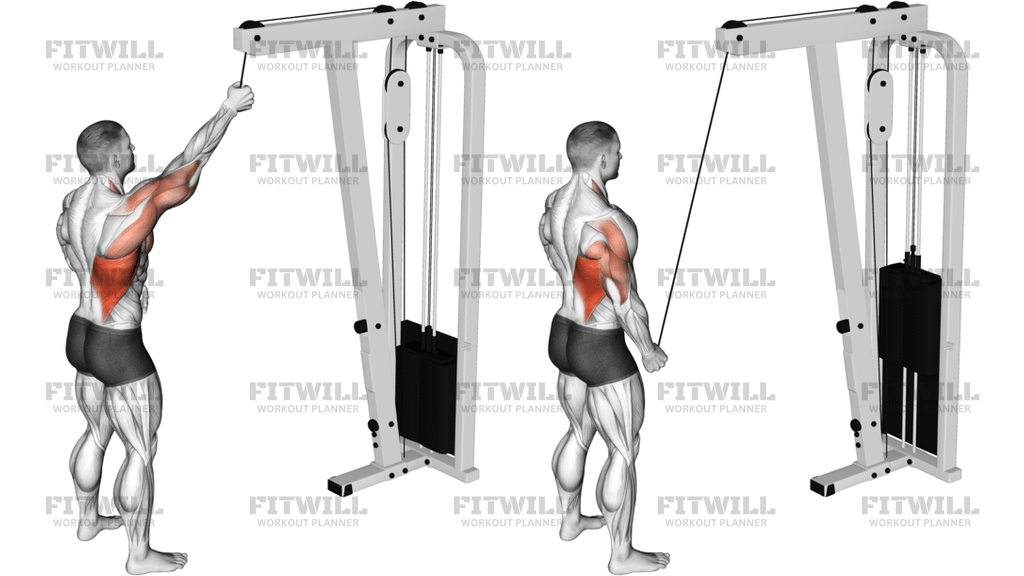
Cable One-Arm Pulldown is a standing cable exercise that trains the lats through a long overhead-to-hip pull. The high pulley gives you constant tension, so the challenge is not just moving the handle down, but keeping the shoulder packed and the torso quiet while the working arm does the work. That makes Cable One-Arm Pulldown especially useful for building lat control, upper-back awareness, and cleaner pulling mechanics.
The main target is the latissimus dorsi, with the rhomboids, biceps, and forearm flexors helping to stabilize the arm and guide the handle. Because only one side works at a time, Cable One-Arm Pulldown also exposes left-to-right differences that can hide in two-arm pulldowns. If one shoulder wants to shrug or one side of the torso wants to twist, the cable setup makes that compensation obvious quickly.
The setup matters a lot in Cable One-Arm Pulldown. Stand far enough from the stack that the handle has tension in the starting position, then organize your ribs, pelvis, and shoulder before you pull. A slight staggered stance or a small forward lean is fine if it helps you stay balanced, but the repetition should still come from the shoulder and elbow moving through a controlled arc rather than from body swing.
On each rep, think about pulling the elbow down toward the front pocket or upper thigh while the hand stays relaxed and the wrist stays neutral. The arm should finish beside the ribcage or hip, not behind the body, and the return should be slow enough that the lat stays loaded all the way back to the overhead stretch. That overhead lengthened position is where the exercise earns much of its training effect, as long as you do not let the shoulder dump upward into your ear.
Cable One-Arm Pulldown fits well in back-focused sessions, accessory work, or unilateral training blocks when you want a strict lat movement without heavy spinal loading. It is usually a good choice for beginners and experienced lifters alike when the goal is better control, cleaner scapular positioning, and a strong mind-muscle connection. Keep the load honest, keep the movement smooth, and let each side work through the same path before switching arms.
Fitwill
Log Workouts, Track Progress & Build Strength.
Achieve more with Fitwill: explore over 9600 exercises with images and videos, access built-in and custom workouts, perfect for both gym and home sessions, and see real results.
Start your journey. Download today!




Instructions
- Set the pulley on a high setting and clip on a single handle attachment.
- Stand facing the cable stack and take the handle in one hand with your palm facing in or slightly forward.
- Step back until the cable is taut with your arm reaching overhead and the working shoulder still under control.
- Set a staggered or split stance if needed so you can stay balanced without swaying.
- Stack your ribs over your pelvis, keep your chest tall, and soften the working elbow slightly.
- Pull the handle down and slightly in toward your front pocket or upper thigh.
- Keep the shoulder from shrugging and avoid rotating your torso to finish the rep.
- Pause briefly when the handle reaches your hip, then reverse the path slowly back overhead.
- Inhale on the return, exhale as you pull, and reset your shoulder before the next rep.
Tips & Tricks
- Think about driving the elbow to your front pocket instead of yanking the handle with your hand.
- If your shoulder creeps toward your ear, lighten the load and start each rep by setting the shoulder down first.
- A staggered stance helps stop torso sway when the stack gets heavy or the cable pulls you off balance.
- Finish with the handle beside your hip or lower ribs, not behind your body like a row.
- Keep the wrist neutral so the forearm does not take over the movement.
- Use a slower return to keep tension on the lats as the arm reaches overhead.
- If you feel the movement mostly in the biceps, reduce the load and focus on leading with the elbow.
- Do not twist your chest toward the cable to fake a bigger range of motion.
- Stop the set when you can no longer keep the same shoulder position side to side.
Frequently Asked Questions
What muscle does Cable One Arm Pulldown target most?
The lats are the main target, with the upper back, biceps, and forearms assisting to control the handle.
Can beginners perform this exercise?
Yes. It is a good beginner lat exercise if you keep the load light and avoid shrugging or twisting.
Where should the handle finish on Cable One-Arm Pulldown?
It should finish near the front pocket or upper thigh on the working side, with the shoulder still depressed.
Should I lean back during Cable One-Arm Pulldown?
A slight lean is fine, but do not turn it into a body-swing or row. The torso should stay mostly still.
Why do I feel Cable One-Arm Pulldown in my biceps?
Some biceps work is normal, but the pull should start from the shoulder and elbow, not from curling the handle.
What stance works best for Cable One-Arm Pulldown?
A split stance usually feels most stable because it lets you resist the cable without rocking your torso.
Can I use this instead of a regular pulldown?
Yes, it can be a useful single-arm accessory or warm-up variation, especially if you want more side-to-side control.
How do I keep my shoulder safe on the overhead stretch?
Let the arm reach overhead without letting the shoulder shrug toward your ear, and keep the return controlled.