Seated Shoulder Flexor Depressor Retractor Stretch Bent Knee
Seated Shoulder Flexor Depressor Retractor Stretch Bent Knee is a floor-based chest and front-shoulder opening drill performed with both knees bent and the hands planted behind the hips. The bent-knee position makes it easier to keep the pelvis grounded and the lower back from taking over, so the stretch stays where it should: across the front of the shoulders, upper chest, and upper arm line.
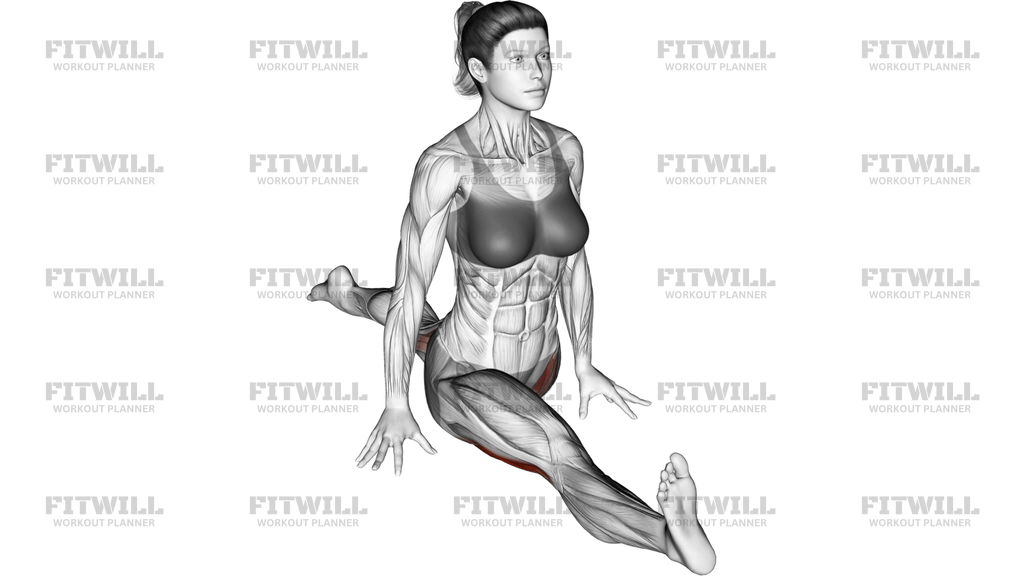
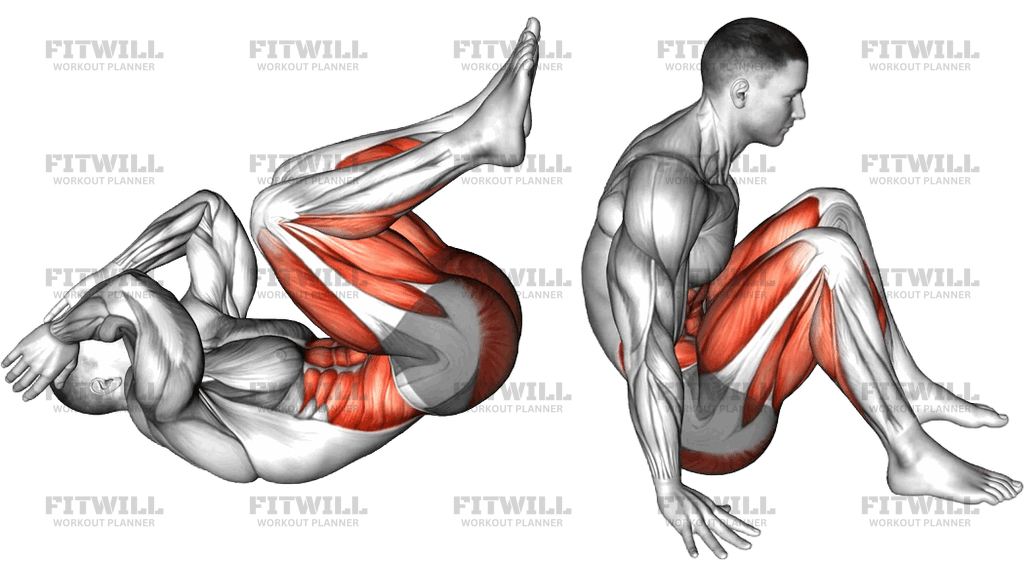
The image shows a supported seated position with the torso opening backward rather than collapsing. That matters because the purpose of Seated Shoulder Flexor Depressor Retractor Stretch Bent Knee is not to force a big bridge or dump into the wrists. The aim is a controlled stretch that teaches the shoulders to stay depressed and retracted while the chest broadens and the neck stays long.
This stretch is useful for lifters who press, row, climb, or spend long periods with rounded shoulders. It can help restore a little shoulder extension and make the front of the body feel less tight before pressing work or after an upper-body session. Beginners usually tolerate the bent-knee version well because the feet and hips remain close to the floor and the range can be scaled down easily.
Set up with the hands just behind the hips, fingers turned slightly out or back, elbows softly unlocked, and the chest tall before you load any weight through the palms. From there, shift only as far as you can keep the shoulders away from the ears and the ribs from flaring. If the front of the shoulder pinches, shorten the reach by walking the hands closer to the body and reducing how far you lean back.
Treat the hold like a quality posture drill, not a race for the deepest position. Breathe steadily, keep the neck relaxed, and come out of the stretch slowly so the shoulders do not spring forward again. Done well, Seated Shoulder Flexor Depressor Retractor Stretch Bent Knee is a simple way to open the front of the body without losing control of the shoulder girdle or overstressing the wrists and elbows.
[ Workout Log & Planner ]
Put your next workout in Fitwill
Keep your plan and training log ready when you are.


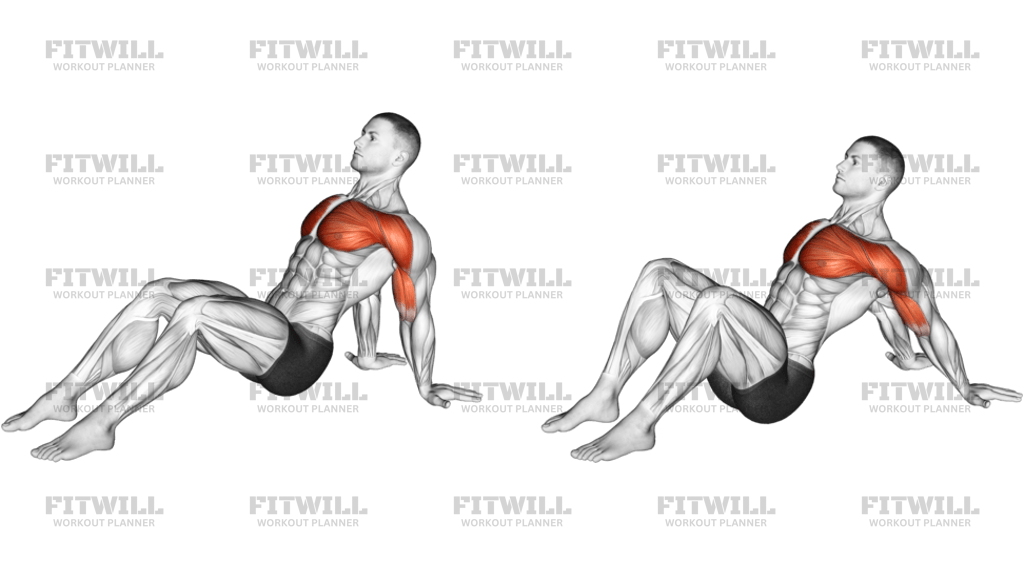
Instructions
- Sit on the mat with both knees bent, feet flat, and your hands placed on the floor just behind your hips.
- Turn your fingers slightly out or back so your wrists feel stable and your palms can share the load.
- Keep your elbows soft, chest lifted, and shoulders away from your ears before you shift any weight backward.
- Press lightly through your hands and feet to open the front of the body without letting your ribs flare.
- Let your sternum rise and your shoulder blades draw down and back as the stretch builds across your chest.
- Hold the open position for a controlled breath or short pause while keeping your neck long and your chin neutral.
- If the stretch moves into a sharp pinch at the front of the shoulder or a hot spot in the wrist, bring your hands closer to your hips and reduce the lean.
- To finish, ease your chest back to neutral, unload your palms, and reset your shoulders before repeating.
Tips & Tricks
- Keep the hands only slightly behind the hips; moving them too far back makes the front of the shoulders work harder than the stretch itself.
- A small bend in the elbows is fine if it keeps the shoulder joint from feeling jammed.
- Think about lifting the sternum, not forcing the lower back into a big arch.
- If the wrists complain, turn the fingers a little farther out and spread the weight across the whole palm.
- The bent-knee position should make the drill feel more controlled, not less; use it to keep the pelvis anchored.
- A good rep feels like a broad opening across the pecs and front delts, not a pinch deep in the shoulder socket.
- Exhale into the hold so the chest can settle without shrugging the shoulders upward.
- Stop short of any sharp pain, especially if the front of the shoulder or the wrist starts to light up.
Frequently Asked Questions
What does Seated Shoulder Flexor Depressor Retractor Stretch Bent Knee stretch most?
It mainly opens the chest, front delts, and the front line of the shoulder, while encouraging the shoulder blades to stay down and back.
Is Seated Shoulder Flexor Depressor Retractor Stretch Bent Knee a mobility drill or a strength exercise?
It is a mobility and positioning drill. The goal is a controlled stretch, not a loaded strength effort.
Why are the knees bent in Seated Shoulder Flexor Depressor Retractor Stretch Bent Knee?
Bent knees make it easier to keep the pelvis and lower back under control, which keeps the stretch focused on the chest and shoulders.
How far behind my hips should my hands go?
Only far enough to feel the chest open without a pinch in the shoulder. Closer hands make the stretch easier and safer.
Should my elbows stay locked in Seated Shoulder Flexor Depressor Retractor Stretch Bent Knee?
No. Keep a soft bend so the elbows and wrists do not get jammed while you hold the position.
Can I use Seated Shoulder Flexor Depressor Retractor Stretch Bent Knee before pressing?
Yes. It can be a useful warm-up for pressing days because it opens the front of the shoulders and chest.
What should I do if Seated Shoulder Flexor Depressor Retractor Stretch Bent Knee bothers my wrists?
Turn the fingers slightly out or back, spread the weight across the palm, and reduce how much you lean into your hands.
How long should I hold Seated Shoulder Flexor Depressor Retractor Stretch Bent Knee?
Hold it for 15 to 30 seconds or for 2 to 4 calm breaths, then reset before repeating.