Roll Recumbent Hip External Rotator And Hip Extensor Stretch Crossedleg
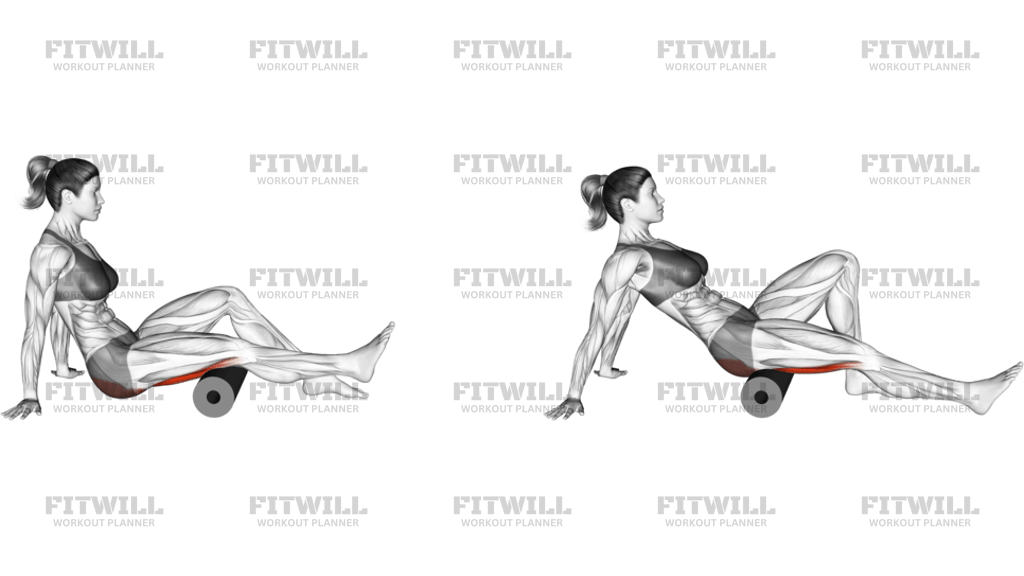
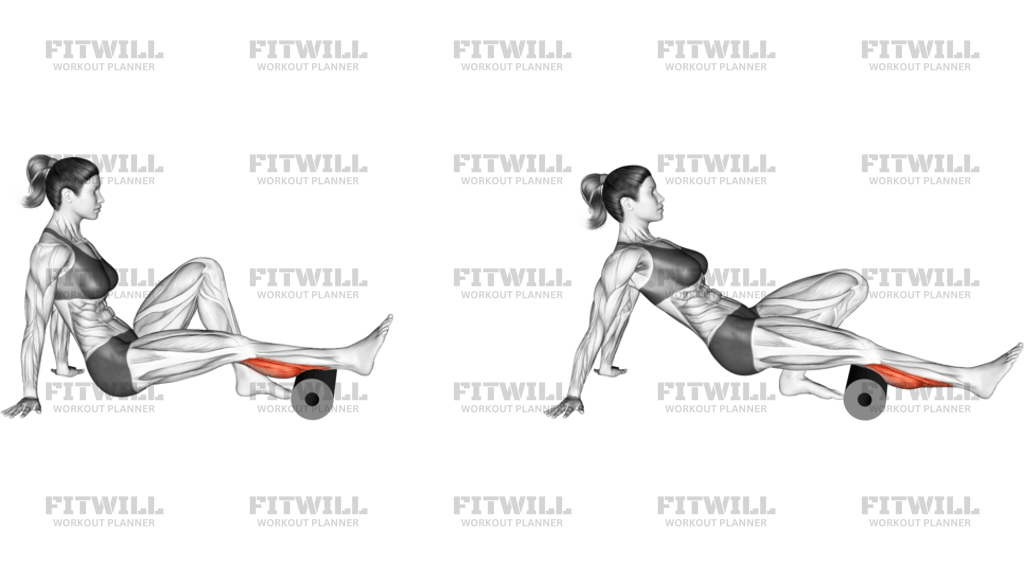
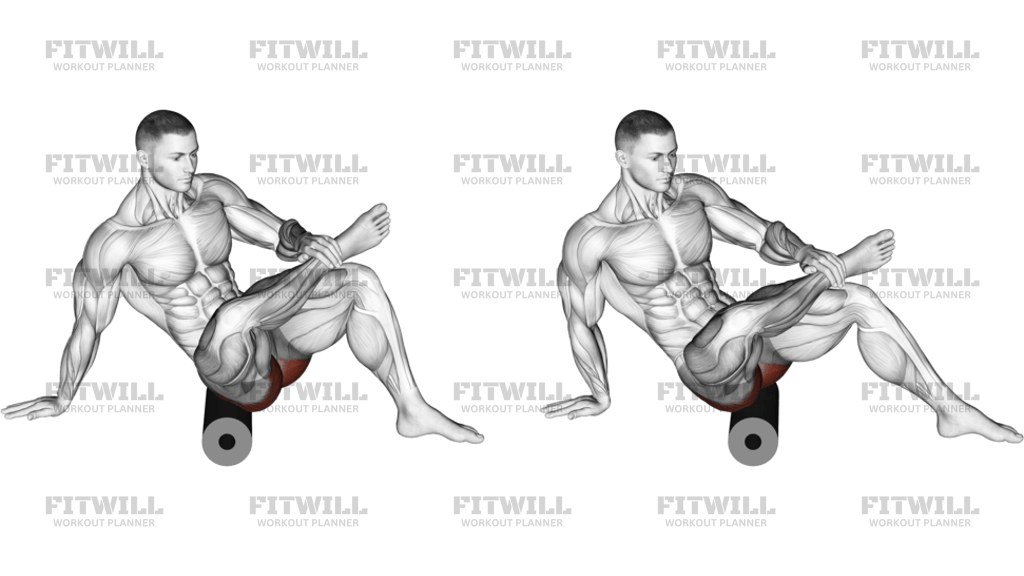
Roll Recumbent Hip External Rotator and Hip Extensor Stretch (CrossedLeg) is a seated foam-roll mobility drill for the outer hip, glute, and the back side of the working leg. The roller lifts the pelvis just enough to make the stretch easier to find and easier to control, while the crossed-leg position biases the deep external rotators and the posterior hip capsule. In the image, the athlete is supported on one hand behind the body, with the other hand helping guide the crossed leg, which keeps the stretch honest instead of letting the torso collapse.
This is not a forceful stretch. The goal is to create a clear but comfortable pull through the glute, piriformis area, and sometimes the upper hamstring or hip flexor line depending on how far the support leg is extended. Small changes in how far you sit back on the roller, how upright your chest stays, and how much you reach the free hand toward the crossed leg will noticeably change where the stretch lands. That makes this movement useful when the hips feel locked up before lower-body training, after long sitting, or during a recovery session where you want to open the hips without getting off the floor.
The foam roll matters because it gives you a narrow, stable contact point under the pelvis. That support lets you settle into the stretch, then adjust side to side until the tighter hip is loaded without pinching the front of the hip or rounding the low back. Keep the chest lifted, ribs controlled, and neck relaxed. If the support leg straightens as shown in the image, let it happen gradually; that change lengthens the back of the hip and shifts more demand into the glute and external rotators of the crossed side.
Use slow breathing and wait for the tissues to soften before asking for more range. A good rep feels like a steady opening, not a jammed position. If you feel pressure in the knee of the crossed leg, reduce the depth of the cross or keep the shin lower. If you feel compression in the low back, move more weight onto the supporting hand and reduce how far you lean back. The best version of this drill is repeatable: you should be able to settle in, breathe, and exit without losing position or forcing the stretch.
[ Workout Log & Planner ]
Put your next workout in Fitwill
Keep your plan and training log ready when you are.


Instructions
- Sit on the foam roller with the roller under one glute and the other foot planted so you can stay balanced.
- Cross one ankle over the opposite thigh, keeping the crossed knee open enough that the hip and knee feel supported.
- Place one hand on the floor behind you and lengthen the spine before you lean back.
- Use the free hand to hold the crossed leg or ankle so it does not drift as you settle into position.
- Slowly shift your weight back until you feel the stretch in the outer hip and glute of the crossed side.
- If the image variation fits your body better, gradually extend the support leg to increase the stretch through the back of the hip.
- Keep breathing and pause at the end range for a few seconds without bouncing.
- Ease out of the stretch with control, reset the setup, and repeat on the other side.
Tips & Tricks
- Let the foam roller sit under the fleshy part of the glute, not directly on the tailbone or low back.
- Keep the crossed foot relaxed; pulling the toes aggressively often turns this into a knee strain instead of a hip stretch.
- A taller chest usually shifts the stretch more into the outer hip, while leaning farther back biases the glute and posterior hip.
- Straightening the support leg increases tension fast, so add that range only after you can hold the basic position comfortably.
- Use the hand behind you to offload pressure if the roller feels unstable or if the low back starts to round.
- Breathe out slowly as you settle deeper; that usually works better than forcing the knee or ankle farther.
- If one side feels much tighter, spend a little longer there instead of pushing harder into the first rep.
- Stop if you feel sharp pain in the knee, pinching in the front of the hip, or numbness down the leg.
Frequently Asked Questions
What does Roll Recumbent Hip External Rotator and Hip Extensor Stretch (CrossedLeg) work most?
It mainly targets the outer hip and glute, especially the deep hip external rotators on the crossed-leg side.
Why use a foam roller for this crossed-leg hip stretch?
The roller lifts the pelvis and gives you a narrow, stable contact point so you can fine-tune the stretch instead of collapsing into the floor.
Should I feel this in my glute or my knee?
You should feel the stretch in the glute and outer hip. If the knee is taking most of it, reduce how high you cross the leg or ease off the depth.
How much should I lean back on the support hand?
Only enough to stay balanced and open the hip. A small change in lean can make the stretch much stronger, so increase it gradually.
Is it okay to straighten the support leg like in the image?
Yes, if it feels smooth and controlled. Straightening that leg usually increases the stretch through the posterior hip and hamstring line.
Can beginners do this stretch safely?
Yes, as long as they keep the chest lifted, use the hand behind for support, and avoid forcing the crossed knee downward.
When should I use this stretch in a workout?
It works well after long sitting, during a warm-up for lower-body training, or in a recovery block when the hips feel stiff.
What should I do if the stretch pinches the front of the hip?
Back out of the range slightly, sit taller, and keep more weight on the support hand so the hip stays open without compression.