Barbell Squat
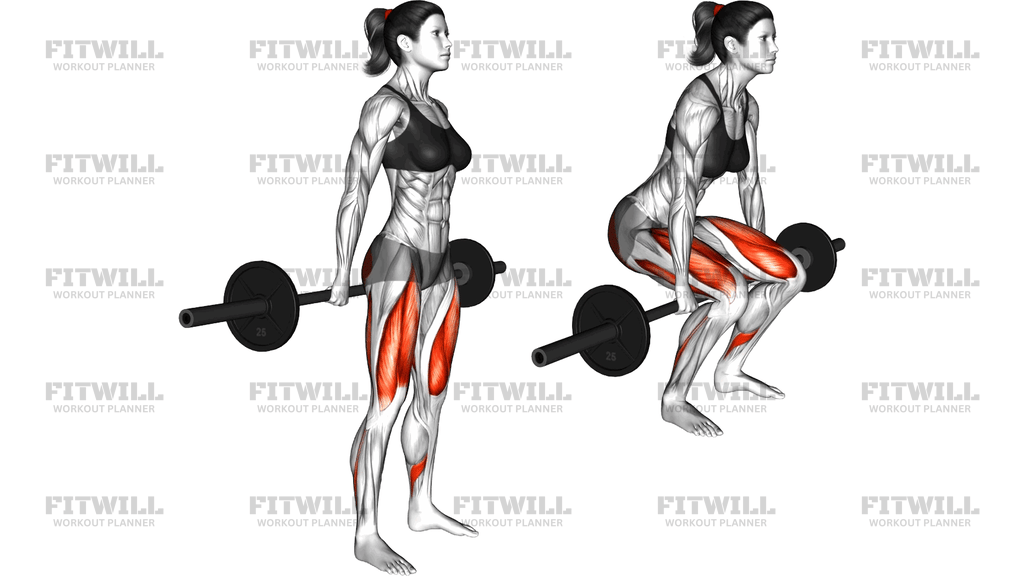
Barbell Squat is a classic barbell back squat performed with the bar resting across the upper back and the feet planted in a stable stance. It is a compound lower-body strength exercise that trains the quads, glutes, adductors, hamstrings, spinal erectors, and trunk together, with the torso acting as a rigid brace while the hips and knees do the moving. The main training value comes from learning to keep the bar path, balance, and bracing consistent as the load increases.
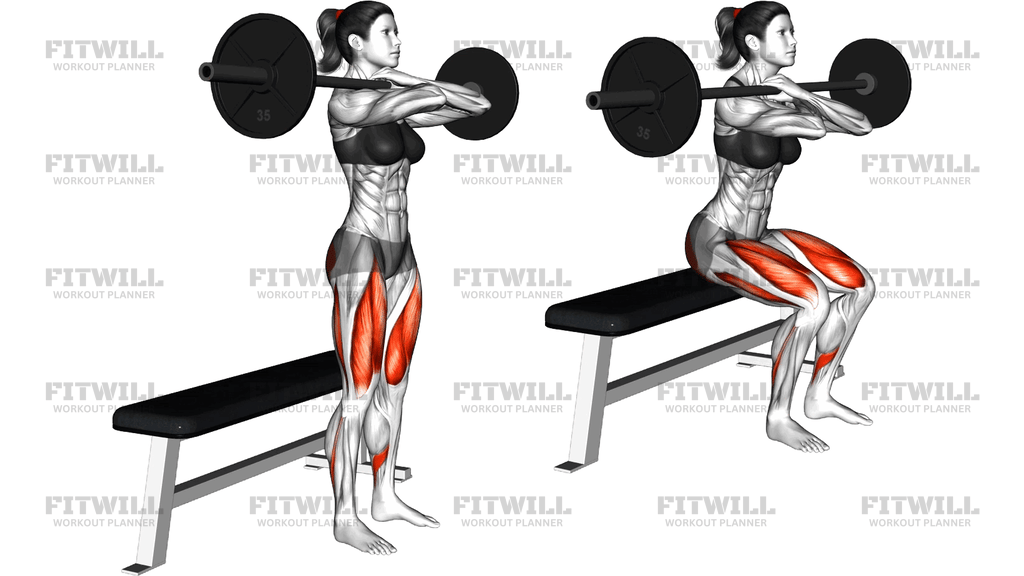
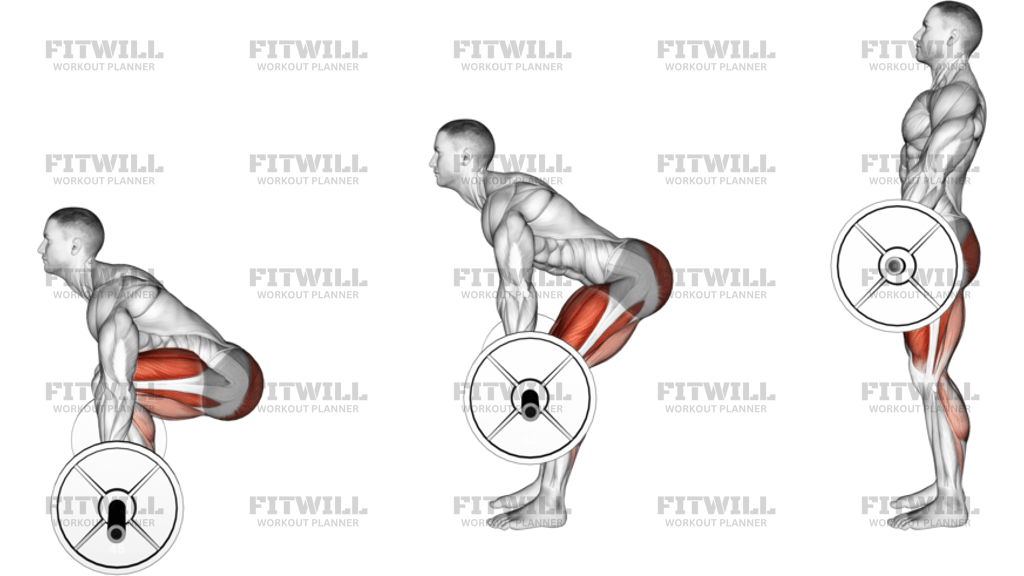
The image shows a standard back squat pattern rather than a machine-assisted or front-loaded variation, so the setup matters as much as the descent. The bar should sit securely on the upper back, the chest should stay proud without overextending the lower back, and the feet should be positioned so the heels can stay down while the knees track in line with the toes. That stance gives you a stable base to descend under control and drive back up without collapsing at the knees or folding at the hips.
A well-executed squat starts before the first rep. After unracking, take a few short steps back, set the feet, and create a hard brace through the midsection before you lower. From there, sit the hips down between the heels while allowing the knees to bend and travel forward naturally. The best reps keep the bar moving over the middle of the foot, the torso controlled, and the depth consistent from rep to rep.
On the way up, press the floor away and drive through the whole foot, not just the toes. The hips and shoulders should rise together so the torso angle does not collapse. Exhale as you pass the hardest part of the ascent, then reset your breath before the next descent. The goal is a repeatable squat pattern that looks controlled from the first rep to the last.
Barbell Squat is useful for general strength work, lower-body hypertrophy, athletic training, and any program that needs a loaded bilateral leg movement. Because the barbell adds compression and demands more trunk control than bodyweight squats, the exercise rewards careful loading and clean mechanics. Start with a load that lets you maintain depth, balance, and tempo, and stop the set when you can no longer keep the bar stable over the midfoot.
[ Workout Log & Planner ]
Put your next workout in Fitwill
Keep your plan and training log ready when you are.


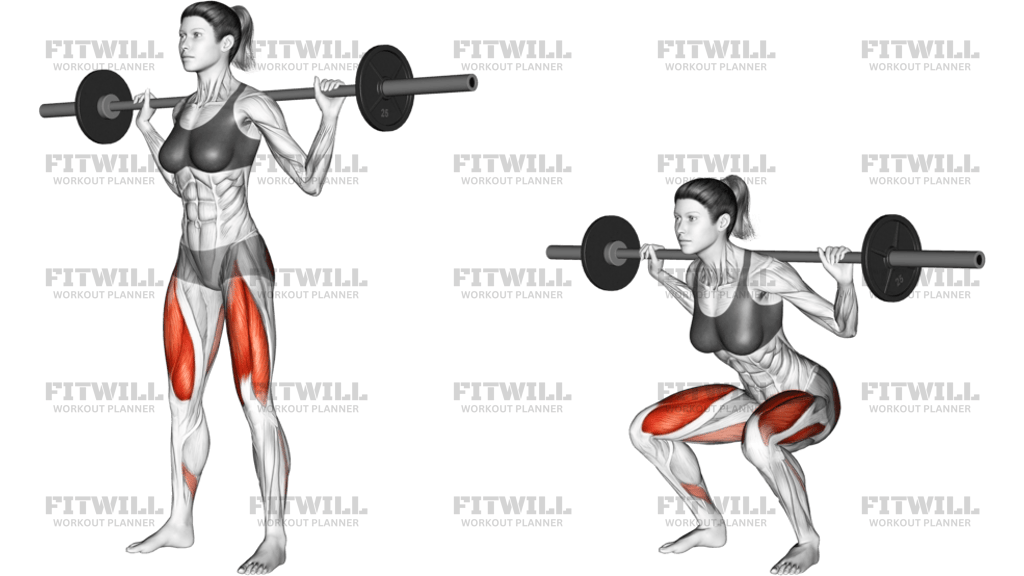
Instructions
- Set the bar across the upper back and grip it just outside shoulder width.
- Step under the bar, lift it clear of the rack, and take two to three short steps back.
- Place your feet about shoulder width apart with toes slightly turned out.
- Brace your trunk hard before you start the descent.
- Sit the hips down and back while letting the knees bend and travel over the toes.
- Keep the chest up and the bar moving over the middle of the foot as you lower.
- Descend until the thighs reach at least parallel or the deepest pain-free depth you can control.
- Drive through the whole foot to stand up, letting hips and shoulders rise together.
- Exhale near the top, then reset your brace before the next rep.
- Walk the bar back into the rack only after you finish the set.
Tips & Tricks
- Set the bar on the upper traps or rear delts, not on the neck or on the very top of the shoulders.
- Keep your elbows angled slightly down and back so the upper back stays tight without cranking the wrists.
- Choose a stance that lets your heels stay planted all the way to depth.
- Let the knees travel forward and outward instead of forcing them to stay vertical.
- Keep the bar stacked over the midfoot; if it drifts forward, the rep usually turns into a good-morning pattern.
- Use a controlled descent so you can own the bottom position instead of bouncing out of it.
- Stay braced through the rep; a soft core makes the chest drop and the lower back take over.
- If the pelvis tucks hard at the bottom, shorten the depth slightly or reduce the load.
- Stop the set when the bar speed, depth, or knee tracking starts to break down.
Frequently Asked Questions
What muscles does the barbell squat work?
It heavily trains the quads and glutes, with strong help from the hamstrings, adductors, spinal erectors, and core.
Where should the bar sit during a back squat?
The bar should rest across the upper back, usually on the traps or rear delts, so it feels secure before you unrack.
How deep should I go in the squat?
Go as deep as you can while keeping the heels down, the knees tracking well, and the lower back from rounding.
Why do my knees move forward in the descent?
Forward knee travel is normal in a back squat as long as the knees track over the toes and the feet stay grounded.
Is a barbell squat beginner friendly?
Yes, if you start with an empty bar or a light load and learn the rack-out, brace, and depth before adding weight.
What is the most common squat mistake?
Letting the chest collapse and the hips shoot back early usually shifts the load away from the legs and turns the squat into a hinge.
Should I use a heel lift or squat shoes?
They can help if ankle mobility limits depth or balance, but the squat should still feel stable and controlled without them.
How do I know if the set is too heavy?
If the bar drifts forward, the knees cave, or you lose depth and bracing within a few reps, the load is too much for that set.