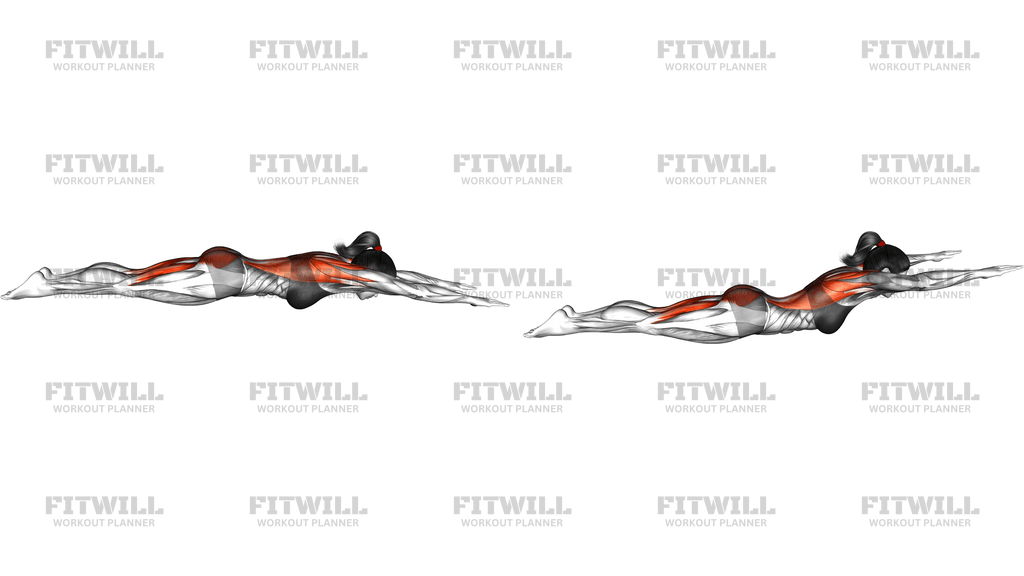
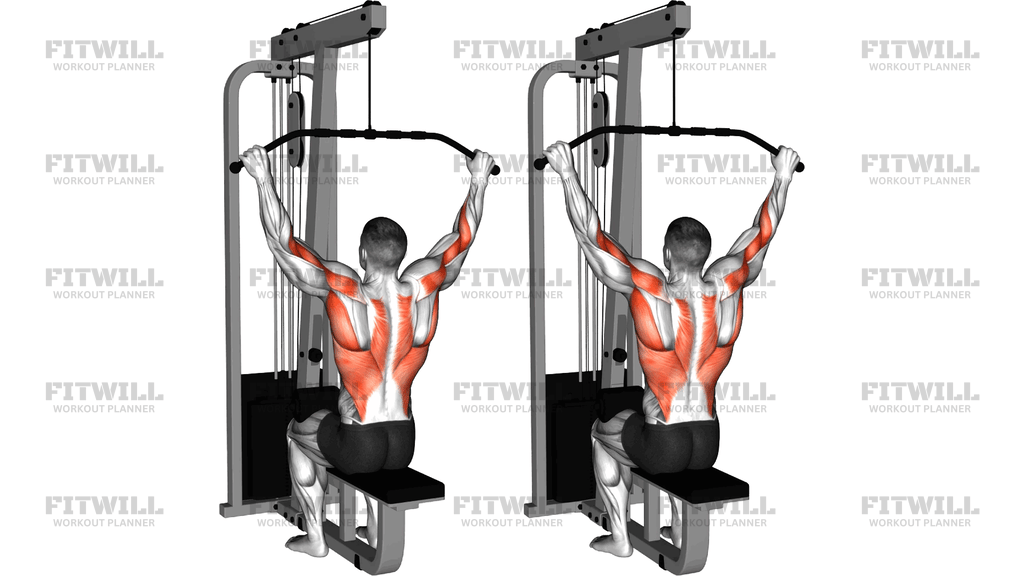
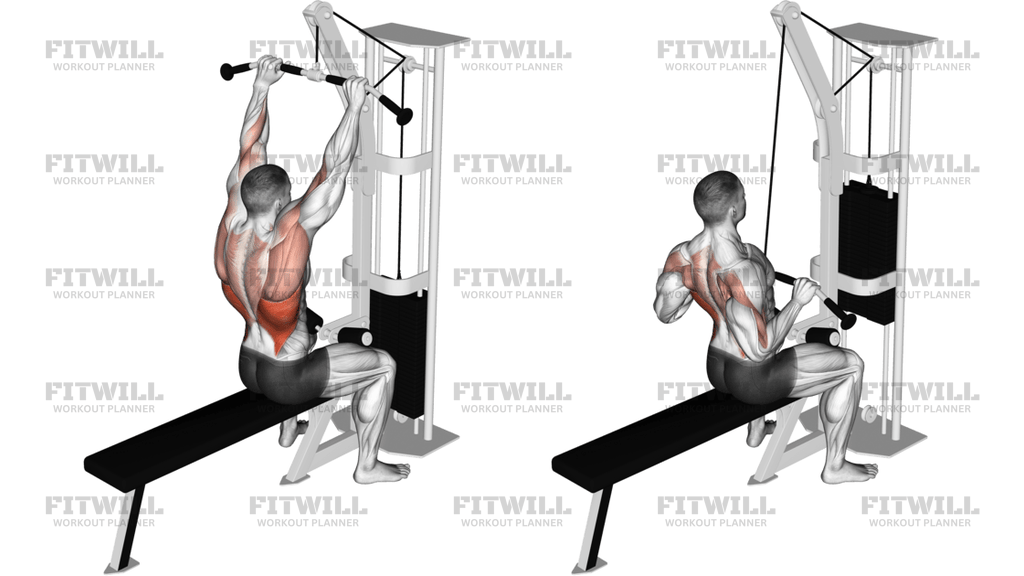
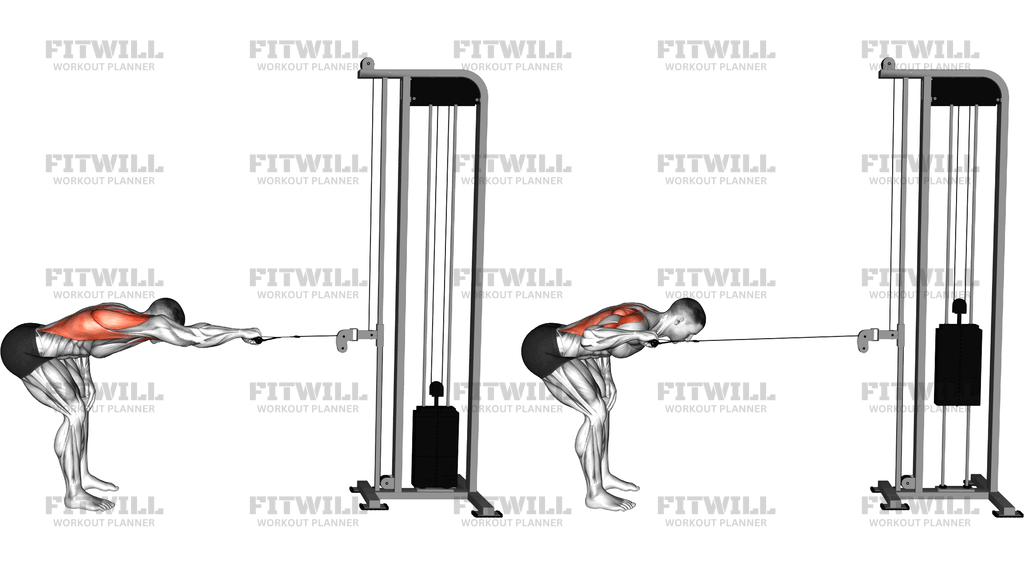
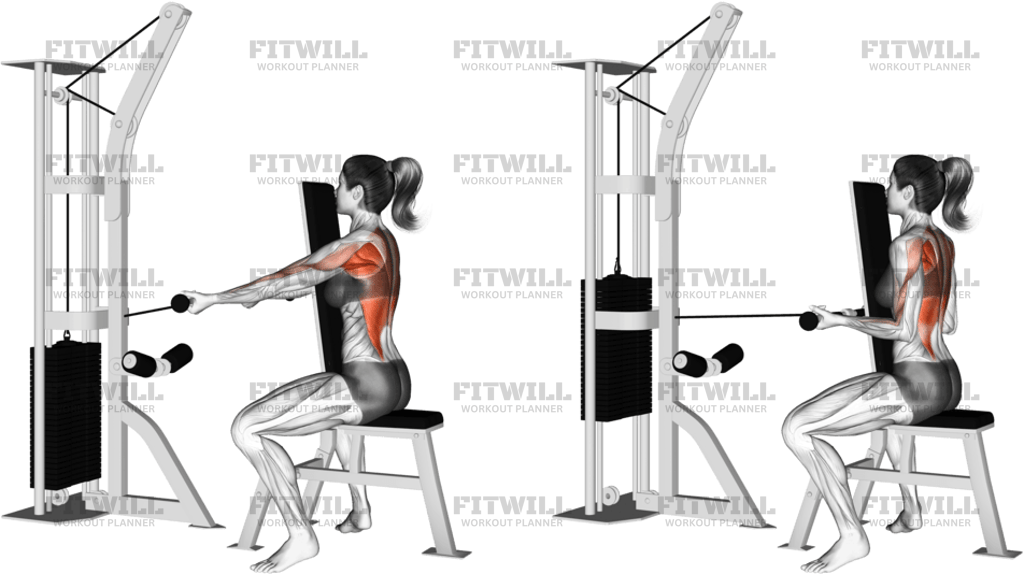
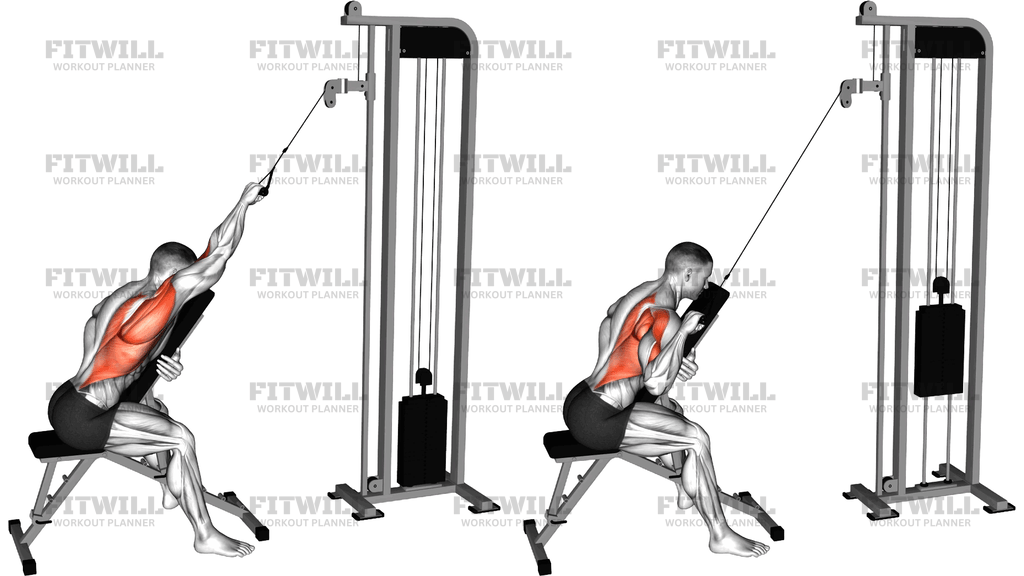
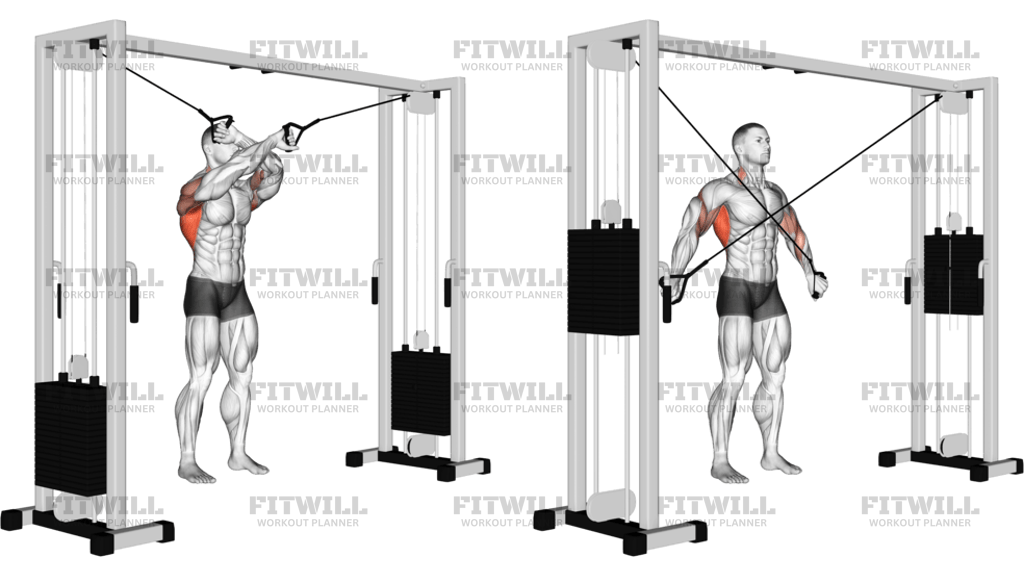
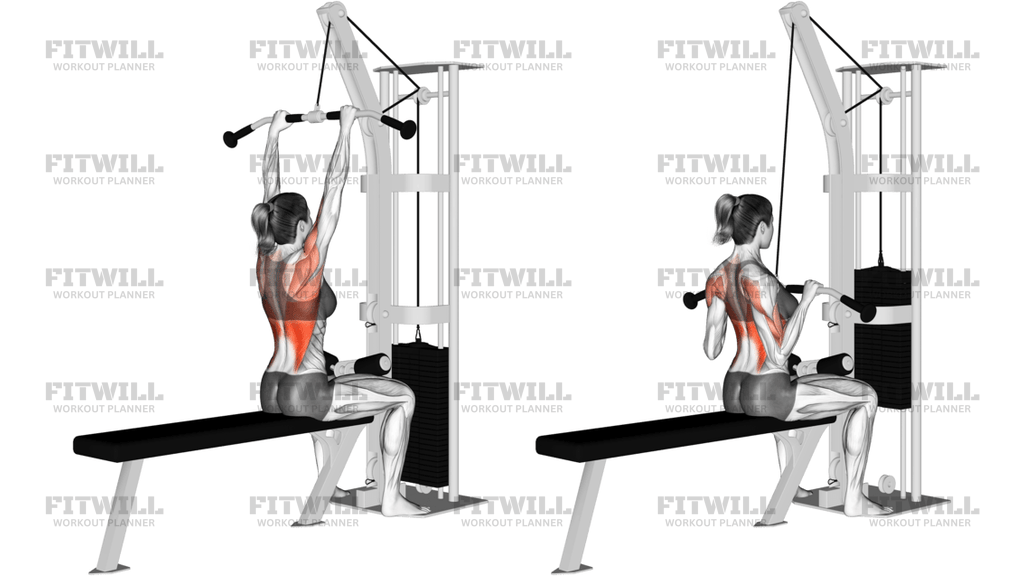
Cable One-Arm Twisting Seated Row
Cable One-Arm Twisting Seated Row combines a single-arm cable row with a controlled torso turn, so the pull trains the lats and upper back while also challenging the trunk to stay organized through rotation. The exercise is usually done from a low pulley with a handle attachment, sitting on the floor or a mat a short distance from the stack. That low, anchored setup matters because it keeps the line of pull predictable and makes the twist come from the torso, not from swinging the whole body.
The main back demand comes from the latissimus dorsi, with the rhomboids, biceps, and forearm flexors helping to guide the handle and finish the row cleanly. Because one arm is working at a time, the exercise also exposes side-to-side differences in shoulder control and lets you feel whether one scapula moves more smoothly than the other. The twisting portion should stay purposeful and small, not exaggerated; the goal is to coordinate rotation with the pull, not to turn the row into a full-body heave.
A good rep starts before the handle moves. Sit tall, plant your hips firmly on the floor, and let the non-working side help you stay balanced while your working arm reaches toward the pulley. Keep the chest long and the shoulders set so the shoulder blade can glide first, then the elbow can travel back toward the rib cage. If you lose the setup and start leaning away from the stack, the exercise quickly shifts from back work to a tug-of-war with momentum.
As you row, rotate only as far as you can keep the ribs stacked and the spine long. The handle should travel in a smooth arc toward the lower ribs or side of the torso, and the return should happen under control so the cable never jerks you forward. That controlled reversal is where many lifters lose tension, so it is worth slowing the eccentric and keeping the shoulder from rolling forward at the end of each rep.
Cable One-Arm Twisting Seated Row is useful when you want a rowing pattern that feels less machine-dependent than a chest-supported row and more controlled than a standing cable pull. It works well as an accessory back movement, a unilateral correction tool, or a lower-load option for teaching scapular control. Beginners can use it if the twist stays small and the torso remains stable; advanced lifters can make it harder by pausing at the finish and keeping every rep identical instead of chasing extra range.
[ Workout Log & Planner ]
Put your next workout in Fitwill
Keep your plan and training log ready when you are.


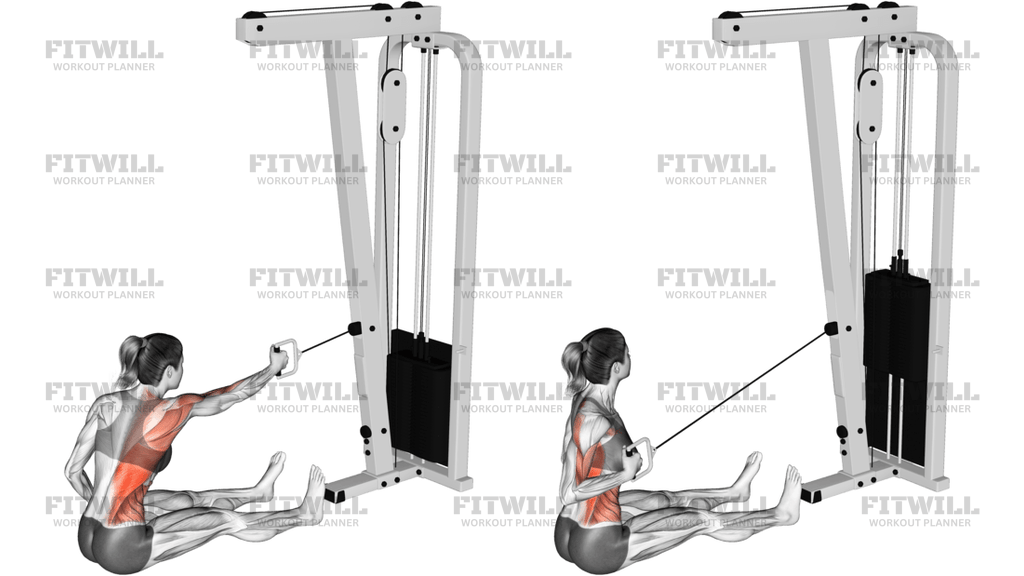
Instructions
- Clip a single handle to a low pulley on the cable machine and sit on the floor or a mat facing the stack, far enough away that the cable starts with the arm extended.
- Plant your hips and legs in a stable position, then hold the handle with the working arm while the other hand helps you balance on the floor or beside your body.
- Sit tall with your chest open, shoulders down, and your spine long before you begin the first pull.
- Reach forward into the start position without collapsing your torso or rounding your lower back.
- Initiate the rep by drawing your shoulder blade back, then pull the elbow toward your side as you start to rotate your torso slightly.
- Keep the twist controlled so the ribs and shoulders turn together without rocking your hips off the floor.
- Finish with the handle close to your lower ribs or waist and a brief squeeze through the back and side of the torso.
- Return the handle forward slowly, letting the shoulder blade travel with control until the arm is fully extended again.
- Exhale as you pull, inhale as you reach forward, and reset your posture before the next repetition.
Tips & Tricks
- If the cable yanks your shoulder forward at the start, sit a little closer to the stack so the first inch of the rep is not overstretched.
- Keep the rotation small enough that your hips stay planted; the twist should come from the torso, not from sliding across the floor.
- Pull the elbow back and slightly in, toward the lower ribs, instead of flaring it wide like a rear-delt row.
- A brief pause at the finish makes it easier to feel the lats and upper back instead of rushing straight into the return.
- Let the handle move forward under tension rather than letting the stack slam and pull your shoulder into protraction.
- Choose a load that lets you rotate smoothly; if you have to jerk the cable, the resistance is too heavy for this pattern.
- Keep the neck relaxed and look straight ahead so the turn stays in the rib cage and upper back instead of the head.
- Use a slower lowering phase if one side feels weaker or less coordinated than the other.
Frequently Asked Questions
What muscles does Cable One-Arm Twisting Seated Row work?
It primarily trains the lats, with help from the rhomboids, biceps, forearm flexors, and the obliques that control the twist.
How much should my torso twist during Cable One-Arm Twisting Seated Row?
Only enough to coordinate the pull and keep the shoulder blade moving cleanly. The hips should stay grounded and the twist should never turn into a full-body swing.
Should I sit on the floor or a bench for this exercise?
The floor or a mat is the common setup because it gives you a low, stable base and makes the rotation easier to control. A bench can work if it keeps you anchored and aligned with the low pulley.
Where should the handle finish on Cable One-Arm Twisting Seated Row?
It should come toward the lower ribs or the side of the waist, not up toward the shoulder. That path keeps the row focused on the back instead of turning it into a shrug.
Is Cable One-Arm Twisting Seated Row beginner-friendly?
Yes, as long as the load is light enough to keep the torso stable and the rotation small. Beginners should learn the row first, then add a little twist once the shoulder path feels smooth.
What is the most common mistake with the twisting version?
Most people rotate too far and lose tension through the back, or they lean away from the stack to fake a bigger pull. Keep the movement controlled and let the cable stay honest.
Why use the twisting version instead of a regular seated row?
The twist adds a trunk-control challenge and can make unilateral back training feel more athletic. It is useful when you want rotation without abandoning the rowing pattern.
How many reps should I do on Cable One-Arm Twisting Seated Row?
Moderate reps usually work well because the exercise rewards control more than heavy loading. Stop the set when the twist gets sloppy or the shoulder starts to roll forward.