Cable Seated Wide-Grip Row
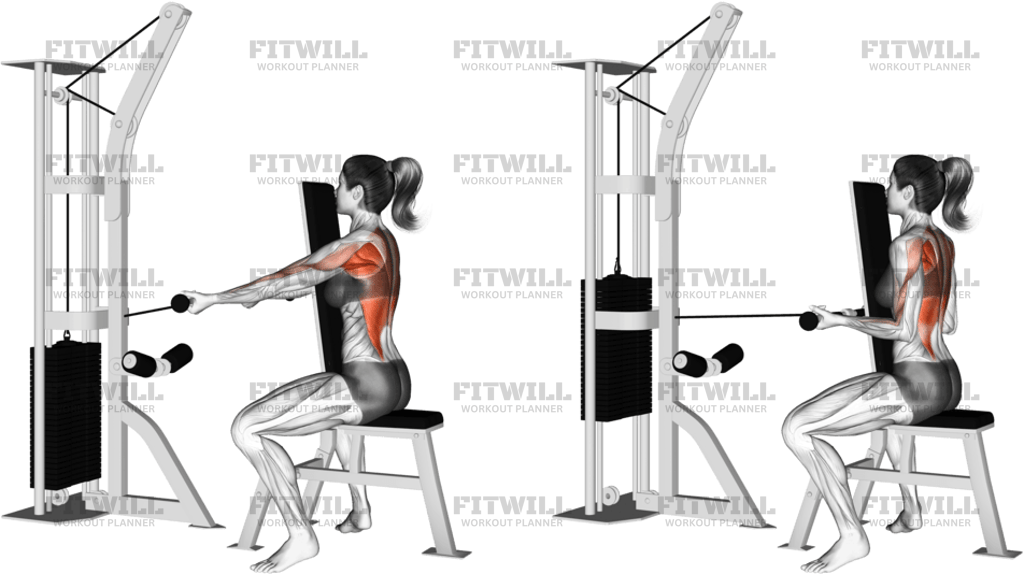
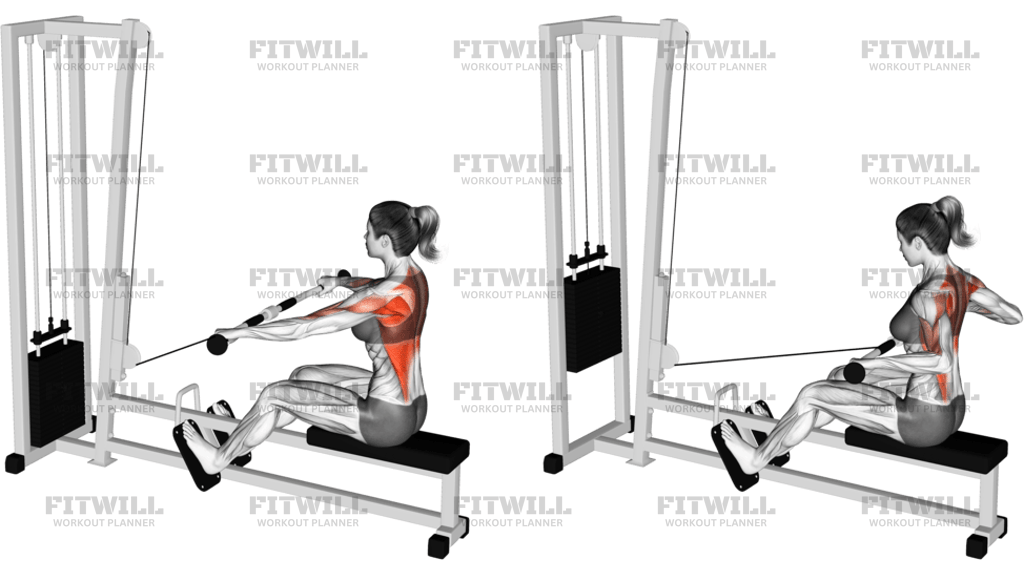
Cable Seated Wide-Grip Row is a seated horizontal pulling exercise done on a cable machine with a wide handle or long row attachment. The torso stays tall while the arms pull the handle toward the upper abdomen or lower ribs, so the back works through a controlled range instead of a swinging, body-English rep. It is a useful rowing pattern for building lat strength, mid-back control, and cleaner scapular movement without needing a free barbell path.
The wide grip changes the feel of the row. Compared with a narrow neutral row, the elbows travel a little farther out from the sides, which usually shifts more of the effort toward the lats, rhomboids, rear delts, and upper-back stabilizers while the biceps and forearms assist. In anatomy terms, the main work centers on the latissimus dorsi, with help from the rhomboids, biceps brachii, and forearm flexors. The exercise is most effective when the shoulder blades move first, the chest stays open, and the shoulders do not roll forward at the end of the reach.
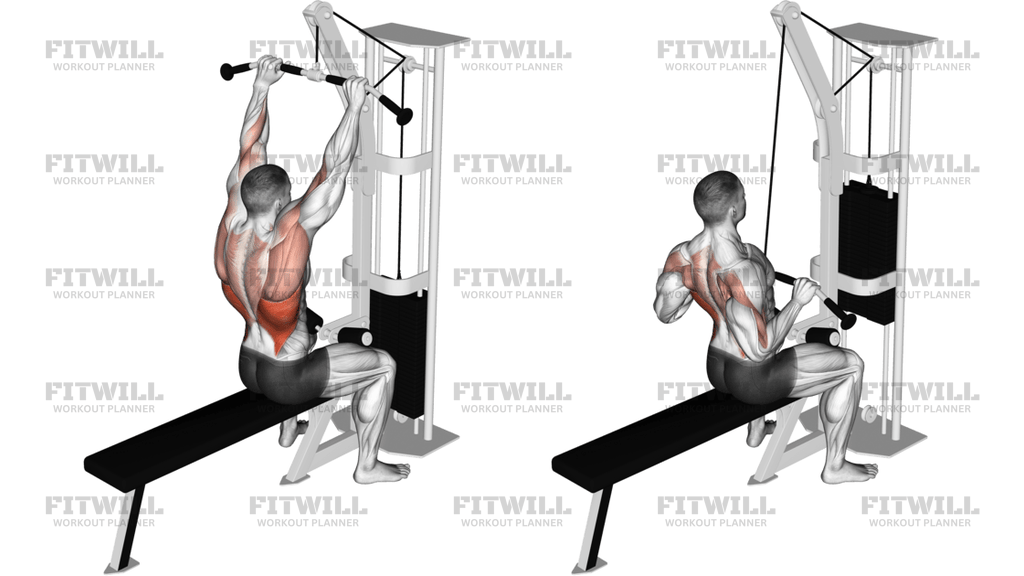
Setup matters because the machine position decides whether the row feels smooth or cramped. Sit far enough from the stack that the cable stays under tension at the start, place the feet on the front footrests, and keep the knees softly bent. Hold the wide attachment with straight but not locked elbows, stack the ribs over the pelvis, and brace before every pull. That upright base lets you row without leaning back to cheat the load or losing position through the midsection.
Each repetition should start with a controlled reach, then a strong pull through the elbows. Drive the handle toward the torso, finish by squeezing the shoulder blades together and down, and stop before the shoulders shrug or the lower back takes over. Return the handle slowly until the arms are extended and the upper back is still organized. Breathing should stay simple: exhale through the pull, inhale on the controlled reach. If the cable yanks you forward or the bench position forces your shoulders up, the load is too heavy or the seat distance is wrong.
Use this movement when you want a machine-supported row that is easy to repeat and easy to load with precision. It fits well in back sessions, upper-body accessory work, or programs that need more rowing volume with less coordination demand than a barbell row. Beginners can learn it quickly if they keep the torso still and shorten the range before form breaks. For stronger lifters, it works well as a controlled hypertrophy movement when the goal is to accumulate tension in the back rather than move the heaviest possible stack.
[ Workout Log & Planner ]
Put your next workout in Fitwill
Keep your plan and training log ready when you are.


Instructions
- Sit on the bench facing the cable stack, place both feet on the front footrests, and keep a soft bend in the knees.
- Grab the wide handle with an overhand grip and start with the arms long, shoulders set down, and chest lifted.
- Slide back only far enough to keep tension on the cable without rounding the lower back.
- Brace your midsection and keep the ribs stacked over the pelvis before the first pull.
- Drive the elbows back and out, pulling the handle toward the upper abdomen or lower ribs.
- Squeeze the shoulder blades together without leaning back or shrugging at the finish.
- Pause briefly in the contracted position, then control the handle forward until the arms are extended again.
- Keep the neck long and breathe out on the pull, in on the return.
Tips & Tricks
- Choose a seat distance that lets the cable stay tight at the start without pulling your shoulders forward.
- Keep the elbows slightly flared instead of tucked hard into your sides; that is the point of the wide-grip row.
- Pull to the upper abdomen or lower ribs, not to the sternum, so the cable path matches the seated row angle.
- Let the shoulder blades glide forward on the reach, but do not collapse the chest or round the upper back.
- Avoid leaning back to finish the rep; if the torso swings, the stack is too heavy.
- Keep the wrists neutral and the grip even so the forearms do not take over the set.
- Use a brief squeeze at the end of the pull to stop the reps from becoming fast, half-range tugs.
- If the low back starts arching or the neck tightens, shorten the range and lower the load.
Frequently Asked Questions
What muscles does the cable seated wide-grip row work most?
It mainly trains the lats and upper back, with the rhomboids, rear delts, biceps, and forearms assisting.
Why use a wide handle instead of a close grip?
The wider hand position usually brings the elbows out a little more and shifts more emphasis to the back rather than a tucked-elbow rowing pattern.
Where should the handle touch at the finish?
Pull it toward the upper abdomen or lower ribs, then stop before you have to lean back to finish the rep.
Should my torso move during the row?
A small amount of natural motion is fine, but the torso should stay mostly upright and stable instead of rocking through every rep.
Is this a good beginner back exercise?
Yes. The cable path is easy to learn, and the seated position makes it simpler to practice clean back tension with lighter loads.
What is the most common mistake on this row?
Leaning back and shrugging to move the handle is the biggest issue. That usually means the load is too heavy.
How deep should I let the handle travel forward?
Reach forward until the arms are long and the back stays organized, but stop before the shoulders collapse or the lower back rounds.
Can I use this exercise for hypertrophy work?
Yes. It is a strong accessory row for accumulating back volume with steady tension and repeatable form.