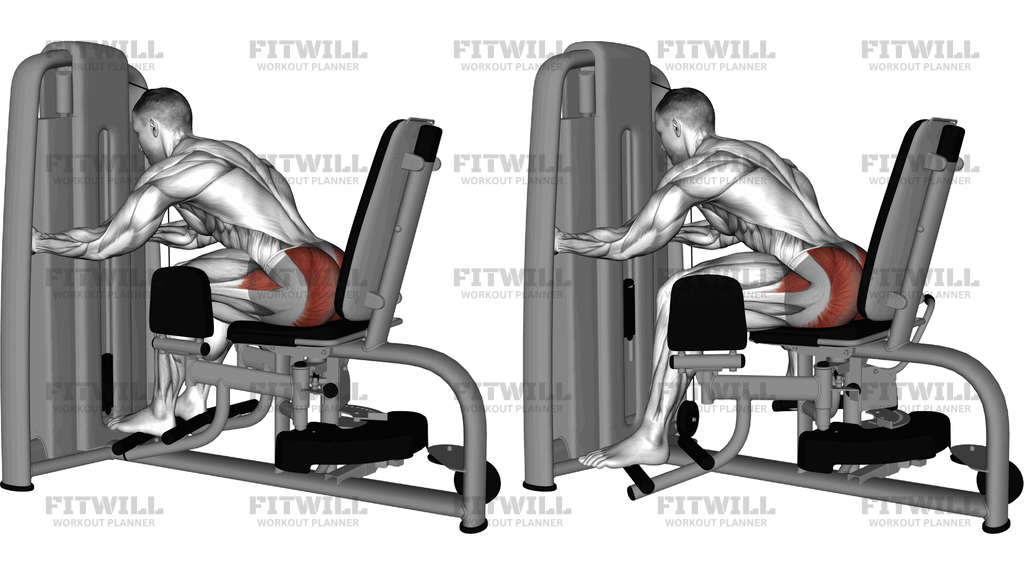
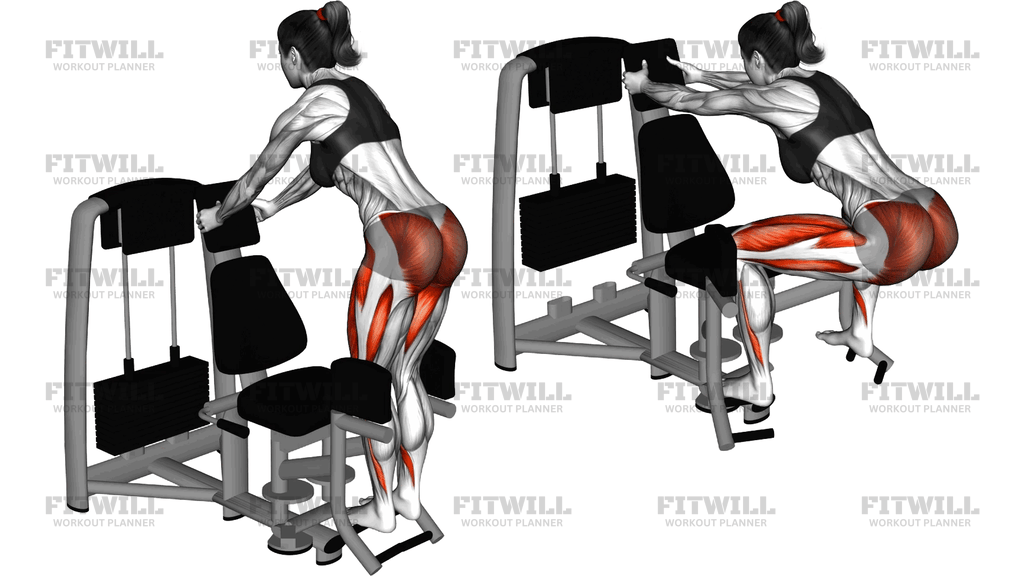
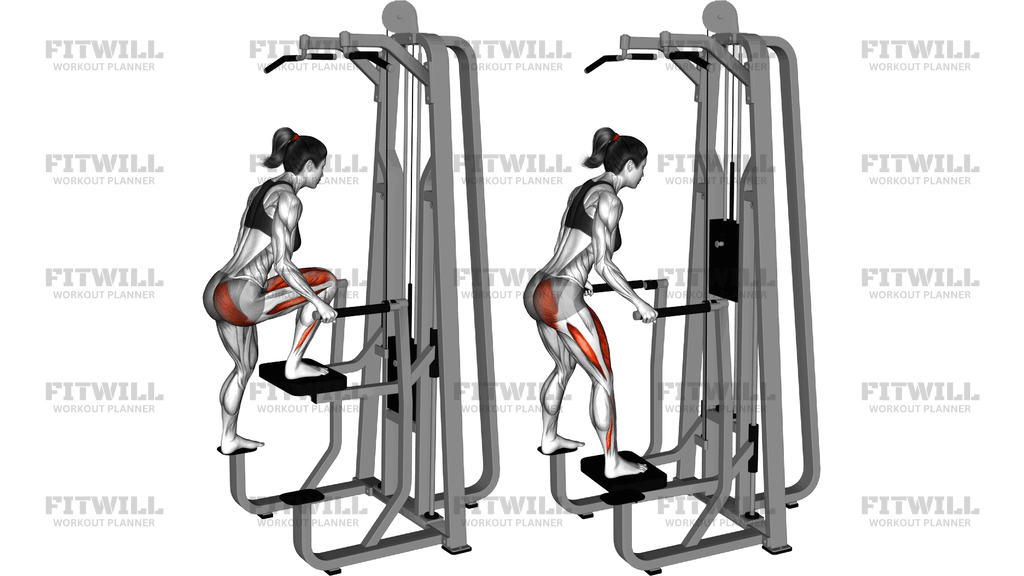
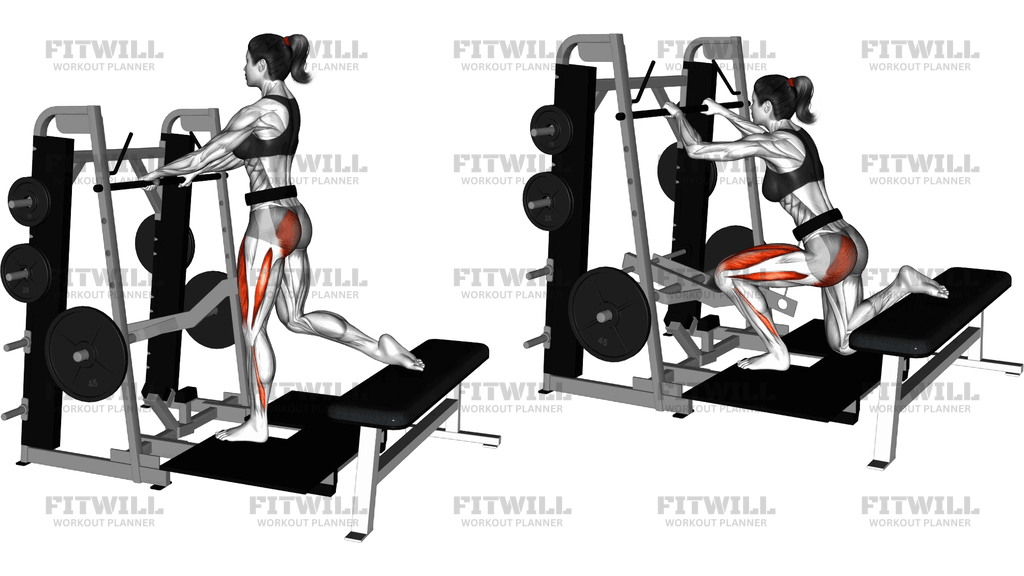
Lever Standing Rear Kick
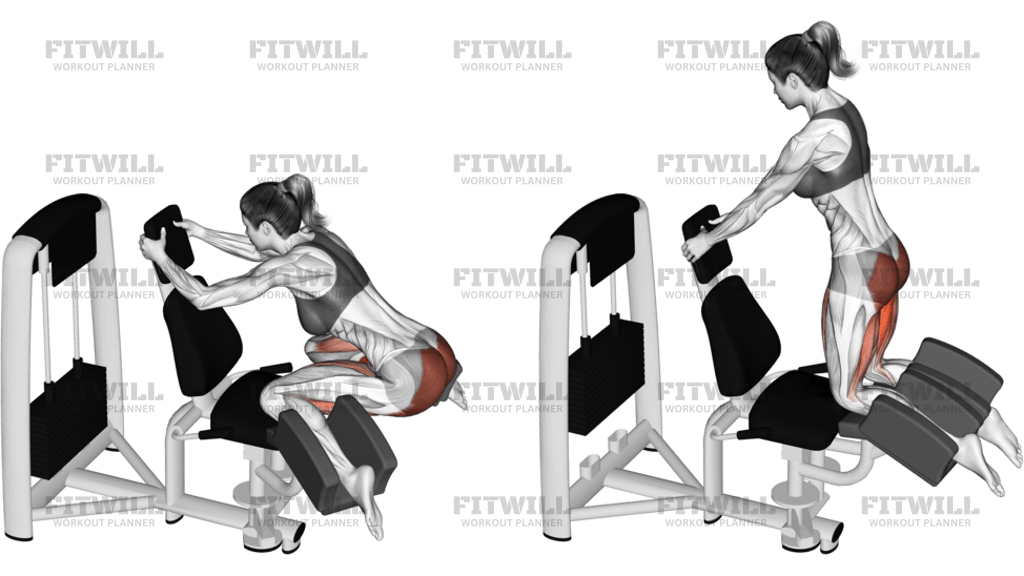
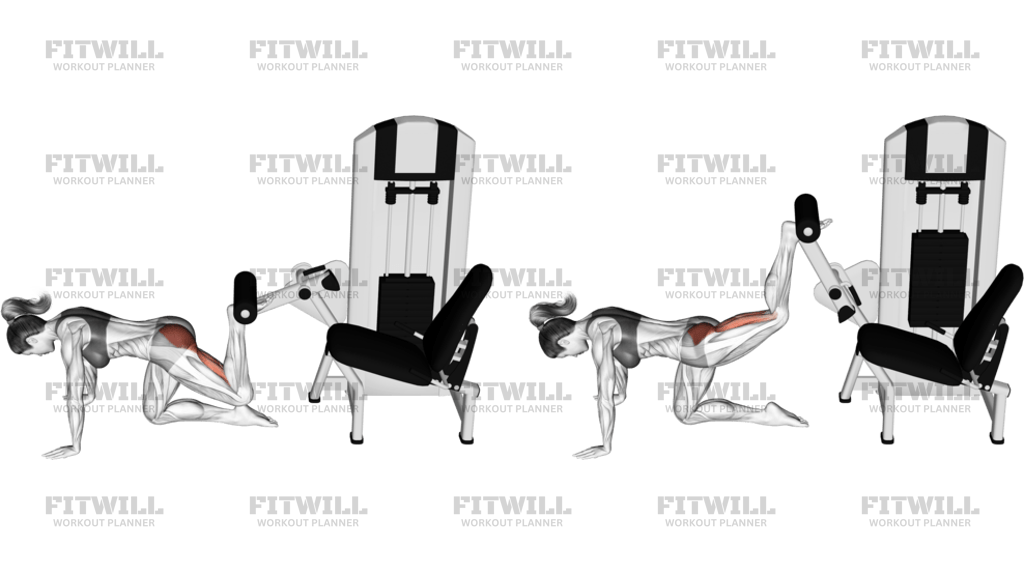
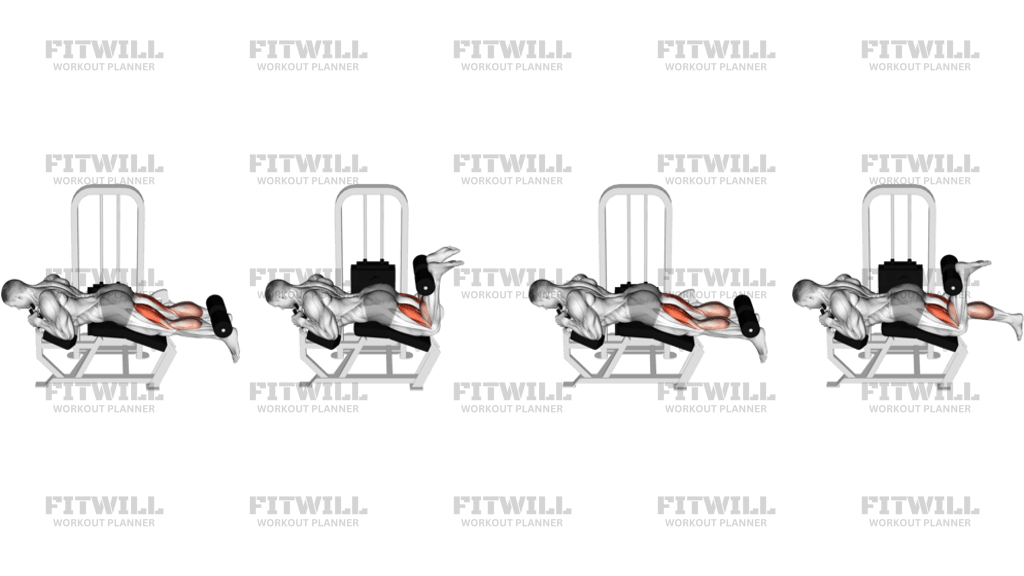
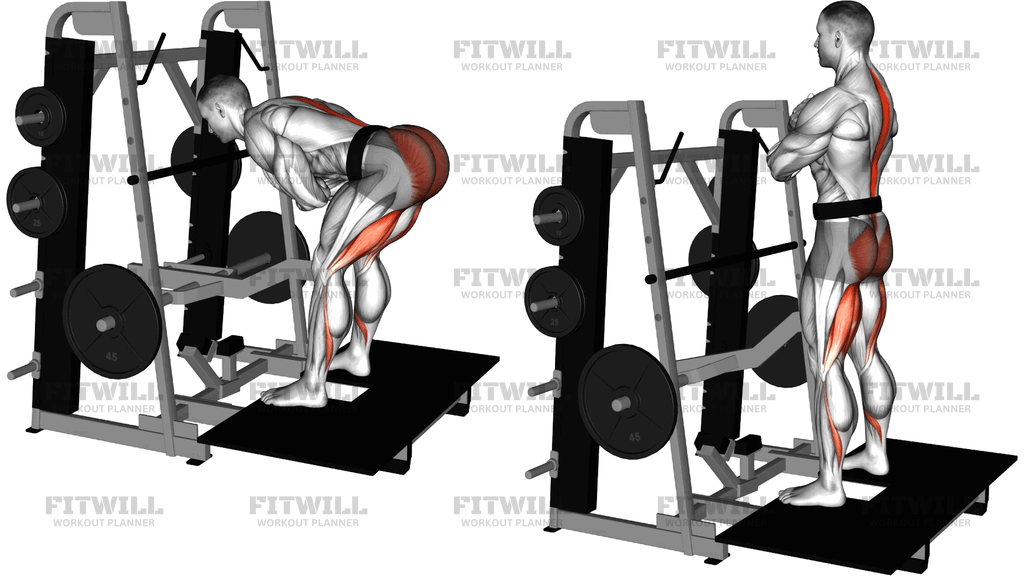
Lever Standing Rear Kick is a standing glute kickback performed on a leverage machine with one leg supported on the working pad and the other leg planted on the platform. The exercise is built around hip extension: you drive the free leg back, keep the pelvis square, and resist the urge to turn the movement into a low-back arch or a full-body swing. Because the machine guides the path, the setup matters more than brute force. If the pad is too low, the stance is unstable, or the torso is drifting, the glutes stop doing the work and the set turns into a balance drill.
This movement primarily trains the gluteus maximus, with the hamstrings and core helping you keep the pelvis from tipping or rotating. In practice, that means the support foot should stay rooted, the hands should stay light on the handles, and the working leg should travel back from the hip rather than from the knee. The best reps feel clean and deliberate: a smooth drive backward, a brief squeeze at the top, then a controlled return until the weight stack or lever is almost back to the start.
The machine makes this a useful unilateral accessory for glute-focused sessions, lower-body training, or warm-up work before bigger lifts. It is also a practical option for beginners because the range of motion is easy to control and the handles provide a stable reference point. Start with a lighter setting than you think you need, especially if you cannot keep your ribs stacked over your pelvis while the leg moves.
Good execution is about staying still everywhere except the hip that is working. Keep the standing knee softly bent, keep the chest quiet, and avoid shrugging or leaning on the handles. If the machine pad starts to dig into the joint line, if the lower back takes over, or if you need to swing the leg to finish the rep, the load is too high or the setup needs to be adjusted. The goal is repeatable glute tension, not a larger-looking kick.
Use Lever Standing Rear Kick when you want controlled glute isolation with a predictable path and easy side-to-side comparison. It fits well near the end of a lower-body session, but it can also work earlier in a workout when the goal is activation and movement quality. Keep the reps smooth, match both sides carefully, and stop the set as soon as the pelvis starts to rotate or the machine begins to move faster than your control.
[ Workout Log & Planner ]
Put your next workout in Fitwill
Keep your plan and training log ready when you are.


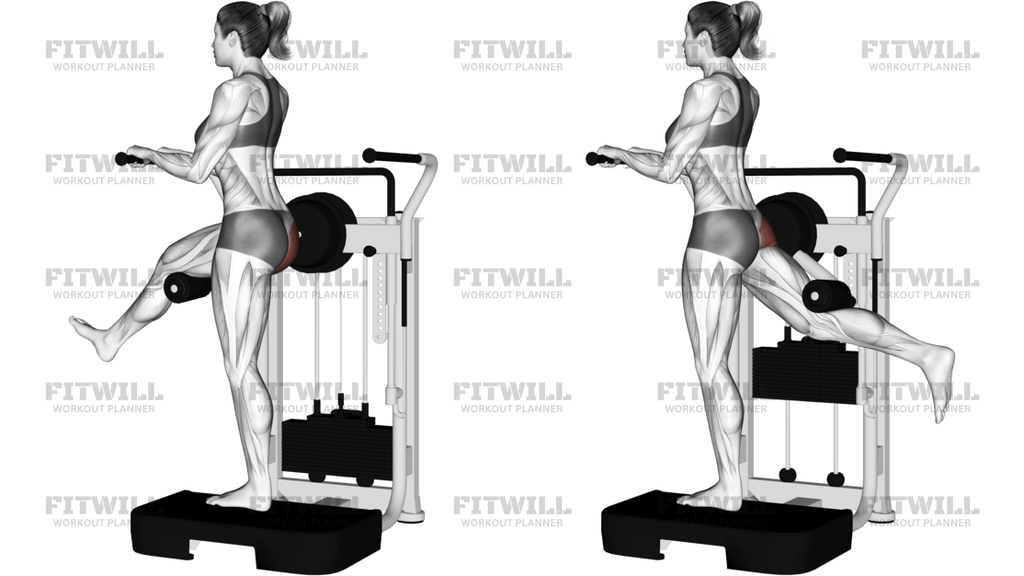
Instructions
- Adjust the leverage machine so the working pad sits behind your lower leg and the support platform lets you stand tall with both hands on the handles.
- Plant the support foot flat on the platform, face the machine, and place the working leg against the pad with a slight bend in the knee.
- Keep your pelvis square, ribs down, and chest tall before the first rep.
- Brace your core and grip the handles lightly for balance, not for pulling yourself through the set.
- Drive the working leg straight back and slightly up from the hip while keeping the torso almost still.
- Squeeze the glute at the end of the kick and hold the top position for a brief pause.
- Return the leg forward slowly until you are back under tension without letting the weight slam down.
- Repeat for the planned reps, then step off carefully and reset before changing sides.
Tips & Tricks
- If your hips twist toward the moving leg, reduce the load and shorten the kick until the pelvis stays level.
- Keep the standing knee slightly soft; locking it out makes balance harder and encourages hip sway.
- Think about pushing the heel back rather than lifting the foot high, which helps keep the motion in hip extension.
- A small forward torso angle is fine, but do not hinge at the waist or turn the rep into a back extension.
- Keep pressure through the whole support foot so you do not rock onto the toes during the kick.
- Let the handles steady you, but do not hang on them or let your shoulders rise toward your ears.
- Use a slower return than the drive back so the glute stays under tension through the full range.
- If the pad starts hitting the back of the knee awkwardly, adjust the machine height before continuing.
Frequently Asked Questions
What muscle does Lever Standing Rear Kick target most?
The main target is the glutes, especially the gluteus maximus on the working side.
Can beginners perform this exercise?
Yes. The handles and guided path make it beginner-friendly as long as the load stays light enough to keep the pelvis steady.
Where should the machine pad sit during the kick?
It should stay against the working lower leg without digging into the joint line, so the kick comes from the hip instead of the knee.
Should my torso lean forward?
A slight forward lean is normal, but you should not fold at the waist. Keep your ribs stacked and let the leg move without swinging your upper body.
Why do I feel this in my lower back instead of my glutes?
That usually means you are arching at the top or using too much load. Shorten the range, keep the pelvis square, and squeeze the glute instead of leaning back.
Can I train both sides in the same workout?
Yes. Train one side at a time and match the reps and tempo so the machine setup and range stay consistent on both legs.
What is the biggest form mistake on this machine?
The most common error is swinging the leg back by leaning the torso and twisting the hips instead of controlling the kick through the glute.
How can I make the exercise harder without cheating?
Use a slightly slower return, add a brief squeeze at the top, or increase the load only after you can keep the support foot, torso, and pelvis quiet.