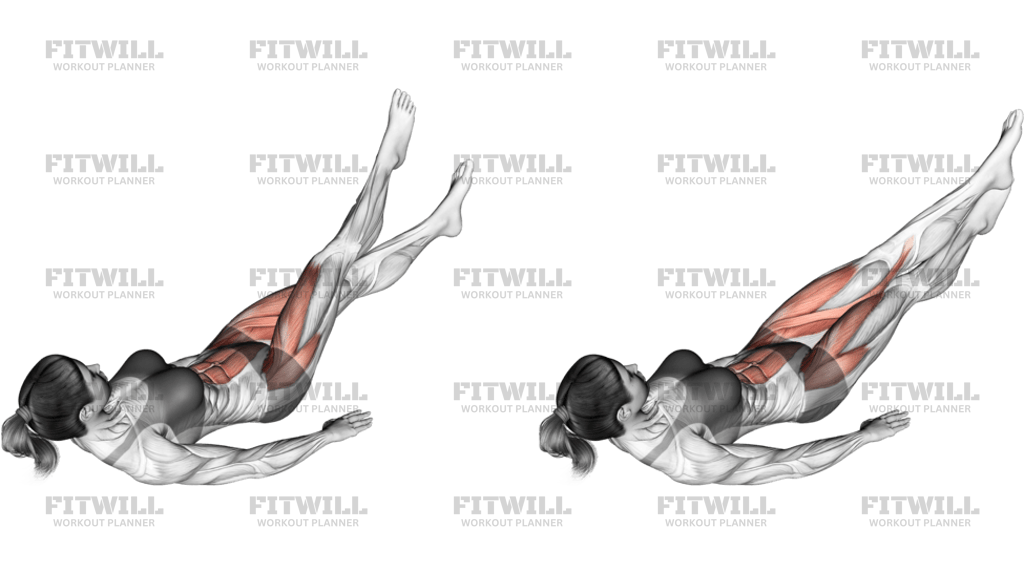
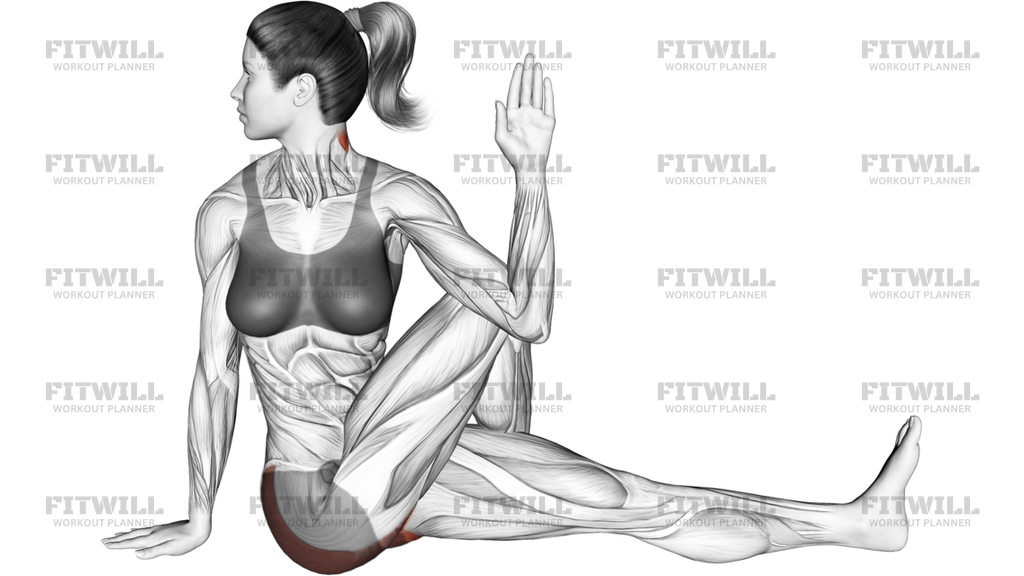
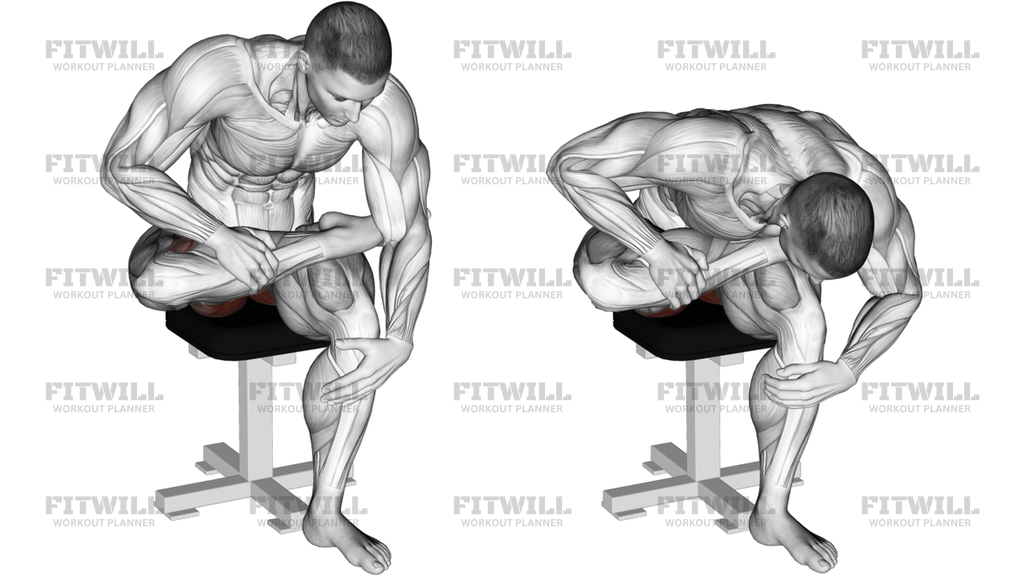
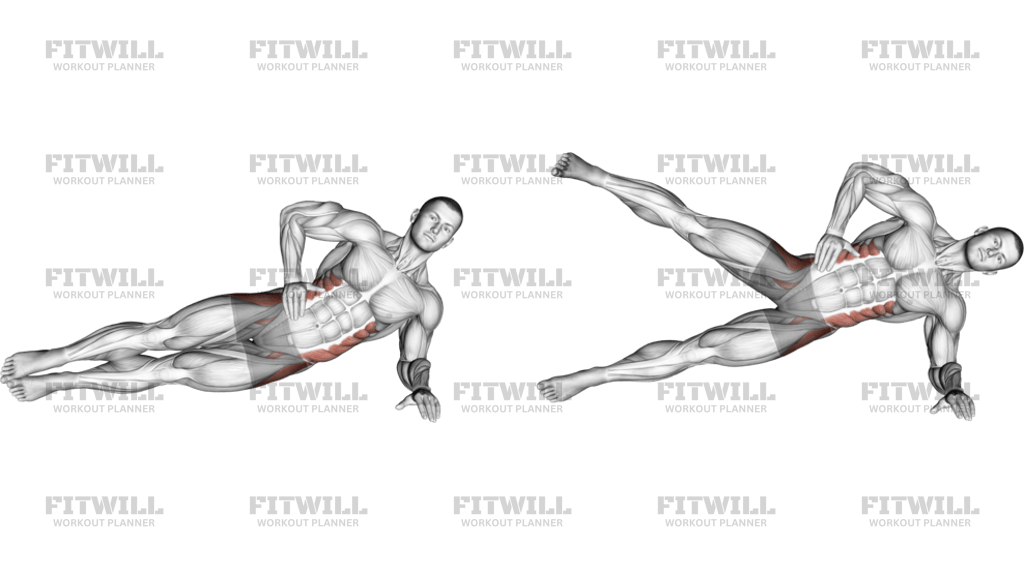
Bent Knee Lying Twist
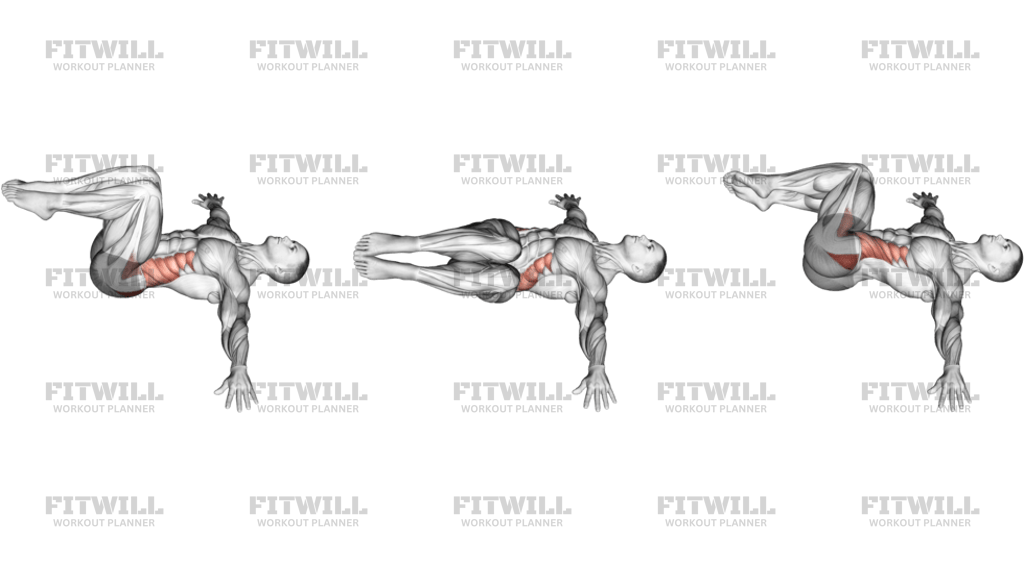
Bent Knee Lying Twist is a floor-based spinal rotation exercise performed on your back with the knees bent and the arms spread wide for support. It is commonly used to improve trunk rotation, ease stiffness through the lower back and hips, and teach the body how to rotate while the shoulders stay anchored to the floor.
The movement mainly asks the obliques and deep core muscles to control the twist, while the glutes, hip rotators, and lower back help guide the knees from side to side. Because the body is fully supported by the floor, the exercise is more about position, control, and breathing than about resistance or speed.
A good rep begins with the shoulder blades relaxed, the arms in a stable T position, and the knees stacked together before the twist starts. As the legs lower to one side, the torso should stay long and quiet so the movement comes from the midsection instead of a fast swing of the hips. The end range should feel like a comfortable rotational stretch, not a forced crank on the knees or low back.
Bent Knee Lying Twist fits well in warm-ups, cool-downs, mobility work, and recovery sessions, especially when the goal is to keep the spine and hips moving well. It can also be used as a gentle core-control drill for beginners or anyone who needs an easier rotation pattern than a loaded twist. If the opposite shoulder lifts, the knees separate, or the low back feels pinched, shorten the range and slow the movement down.
[ Workout Log & Planner ]
Put your next workout in Fitwill
Keep your plan and training log ready when you are.


Instructions
- Lie on your back with your arms out to the sides in a T position and your knees bent so the shins can move together as one unit.
- Keep both shoulder blades and the back of your head relaxed on the floor before you start the twist.
- Press your palms lightly into the ground and draw your ribs down so the torso stays organized.
- Squeeze the knees together or keep them stacked so the legs move as a single block.
- Exhale and lower both knees slowly to one side in a controlled arc.
- Stop the drop when the opposite shoulder wants to lift or when the stretch reaches a comfortable end range.
- Pause briefly, then inhale as you bring the knees back through center without letting them swing.
- Repeat on the other side for the planned number of reps or alternating repetitions.
Tips & Tricks
- Keep the knees stacked together so the twist comes from the torso instead of one leg drifting ahead of the other.
- Let the opposite shoulder be the range limiter; if it lifts, the twist is too deep for clean control.
- Use a smaller arc if the floor range feels aggressive on the low back or front of the hip.
- Keep the palms lightly planted so you can resist rolling and stay centered through the return.
- Exhale as the knees drop and inhale as they come back to center to keep the trunk relaxed.
- Move slowly enough that the legs do not swing through the middle and use momentum to change sides.
- If your hips are tight, bend the knees a little more and reduce the lowering depth instead of forcing the floor.
- A pillow or folded mat under the knees can make the position more comfortable for longer holds.
Frequently Asked Questions
What does Bent Knee Lying Twist work most?
It mainly works the obliques and deep core muscles, with help from the glutes, hip rotators, and lower back.
Can beginners perform this exercise?
Yes. Beginners can use a smaller range and slow breathing to make the twist feel smooth and controlled.
Should my knees touch the floor on every rep?
Not necessarily. Stop when the opposite shoulder starts to peel up or before the low back feels strained.
Why do my shoulders keep lifting off the floor?
The knees are probably dropping too far. Reduce the range and keep the shoulder blades heavy against the floor.
Is this more of a stretch or a strength exercise?
It is mainly a mobility and control exercise, though it still asks the core to resist rotation.
Where should I feel the stretch?
Most people feel it across the lower back, outer hip, and side of the torso rather than in the knees.
When is the best time to use Bent Knee Lying Twist?
It works well in a warm-up, cool-down, mobility block, or recovery session.
What should I do if the twist feels pinchy in my low back?
Shorten the range, keep the knees bent a little more, and avoid forcing the legs toward the floor.