Single Leg Bridge With Outstretched Leg
Single Leg Bridge With Outstretched Leg is a floor-based glute bridge variation performed on an exercise mat using body weight. You lie on your back, drive through one planted foot, and keep the other leg extended so the pelvis has to stay level while the hips rise and lower. The exercise is simple in appearance, but the outstretched leg makes it much more demanding on the glutes, hamstrings, and trunk because you cannot hide poor pelvic control.
The movement is best thought of as a hip extension drill with a stability challenge. The main target is the glute on the working side, with the hamstrings helping to extend the hip and the core preventing the low back from taking over. In anatomy terms, the primary mover is the Gluteus maximus, with assistance from the Biceps femoris, Rectus abdominis, and Erector spinae. Because only one leg supports the lift, small setup errors such as flared ribs, a tilted pelvis, or a foot placed too far away become obvious very quickly.
The starting position matters. Set the shoulders flat on the mat, bend one knee so that foot is planted firmly, and extend the other leg so it stays long instead of bent or drifting outward. Before each rep, brace lightly, flatten the ribs, and make sure the working heel is far enough away that the shin can stay close to vertical at the top. From there, drive the hips up without arching the lower back, then lower under control until the glutes are still doing the work and not simply hanging on the joints.
Use this variation when you want unilateral glute work, bridge progression, or anti-rotation control in a warmup, accessory block, or lower-body session. It pairs well with other single-leg patterns because it teaches the pelvis to stay square while one side produces force. The outstretched leg should stay quiet and long throughout the repetition; if it swings or bends, the set is usually too fast or too hard.
Treat the exercise as a quality drill rather than a max-effort lift. Smooth reps, level hips, and consistent breathing will get more from the movement than chasing height. If the low back feels more active than the glute, shorten the range, move the planted foot closer, or slow the descent until the bridge is driven by hip extension instead of momentum.
[ Workout Log & Planner ]
Put your next workout in Fitwill
Keep your plan and training log ready when you are.


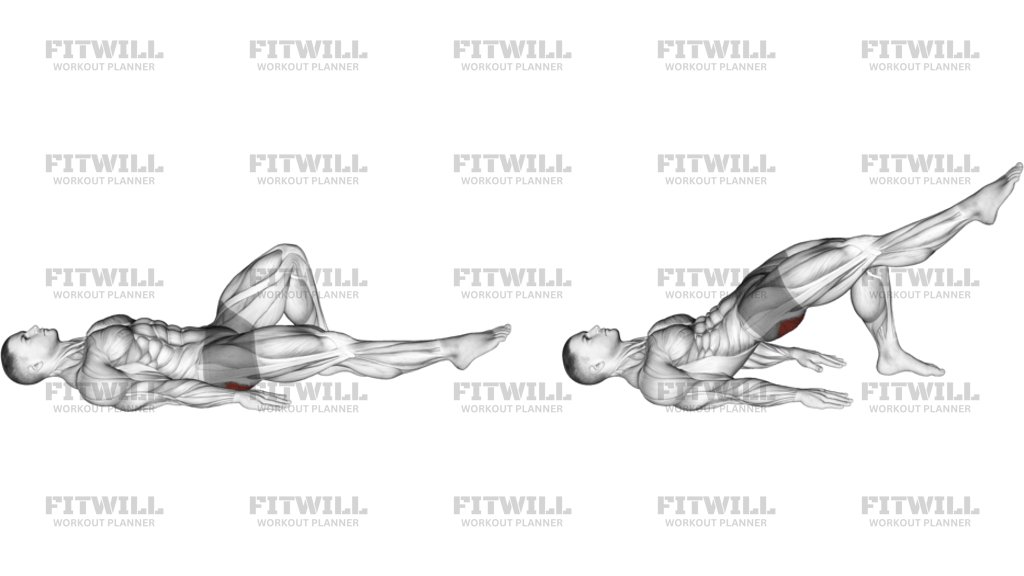
Instructions
- Lie on your back on an exercise mat with one knee bent and that foot planted flat, and extend the other leg straight so it stays off the floor.
- Set your shoulders and upper back firmly into the mat, keep your chin slightly tucked, and place the working foot close enough that the shin stays near vertical at the top.
- Square your hips before you start so the non-working side does not twist outward or drop lower than the planted side.
- Brace lightly through the ribs and lower abdomen, then press the planted heel into the floor to begin the bridge.
- Lift the hips until your torso and working thigh form a straight line without overextending the lower back.
- Keep the outstretched leg long and quiet as you pause briefly at the top with both hips level.
- Lower the pelvis slowly until the glute is still engaged and the low back has not taken over the descent.
- Reset your foot and pelvis between reps if you lose alignment, then repeat on the same side for the prescribed reps before switching legs.
Tips & Tricks
- Keep the planted heel heavy; if you feel the toes doing most of the work, your foot is probably too far forward or too far back.
- Think about lifting the pelvis with the glute, not thrusting the ribs upward with the lower back.
- A small pause at the top helps expose hip drop and keeps the working side honest.
- If the extended leg starts to drift or bend, slow the set down and reduce the rep count.
- Do not chase extra height once the pelvis starts to twist or the lower back arches.
- Move the planted foot slightly closer to your body if the hamstrings cramp before the glute feels loaded.
- Exhale as you drive up so the ribs stay stacked instead of flaring.
- Use a slow lowering phase to keep tension on the glute rather than dropping straight to the mat.
Frequently Asked Questions
What does Single Leg Bridge With Outstretched Leg work most?
It primarily targets the glute on the planted side, with the hamstrings and core helping to keep the pelvis level.
How should the outstretched leg be positioned?
Keep it straight and quiet, with the thigh and foot off the floor so it does not help push the bridge up.
Where should my planted foot be?
Place it close enough that the shin is near vertical at the top of the bridge and the heel can drive the lift.
Why do my hips twist during the rep?
The pelvis usually twists when the extended leg is helping too much, the foot is poorly placed, or the bridge is being rushed.
Should I feel this in my lower back?
No. A small amount of trunk work is normal, but the main effort should stay in the planted-side glute and hamstring.
Is this a good beginner bridge variation?
It is more advanced than a standard two-leg bridge, so beginners usually do better learning the basic bridge first.
What is the biggest mistake on this exercise?
Letting the lower back arch to force the hips higher instead of keeping the ribs down and the pelvis level.
How can I make it harder without adding weight?
Slow the lowering phase, add a brief pause at the top, or extend the free leg farther so the pelvis has less margin for error.