Dumbbell RDL Death March
Dumbbell RDL Death March is a hinge-based lower-body exercise that combines a Romanian deadlift pattern with a controlled march or kickstand-style weight shift. You hold a dumbbell in each hand at your sides, stay tall through the torso, and move from one stable leg to the other without losing the hip hinge. It is a good choice when you want glute and hamstring work plus balance, pelvic control, and anti-rotation strength in the same drill.
The main work comes from the glutes and hamstrings, while the core and lower back keep the trunk organized as one leg takes most of the load. Because each rep starts from a narrow base of support, the setup matters more than the weight. If the dumbbells drift forward or the hips twist open, the exercise turns into a sloppy squat-hinge hybrid instead of a clean deadlift variation.
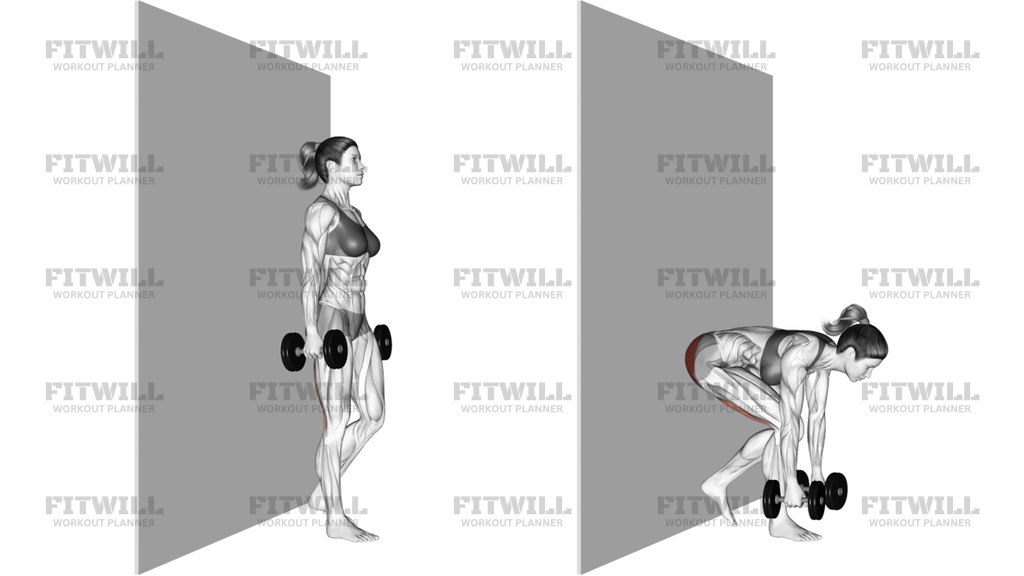
Stand with your feet about hip-width apart, knees softly bent, shoulders relaxed, and the dumbbells hanging just outside the thighs. Shift most of your weight into one leg and let the other foot hover lightly behind you or tap the floor softly for balance. From there, brace your midsection and send the hips straight back as the chest tips forward, keeping the dumbbells close to the legs and the spine long.
Lower until the torso is nearly parallel to the floor or until the hamstrings stop the hinge before the back rounds. Keep the standing knee slightly bent, the pelvis level, and the chin tucked so the neck stays in line with the spine. Drive through the whole foot to stand back up, squeeze the glute on the working side, and switch legs only when you are fully upright and balanced.
This exercise fits lower-body strength blocks, accessory work for runners, and unilateral hinge practice when you want more control than a heavy barbell variation allows. It also works well as a warm-up for deadlifts if you keep the load light and the tempo deliberate. Stop the set if the lower back starts doing the work that should be coming from the hips, or if you have to rotate the torso to stay upright.
[ Workout Log & Planner ]
Put your next workout in Fitwill
Keep your plan and training log ready when you are.


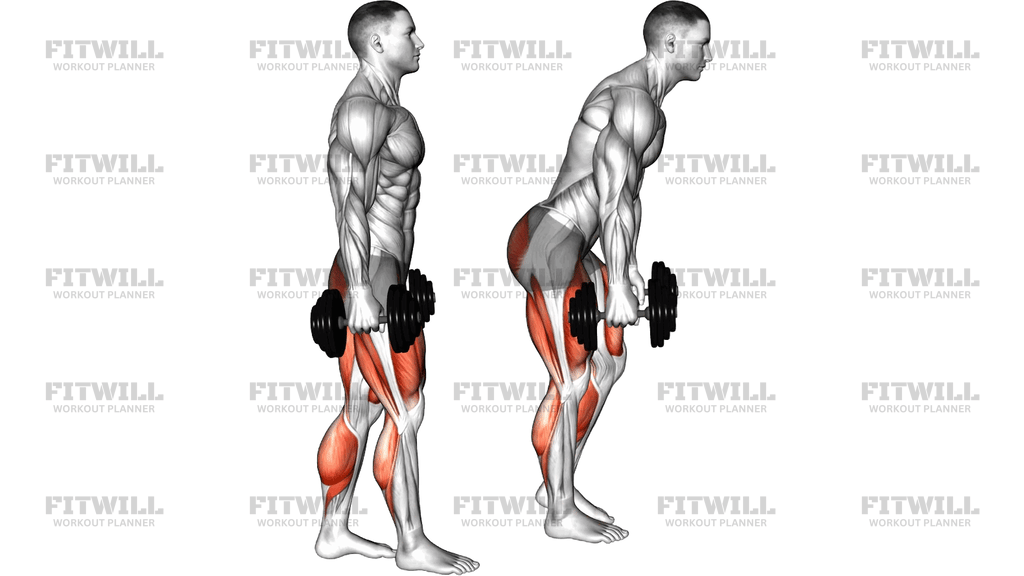
Instructions
- Stand tall with a dumbbell in each hand, feet about hip-width apart, and your arms hanging straight at your sides.
- Shift most of your weight onto one leg and let the other foot hover lightly behind you or tap down softly for balance.
- Keep both shoulders square, soften the standing knee, and brace your midsection before you hinge.
- Push your hips straight back and slide the dumbbells down the front of your thighs, keeping them close to your legs.
- Lower until your torso is nearly parallel to the floor or until your hamstrings stop the hinge before your back rounds.
- Drive through the standing heel and midfoot to bring your hips forward and return to a tall stance.
- Stand fully upright, squeeze the glute on the working side, and only then shift to the other leg for the next rep.
- Keep breathing steady, exhaling as you stand and resetting your balance before each hinge.
Tips & Tricks
- Keep the dumbbells brushing the thighs and shins instead of letting them swing away from the body.
- Think "hips back, chest long" so the rep stays a hinge and not a squat.
- If you lose balance, shorten the reach and let the trailing toes stay on the floor as a kickstand.
- Keep the front hip pointed straight ahead; opening it up turns the drill into a rotation exercise.
- Stop the descent when the hamstrings are tight but the lumbar spine still feels neutral.
- Use a slower lower and a brief pause near the bottom to clean up side-to-side control.
- Finish each rep with the glute, not by leaning backward at the top.
- Light to moderate dumbbells are usually enough; loading too heavy usually shows up as hand swing or torso twist.
Frequently Asked Questions
What muscles does Dumbbell RDL Death March work?
It primarily trains the glutes and hamstrings, with the core, lower back, and hip stabilizers helping control the single-leg hinge.
Is Dumbbell RDL Death March the same as a regular dumbbell RDL?
No. A regular dumbbell RDL keeps both feet planted, while this variation shifts load from side to side and challenges balance and pelvic control.
Should the back foot stay on the floor?
It can lightly tap the floor for balance, but it should stay passive. The working leg should still do most of the load-bearing.
How low should I lower the dumbbells?
Lower as far as you can while keeping the spine long and the dumbbells close to the legs. For many people that is around mid-shin or just below the knees.
Where should I feel Dumbbell RDL Death March?
You should feel the stretch and work in the glutes and hamstrings of the working side, with the core helping keep the torso from twisting.
Can beginners do this exercise?
Yes, if they start light and use a short range at first. The balance demand is the main challenge, so control matters more than load.
What is the most common mistake?
Letting the dumbbells drift away from the body or rotating the hips open to find the bottom position. Both usually shift stress away from the glutes and hamstrings.
Can I substitute this for single-leg Romanian deadlifts?
Yes, it can serve a similar role, though the march or kickstand version is often easier to learn and easier to load safely.