Dumbbell Goblet Box Squat
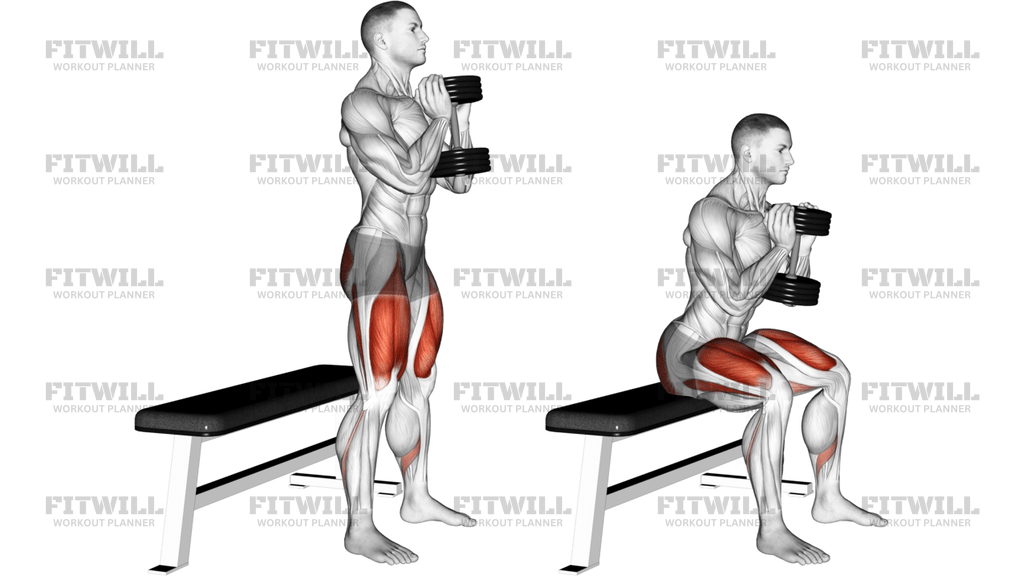
The Dumbbell Goblet Box Squat is a squat variation that uses a box or bench as a depth target while you hold a dumbbell close to the chest. It is designed to teach control, consistent depth, and a more upright torso than a free squat-only pattern. The box gives you a clear stopping point, which helps reduce guessing about depth and makes the rep easier to repeat with good mechanics.
This movement is mainly used to train the glutes and thighs while the trunk works hard to keep the torso stacked and the dumbbell steady. In practice, the legs do most of the lifting, but the upper back and core must keep the goblet position organized so the chest does not collapse forward. That is why the setup matters: the feet, box height, and stance width all affect whether you can sit back under control and stand without shifting onto your toes.
A good box squat is not a sit-and-relax exercise. You lower until you lightly touch the box, keep tension in the legs, and then drive back up without rocking backward or fully unloading onto the bench. The touch point should be consistent from rep to rep, and the descent should be smooth enough that you can stop exactly where you planned. If you drop fast, bounce off the box, or lose position at the bottom, the box is too low or the load is too heavy for the current goal.
Because the dumbbell is held in front of the chest, the exercise also reinforces bracing and clean posture. That front load encourages the knees and hips to share the work while the torso stays braced. It is useful for warmups, accessory strength work, patterning for beginners, or hypertrophy blocks where you want repeatable squatting mechanics without chasing maximum load.
Use a box height that lets you keep the feet flat, knees tracking over the toes, and the spine neutral. The best reps feel controlled on the way down, brief at the touch, and strong on the way up. If the lower back rounds, the knees cave in, or the dumbbell drifts away from the chest, reduce the load or raise the box until the movement stays crisp.
[ Workout Log & Planner ]
Put your next workout in Fitwill
Keep your plan and training log ready when you are.


Instructions
- Place a box or bench behind you at a height that lets you squat to at least parallel without tucking your pelvis under.
- Stand with your feet about shoulder width apart, toes slightly turned out, and hold one dumbbell vertically at your chest in a goblet grip.
- Lift your chest, pull your shoulders down, and brace your midsection before you start the descent.
- Sit your hips back and bend your knees at the same time, keeping the dumbbell close to your sternum.
- Lower under control until you lightly touch the box with your glutes or hamstrings.
- Pause briefly on the box without relaxing your torso, feet, or core.
- Drive through your midfoot and heels to stand up, keeping your knees tracking in line with your toes.
- Finish tall with the glutes squeezed and the dumbbell still close to your chest.
- Reset your breath and repeat for the planned number of reps.
Tips & Tricks
- Choose a box height that lets you keep your lower back neutral at the touch point; a box that is too low usually turns the squat into a pelvic tuck.
- Keep the dumbbell tight to your chest so it does not pull you forward or make you reach with the shoulders.
- Think about sitting back to the box rather than dropping straight down, then stand by driving the floor away.
- Let the knees travel forward as needed, but keep them tracking over the toes instead of collapsing inward.
- Keep both heels planted; if they lift, widen the stance slightly or raise the box.
- Do not relax fully on the box. The touch should be brief, with tension still in the legs and trunk.
- Use a slow descent if you want more control, especially when learning the movement or working with heavier dumbbells.
- Exhale as you pass the hardest point on the way up, then reset your breath at the top before the next rep.
Frequently Asked Questions
What muscle does Dumbbell Goblet Box Squat target most?
It mainly targets the glutes and thighs, with the core and upper back helping keep the goblet position stable.
Can beginners perform this exercise?
Yes. The box makes the depth easier to learn, and the goblet hold helps beginners stay upright and balanced.
How high should the box or bench be?
Use a height that lets you touch the box without rounding your lower back or collapsing your knees inward.
Should I sit all the way down on the box?
No. Touch the box lightly, keep tension in your legs, and stand back up without relaxing or rocking backward.
What grip should I use on the dumbbell?
Hold one end of the dumbbell against your chest with both hands, elbows angled down and close enough to keep the load stable.
Why use a box instead of a free squat?
The box gives you a repeatable depth target and helps you practice sitting back with better control.
What if my heels come off the floor?
Raise the box slightly, widen your stance a little, and keep pressure through the midfoot and heels throughout the rep.
Where should I feel the exercise most?
You should feel it mostly in the glutes and thighs, with the trunk working to keep the dumbbell and torso stable.