Dumbbell Press Squat
Dumbbell Press Squat is a front-loaded squat variation that combines a deep lower-body rep with a forward press-out from the bottom position. The dumbbell starts close to the chest, then the lifter drops into a squat before pressing the weight straight forward at about shoulder height. That extra press changes the demand from a plain squat: the legs still drive the movement, but the chest, shoulders, arms, and trunk have to resist the forward load and keep the torso from folding.
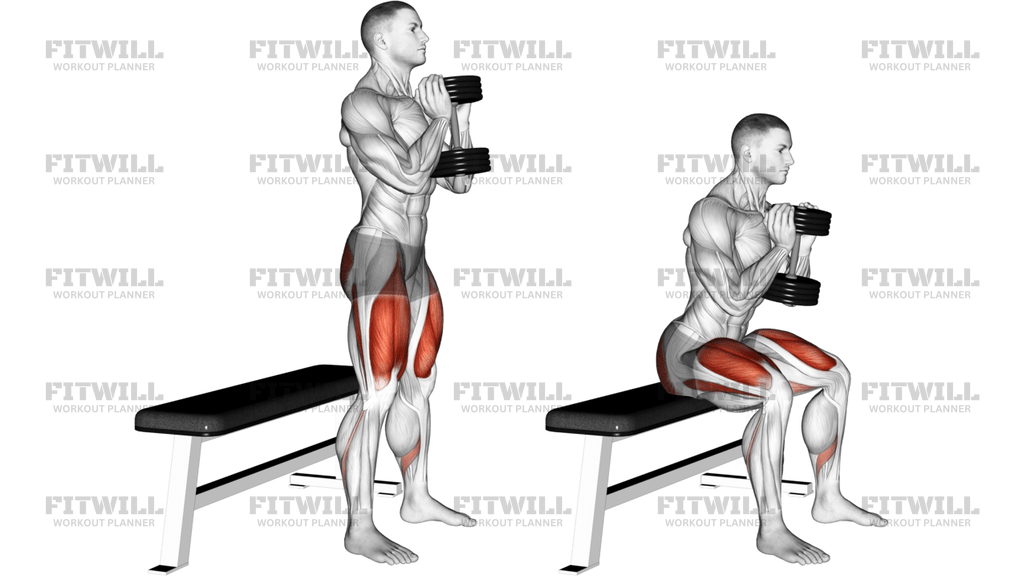
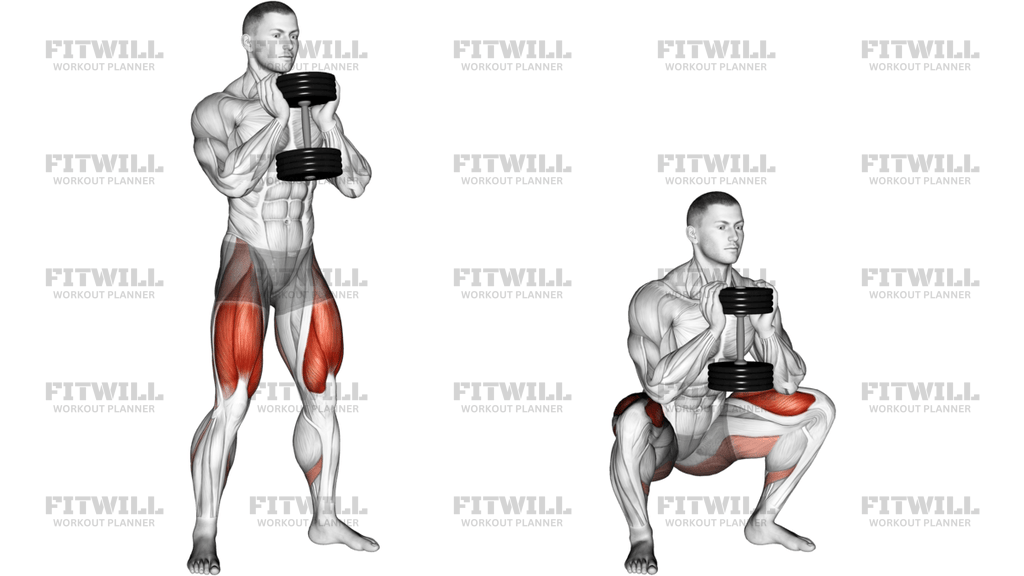
The exercise is especially useful when you want squat mechanics plus an upper-body stability challenge in one movement. The image shows a controlled bodyweight-style squat depth with the dumbbell held in front of the sternum, which keeps the load centered and makes the movement easier to balance than a free swinging press. The primary emphasis in the database is glutes, and that still fits the pattern well because the hips and knees do most of the work on the way up, while the core and upper back stabilize the front-loaded position.
Setup matters here. If the dumbbell drifts away from the chest too early, the shoulders and lower back take over and the squat becomes harder to control. If the heels lift or the knees cave in, the lower body stops doing its job and the press-out turns into a rushed compensation. A stable stance, upright chest, and controlled squat depth let the legs absorb the load first, then the press-out can happen without losing the stacked torso position.
On each repetition, squat down under control, keep the feet planted, and use the bottom position to press the dumbbell forward in a straight line rather than punching it upward. Bring the weight back to the chest before standing if that is how your programming is written, or stand first and reset if fatigue is building. The best reps look smooth and deliberate, with the ribs down, the neck relaxed, and the dumbbell path staying clean from the first rep to the last.
This movement fits accessory lower-body work, conditioning circuits, or coaching sessions where you want to reinforce posture under load. It can be a good option for beginners when the dumbbell is light and the squat depth is limited to what can be controlled. Treat it as a quality drill rather than a max-strength lift: the goal is to keep the squat, the press-out, and the return all organized in one repeatable pattern.
[ Workout Log & Planner ]
Put your next workout in Fitwill
Keep your plan and training log ready when you are.


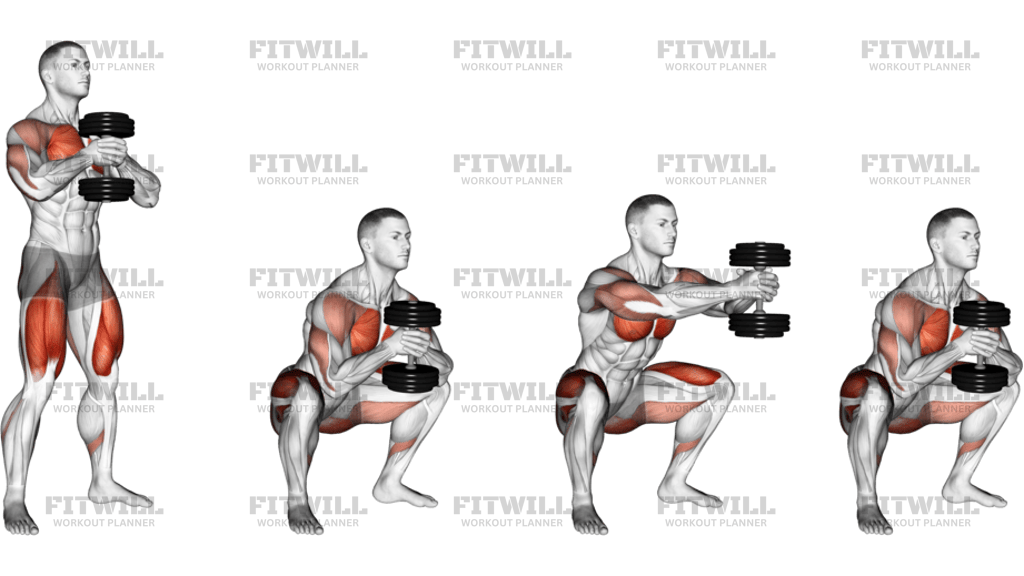
Instructions
- Stand tall with your feet about shoulder-width apart and hold one dumbbell vertically at chest height with both hands, elbows tucked in front of your ribs.
- Set your feet flat, spread the floor through your heels and forefeet, and keep your chest lifted before you begin the squat.
- Lower into a squat by bending the hips and knees together, letting the hips travel back while the dumbbell stays close to your sternum.
- Keep your knees tracking over your toes and descend only as far as you can keep your heels down and your torso braced.
- From the bottom position, press the dumbbell straight forward to shoulder height without letting your shoulders shrug or your ribs flare.
- Pause briefly with the arms extended, then pull the dumbbell back to your chest before you start driving up.
- Stand up by pushing the floor away and extending the hips and knees until you return to a tall stance.
- Breathe in as you squat down, exhale as you press and rise, and reset your posture before the next rep.
- Repeat for the planned number of repetitions with the same depth, press path, and tempo on every rep.
Tips & Tricks
- Keep the dumbbell anchored high on the chest until the bottom of the squat; letting it drift early makes the press-out and the stand-up much harder to control.
- Use a squat depth you can own while keeping the heels flat, because losing foot pressure usually shows up before the torso does.
- Press the dumbbell straight forward, not upward, so the shoulders stay in line with the load instead of turning the rep into a front raise.
- Think about ribs stacked over pelvis when the arms extend; that cue helps prevent low-back arching during the press-out.
- If your elbows flare wide, switch to a firmer two-hand grip and keep the dumbbell touching the upper chest longer before each press.
- The legs should initiate the stand, not the arms; finish the squat first, then rise by driving through the floor.
- Choose a lighter dumbbell than you would for a regular goblet squat, since the forward press increases the demand on the upper body and core.
- Move smoothly through the bottom of the squat instead of bouncing, especially if the press-out is the hardest part of the rep.
- Stop the set when the dumbbell starts wobbling away from the midline or the knees collapse inward on the way up.
Frequently Asked Questions
What muscles does Dumbbell Press Squat work most?
The squat portion emphasizes the glutes and quads, while the forward press adds work for the chest, shoulders, arms, and core.
Where should I hold the dumbbell before the press-out?
Hold it close to the chest with both hands and keep the elbows in front of the torso so the weight stays centered before each squat.
Should the dumbbell go overhead?
No. In this movement the dumbbell presses straight forward to shoulder height, not overhead.
How deep should I squat on this variation?
Go as deep as you can while keeping both heels down, the knees tracking cleanly, and the dumbbell under control at the chest.
What is the most common mistake with the press?
Most people let the dumbbell drift forward too fast or turn the press into a shrug. Keep the path straight and the shoulders packed.
Is this basically a goblet squat with a front raise?
It is closer to a goblet squat plus a forward press-out. The load should stay close to the chest until you deliberately press it forward from the bottom.
Can beginners do Dumbbell Press Squat?
Yes, if the dumbbell is light and the squat depth is limited to a range they can control without losing balance or torso position.
When should I exhale during the rep?
A practical cue is to inhale on the way down, then exhale as you press the dumbbell forward and stand back up.