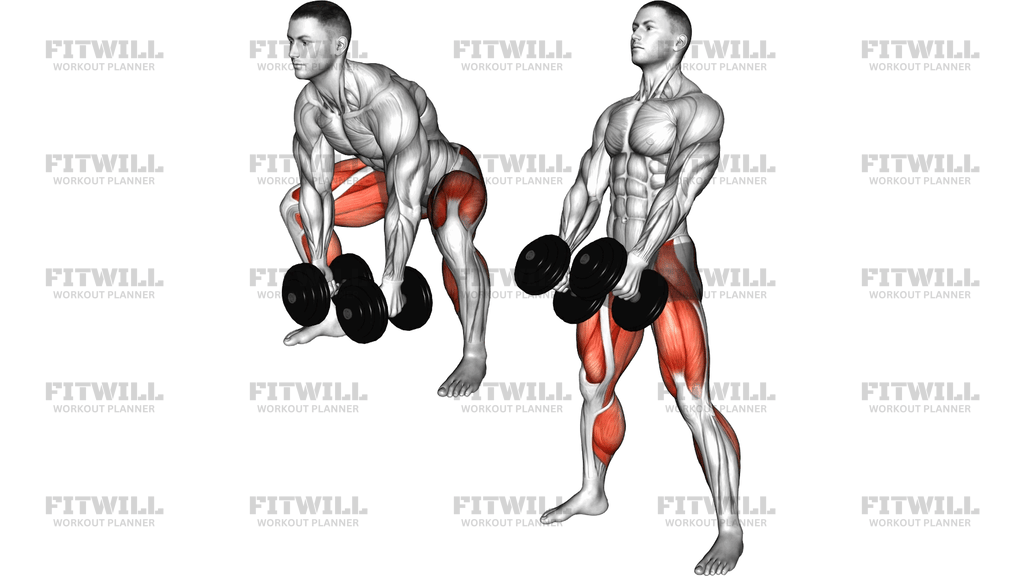
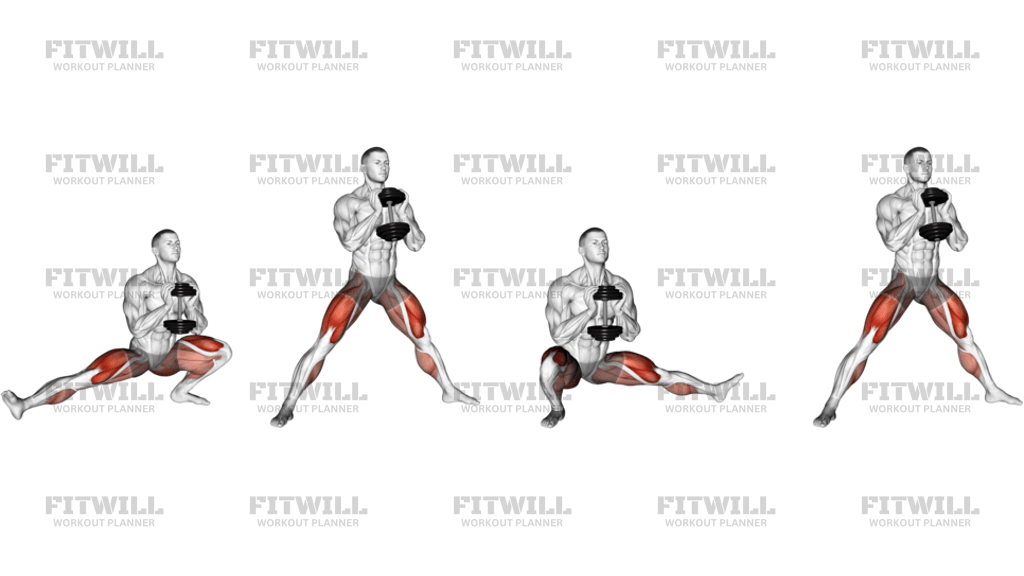
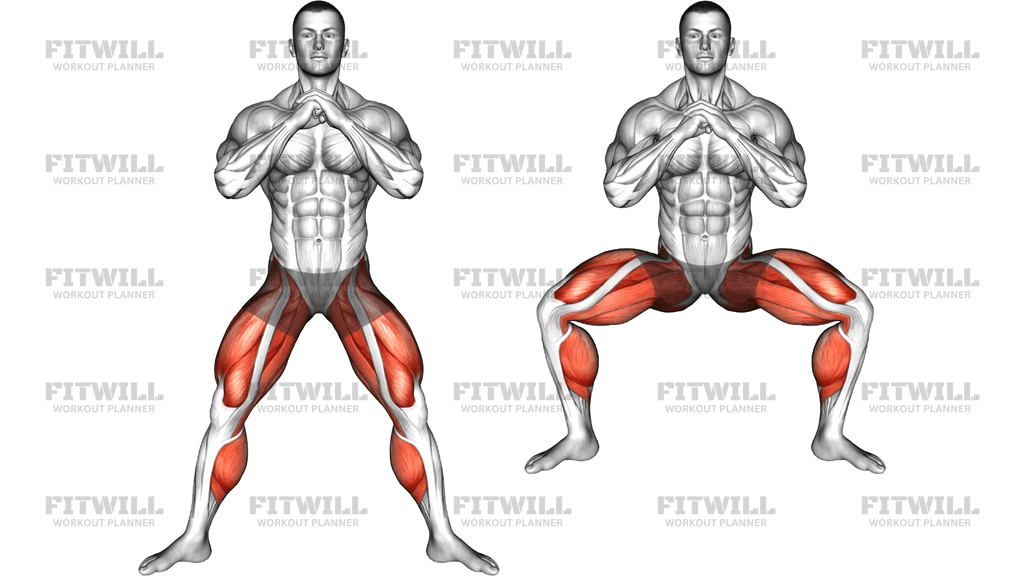
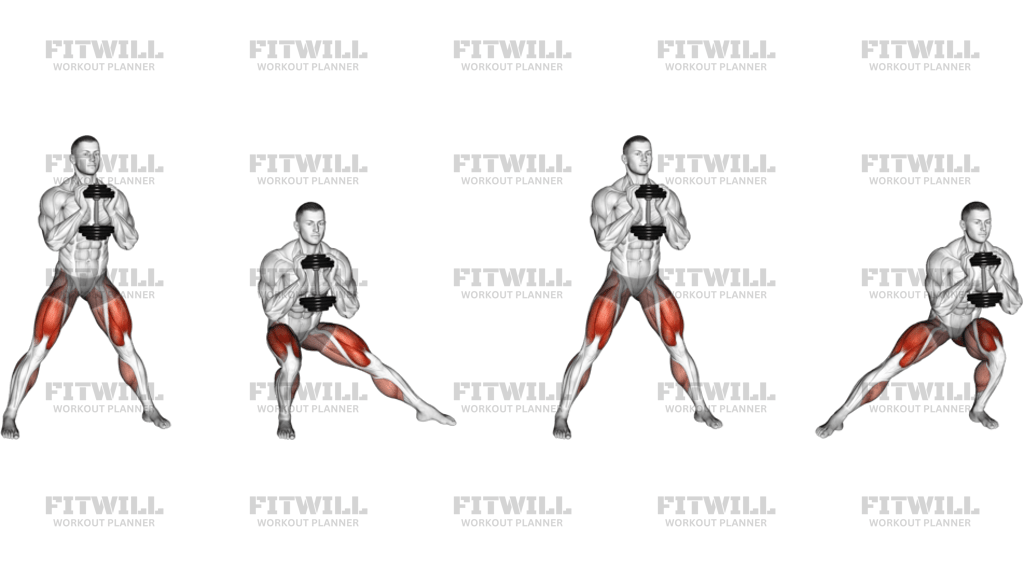
Dumbbell Goblet Squat
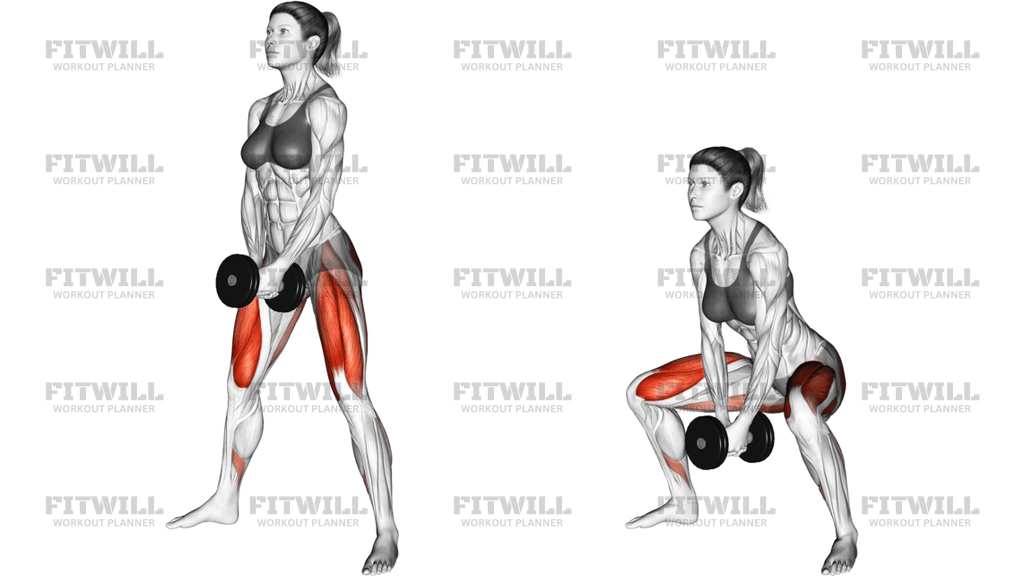
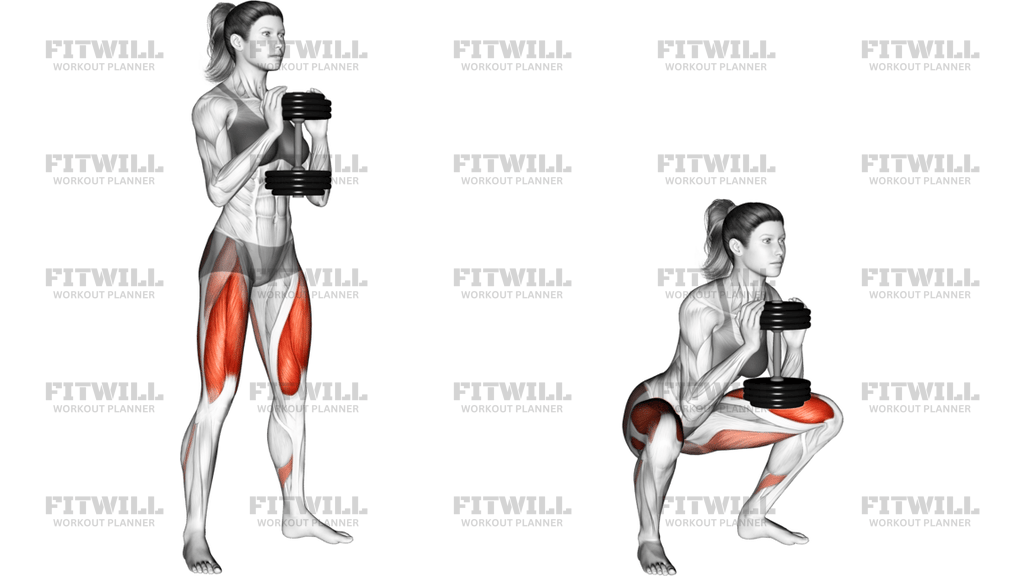
Dumbbell Goblet Squat is a front-loaded squat variation where you hold a dumbbell close to your chest and descend by bending at the hips and knees together. The front load keeps the torso more upright than many other squat styles, which makes this exercise useful for learning squat mechanics, building quad strength, and reinforcing a strong bracing pattern through the trunk.
Because the dumbbell sits in front of the body, the goblet position gives you immediate feedback. If the weight drifts away from the chest, the upper back works harder and the squat usually becomes less stable. When the bell stays tucked in close, it is easier to keep the ribs stacked over the pelvis, keep the heels grounded, and track the knees in line with the toes.
Dumbbell Goblet Squat is especially valuable for lifters who want a squat pattern that is easier to coach than a barbell back squat but still demanding enough to build real lower-body strength. It trains the quads heavily, while the glutes, adductors, upper back, and core help control the descent and drive you out of the bottom. The setup matters because a narrow, crowded stance or a loose grip often turns the movement into a tip-forward hinge instead of a true squat.
A good repetition starts with the dumbbell held vertically at the chest, elbows pointing down and in, feet planted firmly, and pressure spread across the full foot. From there, sit straight down between the legs while keeping the chest proud and the knees tracking over the middle toes. The torso should stay braced and controlled, not relaxed at the bottom, so the hips can travel deep without the lower back collapsing.
Use Dumbbell Goblet Squat for strength work, accessory volume, movement practice, or as a squat variation when you want a cleaner upright pattern. It is also a useful option when teaching beginners how to squat deeply with control. The safest and most productive reps are the ones where the heels stay down, the dumbbell never pulls the shoulders forward, and the return to standing is driven by the legs rather than a bounce or sway.
[ Workout Log & Planner ]
Put your next workout in Fitwill
Keep your plan and training log ready when you are.


Instructions
- Stand tall with your feet about shoulder width apart and hold a dumbbell vertically against the center of your chest with both hands under the top end.
- Keep your elbows pointed down and slightly in front of your ribs so the dumbbell stays close to your sternum.
- Plant your heels, spread your toes, and tighten your midsection before you start the first descent.
- Sit your hips down between your heels while letting your knees travel forward and out in line with your toes.
- Keep your chest lifted and your back neutral as you lower under control.
- Descend until your thighs are at least parallel to the floor, or as deep as your hips and mobility allow without losing position.
- Drive through the midfoot and heels to stand back up, keeping the dumbbell pinned to your chest.
- Exhale as you rise, then reset your stance and torso before the next repetition.
Tips & Tricks
- If the dumbbell pulls your shoulders forward, lower the load and keep the top end tucked against your sternum.
- Let the knees travel forward and out instead of forcing them to stay vertical; a goblet squat should still look like a squat, not a hip hinge.
- Keep the whole foot heavy on the floor, especially the big toe and heel, so you do not rock onto the toes at the bottom.
- A slightly wider stance often makes the bottom position cleaner and gives the hips room to drop between the thighs.
- If your heels lift, shorten the range or elevate the heels slightly only if that helps you keep control and balance.
- Pause for a split second at the bottom if you tend to bounce out of the hole or lose torso position.
- Keep the elbows pointed down rather than flaring wide; that helps keep the dumbbell from drifting away from the body.
- Stop the set when your knees cave inward, your chest collapses, or you have to tip forward to stand up.
Frequently Asked Questions
What muscles does Dumbbell Goblet Squat target most?
It emphasizes the quads, with strong help from the glutes, adductors, and core. The upper back also works to keep the dumbbell fixed against the chest.
How should I hold the dumbbell in Dumbbell Goblet Squat?
Hold it vertically at the center of your chest with both hands under the top end. Keep your elbows pointed down so the weight stays close and does not drag you forward.
How deep should I go in Dumbbell Goblet Squat?
Go as deep as you can while keeping your heels down, chest lifted, and knees tracking over your toes. For many lifters that means at least parallel, but depth should never come at the cost of losing position.
Is Dumbbell Goblet Squat good for beginners?
Yes. The front load makes it easier to learn an upright squat pattern, and the dumbbell gives a clear cue for keeping the torso braced and balanced.
Why do my heels lift during Dumbbell Goblet Squat?
You may be descending too far for your current ankle mobility or stance. Try a slightly wider stance, keep pressure through the whole foot, and only squat as deep as you can without rocking forward.
What is the most common mistake in Dumbbell Goblet Squat?
Letting the dumbbell drift away from the chest and turning the rep into a forward fold. Keep the weight tucked in close so the torso stays upright and the quads can do the work.
Can I use Dumbbell Goblet Squat instead of a barbell squat?
It can be a strong substitute for general lower-body training, especially when you want a simpler setup or more torso control. You will usually be limited by how much weight you can hold at the chest before grip or upper-back fatigue becomes the limiter.
Should my knees move forward in Dumbbell Goblet Squat?
Yes, some forward knee travel is normal and useful as long as the knees track over the toes and the heels stay planted. Forcing the shins to stay vertical usually makes the squat less natural.