Dumbbell Lying Femoral
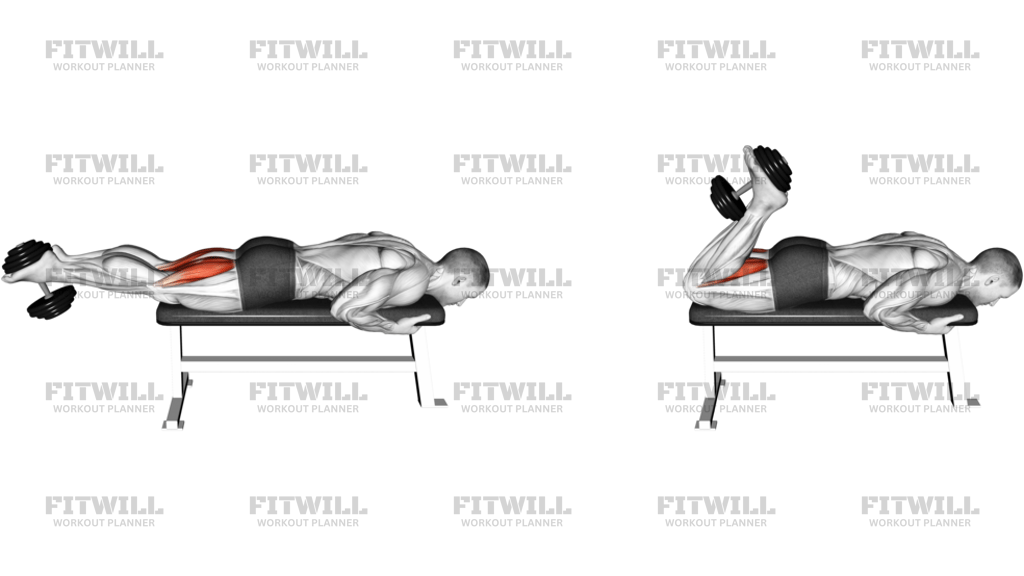
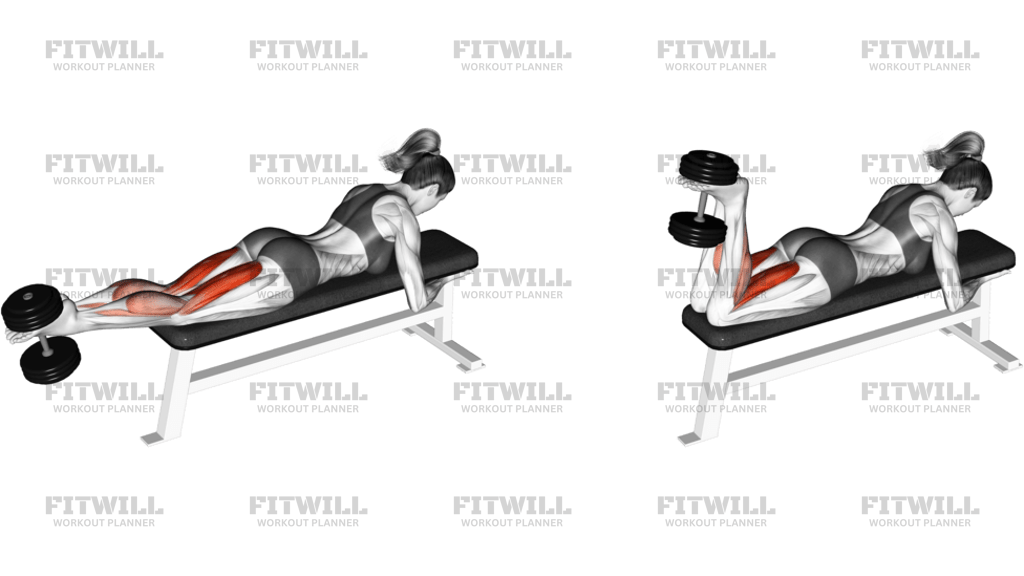
Dumbbell Lying Femoral is a prone hamstring curl performed on a flat bench with a dumbbell trapped between the feet. It is a simple but demanding way to train knee flexion when you want direct work for the back of the thighs without using a machine. The bench support keeps the torso quiet so the hamstrings can do the work instead of the lower back or hips taking over.
The setup matters because the dumbbell is controlled by the feet rather than the hands. Lie face down with your hips supported on the bench, your knees just off the edge, and your lower legs free to move through the curl. That position gives the hamstrings a clean line of pull and makes it easier to feel whether the weight is staying stable or drifting out of position.
To do Dumbbell Lying Femoral well, clamp the dumbbell securely between the soles or inner edges of your shoes, then curl your heels toward your glutes by bending the knees. Keep your thighs pressed into the pad and avoid kicking the weight up with your hips. The finish should feel like a strong hamstring squeeze, not a jumpy swing from the lower body. Lower the dumbbell slowly until the legs are nearly straight again, keeping tension on the hamstrings the whole way down.
This exercise is useful as accessory work for bodybuilding, general strength training, or home gym sessions where a leg curl machine is not available. It can work for beginners, but only if the load is very light and the dumbbell is held securely enough that the feet do not fight the weight every rep. If the dumbbell twists, your knees lift off the bench, or your low back starts to arch, the setup is too heavy or the bench position needs to be adjusted.
The best sets of Dumbbell Lying Femoral are controlled and repetitive, with a steady squeeze at the top and a deliberate lowering phase. Use it when you want to isolate the hamstrings, finish a lower-body workout, or add direct posterior-thigh work without loading the spine much. Clean reps matter more than load here, because the exercise only works well when the feet, hips, and bench stay organized from start to finish.
[ Workout Log & Planner ]
Put your next workout in Fitwill
Keep your plan and training log ready when you are.


Instructions
- Lie face down on a flat bench with your hips supported and your knees just past the edge so your lower legs can hang freely.
- Clamp a dumbbell between the soles of your feet or the inner edges of your shoes, and steady yourself with your forearms or hands on the bench.
- Keep your pelvis pressed into the pad, brace your abdomen, and start with your legs nearly straight and a soft bend in the knees.
- Exhale and curl your heels toward your glutes by bending the knees, keeping your thighs glued to the bench.
- Squeeze the dumbbell tightly as you finish the curl and bring the heels as close to the bench as your hamstrings allow.
- Pause briefly at the top without letting your hips rise or the dumbbell wobble.
- Lower the dumbbell slowly until your knees are almost straight again, keeping tension on the hamstrings.
- After the final rep, lower the dumbbell carefully, reset your grip, and step off the bench without dropping the weight.
Tips & Tricks
- Use a much lighter dumbbell than you would for a hand-held curl; the foot clamp is the limiting factor here.
- If the dumbbell starts rotating, point the toes slightly inward and squeeze the inner edges of the feet harder.
- Keep your thighs pressed into the bench at the top; once your hips lift, the hamstrings lose most of the work.
- A slower lowering phase makes the curl feel harder and reduces the chance of the dumbbell swinging free.
- Wear shoes with a firm sole if barefoot pressure makes the dumbbell feel unstable.
- Stop just short of a hard knee lockout on the way down if the bench edge digs into the joint or the weight starts to pull loose.
- If your calves cramp before your hamstrings do, reduce the load and shorten the range slightly.
- Use this exercise as an accessory movement, not a max-effort lift; clean control matters more than load.
Frequently Asked Questions
What muscles does Dumbbell Lying Femoral train most?
The hamstrings do most of the work, with the glutes and calves helping to stabilize the dumbbell and keep the lower legs under control.
How do I keep the dumbbell from slipping in Dumbbell Lying Femoral?
Use a very light dumbbell, clamp it between the soles or inner edges of your shoes, and keep the feet slightly squeezed together through the whole rep.
Should my hips stay on the bench during Dumbbell Lying Femoral?
Yes. Keep your hips pressed into the pad so the hamstrings, not the lower back, drive the curl.
How far should I curl the dumbbell up?
Curl until the heels are close to the glutes and the hamstrings are clearly shortened, but stop before the dumbbell forces your hips to pop up.
Is Dumbbell Lying Femoral beginner-friendly?
Yes, but only with a very light dumbbell and a stable bench setup. If the foot clamp feels awkward, a lying leg curl machine is usually easier to learn first.
What is the biggest mistake people make on this exercise?
The most common error is swinging the dumbbell up by lifting the hips or kicking the lower legs instead of curling smoothly from the hamstrings.
What can I use instead of Dumbbell Lying Femoral?
A lying leg curl machine, stability-ball leg curl, or sliding leg curl will train a similar knee-flexion pattern if you do not want to clamp a dumbbell between your feet.
How should I breathe during Dumbbell Lying Femoral?
Exhale as you curl the weight up, then inhale as you lower it with control back toward the start.