Dumbbell Plank Pass Through
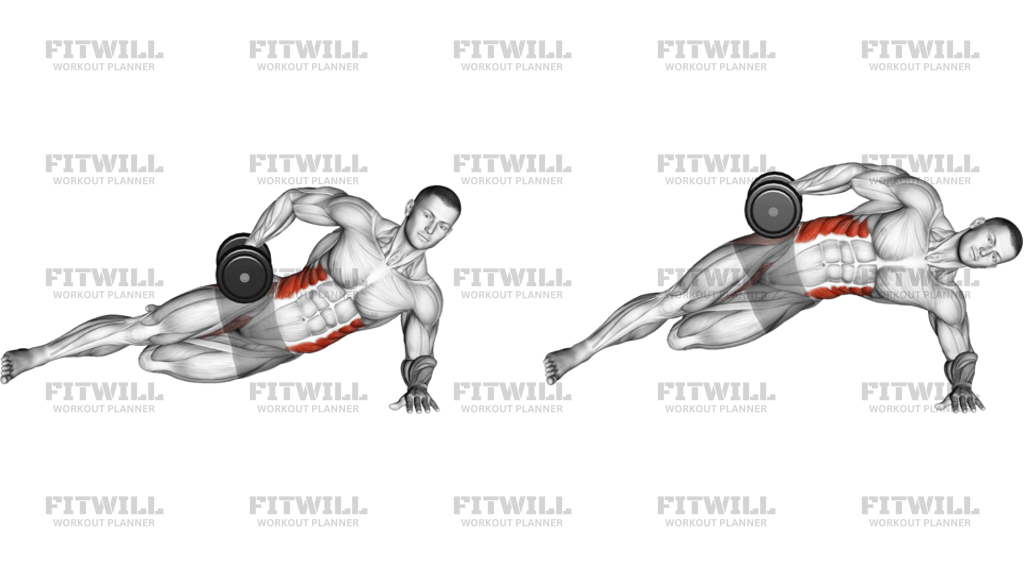
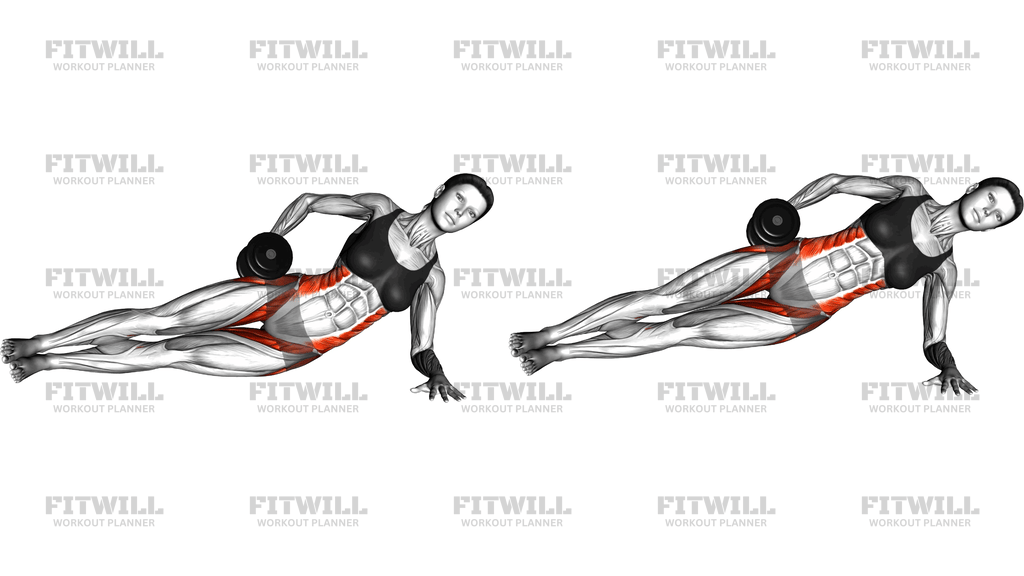
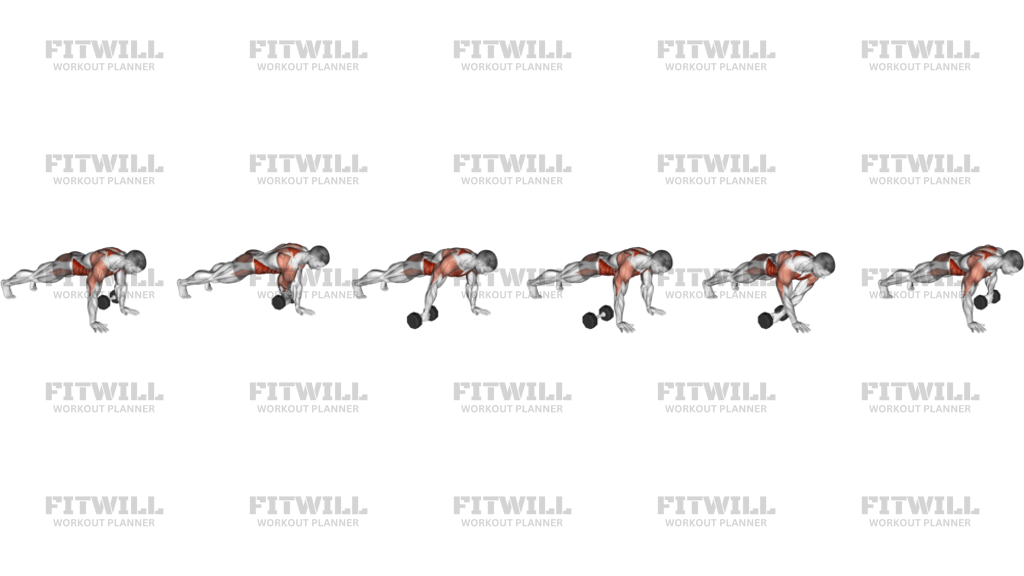
Dumbbell Plank Pass Through is a plank-based anti-rotation core exercise where you hold a high plank and move a dumbbell from one side of the body to the other beneath your chest. The exercise looks simple, but the main challenge is keeping the trunk, pelvis, and shoulders square while one hand leaves the floor to move the weight. That makes it a useful drill for core control, shoulder stability, and bracing under small but constant shifts in load.
The movement primarily targets the obliques, with the rectus abdominis, transverse abdominis, glutes, and shoulder stabilizers helping you keep the plank rigid. Because the dumbbell passes under the torso, the exercise also asks the wrists and serratus anterior to manage bodyweight through a stable support arm. The load should stay light enough that the body does not start rocking side to side or sagging at the hips.
Setup matters more here than in many dumbbell exercises. Start in a strong high plank with the hands under the shoulders, the feet slightly wider than hip width, and a dumbbell positioned just outside one hand. Squeeze the glutes, pull the ribs down, and keep the neck long before the first transfer. If the base is too narrow or the dumbbell starts too far away, the body will compensate by twisting instead of resisting rotation.
Each repetition should be a controlled hand-to-hand pass rather than a rush for speed. Reach the free hand under the chest, move the dumbbell close to the floor, and place it outside the opposite hand without shifting the torso. The supporting shoulder should stay stacked, the hips should stay level, and the feet should stay planted. Exhale during the pass, then re-brace before the next transfer so every rep starts from a stable position.
This is best used as accessory core work, warm-up stability practice, or part of a conditioning circuit where clean movement matters more than heavy loading. It is not a power exercise and it is not meant to be done for sloppy speed. If the lower back starts to arch, the shoulders drift, or the dumbbell becomes hard to control, the set is too long or the load is too heavy. Keep the motion crisp, symmetrical, and quiet so the target is the anti-rotation demand rather than momentum.
[ Workout Log & Planner ]
Put your next workout in Fitwill
Keep your plan and training log ready when you are.


Instructions
- Place a dumbbell on the floor just outside one hand and set up in a high plank with your hands under your shoulders.
- Walk your feet slightly wider than hip width so you have enough base to resist twisting.
- Lock your elbows, squeeze your glutes, and pull your ribs down before the first rep.
- Shift a little weight into the hand that is not moving so the reaching hand can leave the floor cleanly.
- Reach the free hand under your chest and grasp the dumbbell close to the floor.
- Pass the dumbbell beneath your torso to the space outside the opposite hand without letting your hips turn.
- Set the dumbbell down, replant the reaching hand, and re-square your shoulders and hips.
- Repeat the pass back to the starting side for the planned repetitions while breathing steadily.
Tips & Tricks
- Use a hex dumbbell or another weight that sits flat so it does not roll when you pass it under your body.
- Keep your feet wider than a normal plank stance if your hips sway when one hand reaches across.
- Move the dumbbell close to the floor instead of lifting it high; a big arc usually means extra torso rotation.
- Press the floor away with the support hand so the shoulder stays active instead of collapsing into the joint.
- Keep your hips level with the floor; if one side rises, shorten the reach or lighten the load.
- Exhale during the transfer and reset your brace before the next pass to avoid drifting into an unstable plank.
- If your wrists get irritated, place the dumbbell closer to the hand so the support side does not have to overreach.
- Choose a lighter dumbbell than you would use for a regular carry, because anti-rotation strength is the limiter here.
- Stop the set when the lower back starts to arch or the dumbbell begins to slap the floor instead of moving smoothly.
Frequently Asked Questions
What muscles does Dumbbell Plank Pass Through work most?
It mainly challenges the obliques and deep core muscles, with the abs, glutes, serratus anterior, and shoulder stabilizers helping you hold the plank steady.
Can beginners perform this exercise?
Yes, but start with a very light dumbbell and a wide, stable plank. If holding a full high plank is hard, shorten the set or elevate the hands first.
How heavy should the dumbbell be for this movement?
Light enough that you can pass it without the torso twisting or the hips rocking. The set should feel like a core stability drill, not a strength pull.
What is the most common mistake with a plank pass through?
Letting the hips rotate toward the moving hand. The dumbbell should travel under the chest while the shoulders and pelvis stay nearly level.
Should my feet be wide or narrow?
A slightly wider stance usually works best. Narrow feet make it harder to keep the plank from swaying when the hand reaches across.
Is it normal to feel this in my shoulders too?
Yes. The support shoulder and serratus anterior work hard to keep the plank stable while the other hand moves the dumbbell.
Can I do this on my knees or on an incline?
Yes. A kneeling version or a hands-elevated version on a bench makes the anti-rotation demand easier while you learn the path.
What should I do if the dumbbell keeps rolling?
Use a hex dumbbell or place the weight on a flatter surface. If it still rolls, slow the transfer down and keep the dumbbell lower to the floor.