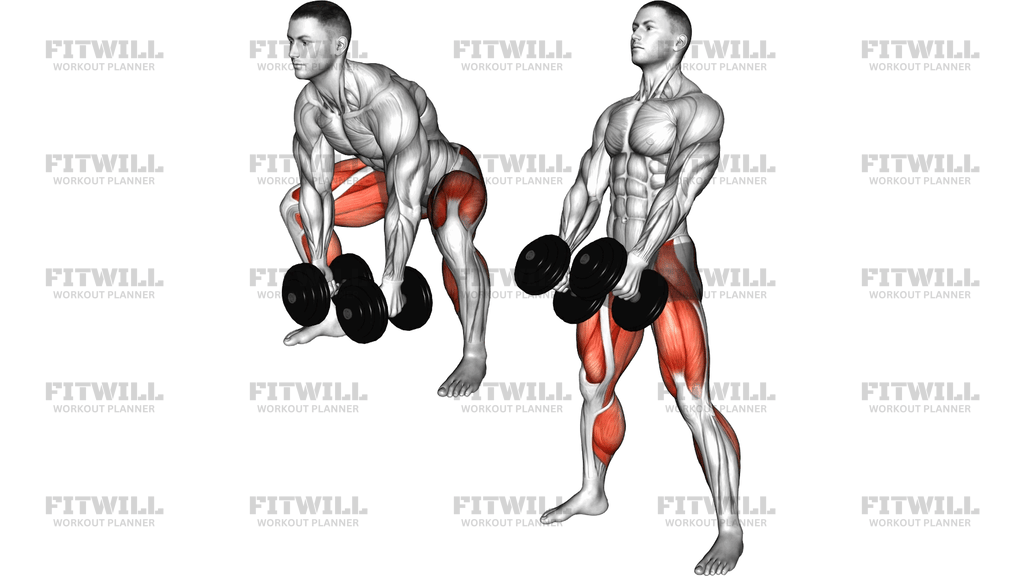
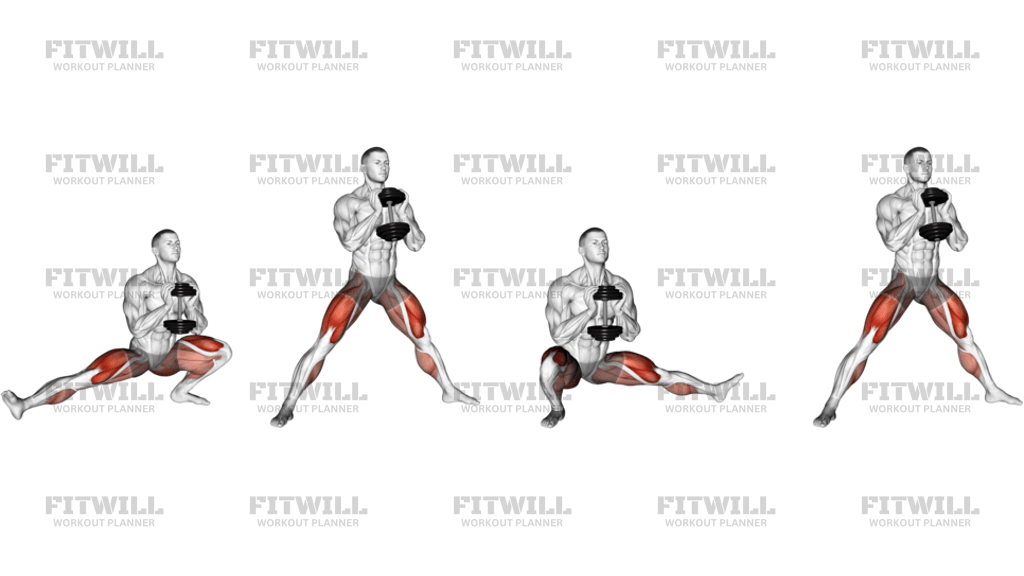
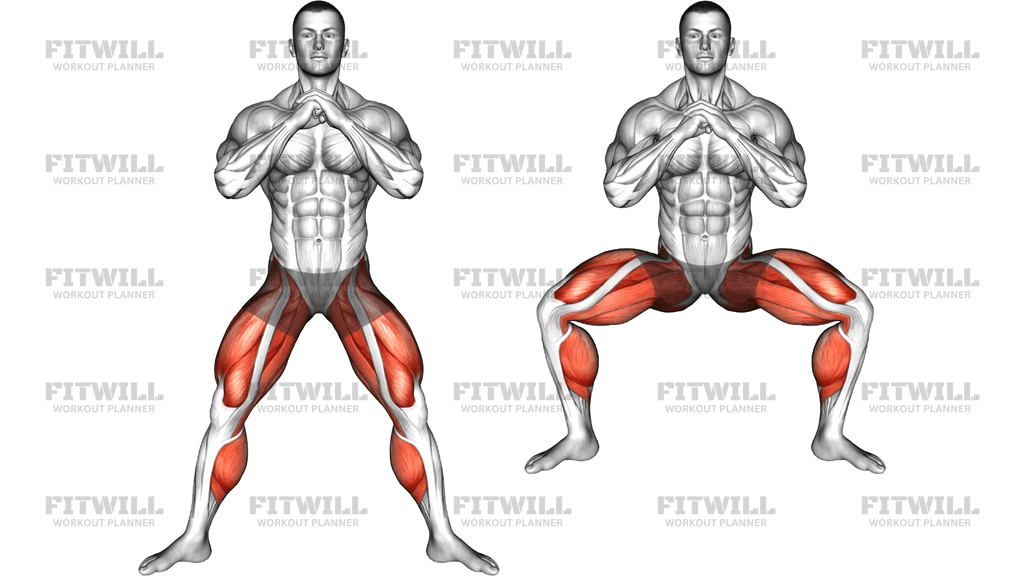
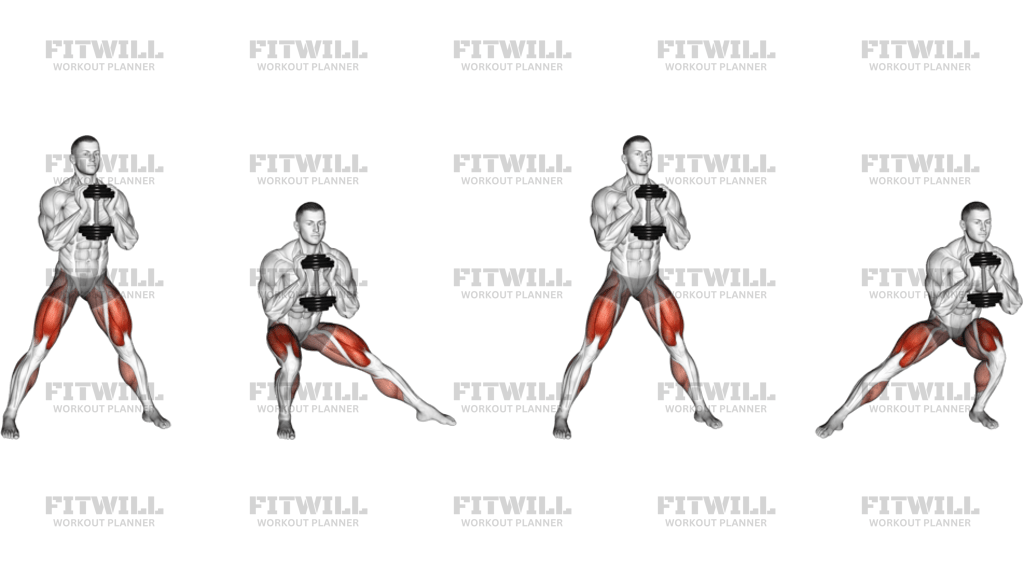
Dumbbell Goblet Split Squat
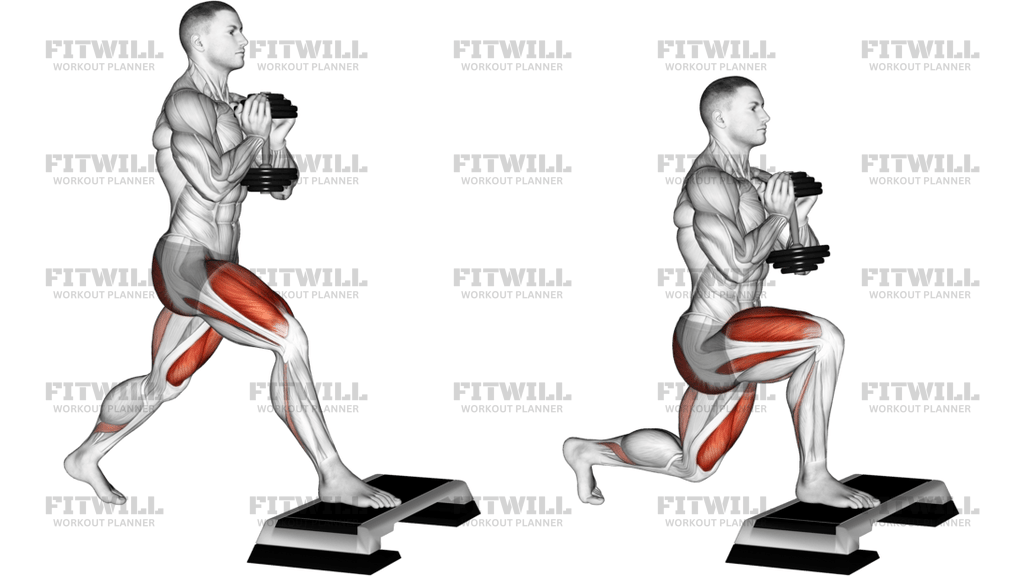
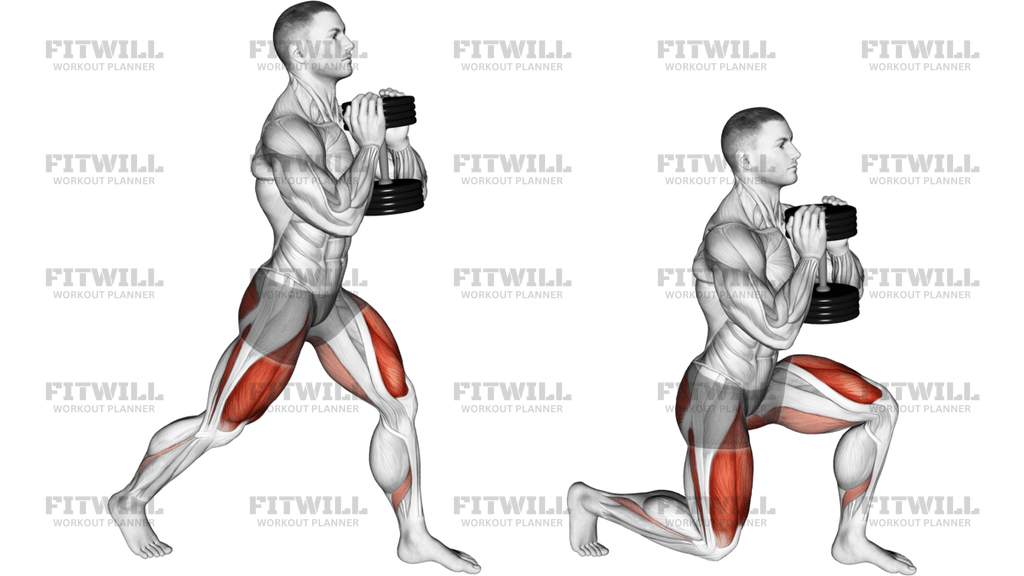
Dumbbell Goblet Split Squat is a unilateral lower-body strength exercise performed from a fixed split stance while holding one dumbbell close to the chest. The front leg does most of the work, and the rear leg acts mainly as support and balance. The goblet position gives you a compact counterbalance, which helps keep the torso more upright and makes it easier to stay organized through the hips, knees, and trunk.
This variation is especially useful when you want quad-focused leg work without the spinal loading of a barbell squat. The front thigh, glute, adductors, calves, and trunk all contribute, but the front leg should feel like the engine of the movement. It is also a practical choice for correcting left-right strength differences, building single-leg control, and teaching clean knee tracking before progressing to heavier split squats or lunges.
Setup matters more here than on many bilateral leg exercises. Step into a stance long enough that you can lower straight down without crowding the front knee or losing balance, then place the rear foot on the ball of the foot with the heel lifted. Hold the dumbbell vertically at the chest with the elbows underneath it, keep the ribs stacked over the pelvis, and square the hips before you descend. The front foot should stay flat and stable, with pressure spread across the heel, base of the big toe, and base of the little toe.
Lower under control by bending both knees and letting the rear knee travel toward the floor while the front knee tracks over the middle toes. A little forward torso lean is normal, but the weight should stay close to the body and the pelvis should not twist or dump forward. At the bottom, the rear knee should hover just above the floor or make a light, controlled touch. Drive back up through the front heel and midfoot, exhale as you stand, and avoid pushing off the back toes to finish the rep.
Use this exercise for accessory leg work, hypertrophy, or controlled unilateral strength training when you want tension and stability instead of speed. Start lighter than you think, because the goblet hold makes balance and posture part of the challenge. If the movement turns into a wobble, shorten the stance, reduce the load, or slow the descent until each rep looks identical. The goal is a clean split squat that loads the front leg hard without sacrificing knee alignment, trunk position, or pain-free range of motion.
[ Workout Log & Planner ]
Put your next workout in Fitwill
Keep your plan and training log ready when you are.


Instructions
- Stand tall holding one dumbbell vertically at your chest in a goblet grip.
- Step one foot forward and the other back into a long split stance.
- Plant the front foot flat and keep the rear heel lifted so you are balanced on the ball of the back foot.
- Brace your trunk, keep your ribs stacked over your pelvis, and hold the dumbbell close to your sternum.
- Inhale and lower straight down by bending both knees, letting the front knee track over the middle toes.
- Keep most of your weight on the front leg as the back knee moves toward the floor.
- Pause briefly near the bottom when the back knee is just above the floor and the front leg is fully loaded.
- Exhale and drive through the front heel and midfoot to return to standing without pushing off the back leg.
- Complete all planned reps on one side, reset your stance, and repeat on the other side.
Tips & Tricks
- Choose a stance length that lets the rear knee drop without crowding the front hip or forcing the torso to fold.
- Keep the dumbbell pinned to your chest; if it drifts forward, the exercise turns into a balance drill instead of a leg driver.
- Think front-foot tripod pressure: big toe, little toe, and heel all stay connected to the floor.
- Let the front knee travel forward as long as it tracks over the toes and the front heel stays planted.
- Treat the rear leg like a kickstand, not the engine; do not push off the back toes to stand up.
- If the rear knee touches the floor, let it tap softly and rebound under control instead of bouncing.
- Slow the lowering phase if the movement gets shaky; a 2-3 second descent usually makes the front leg work harder without extra load.
- Stop the set when the pelvis twists, the front heel rises, or the dumbbell starts to pull your shoulders forward.
Frequently Asked Questions
What muscles does Dumbbell Goblet Split Squat work most?
The front-leg quads and glutes do most of the work. The adductors, calves, and trunk help stabilize the split stance.
Is this a lunge or a split squat?
It is a split squat because your feet stay planted in a staggered stance. You lower and rise without stepping each rep.
Why hold the dumbbell at the chest?
The goblet hold keeps the load close, helps you stay more upright, and gives you a useful counterbalance for single-leg stability.
How low should I go?
Lower until the rear knee is just above the floor or makes a light touch, as long as the front heel stays down and the knee tracks cleanly.
What if I feel this in my lower back?
Usually the dumbbell has drifted too far from the chest or the ribs are flaring. Keep the weight tight and stack the ribs over the pelvis.
Can beginners use this exercise?
Yes. Start with a light dumbbell and a stance that feels stable, then shorten the range a little if balance is the main challenge.
What is the biggest technique mistake?
Pushing off the back foot and turning the movement into a hop back to standing. The front leg should drive the rep.
How can I make it harder without changing the exercise?
Slow the descent, add a pause near the bottom, or increase the dumbbell only after your torso stays upright and the front knee tracks well.