Dumbbell Overhead Squat
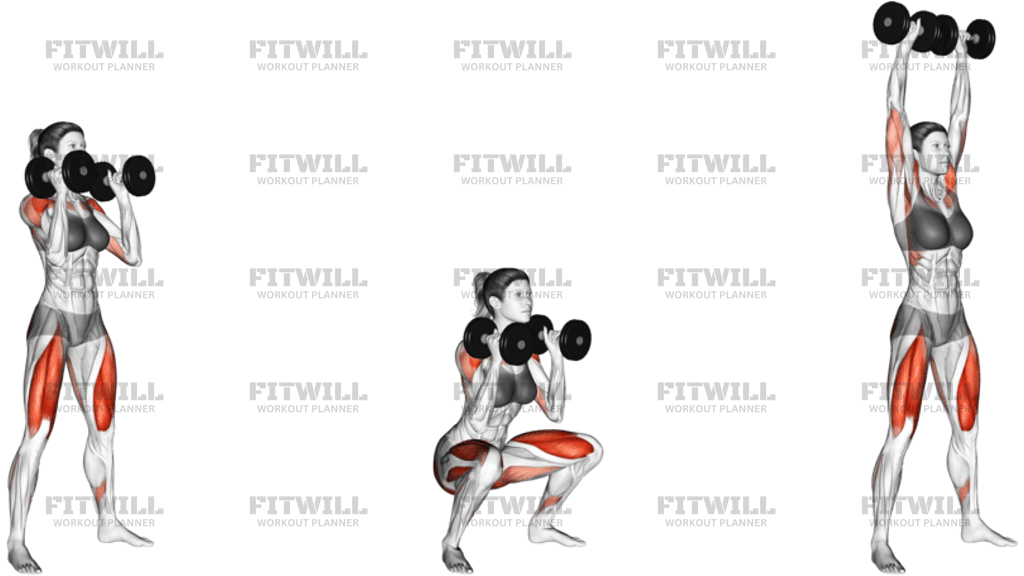
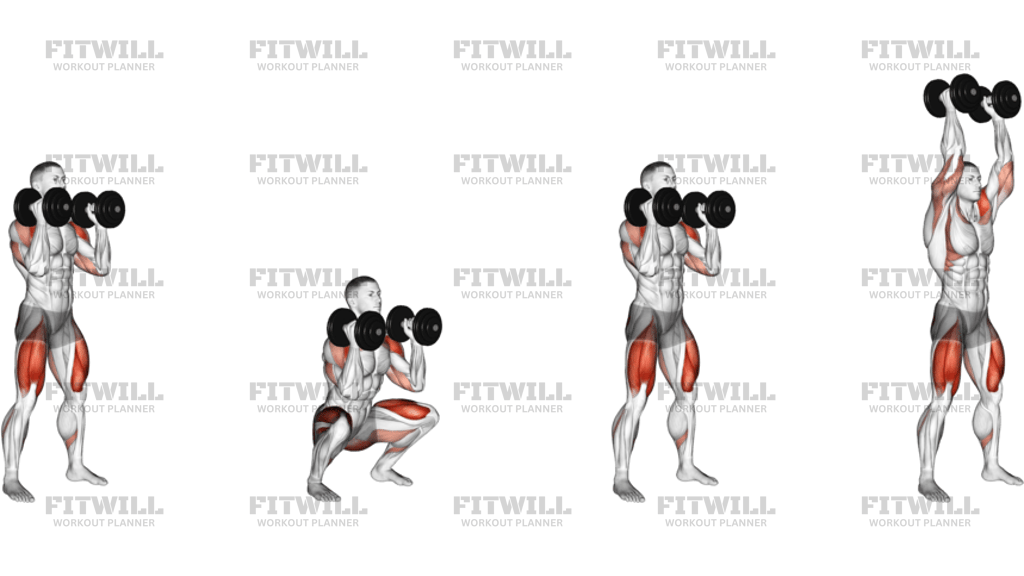
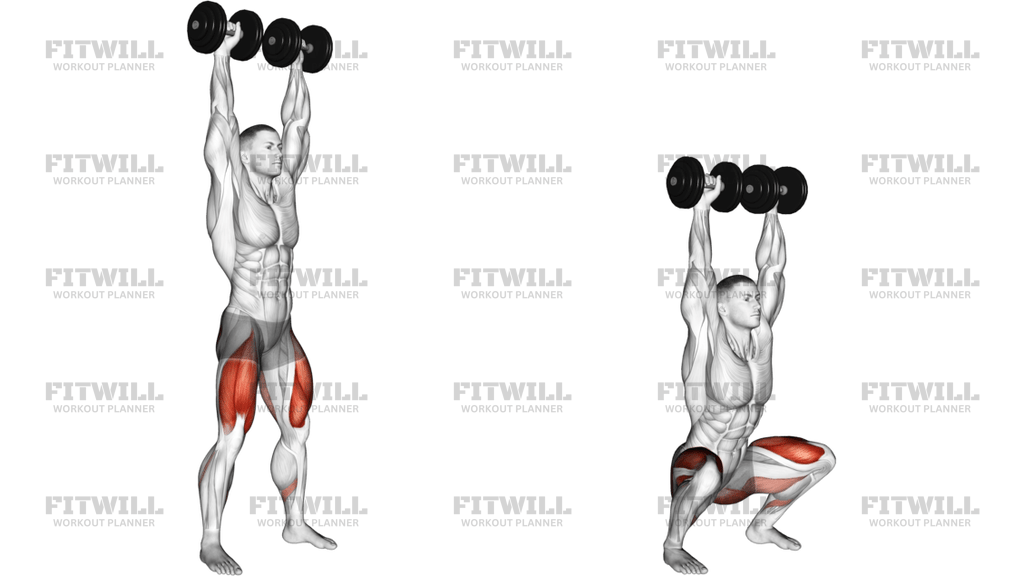
Dumbbell Overhead Squat is a loaded squat pattern where you hold two dumbbells overhead, keep them stacked above the shoulders, and descend into a deep squat before standing back up. It is a demanding strength and mobility exercise that asks for ankle, hip, thoracic spine, and shoulder control at the same time. When it is performed well, it builds lower-body strength, trunk stiffness, and overhead stability in one movement.
The exercise places the greatest demand on the quads, glutes, and core, while the shoulders, upper back, and hip stabilizers work hard to keep the weights centered over the feet. That overhead position is the reason the movement is so effective: if the ribs flare, the dumbbells drift forward, or the heels lift, the squat quickly becomes unstable. Clean reps depend on a strong lockout overhead and a torso that stays tall through the descent.
The setup matters more here than in a standard squat. Start with the dumbbells pressed directly over the shoulders, elbows fully extended, wrists stacked, and palms facing forward or slightly inward depending on shoulder comfort. Set the feet about shoulder width apart, brace before each rep, and keep the chest lifted without over-arching the lower back. From there, sit down between the heels while keeping the arms fixed overhead and the weights in line with the midfoot.
During the descent, let the knees travel in line with the toes and keep the heels rooted. At the bottom, pause only if you can stay balanced and keep the weights quiet overhead. Drive up by pushing the floor away, standing through the midfoot, and finishing with the hips and knees together under the dumbbells. The return should look as controlled as the descent; if the shoulders or low back are doing the work of the legs, the load is too heavy or the range is too deep for the current session.
Use Dumbbell Overhead Squat when you want a more athletic squat variation, overhead stability work, or a mobility-strength challenge in the same rep. It is useful as warm-up skill work, accessory work, or lighter technical strength training, but it is not a movement to rush. Start conservatively, keep every rep crisp, and stop the set when the dumbbells stop tracking directly over the center of the foot.
Fitwill
Log Workouts, Track Progress & Build Strength.
Achieve more with Fitwill: explore over 9600 exercises with images and videos, access built-in and custom workouts, perfect for both gym and home sessions, and see real results.
Start your journey. Download today!




Instructions
- Hold a dumbbell in each hand and press both arms straight overhead with the elbows locked and the wrists stacked over the shoulders.
- Set your feet about shoulder width apart with the toes slightly turned out and balance your weight through the whole foot.
- Brace your core, squeeze your glutes lightly, and keep the ribs down before you start the descent.
- Keep the dumbbells directly over the midfoot and begin lowering by bending the hips and knees together.
- Sit down between your heels while keeping the chest tall and the arms fixed in the overhead position.
- Descend until your thighs reach the deepest pain-free squat you can control without the weights drifting forward.
- Drive back up through the midfoot, letting the knees track in line with the toes and the hips rise with the shoulders.
- Finish standing tall with the dumbbells still overhead, then lower them only after the rep is complete if the set calls for it.
- Breathe in and brace before each rep, then exhale as you stand back up.
Tips & Tricks
- Choose dumbbells you can hold overhead without shaking; the limiting factor is usually shoulder stability before leg strength.
- Keep the biceps close to the ears at the top so the weights stay stacked over the shoulders instead of drifting forward.
- If your low back arches hard to keep the dumbbells up, reduce the load or shorten the range of motion.
- Keep the heels planted through the whole rep; lifting the heels usually means the squat is too deep or the ankles need more mobility.
- Let the knees travel over the toes instead of caving inward, especially near the bottom of the squat.
- Use a controlled tempo on the way down so you can feel where the balance shifts before it becomes a missed rep.
- Keep the neck relaxed and look forward or slightly down rather than craning to follow the weights.
- Stop the set when one arm starts drifting behind the other, because asymmetry overhead is a sign the rep is losing quality.
- Treat this as a technique lift, not a max-strength squat; cleaner reps matter more than load.
Frequently Asked Questions
What muscles does the dumbbell overhead squat train most?
It primarily trains the quads, glutes, and core, with the shoulders and upper back working hard to keep the dumbbells stable overhead.
Is this harder than a regular dumbbell squat?
Yes. The overhead position adds a major shoulder and core stability demand, so the movement usually feels much more challenging even with lighter weights.
How should the dumbbells be held overhead?
Hold them directly above the shoulders with the elbows locked and the wrists stacked so the weights stay over the midfoot during the squat.
What is the most common mistake in this squat?
Letting the dumbbells drift forward while the chest collapses or the lower back arches to save the rep.
Can beginners do a dumbbell overhead squat?
Yes, but only with very light loads and a range of motion they can control. Many beginners should practice the pattern with bodyweight or a dowel first.
Why do my heels come up during the squat?
Usually the squat is deeper than your ankle mobility allows, or the load is pulling you forward. Shorten the depth and keep pressure through the whole foot.
Should I lower the dumbbells between reps?
For a full set, keep them overhead between reps if you can maintain position. If your shoulders fatigue and the form breaks, reset the weights safely before the next rep.
What if my shoulders do not tolerate the overhead position well?
Use a lighter load, reduce range, or switch to a different squat variation. Pain or pinching overhead is a sign to stop and adjust the movement.