Barbell Overhead Lunge
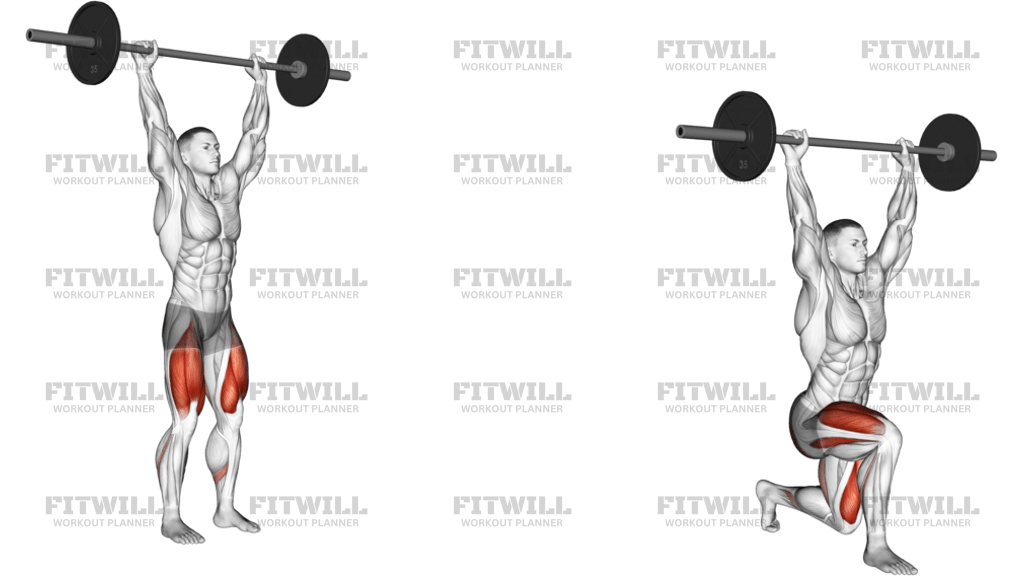
Barbell Overhead Lunge is a loaded single-leg strength exercise that combines a lunge pattern with an overhead hold. The barbell sits locked out above the shoulders while one leg steps into a split stance, so the exercise asks the hips, knees, trunk, and shoulders to work together instead of letting any one area drift out of position. That overhead demand makes it much more than a simple leg movement: it is a test of balance, ribcage control, and shoulder stability under load.
The main lower-body emphasis is on the glutes and thighs, with the hamstrings assisting as you control the descent and drive back up. The core and lower back work hard to keep the torso tall and keep the bar stacked over the midfoot. In practice, that means the exercise rewards a clean line from hands to shoulders to hips more than it rewards speed or long strides. If the bar wanders forward or the chest collapses, the rep becomes harder for the wrong reasons.
The setup matters. Start with a light barbell or an empty bar, press it overhead, and keep the elbows straight, wrists neutral, and shoulders active. From there, step into a lunge stance with enough length that both knees can bend without forcing the front heel to pop up or the back heel to twist. A good rep looks stable from the start: ribs down, pelvis level, eyes forward, and the bar parked over your base of support.
As you descend, lower straight down rather than leaning forward. The front knee should track in line with the toes, the back knee should travel toward the floor, and the torso should stay tall enough that the bar remains over the shoulders. The overhead position should not change into a press-out or a behind-the-head drift; instead, it should feel like you are holding the bar still while the legs move underneath it.
Barbell Overhead Lunge is useful for lifters who want stronger legs, better single-leg control, and more stable overhead mechanics in one drill. It fits well in strength sessions, athletic warm-ups, or accessory work after the main lift, especially when you want to train bracing without turning the movement into a balance trick. If the shoulders, hips, or ankles are not ready for a full range yet, shorten the step, lighten the load, or use a dowel until you can keep the bar path and lunge depth consistent.
Fitwill
Log Workouts, Track Progress & Build Strength.
Achieve more with Fitwill: explore over 9600 exercises with images and videos, access built-in and custom workouts, perfect for both gym and home sessions, and see real results.
Start your journey. Download today!




Instructions
- Stand tall with your feet about hip-width apart and hold the barbell overhead with your hands slightly wider than shoulder-width.
- Lock your elbows, stack your wrists over your shoulders, and keep the bar directly above the middle of your feet.
- Set your ribs down and tighten your glutes so your torso stays tall before you step.
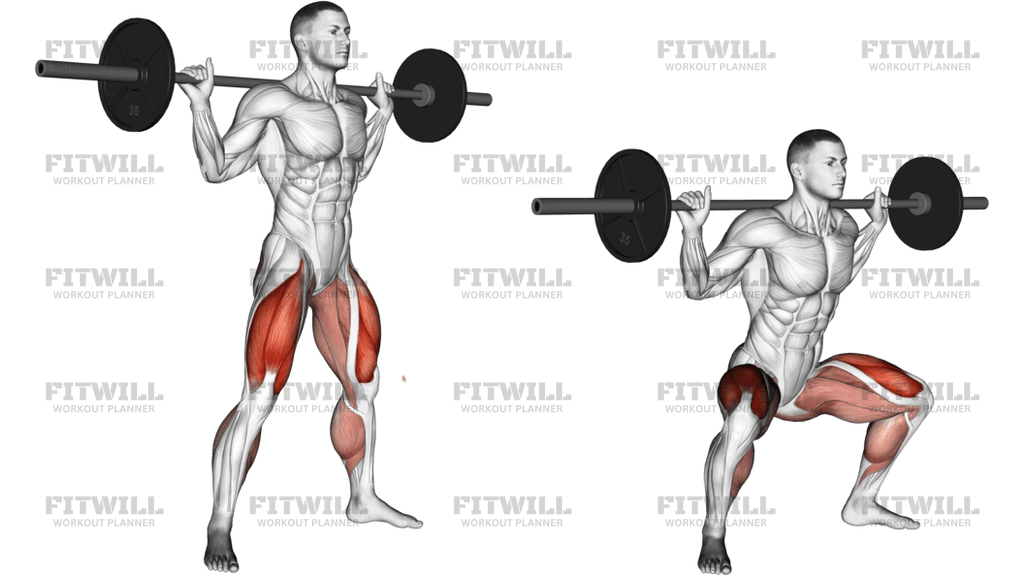
- Step one foot back into a long split stance, keeping your front foot flat and your back heel lifted.
- Lower straight down until your back knee hovers just above the floor and your front thigh is close to parallel.
- Keep the bar steady overhead as both knees bend, and avoid letting your chest tip forward.
- Drive through the front heel to stand back up and bring the rear leg forward to re-stack your feet.
- Exhale as you rise, inhale on the way down, and alternate legs for the planned number of reps.
Tips & Tricks
- Start with an empty bar or a very light load; the overhead hold exposes balance mistakes quickly.
- Keep the bar slightly behind your face line before you step so it stays over the shoulders instead of drifting forward.
- Use a stance long enough that the front heel stays down when the back knee approaches the floor.
- If the bar wobbles, shorten the depth before you add more weight.
- Think about lowering the back knee straight toward the floor instead of lunging forward and tipping your torso.
- Keep the front knee tracking over the second and third toes so the leg can drive up cleanly.
- Do not let your lower back arch to save the overhead position; keep the ribs stacked under the bar.
- If your shoulders fatigue before your legs, reduce the load and keep every rep crisp.
Frequently Asked Questions
What muscles does Barbell Overhead Lunge work?
It mainly trains the glutes and thighs, with the hamstrings, core, and shoulder stabilizers helping keep the overhead position steady.
Is Barbell Overhead Lunge more of a leg exercise or a shoulder exercise?
It is mostly a leg exercise, but the overhead hold makes your shoulders, upper back, and trunk work hard to keep the bar balanced.
Should my back knee touch the floor in Barbell Overhead Lunge?
No. Lower until the back knee is just above the floor so you keep tension on the working leg and can stay stable under the bar.
Why does the bar drift forward during Barbell Overhead Lunge?
That usually means the ribs are flaring or the step is too short. Reset with the bar stacked over the shoulders and a longer split stance.
Can beginners do Barbell Overhead Lunge?
Yes, but only with a very light bar and a short range of motion at first. Master the overhead lockout before adding load.
What if my shoulders are not mobile enough for this movement?
Use a lighter bar, reduce the depth, or switch to a front-rack or bodyweight lunge until you can hold the bar overhead without arching your back.
How do I keep my balance during Barbell Overhead Lunge?
Keep the bar directly over your midfoot, keep your eyes forward, and choose a stance long enough that both feet stay planted through the whole rep.
What is the safest way to load Barbell Overhead Lunge?
Add weight slowly only after the overhead position and lunge depth stay consistent for every rep. The bar should feel stable before the legs feel hard.