Barbell Front Bench Squat
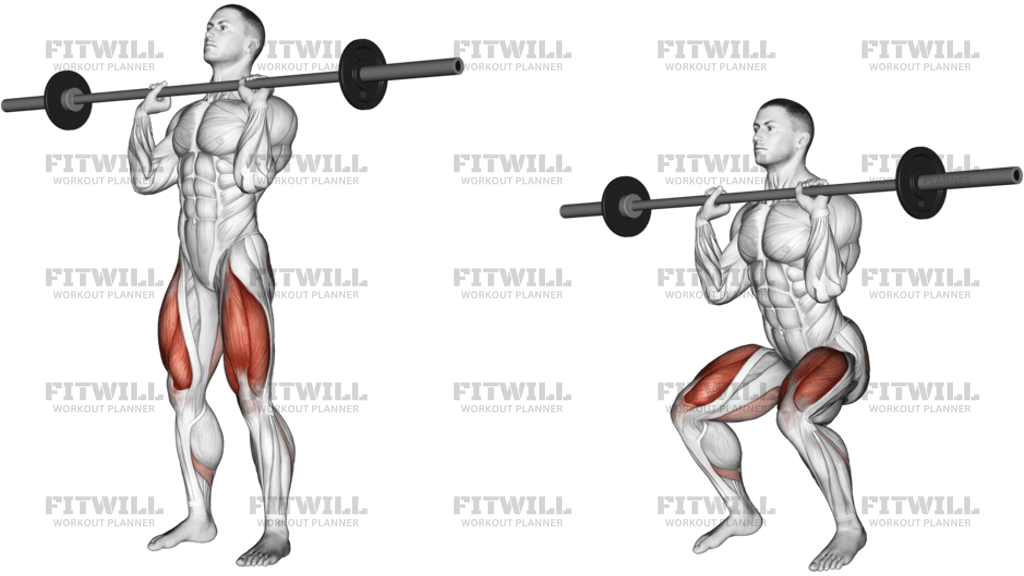
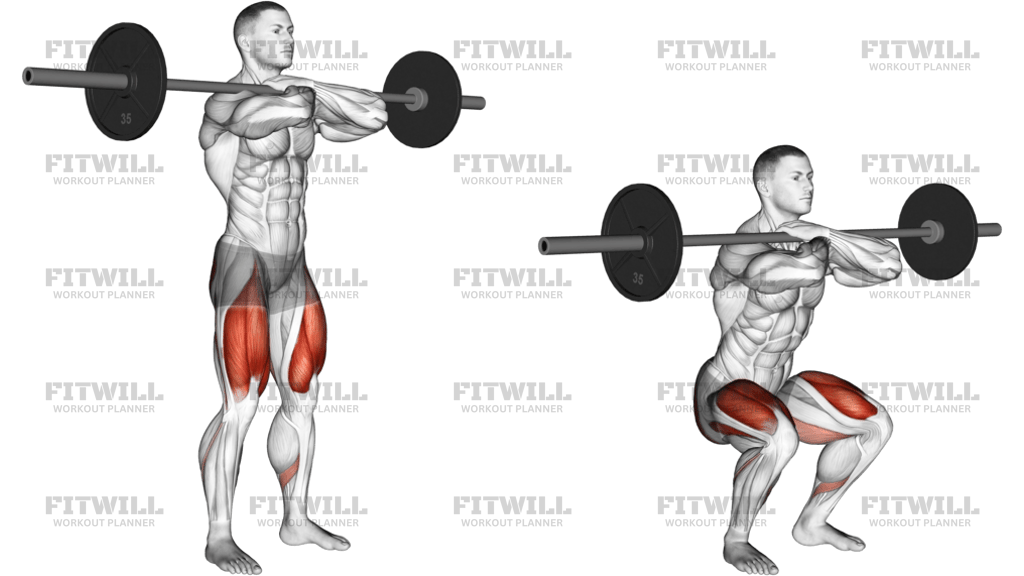
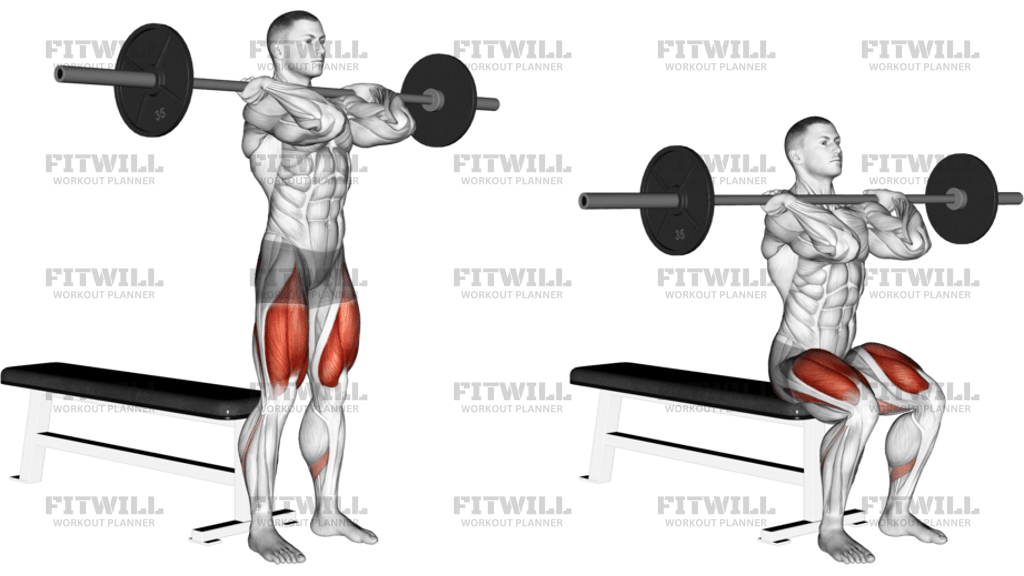
Barbell Front Bench Squat is a front-rack squat performed to a bench or box, using the bench as a depth target rather than a place to sit and relax. The bar stays across the front of the shoulders with the elbows lifted, which makes this a very upright squat variation that asks for strong torso control, clean bracing, and a steady descent.
Because the torso stays tall and the bar is held in front of the body, the exercise places a large training demand on the thighs while also challenging the glutes, core, and upper back to keep the trunk from folding forward. The bench helps standardize depth and gives you a consistent end point for each repetition, which is useful when you want repeatable technique, a clear pause, or a controlled box-squat style pattern. In practice, this makes the movement useful for building leg strength without relying on speed or bounce.
The setup matters more here than in a freer squat because the front rack must be secure before you start descending. A good front rack keeps the wrists as neutral as your mobility allows, the elbows pointed forward, and the chest proud enough that the bar does not roll down the shoulders. Step back into a stance that lets you sit straight down between the feet, then lower under control until the glutes lightly touch the bench. Treat the bench as a depth marker, not a rest position.
On the way up, keep pressure through the whole foot, drive the knees in the direction of the toes, and stand up by pushing the floor away while keeping the elbows high. If the elbows drop, the chest usually drops with them and the bar becomes harder to control. A brief touch on the bench is fine, but do not collapse onto it or bounce aggressively unless that is the intended coaching style. Controlled reps with the same depth and bar path are the goal.
This exercise is a good choice for lower-body strength work, technique practice, or a squat variation when you want more upper-back and core demand than a standard back squat. It is also helpful for lifters who benefit from a clear depth target. Keep the load honest, because front-rack position, upright posture, and full control over the bench touch are what make the movement effective and safe.
[ Workout Log & Planner ]
Put your next workout in Fitwill
Keep your plan and training log ready when you are.


Instructions
- Set the bar in a front rack across the shoulders, lift the elbows forward, and stand a step or two in front of the bench with feet about shoulder-width apart.
- Take a breath, brace your midsection, and keep your chest tall before you start the descent.
- Sit the hips straight down between the feet, keeping the bar over midfoot and the knees tracking in line with the toes.
- Lower until the glutes lightly touch the bench without relaxing onto it or collapsing the torso.
- Pause briefly on the bench if the rep calls for a dead-stop or controlled box touch.
- Drive through the whole foot and stand up by pushing the floor away while keeping the elbows high.
- Exhale as you pass the hardest part of the ascent, then reset your breath at the top before the next rep.
- Re-rack the bar carefully after the final repetition and keep the front rack tight until the bar is secure.
Tips & Tricks
- Use the bench as a depth target, not a seat; the touch should be light and controlled.
- Keep the elbows lifted so the bar stays on the front delts instead of rolling toward the wrists.
- Choose a stance that lets you descend vertically between the feet instead of pitching the chest forward.
- If your heels rise, widen the stance slightly or reduce load before forcing deeper reps.
- Let the knees move forward enough to keep the torso upright; blocking the knees back usually turns this into a good-morning pattern.
- A dead-stop touch on the bench removes bounce and makes the lower legs and core do more work.
- Keep the bar path over the midfoot on both the way down and the way up to avoid drifting onto the toes.
- Stop the set if the front rack starts to unravel, because a sloppy rack usually means the torso is about to fold.
Frequently Asked Questions
What does the bench do in a Barbell Front Bench Squat?
It gives you a consistent depth target so every rep reaches the same point before you stand back up.
Where should the bar sit for this squat?
The bar should rest in a front rack across the front shoulders, with the elbows lifted to help keep the chest upright.
What muscles work hardest in this variation?
The thighs do most of the work, with the glutes, core, and upper back helping stabilize the front-rack position and torso.
Should I bounce off the bench?
No. A light touch is ideal; bouncing turns the bench into momentum instead of a depth guide.
Can beginners use this exercise?
Yes, if the load is light enough to hold the front rack and control the descent to the bench.
What is the most common form mistake?
Letting the elbows drop and collapsing the chest, which usually sends the bar forward and makes the squat harder to control.
How low should I sit to the bench?
Lower until the glutes lightly touch the bench and stop there; do not fully relax or shift your weight onto it.
How can I make the movement harder without changing the exercise?
Use a slower descent, add a brief pause on the bench, or keep the same depth while increasing the load only if the front rack stays solid.