Barbell Front Step-Up
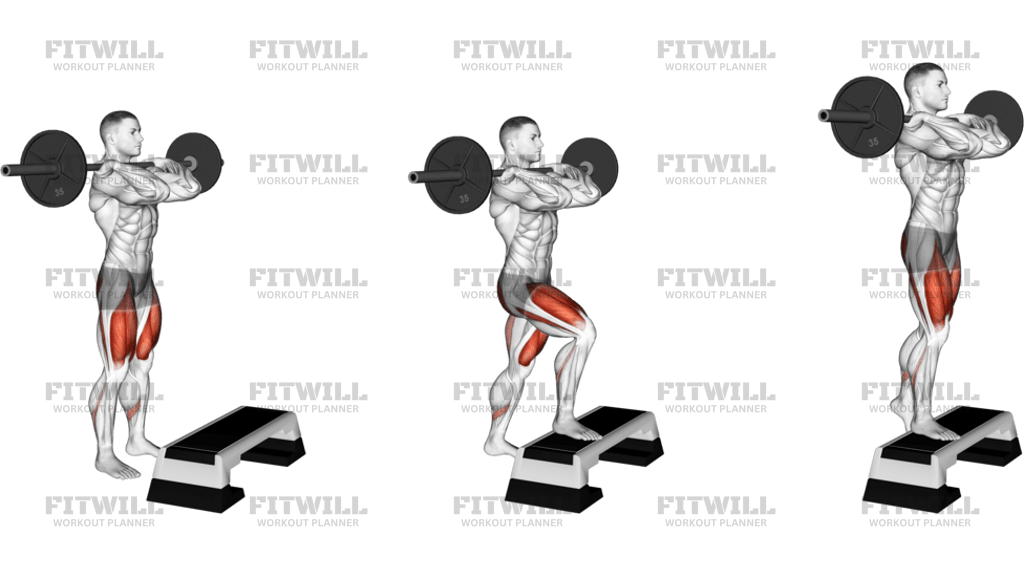
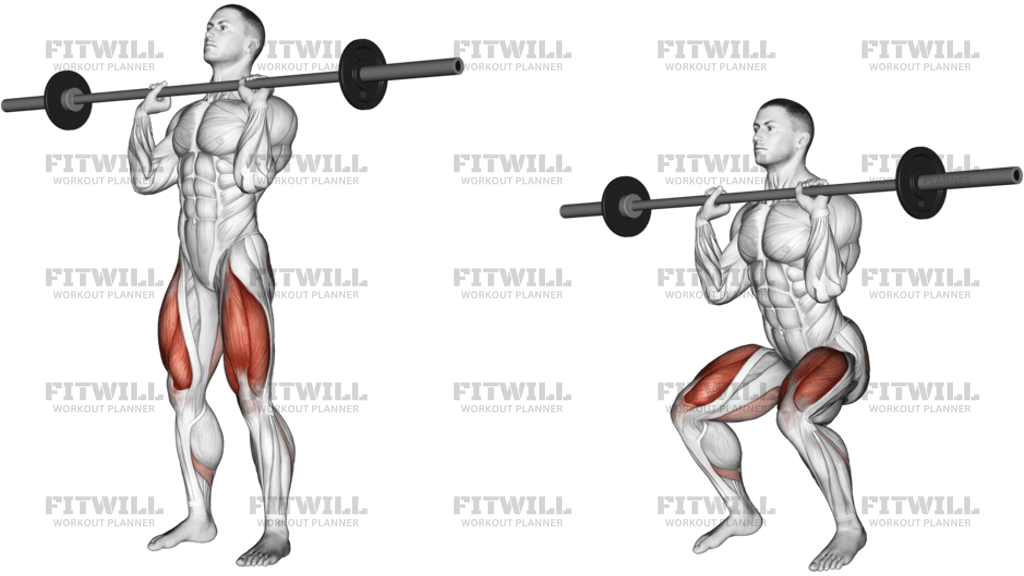
Barbell Front Step-Up is a loaded unilateral leg exercise performed with the barbell held in the front rack while you step onto a box or bench. It places the working leg in a strong knee- and hip-extension pattern and trains the glutes, quads, and hamstrings to drive the body upward without twisting or bouncing.
The front-rack position changes the demand compared with a dumbbell step-up: the torso has to stay tall, the upper back has to support the bar, and the core has to resist leaning or side-to-side drift. That makes the setup important. If the box is too high or the bar is too heavy, the movement quickly turns into a push, hop, or collapse through the trunk instead of a clean single-leg drive.
Set the front foot fully on the platform, keep the whole foot planted, and let the working leg do the lift. The trailing leg should stay quiet and only help you balance as you rise and descend. A good repetition finishes with the hips stacked over the platform, the knee tracking in line with the toes, and the bar staying level across the shoulders.
Use this exercise when you want leg strength, single-leg stability, and better control in a posture that also challenges the upper back and core. It fits well in lower-body strength sessions, athletic accessory work, or unilateral training blocks. Beginners can use it if the box is low and the load is light, but the front rack should still feel secure before adding weight.
Keep every rep smooth and repeatable. Step down under control, reset your foot position if needed, and choose a load that lets you stay tall instead of chasing height with momentum. If your wrists, elbows, or front rack position break down before your legs do, the bar is too heavy for the quality this movement is meant to build.
Fitwill
Log Workouts, Track Progress & Build Strength.
Achieve more with Fitwill: explore over 9600 exercises with images and videos, access built-in and custom workouts, perfect for both gym and home sessions, and see real results.
Start your journey. Download today!




Instructions
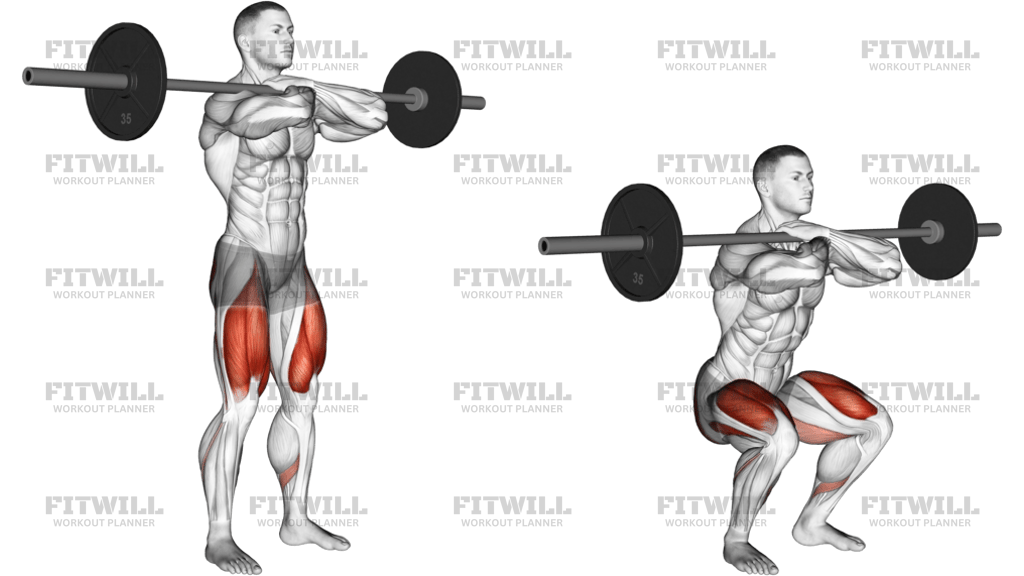
- Clean the bar to the front rack and stand tall with the bar across the front delts, elbows lifted, and feet about hip-width apart.
- Place one foot fully on the box or bench, making sure the entire sole is supported before you start the rep.
- Brace your trunk, keep your chest tall, and shift your weight over the working leg without leaning forward.
- Drive through the heel and midfoot of the foot on the platform to lift your body straight up.
- Keep the knee tracking over the toes as you stand, and avoid letting it cave inward or flare out hard.
- Bring the trailing leg up only after the working leg has done the lift; do not jump off the floor.
- Finish the rep standing tall on the platform with the hips extended and the bar level across your shoulders.
- Step back down under control with the same working leg, reset your stance, and repeat for the planned reps before switching sides.
Tips & Tricks
- Choose a box height that lets the working thigh stay around parallel or slightly below parallel; a very high step usually turns the rep into a hip hike.
- Keep the whole front foot on the platform so you can push through the heel and midfoot instead of balancing on the toes.
- Hold the elbows up in the front rack so the bar stays supported by the shoulders, not the hands and wrists.
- Use the trailing leg for balance only; if it is giving you a noticeable push, the load or setup is too hard.
- Lower with control instead of dropping off the box, because the descent is where many people lose knee alignment.
- Keep the pelvis square to the front and avoid rotating the torso toward the working leg.
- Start lighter than you think you need, since front-rack position and single-leg balance make this harder than a standard step-up.
- Exhale as you stand up, then re-brace before the next descent so each rep starts with the trunk set.
Frequently Asked Questions
What muscles does the Barbell Front Step-Up work most?
The main work is usually felt in the glutes and quads, with the hamstrings, calves, and core helping to stabilize the lift.
Is the front-rack barbell position harder than holding dumbbells?
Yes. The front rack demands more upper-back and trunk control, so it is usually more technical than a dumbbell step-up.
How high should the box or bench be?
A good starting height is one that lets your working knee stay around hip level or slightly below. If you have to lean hard or jump, the platform is too high.
Should the back leg push off the floor?
It can help you balance, but it should not be doing the work. The leg on the box should control the lift and the descent.
What is the main setup cue for the foot on the platform?
Place the entire foot on the box or bench and keep pressure through the heel and midfoot so the knee and hip can drive together.
What should my elbows do in the front rack?
Keep them lifted enough that the bar stays secure on the front delts. Dropping the elbows often causes the torso to collapse forward.
Can I alternate legs rep by rep?
Yes, alternating sides works well if you want a more athletic rhythm. Just keep each rep clean and reset your stance before stepping up again.
What is a common mistake with this movement?
Most people either push off the floor with the trailing leg or let the knee cave inward as they stand. Both usually mean the load is too heavy or the box is too high.