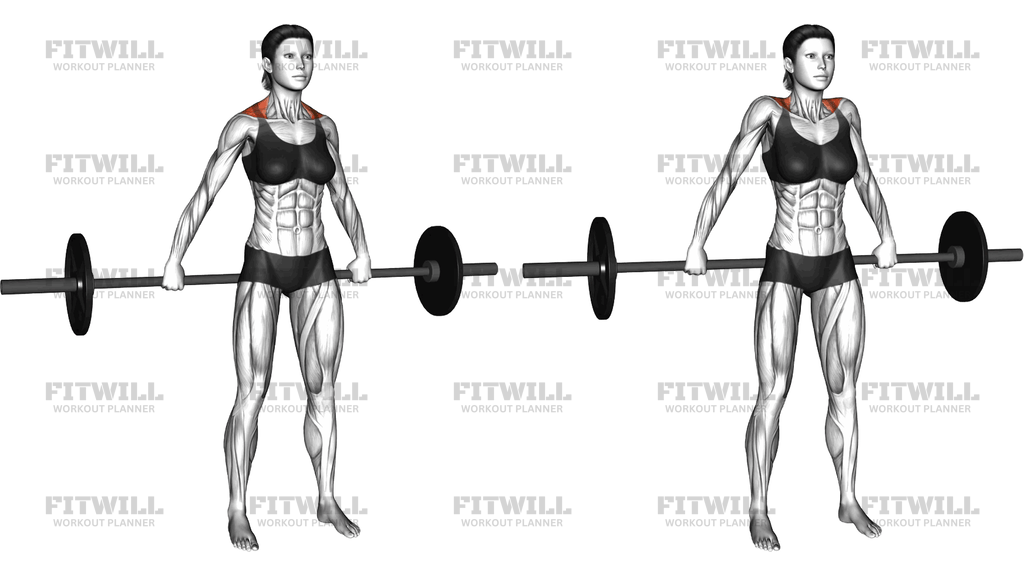
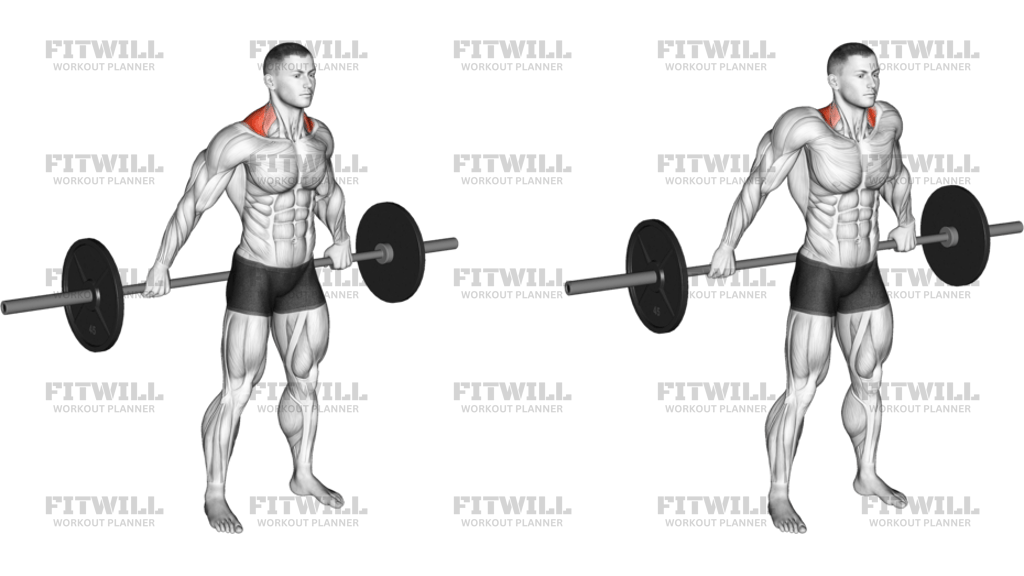
Barbell Behind The Back Shrug
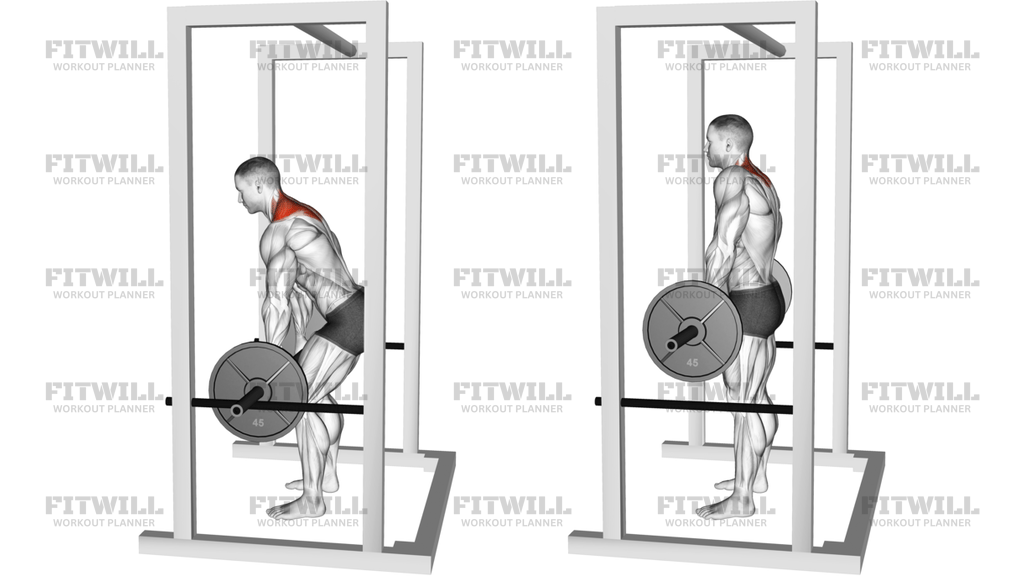
Barbell Behind the Back Shrug is a standing trap-focused barbell exercise where the load hangs behind the body instead of in front of the thighs. That setup changes the line of pull and makes the upper traps work hard to elevate the shoulders while the torso stays tall and still. It is useful when you want a simple, direct way to train shrug strength, upper-trap size, and scapular control without turning the rep into a hip or arm swing.
The exercise is mainly a trapezius movement, but the upper back, lats, forearms, and biceps help keep the bar steady and the posture organized. Because the bar sits behind you, the setup matters more than with a standard shrug: the chest should stay lifted, the shoulders should start relaxed, and the neck should remain long so the shrug comes straight up instead of forward. If the torso drifts, the shoulders roll, or the elbows bend, the exercise stops targeting the traps cleanly.
A good rep starts from a balanced stance with the bar held behind the glutes at arm's length. From there, shrug the shoulders straight toward the ears, keep the arms extended, and pause briefly at the top without leaning back or circling the shoulders. The lowering phase should be slow enough to keep tension on the traps while the shoulders return to a fully controlled stretch. Breathing should stay steady and predictable so the torso does not lose position between reps.
Use this exercise as accessory work on an upper-body, back, or trap-focused day, usually in moderate to higher reps with a load that does not distort the setup. It is especially helpful for lifters who want a straightforward shrug variation that emphasizes the upper traps while teaching clean shoulder elevation. Keep the movement pain-free, avoid aggressive shoulder rolling, and stop the set when the bar starts drifting, the neck tightens, or the body has to sway to finish the rep.
[ Workout Log & Planner ]
Put your next workout in Fitwill
Keep your plan and training log ready when you are.


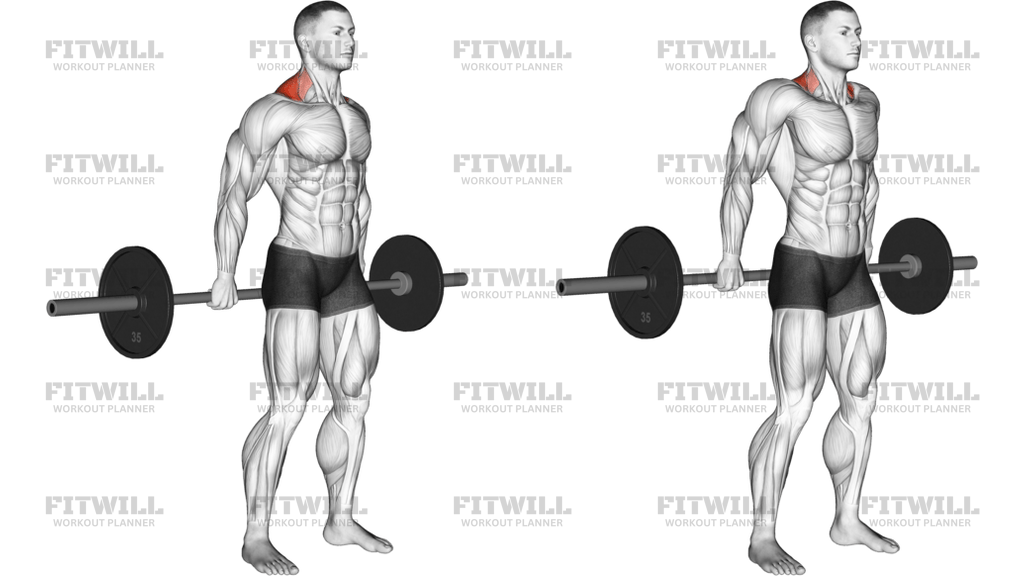
Instructions
- Stand tall with your feet about hip-width apart and hold a barbell behind your thighs with an overhand grip, arms straight and the bar resting just behind the glutes.
- Let your shoulders hang naturally, lift your chest, and keep your chin tucked so your neck stays long.
- Brace your midsection before you start the first rep so your torso does not lean back when the bar moves.
- Shrug both shoulders straight up toward your ears without bending your elbows or rolling the bar forward.
- Squeeze at the top for a brief pause while keeping the bar close to your body and your ribs down.
- Lower the shoulders slowly until they return to a full, controlled stretch behind the body.
- Reset your posture if the bar drifts away from your legs or your upper back starts to arch.
- Repeat for the planned reps while keeping the same upright stance and smooth breathing throughout.
Tips & Tricks
- Keep the bar close to the back of your legs; if it swings away, the traps lose tension and the lower back starts helping too much.
- Think about lifting the shoulders straight up rather than pinching them back, which turns the shrug into a row.
- Use a mixed or double-overhand grip that lets the wrists stay neutral and the bar sit evenly behind the body.
- Do not bend the elbows to finish the rep; the arms should act like cables, not a secondary pulling muscle.
- A short pause at the top usually works better than chasing a huge shrug height that forces the torso to lean.
- Lower the bar under control until the shoulders fully settle, because half-reps shorten the trap stimulus.
- Choose a load that allows a smooth path behind the body; if you have to swing the hips, it is too heavy.
- If your neck gets tight, lighten the load and keep the chin slightly tucked so the upper traps do the work instead of the cervical spine.
Frequently Asked Questions
What muscle does Barbell Behind The Back Shrug target most?
The upper trapezius is the main target, with the upper back and forearms helping to stabilize the bar.
Can beginners perform this exercise?
Yes, beginners can use it if they keep the load light, the torso upright, and the shrug motion strict.
How should the bar sit behind me?
The bar should stay close to the backs of the thighs or just behind the glutes, not drifting out behind the body.
Should I roll my shoulders at the top?
No. Lift the shoulders straight up and pause there; rolling tends to reduce trap tension and can irritate the shoulders.
Why do the arms stay straight during the shrug?
Straight arms keep the movement focused on shoulder elevation instead of turning it into a partial row or curl.
What is the biggest form mistake with this exercise?
Leaning back or swinging the torso to force the bar upward is the most common way the movement gets sloppy.
How many reps work well here?
Moderate to higher reps usually work best because the exercise is most useful when the shrug path stays smooth and controlled.
Is this different from a regular barbell shrug?
Yes. The behind-the-back position changes the shoulder angle and often puts more emphasis on a strict vertical shrug.