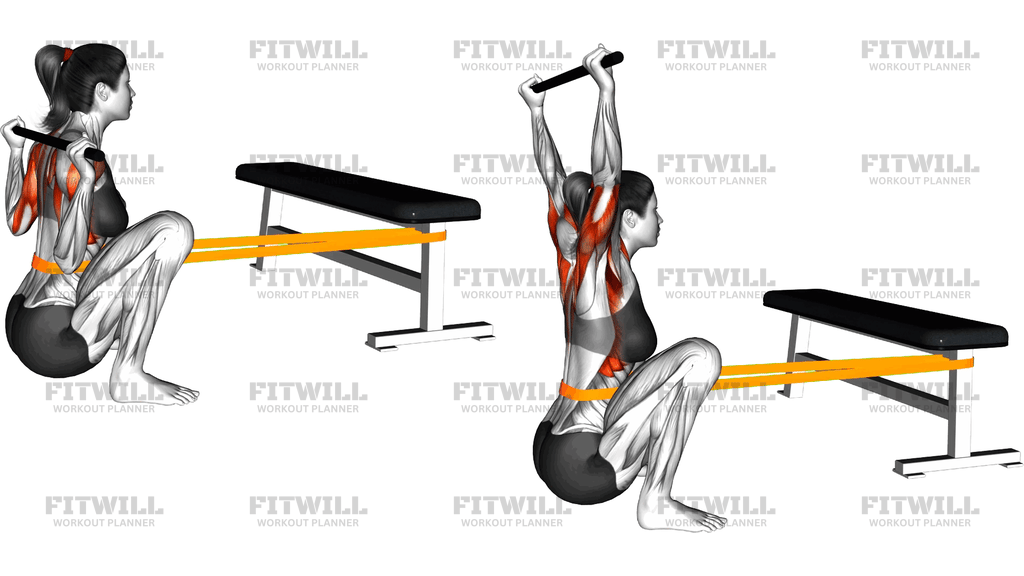
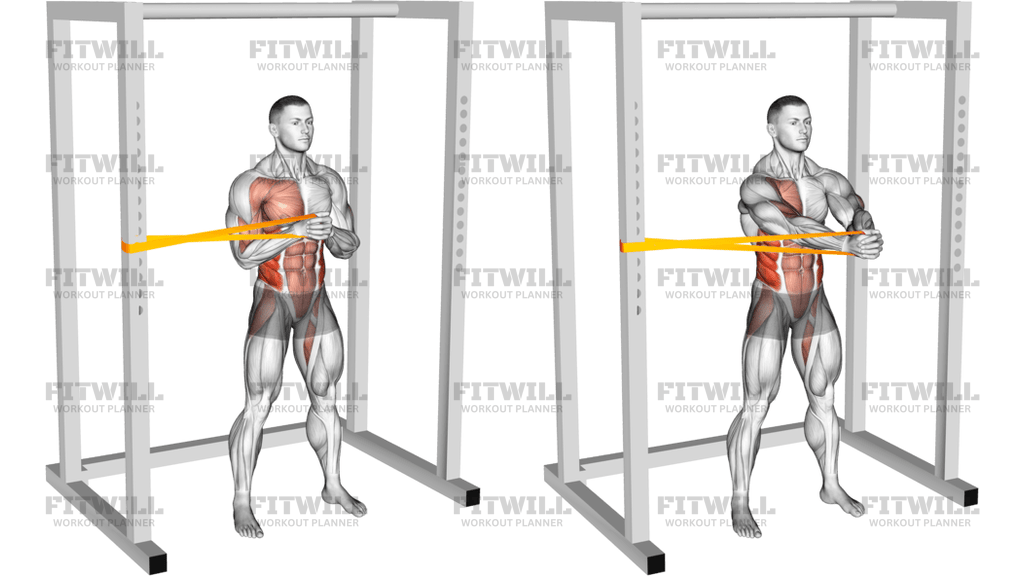
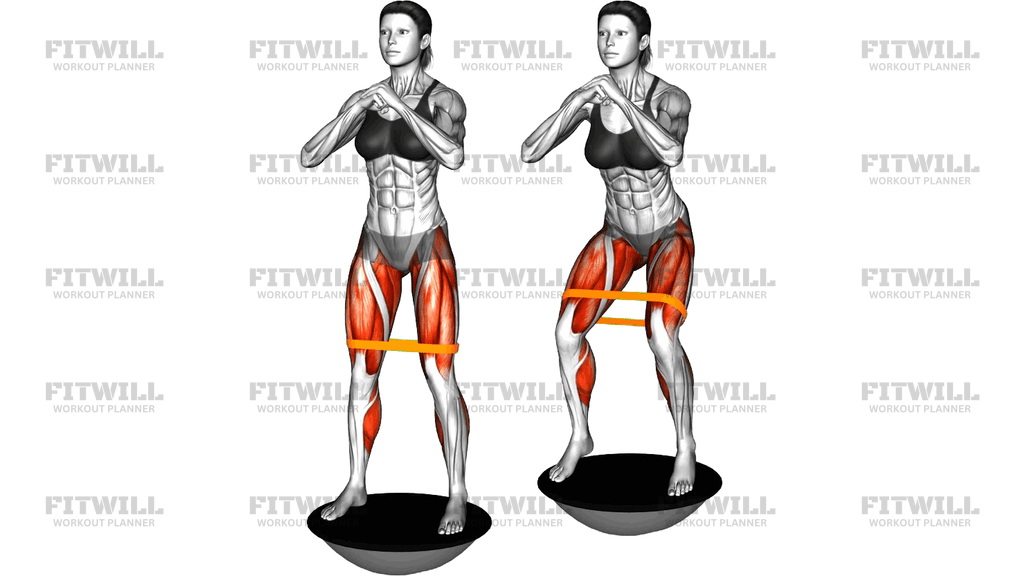
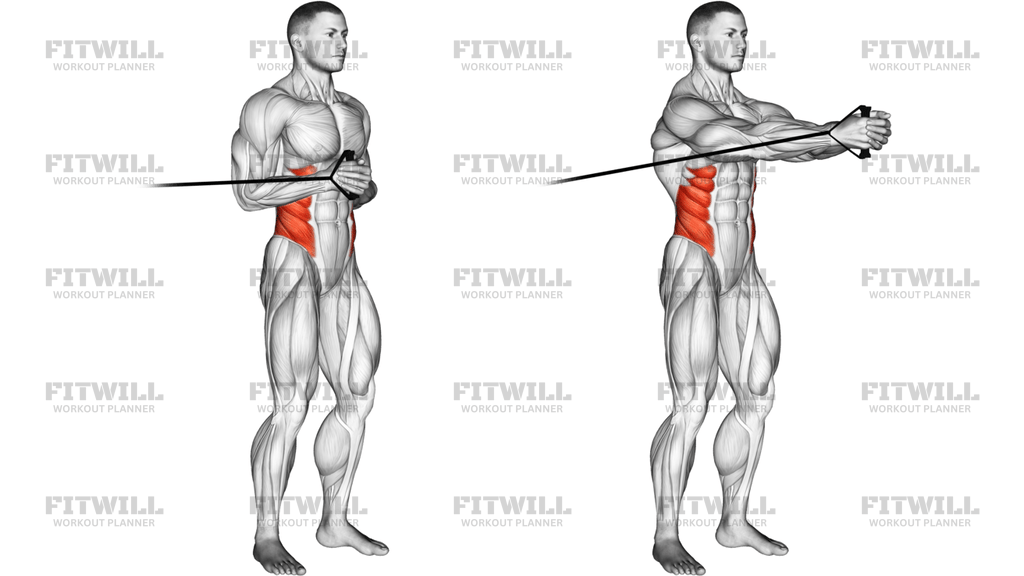
Band Squat With Horizontal Pallof Hold
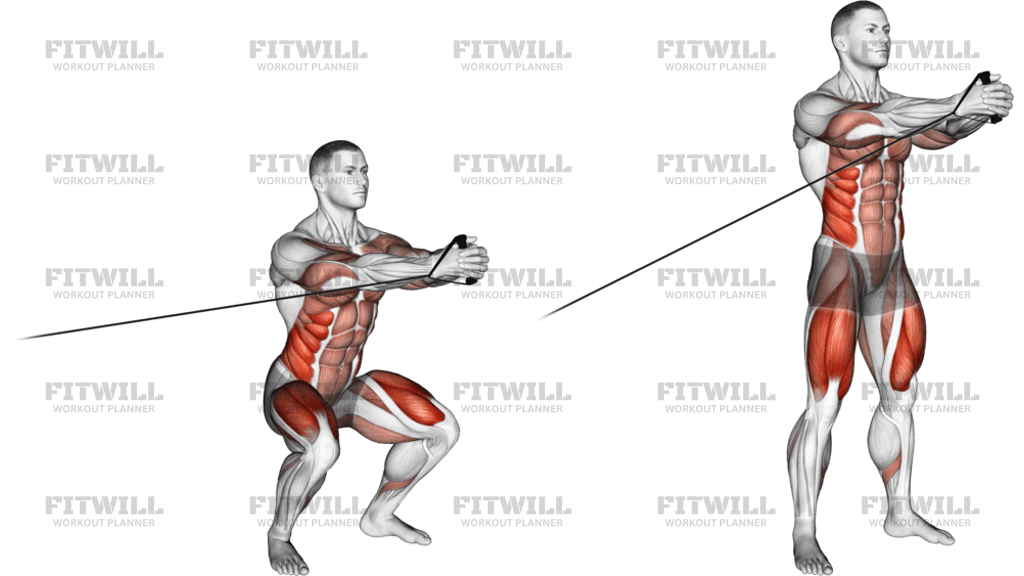
Band Squat With Horizontal Pallof Hold is a band-resisted squat performed with the arms held straight out in front while the band pulls from one side. The exercise blends lower-body squatting with an anti-rotation core challenge, so the hips, glutes, quads, and inner thighs do the work of standing and sitting while the obliques and deep trunk muscles keep the torso square.
The side pull is what makes the movement different from a normal squat. Because the band wants to rotate your shoulders and ribcage toward the anchor, you have to keep the hands level, the chest centered, and the pelvis facing straight ahead through every rep. That makes setup important: the anchor height, how far you step away, and how much band tension you take on all determine whether the rep feels crisp or unstable.
Use the squat to load the legs, but treat the arm position as a fixed brace. Sit down under control, keep the arms extended at shoulder height, and resist letting the band twist you as you rise. A clean rep should look calm from the outside: knees track over the toes, heels stay grounded, and the band line stays steady instead of snapping the torso open.
This variation is useful as a strength accessory, warm-up drill, or core-focused conditioning exercise when you want to train squat mechanics without heavy external load. It is also helpful for beginners who need a lighter way to learn trunk control, and for athletes who need frontal-plane stability. Choose a resistance that lets you stay square from the first rep to the last, and reduce the band tension or squat depth if the low back, knees, or shoulders start compensating.
[ Workout Log & Planner ]
Put your next workout in Fitwill
Keep your plan and training log ready when you are.


Instructions
- Anchor the band at about chest height and stand sideways to it, then hold the band with both hands straight out in front of your chest.
- Step far enough away to create tension at arm's length while keeping your hands level and your shoulders relaxed.
- Set your feet about shoulder-width apart, turn both toes forward, and stack your ribs over your pelvis before you start the rep.
- Brace your trunk without letting the band pull your shoulders or chest toward the anchor.
- Sit your hips back and down into a squat, bending the knees while keeping the arms extended and the band line steady.
- Lower only as far as you can keep your torso square, your heels down, and your knees tracking over the toes.
- Drive through the midfoot and heels to stand back up, resisting the band's pull so the torso does not rotate.
- Finish tall with the arms still fixed in front, breathe out as you rise, then reset before the next repetition.
Tips & Tricks
- Set the anchor at chest height; if it is too low or too high, the band will pull your shoulders up or down and make the squat harder to control.
- Step out only far enough to feel steady tension at lockout. Too much tension makes the torso twist before the legs have a chance to work.
- Keep your hands centered in front of the sternum instead of drifting toward the anchor side, which would shorten the anti-rotation challenge.
- Think about keeping your belt line and ribcage pointed straight ahead the entire rep; if they turn, the Pallof hold has collapsed.
- Let the knees travel over the toes as long as the arches stay lifted and the heels stay planted.
- Stop the squat before the pelvis tucks under or the lower back starts rounding to chase extra depth.
- Use a smooth exhale as you stand up so the ribs stay stacked instead of flaring against the band pull.
- Pick a band strength that lets every rep look nearly identical; if the first rep already feels like a fight, reduce tension or shorten the stance.
Frequently Asked Questions
What does Band Squat With Horizontal Pallof Hold train most?
It trains the squat pattern with extra demand on the obliques, deep core, glutes, quads, and adductors because the band tries to rotate the torso sideways.
Where should the band be anchored for this exercise?
Anchor it about chest height on one side of you so the pull stays horizontal and challenges you to resist rotation rather than just pull up or down.
Should my arms move during the squat?
No. Keep the arms straight and level in front of your chest so the upper body stays fixed while the legs do the squatting.
How deep should I squat?
Go only as low as you can while keeping the torso square, the heels planted, and the band line steady. Depth is secondary to control here.
What is the most common mistake?
Letting the band twist the shoulders or ribs open toward the anchor is the biggest error. If that happens, the resistance is too high or you stepped too far out.
Can beginners do this movement?
Yes. Beginners usually do best with a light band, a shorter squat depth, and a slow tempo so they can learn how to keep the torso square.
Why does this feel different from a regular band squat?
A regular band squat loads the legs; this version also asks your trunk to fight sideways pull, so the core has to stabilize the body against rotation on every rep.
How can I make it easier or harder?
Make it easier by stepping closer to the anchor or using a lighter band. Make it harder by increasing band tension slightly, but only if you can still keep the chest and pelvis facing forward.