Band Jump Lunge With Single-Arm Row
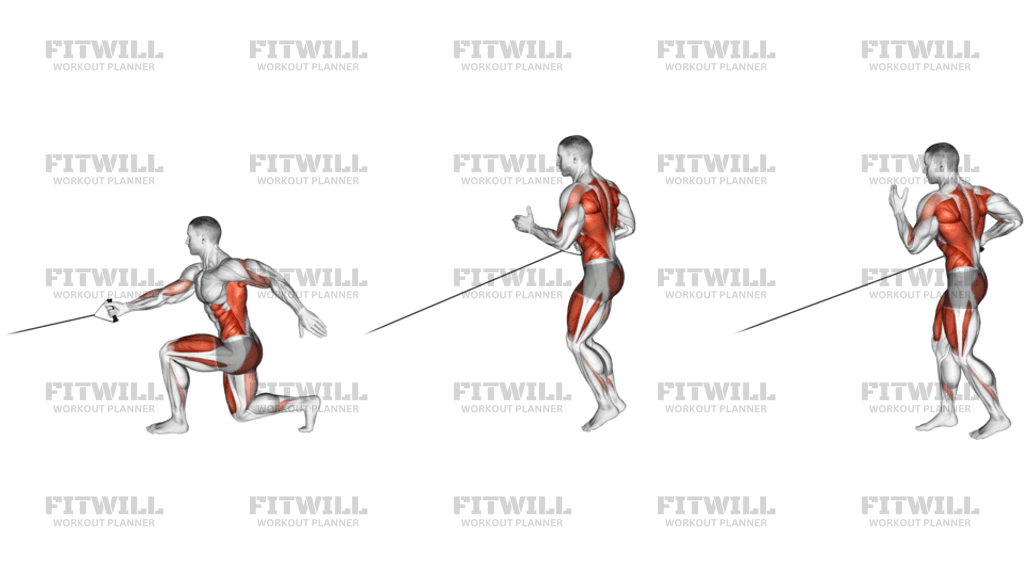
Band Jump Lunge With Single-Arm Row is a dynamic band exercise that combines a lower-body plyometric lunge with an upper-back row. The movement trains power, coordination, and trunk control at the same time, so it works well when you want an athletic drill that links the legs, hips, core, and pulling muscles instead of isolating one joint pattern.
The band changes the feel of the rep in an important way: the row gets harder as you move away from the anchor, and the torso wants to twist if the shoulder and hips do not stay organized. That makes setup matter. A clean start keeps the band under light tension, the chest tall, and the working arm ready to pull without yanking the body out of position.
During each rep, the jump should come from the legs while the row is timed with the drive upward. Pull the handle toward your lower ribs as you rise, keep the elbow close to your side, and land softly in control before the next repetition. The goal is a crisp, coordinated rep, not a loose hop with the band doing all the work.
This movement fits best in athletic conditioning, full-body sessions, or accessory work when you want more intensity than a stationary lunge or row alone. It is not a pure strength exercise, and it is not ideal when fatigue has already broken your landing mechanics. Use light to moderate resistance, keep the range pain-free, and stop the set if the torso starts rotating or the landing gets noisy and unstable.
[ Workout Log & Planner ]
Put your next workout in Fitwill
Keep your plan and training log ready when you are.


Instructions
- Anchor the band low and stand beside it so the working hand can reach the handle with light tension.
- Take a split-lunge stance with one foot forward, the back heel lifted, and the chest stacked over the hips.
- Hold the band in the hand nearest the working side and let the arm start long enough that the band is not slack.
- Lower into the lunge until both knees are bent and the back knee hovers just above the floor.
- Drive through the front foot and explode upward, keeping your torso tall as you leave the bottom position.
- As you rise, row the handle toward your lower ribs by pulling the elbow back close to your side.
- Land softly and return to a controlled split lunge with the band still under tension.
- Reset your stance, breathe, and repeat for the planned reps before switching sides.
Tips & Tricks
- Keep the anchor low enough that the row tracks into your lower ribs instead of drifting up toward your shoulder.
- Let the jump come from the legs first; if the band is yanking you forward, the resistance is too heavy.
- Keep the rib cage stacked over the pelvis so the row does not turn into a twisting torso pull.
- A soft landing matters more than jump height here; absorb the rep through the hips, knee, and ankle.
- Pull with the elbow, not the hand, so the shoulder blade can move back without shrugging.
- Choose a band that lets you finish every row cleanly at the top of the jump without losing posture.
- If the rear knee slams into the floor or the front knee caves inward, shorten the range and slow the descent.
- Use a smooth breathing rhythm: brace before the jump, exhale through the rise, and reset on the landing.
Frequently Asked Questions
What does the single-arm row add to the jump lunge?
It loads the upper back, rear shoulder, and arm while the legs work through the jump, turning the drill into a more complete full-body movement.
Should I hold the band in the same hand as the anchor?
Yes, that setup matches the image and keeps the pull line low and direct so the row stays smooth instead of crossing awkwardly in front of the body.
How low should I lunge before jumping?
Drop until both knees are comfortably bent and the back knee is close to the floor, but stop before the pelvis tucks or the front heel lifts.
What muscles work hardest in this exercise?
The row emphasizes the lats, mid-back, rear shoulder, and biceps, while the jump lunge drives the quads, glutes, hamstrings, calves, and core.
Can beginners do this movement?
Yes, but it should start with a very light band and a smaller jump so the landing stays quiet and the row stays controlled.
What is the most common mistake?
The most common error is letting the band pull the torso forward and twist the shoulders while the landing gets sloppy.
Do I switch legs every rep?
Use the version your program calls for; many people alternate sides or switch in the air, but the key is keeping each landing stable and repeatable.
How should the row finish?
Finish with the elbow close to the ribcage, shoulder down, and chest still tall, without shrugging or leaning back to cheat the pull.