Pike Push-Up
Pike Push-Up is a bodyweight pressing exercise that shifts your torso into an inverted-V so the shoulders and triceps do most of the work. Unlike a standard push-up, the line of force is more vertical, which makes this a useful builder for overhead pressing strength, shoulder endurance, and control through a deep shoulder bend.
The setup matters because the whole exercise depends on where your hands, feet, and hips are placed. Plant your palms firmly on the floor, keep your feet anchored, and lift the hips high enough that your body forms a sharp pike. That angle lets you load the shoulders without collapsing into a sloppy plank or turning the movement into a half-range push-up.
Each rep should feel like a controlled descent and a strong press back to the pike. Lower the head between the hands by bending the elbows, keep the forearms roughly vertical, and stop when the head reaches the floor or the lowest pain-free point you can control. Press the floor away to return to the start while keeping the ribs tucked and the neck relaxed.
This exercise fits well in upper-body strength sessions, shoulder-focused accessory work, calisthenics progressions, and handstand push-up preparation. It is also easy to scale: shorten the range, raise the hands, or place the feet on a box to change the loading demand. The goal is not speed; it is consistent shoulder mechanics, clean elbow tracking, and steady tension from the first rep to the last.
If the shoulders pinch, the wrists feel overloaded, or the lower back starts to arch, reduce the range or simplify the setup before forcing more reps. A good pike push-up keeps the head moving under control, the hips high, and the pressing pattern smooth enough that every repetition looks nearly the same.
[ Workout Log & Planner ]
Put your next workout in Fitwill
Keep your plan and training log ready when you are.


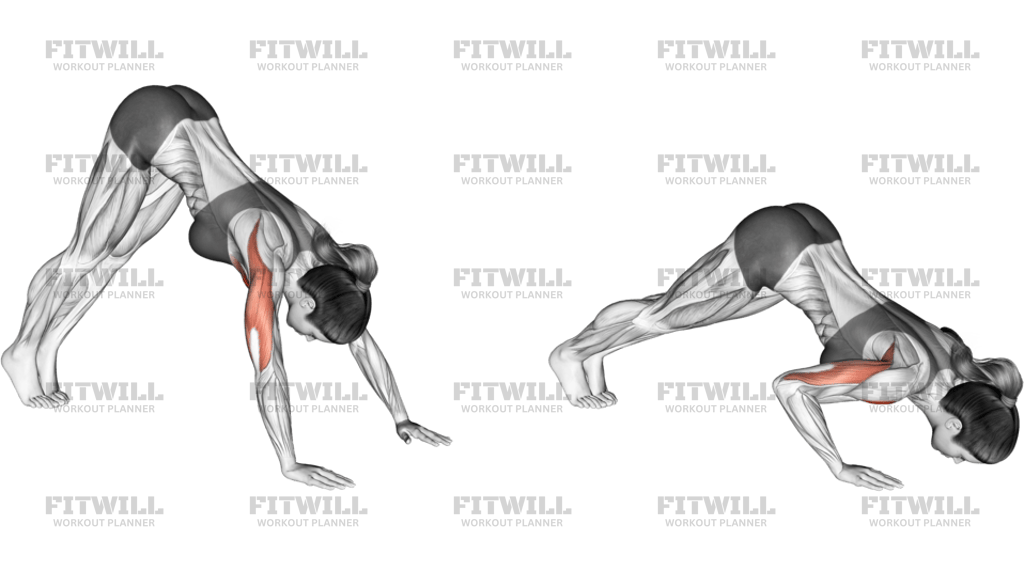
Instructions
- Place your hands on the floor a little wider than shoulder-width and walk your feet back until your body forms a high inverted V.
- Press your palms down, spread your fingers, and keep your weight balanced between your hands and feet.
- Tuck your ribs slightly and brace your midsection before the first rep so your lower back does not sag.
- Keep your gaze on the floor between your hands and let the head travel straight down between the arms.
- Bend the elbows and lower under control until the head reaches the floor or the lowest pain-free point you can manage.
- Keep the forearms as vertical as possible and avoid letting the elbows flare completely out to the sides.
- Press the floor away to return to the pike position while keeping the hips high and the neck long.
- Exhale as you press up, then reset your brace before the next repetition.
Tips & Tricks
- Move the shoulders forward over the hands before descending; if your weight stays too far back, the press becomes easier but much less specific.
- A slightly shorter stance usually makes the rep cleaner because it keeps the torso steep enough to load the shoulders.
- Think about lowering the crown of the head between the hands, not reaching the nose far forward toward the floor.
- Keep the elbows angled forward and out, but not flared wide enough to dump tension into the shoulder joint.
- If your wrists complain, use push-up handles, parallettes, or dumbbells so the wrist angle is less extreme.
- Stop each rep before your lower back arches; losing the pike turns the movement into a strainy hybrid instead of a clean press.
- Use a slow lowering phase if you want more shoulder control, especially on the way into the bottom position.
- Raise your feet on a box or bench only after you can keep the same head path and elbow position on the floor version.
- Keep the neck neutral instead of craning forward; the head should move, but the cervical spine should not lead the rep.
Frequently Asked Questions
What muscles does a Pike Push-Up work most?
It mainly trains the shoulders and triceps, with the upper chest and upper back muscles helping to stabilize the position.
Is Pike Push-Up more like a push-up or an overhead press?
It is closer to a vertical press because your torso is angled into an inverted V and the shoulders take most of the load.
How do I make the movement easier?
Shorten the range, keep the feet a little closer to the hands, or elevate the hands on blocks so the press starts from a less demanding angle.
How do I make Pike Push-Up harder?
Move the feet farther from the hands, slow the lowering phase, or elevate the feet on a box once your shoulder control is solid.
Where should my head go during each rep?
The head should travel down between the hands, not forward in front of them. That keeps the pressing path more vertical and shoulder-dominant.
Can a beginner do Pike Push-Ups?
Yes, but it helps to start with a shorter range and a mild pike before trying full depth.
Why do my wrists hurt in this exercise?
The wrist is loaded in extension, so the angle can be demanding. Using handles or parallettes usually reduces the strain.
What is the most common form mistake?
Letting the hips drop and turning the rep into an awkward push-up is the most common problem. Keep the inverted-V shape the whole time.