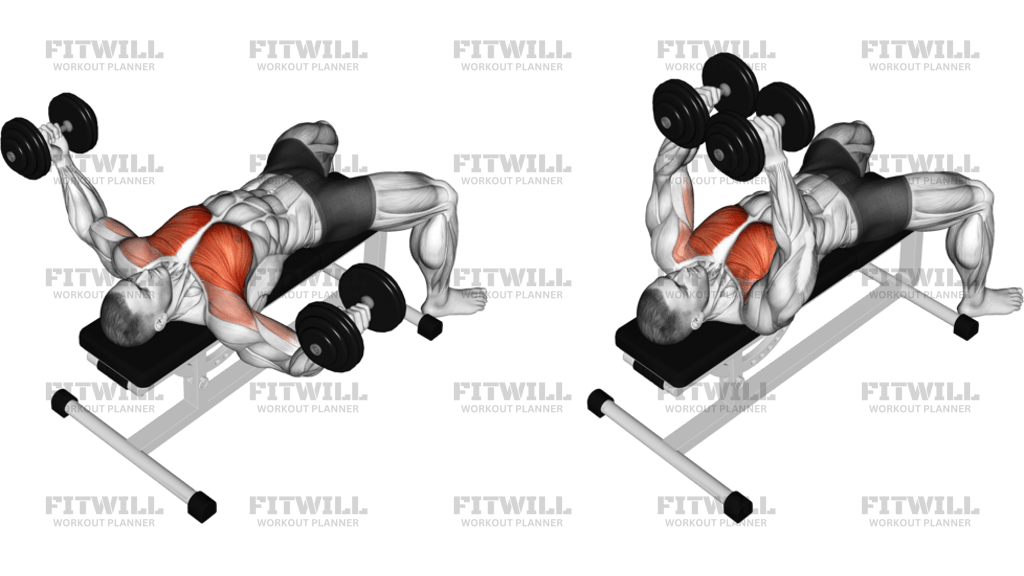
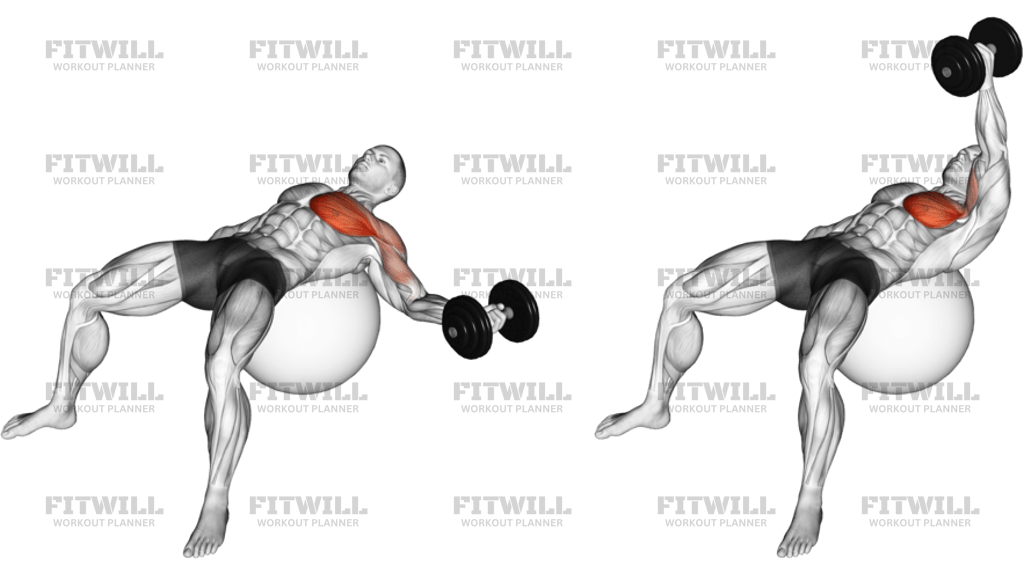
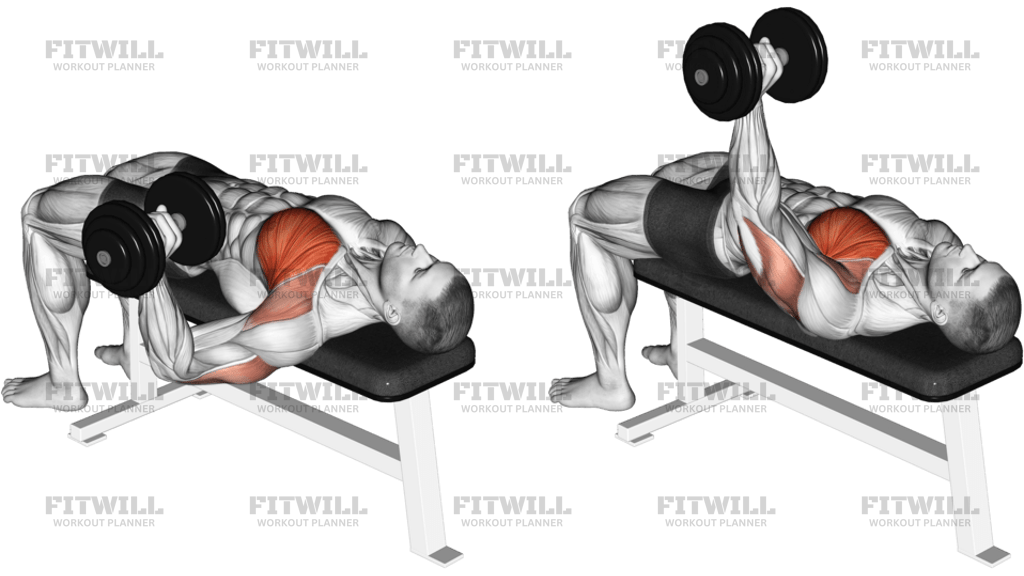
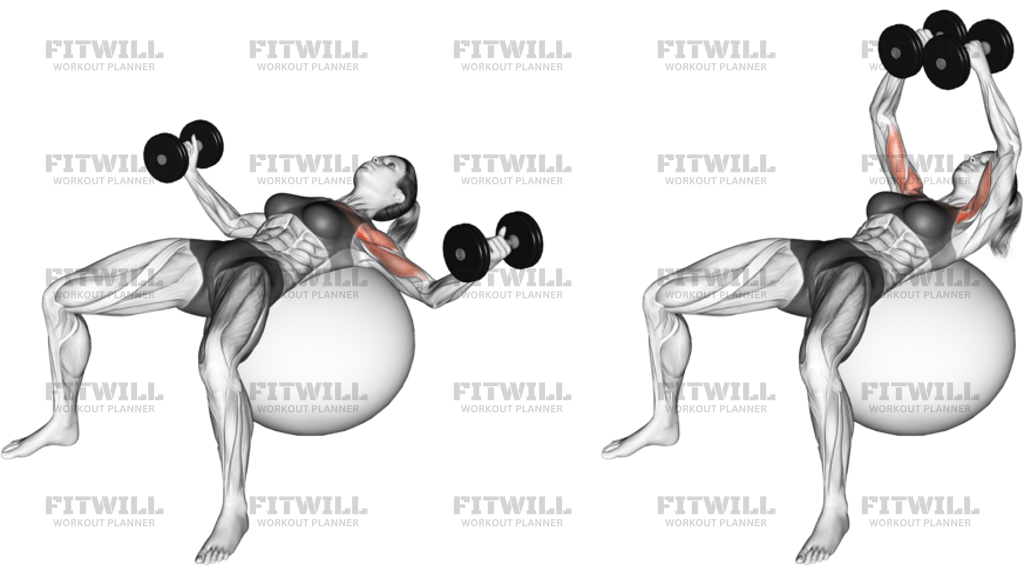
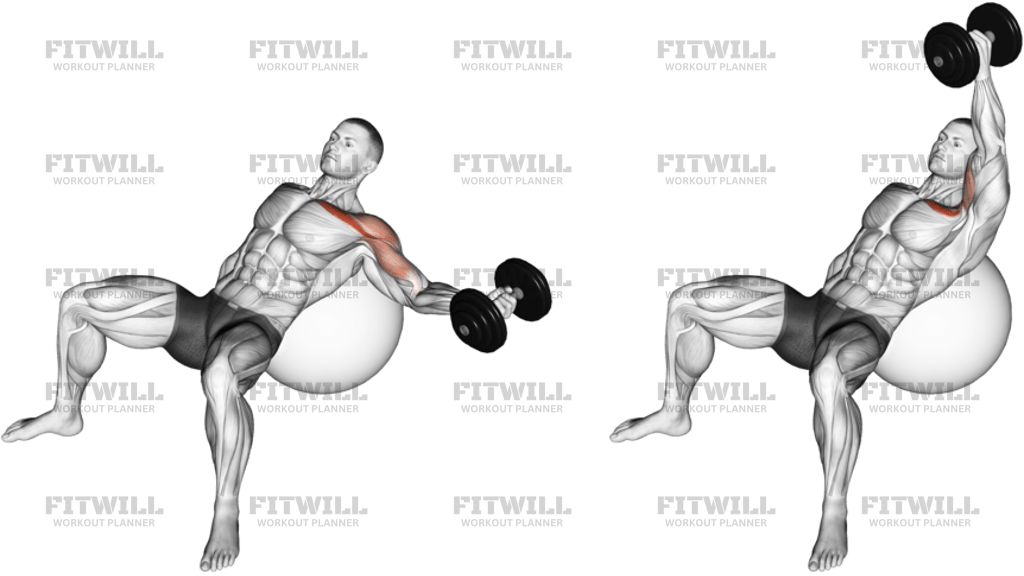
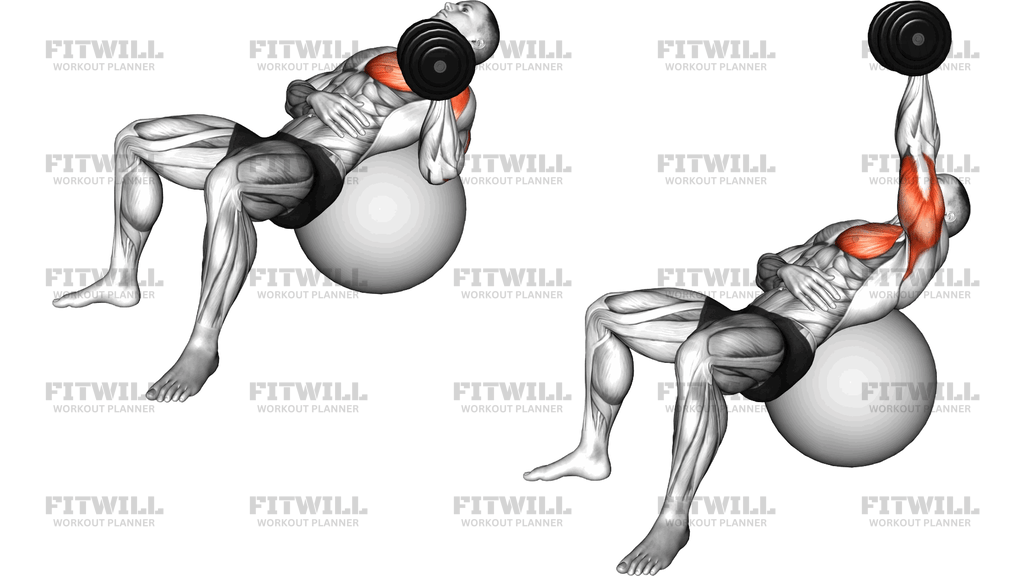
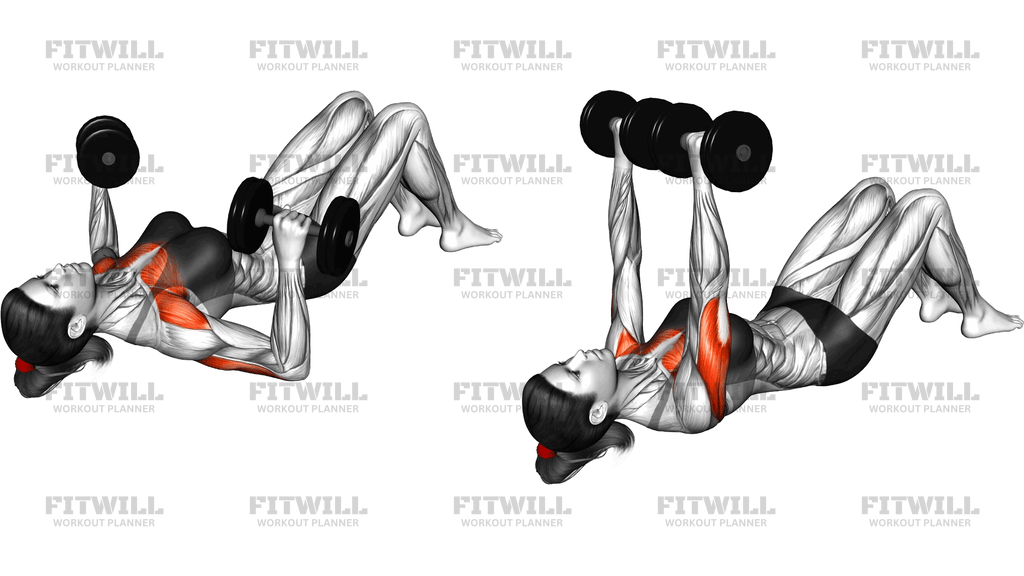
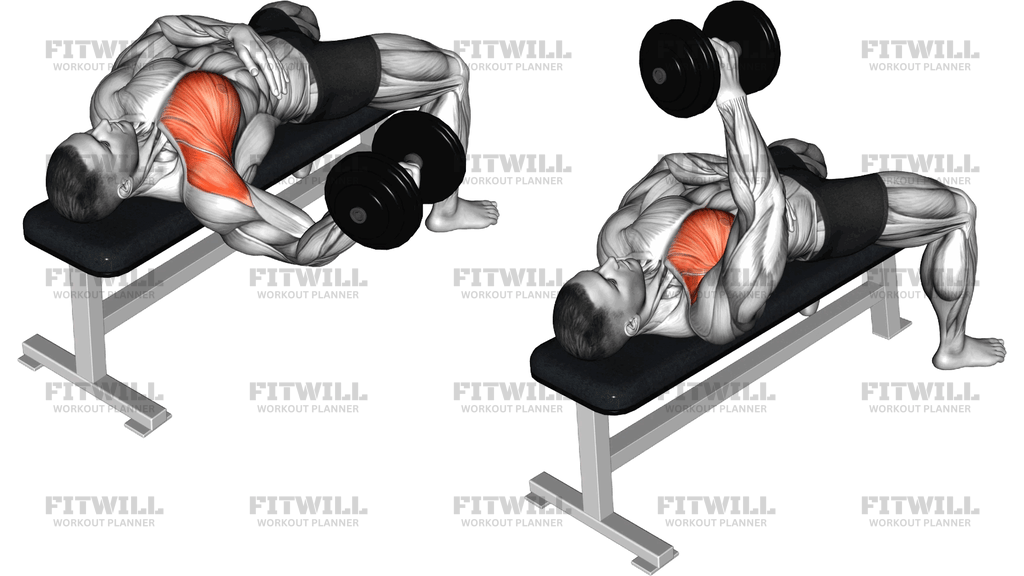
Dumbbell Incline One-Arm Fly
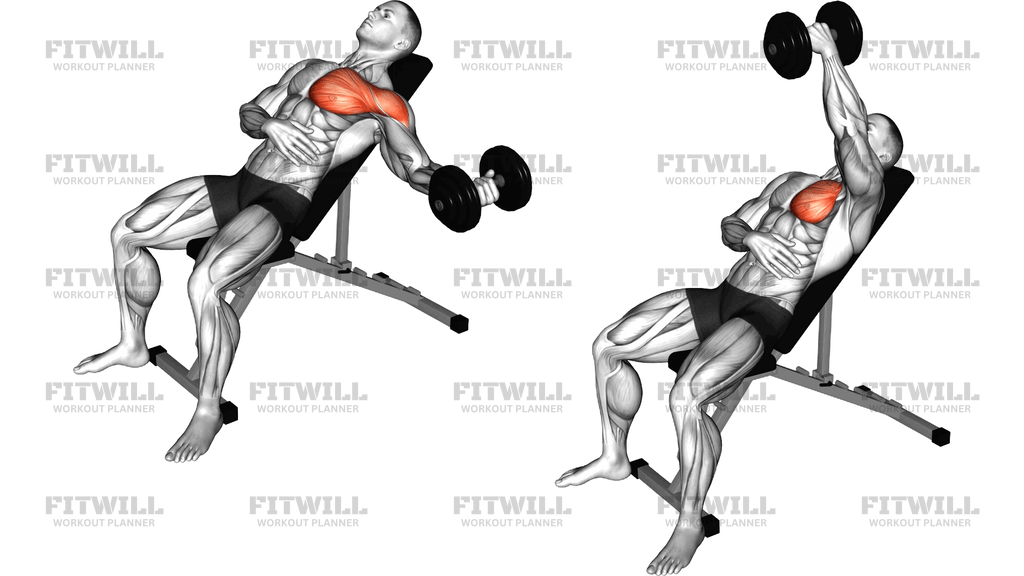
Dumbbell Incline One-Arm Fly is a unilateral chest isolation movement performed on an incline bench with one dumbbell moving in a wide arc. The exercise keeps the upper back supported while one side of the body opens and closes through the pressing plane, which makes it useful for building chest tension without turning the set into a heavy press. The incline angle shifts more of the demand toward the upper chest than a flat fly, while the single-arm format adds a stability challenge that the shoulder girdle and trunk have to manage rep after rep.
The main target is the chest, especially the upper fibers of the pectoralis major, with the front deltoid and triceps helping steady the shoulder and arm. Because only one arm is loaded, the torso also has to resist twisting, so the core works to keep the rib cage square to the bench. That makes this a good option when you want chest work with extra control, cleaner scapular positioning, and less total load than a bilateral fly.
Setup matters more here than on many other chest exercises. A moderate incline, usually around 30 to 45 degrees, keeps the bench angle supportive without making the movement drift into a shoulder raise. Sit back with the upper spine and head on the pad, feet planted, and the dumbbell stacked over the working shoulder with a soft elbow bend. The non-working side should stay quiet so the torso does not rotate as the arm opens.
Each repetition should feel like a controlled stretch and squeeze, not a swing. Lower the dumbbell in a smooth arc until the upper arm is in line with or slightly below the torso, then reverse the path by bringing the arm back up and in over the chest. Keep the elbow angle nearly fixed, keep the wrist neutral, and stop the descent before the shoulder rolls forward or the chest loses tension. Exhale through the lifting phase and let the descent happen under control.
This exercise works best as accessory chest work, especially when you want to improve mind-muscle connection, manage side-to-side differences, or keep loads moderate while still challenging the pecs. It is not a movement to force with momentum or oversized range. If the front of the shoulder feels pinched, shorten the arc, lower the load, or reduce the incline before trying to push through it. A clean rep here should feel smooth, deliberate, and centered on the chest rather than on the hands or shoulders.
[ Workout Log & Planner ]
Put your next workout in Fitwill
Keep your plan and training log ready when you are.


Instructions
- Set an incline bench at a moderate angle and sit back with your head, upper back, and shoulder blades supported on the pad.
- Plant both feet on the floor and hold one dumbbell above the working shoulder with a soft bend in the elbow.
- Keep the non-working side quiet so your chest stays square to the bench instead of rotating toward the moving arm.
- Let the dumbbell travel out in a wide arc until you feel a controlled stretch across the chest, not a pinch in the front of the shoulder.
- Keep the elbow angle nearly fixed while the arm opens; do not turn the fly into a pressing motion.
- Squeeze the chest to bring the dumbbell back up along the same arc until it finishes above the shoulder.
- Keep the wrist neutral and the rib cage down while you lift so the torso does not arch or twist.
- Inhale as the arm lowers and exhale as you bring the dumbbell back to the start.
- Complete the planned reps on one side, then switch arms and repeat with the same range and tempo.
Tips & Tricks
- Choose a moderate incline; if the bench is too steep, the movement becomes more shoulder-dominant and less like a chest fly.
- Keep a soft bend in the elbow from start to finish so the long lever stays on the chest instead of the elbow joint.
- Lower the dumbbell slowly enough to feel the pecs lengthen, but stop before the shoulder rolls forward or the front of the shoulder tightens.
- Keep both shoulder blades lightly anchored on the bench instead of shrugging the working shoulder up toward the ear.
- Use a lighter load than you would for a press; one-arm flys punish sloppy control much faster than pressing patterns do.
- Do not twist through the torso to help the weight rise back up. The trunk should stay square and stable throughout the set.
- Match the same arc on every rep so the range stays consistent between the opening and closing phases.
- If the bottom position feels unstable, shorten the range before you add weight or reps.
- A slow, even tempo usually gives better chest tension here than a fast eccentric or a bounce out of the stretch.
Frequently Asked Questions
What does Dumbbell Incline One-Arm Fly train most?
It primarily trains the chest, with the upper fibers of the pectoralis major doing most of the work.
Why use an incline bench instead of a flat bench?
The incline bench shifts more tension toward the upper chest and usually gives a more comfortable shoulder angle than a very wide flat fly.
How much bend should I keep in the elbow?
Keep the elbow softly bent and hold that angle nearly the same through the whole rep so the movement stays a fly, not a press.
What should the dumbbell path look like on the bench?
The hand should open out in a wide arc and then come back up on the same path, finishing above the shoulder rather than drifting straight forward.
Should the free side of my body move during the set?
No. The non-working side should stay quiet so your torso does not rotate or lift off the bench while the dumbbell moves.
What if I feel this in the front of my shoulder instead of my chest?
Reduce the incline, shorten the bottom range, and use a lighter dumbbell. A pinching feeling usually means the shoulder is taking over.
Is this a good beginner chest exercise?
Yes, if the load is light and the range is controlled. It teaches chest tension well, but the long lever makes strict form important.
How do I progress the exercise safely?
Add reps or a small amount of load only after you can keep the same bench angle, elbow position, and smooth arc on every repetition.