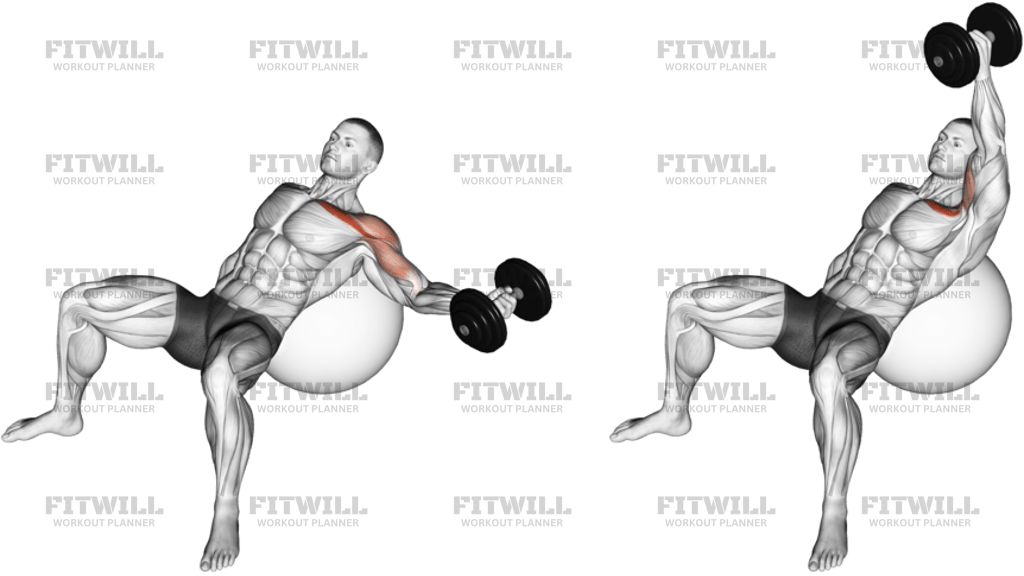
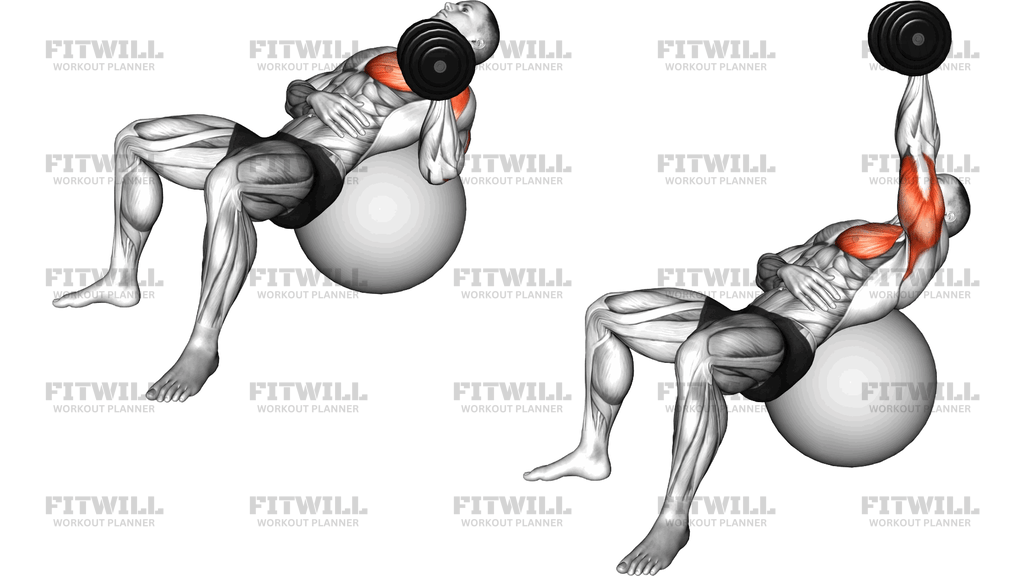
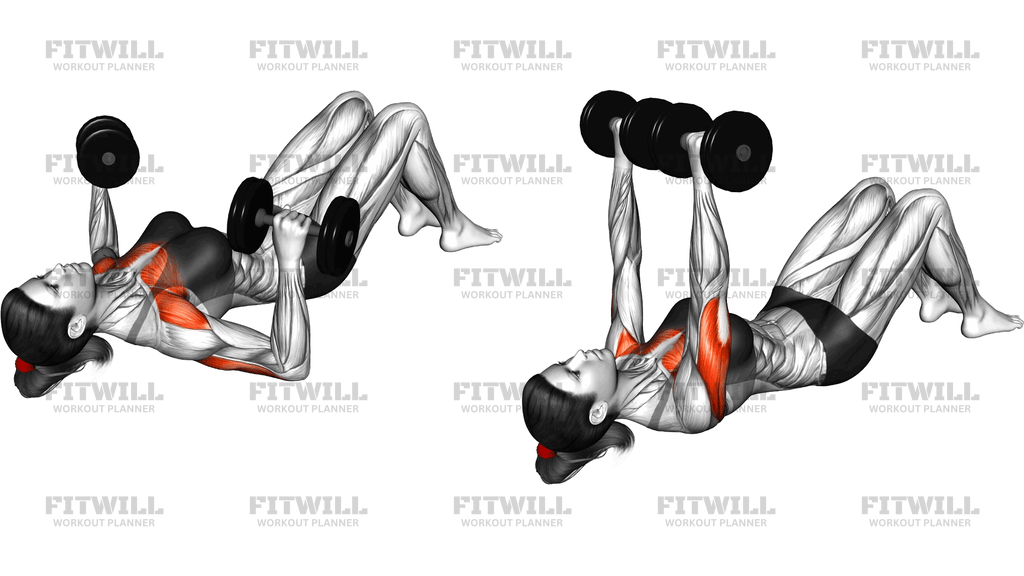
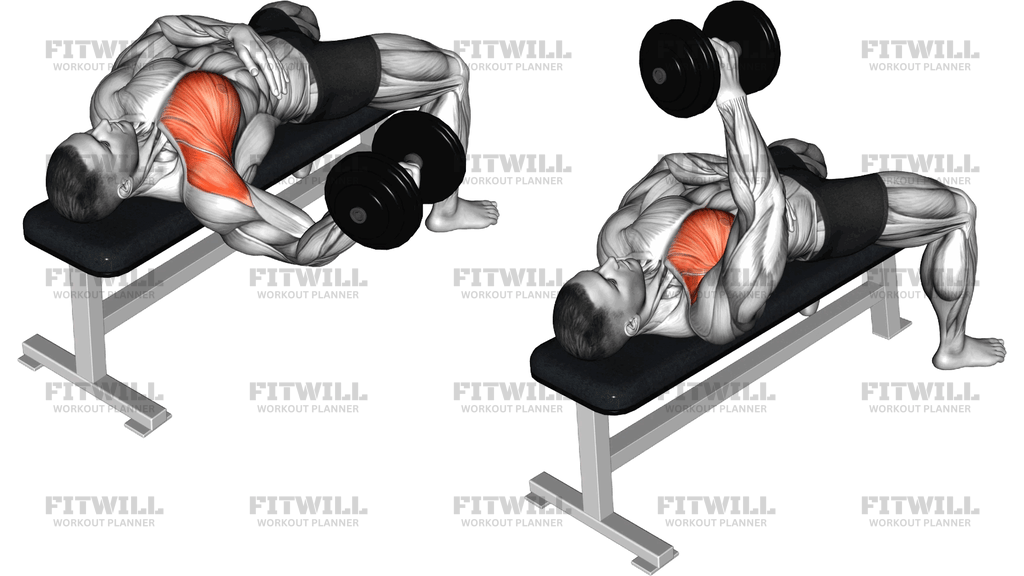
Dumbbell Decline One-Arm Fly
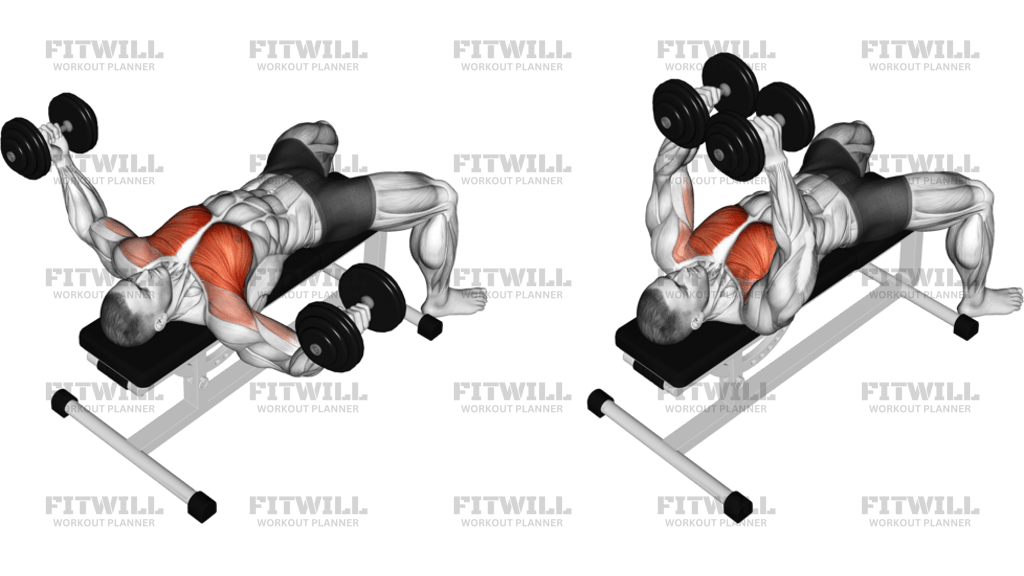
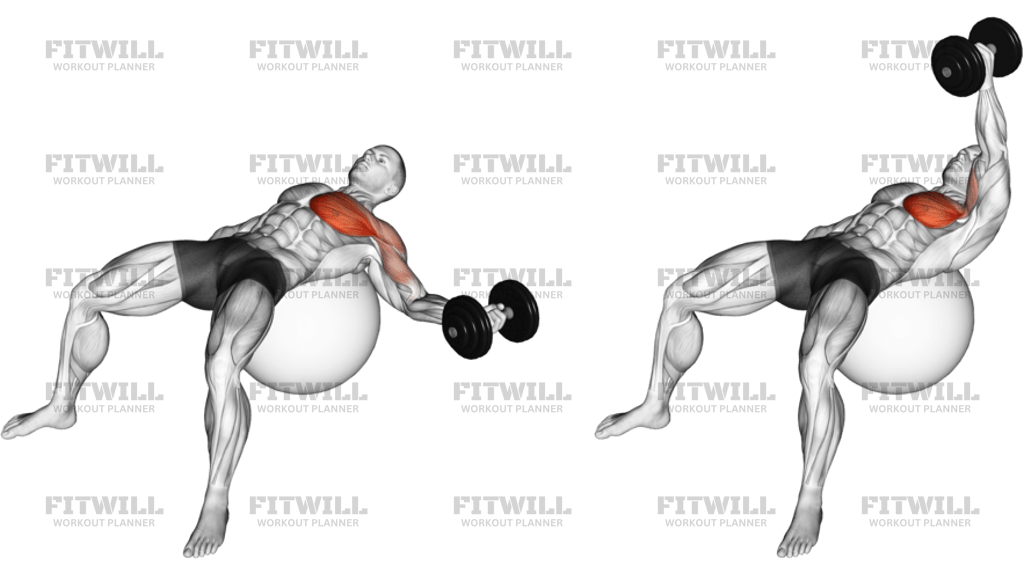
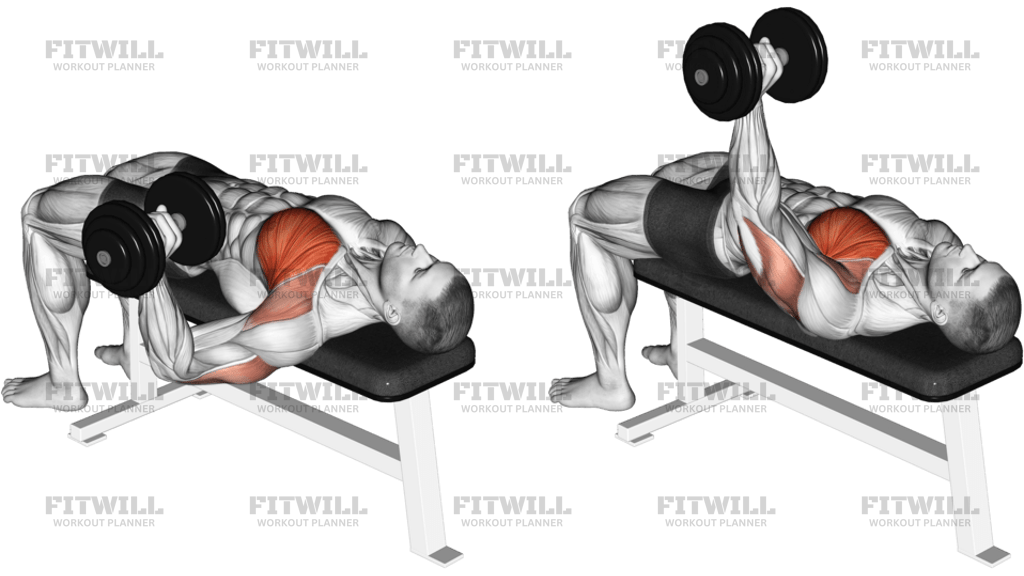
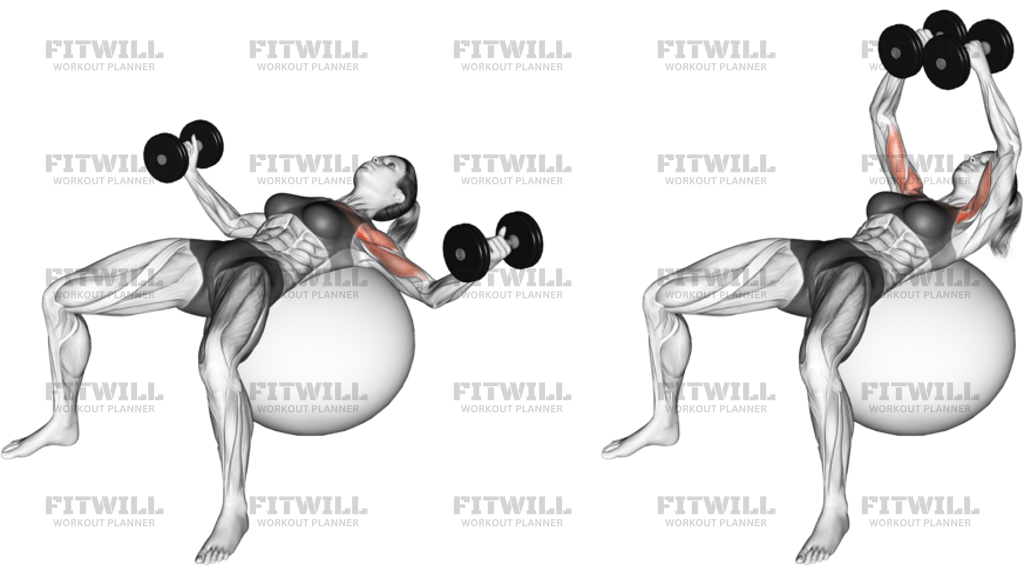
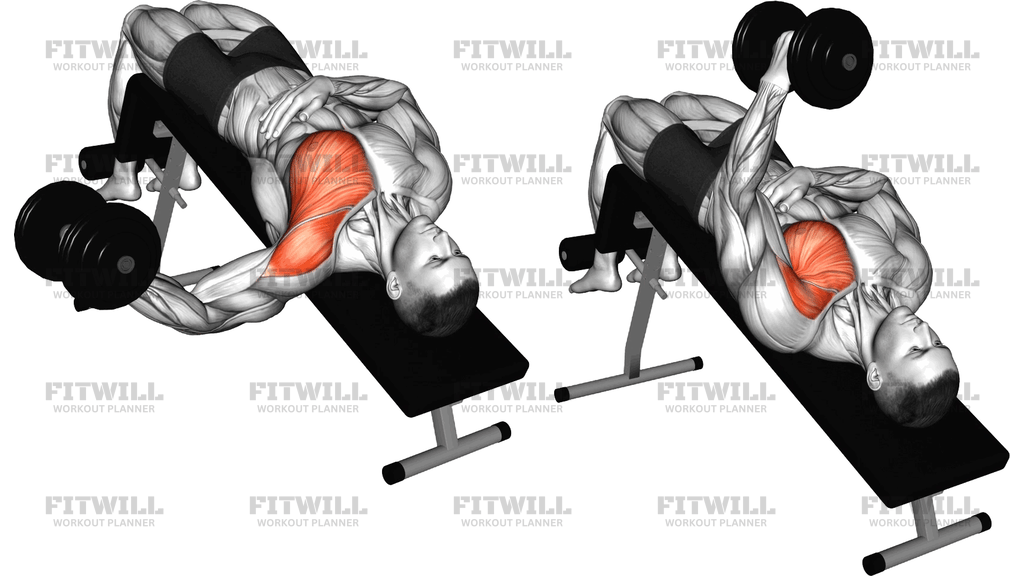
Dumbbell Decline One-Arm Fly is a unilateral chest isolation exercise performed on a decline bench with one dumbbell moving in a wide arc. The decline position changes the line of pull so the pecs stay loaded while the shoulder works through a controlled stretch and squeeze instead of a pressing pattern. Because one arm works at a time, the trunk also has to resist twisting, which makes the movement more demanding than a standard two-arm fly.
The main target is the chest, especially the pectoralis major, with the front shoulder and triceps helping to stabilize the arm. The free side of the body is not passive either: your torso, ribs, and hips have to stay square on the bench so the working side can move cleanly. That makes Dumbbell Decline One-Arm Fly useful when you want to train chest size and control without relying on heavier compound pressing.
Bench setup matters more here than it does in many other chest exercises. A secure decline angle, locked-in feet, and a stable upper back let you open the working arm without sliding, shrugging, or turning the lift into a shoulder exercise. The best reps usually come from starting with the dumbbell stacked over the shoulder, then lowering only until the chest is stretched and the upper arm is still under control.
The lifting path should feel like a smooth semicircle, not a drop and catch. Keep a soft elbow, keep the shoulder blade set, and bring the dumbbell back to the top by squeezing the chest rather than throwing the weight upward. If the lower position forces the shoulder to roll forward or the elbow to straighten, the range is too deep for the load you chose.
Dumbbell Decline One-Arm Fly is a good accessory movement after your main press work, especially when you want a little more chest isolation or want to address left-right differences. It works best with moderate-to-light loading, deliberate tempo, and a clean stop before the shoulder feels strained. Treat it as a precision exercise: the rep is successful when the chest does the work and the bench position stays quiet from start to finish.
[ Workout Log & Planner ]
Put your next workout in Fitwill
Keep your plan and training log ready when you are.


Instructions
- Set a decline bench at a comfortable angle, sit down with one dumbbell in the working hand, and hook your feet securely under the rollers.
- Lie back so your head is lower than your hips, keep your shoulders square on the pad, and let the dumbbell hang over the working shoulder with a soft elbow.
- Brace your ribs down and set the working shoulder blade back and down before the first rep.
- Lower the dumbbell in a wide arc out to the side until you feel a strong chest stretch and the upper arm stays under control.
- Keep the elbow slightly bent and fixed as the arm opens; do not turn the movement into a press or let the arm go straight.
- Pause briefly in the bottom position without letting the shoulder roll forward or the torso twist.
- Exhale and sweep the dumbbell back up along the same arc until it finishes over the chest.
- Reset the shoulder at the top, then repeat for the planned reps before switching sides or racking the dumbbell safely.
Tips & Tricks
- Start lighter than you would for a flat dumbbell fly; the decline angle can make the bottom position feel deeper and less forgiving.
- Keep a small bend in the elbow from start to finish so the movement stays a chest fly instead of turning into a shoulder-heavy press.
- Stop the descent when the upper arm is roughly in line with the torso or when the chest stretch peaks without the shoulder rolling forward.
- Press your feet firmly into the rollers so your hips do not slide and your torso does not twist toward the working side.
- Keep the shoulder blade of the working arm anchored to the bench instead of letting it glide forward at the bottom.
- Lower for two to three seconds and bring the dumbbell back up smoothly; the exercise works best when the eccentric is deliberate.
- Let the free hand stay quiet for balance, but do not push off the bench or create a small press with the non-working side.
- If the shoulder feels pinchy, shorten the range and reduce the load before the chest loses position.
Frequently Asked Questions
What does Dumbbell Decline One-Arm Fly train most?
It mainly trains the chest, especially the pectoralis major, with the front shoulder and triceps helping to stabilize the arm.
Why use a decline bench for a one-arm fly?
The decline angle changes the chest line of pull and usually reduces how much the shoulder has to travel into extension, which can make the stretch feel more controlled.
How low should the dumbbell go in Dumbbell Decline One-Arm Fly?
Lower only until you feel the chest stretch and can still keep the shoulder blade set. If the shoulder rolls forward or the elbow straightens, the range is too deep.
Can beginners do Dumbbell Decline One-Arm Fly?
Yes, but start with a very light dumbbell and a shorter range. The decline position and one-arm setup make balance and shoulder control more demanding than a basic fly.
Should my elbow stay bent the whole time?
Yes. Keep a slight bend locked in so the rep stays in the chest and does not turn into a straight-arm shoulder raise.
Do I need to hook my feet under the bench rollers?
If the bench has rollers, yes, because they help keep your hips and rib cage from sliding. If there are no rollers, plant your feet securely and keep the torso still.
Why is Dumbbell Decline One-Arm Fly done one side at a time?
Working one side at a time makes it easier to focus on the chest path and exposes side-to-side differences in control or strength.
What should I do if my shoulder feels pinchy?
Reduce the range first, then lower the weight. If the pinch stays, switch to a flatter angle or a cable fly that lets the shoulder path feel smoother.