Weighted Squat Jump With Plate
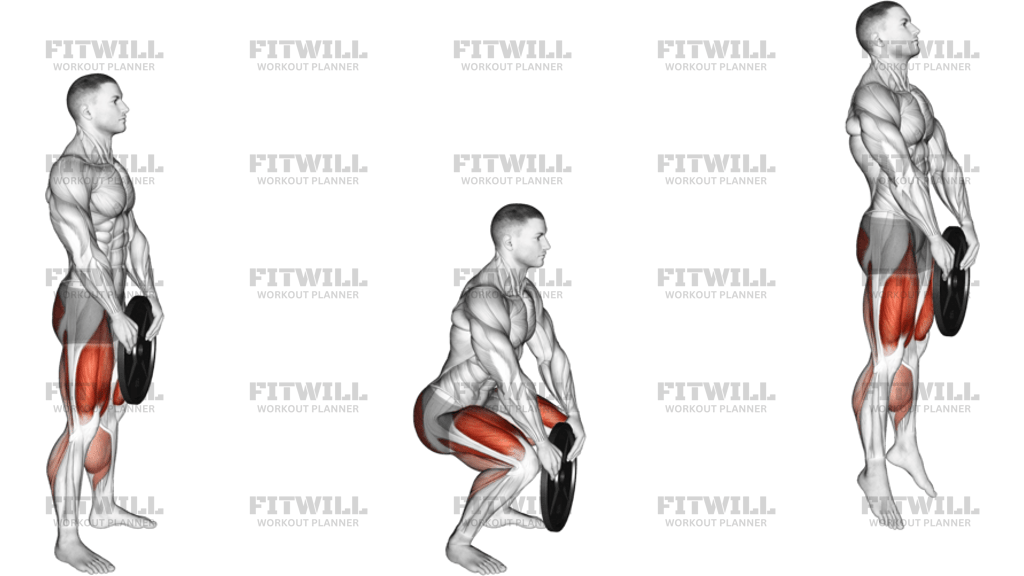
Weighted Squat Jump With Plate is a loaded plyometric squat that combines a deep lower-body dip with an explosive vertical jump. Holding the plate in front of the body adds a small anterior load, which makes the torso work harder to stay tall and forces the legs to produce enough drive to leave the floor cleanly. The exercise is primarily about power and landing control, not about using a heavy plate.
The setup matters because the plate changes your balance point. Stand with your feet about shoulder width apart, hold the plate with both hands in front of your thighs, and keep your chest lifted with your ribs stacked over your pelvis. A neutral spine and stable foot pressure let the knees track in line with the toes and keep the jump centered instead of tipping forward.
Each repetition should move from a controlled squat into a fast, vertical takeoff. Sit the hips back and down, then drive through the whole foot to extend the hips, knees, and ankles at the same time. Leave the floor with a straight up-and-down path, then land softly with bent knees and hips so the force is absorbed through the legs instead of the lower back or joints. Exhale on the jump, inhale as you lower into the next rep.
This exercise is useful in power sessions, athletic warmups, or conditioning blocks when you want a simple movement that builds explosiveness without complex equipment. It should feel springy and repeatable, with the thighs, glutes, and calves doing most of the work while the core keeps the trunk organized. If the plate pulls you forward, the jump gets noisy, or the landing becomes sluggish, the load is too heavy or the set is too long.
Use light resistance and stop the set as soon as jump height, speed, or landing quality drops. Squat jumps are effective when every rep looks almost identical, so the goal is crisp force production rather than fatigue. A clean set should leave you feeling like you could have done one or two more explosive reps with the same mechanics.
Fitwill
Log Workouts, Track Progress & Build Strength.
Achieve more with Fitwill: explore over 9600 exercises with images and videos, access built-in and custom workouts, perfect for both gym and home sessions, and see real results.
Start your journey. Download today!




Instructions
- Stand tall with your feet about shoulder width apart and hold the plate vertically with both hands in front of your thighs.
- Set your chest up, brace your midsection, and keep your shoulders down so the plate stays close to your body.
- Sit your hips back and bend your knees into a squat until you reach a depth you can reverse quickly and safely.
- Keep your knees tracking in line with your toes and press evenly through your heel, big toe, and little toe.
- Drive up forcefully and jump straight off the floor by extending your hips, knees, and ankles together.
- Keep the plate steady in front of you and avoid swinging it to help the jump.
- Land softly on the midfoot with bent knees and hips, then absorb the force by lowering back into the squat.
- Reset your posture after each landing, breathe between reps as needed, and repeat for the planned number of jumps.
Tips & Tricks
- Use a light plate that lets you jump fast; if the load slows the takeoff, it is too heavy.
- Hold the plate close to your thighs or lower torso so it does not pull your chest forward.
- Land quietly. Loud landings usually mean you are dropping too hard or losing knee control.
- Keep the jump vertical instead of reaching forward or tucking the knees aggressively.
- If your heels pop up too early in the squat, shorten the depth a little and keep pressure through the whole foot.
- Stop the set when jump height noticeably drops, because the exercise depends on speed more than fatigue.
- Keep the torso tall on the way down so the load does not round the upper back.
- Use low rep sets with full recovery if you want power output rather than conditioning.
Frequently Asked Questions
What muscles does Weighted Squat Jump With Plate train most?
It primarily hits the quadriceps, glutes, and calves, with the core working to keep the plate and torso stable during the jump.
Is the plate there to build strength or power?
The plate is mainly there to add a small amount of resistance while you train explosive leg drive and landing control.
How heavy should the plate be for this squat jump?
Choose the lightest load that still challenges you, because the goal is a fast vertical jump and a clean landing, not maximal resistance.
Where should I hold the plate during the rep?
Hold it with both hands in front of your thighs or lower abdomen, close to the body so it does not pull you forward.
Should I jump as high as possible every rep?
Yes, but only if you can land softly and keep the same squat position on the next rep; height should never come from sloppy mechanics.
Can beginners do Weighted Squat Jump With Plate?
Yes, but it is better to start with bodyweight squat jumps or a very light plate until the squat, landing, and knee tracking are consistent.
What is the most common mistake with this exercise?
Letting the plate drift forward or turning the jump into a forward lean usually steals power and makes the landing less stable.
How many reps should I do?
Use short sets of a few explosive reps so every jump stays crisp; once the speed drops, the set is over.