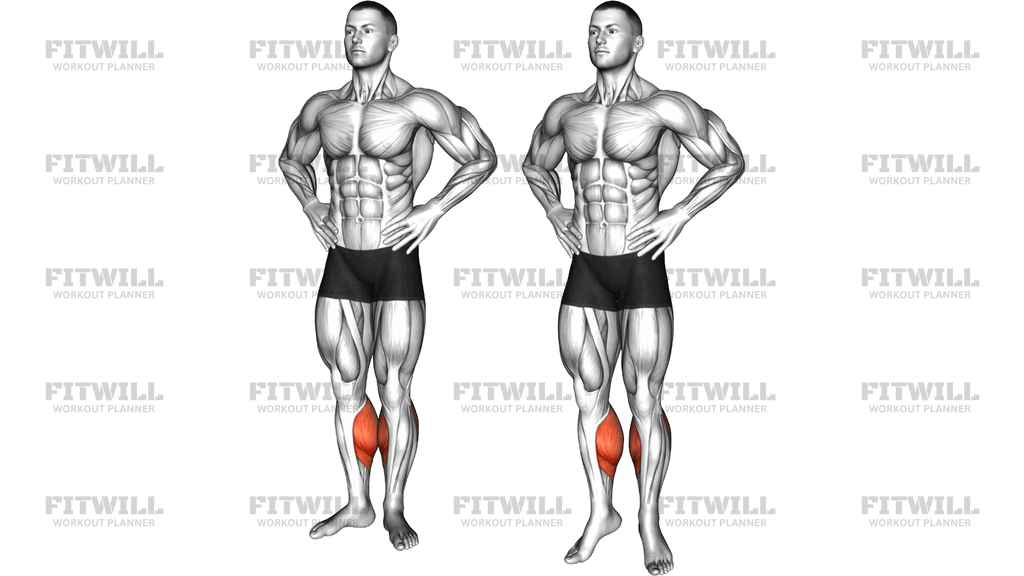
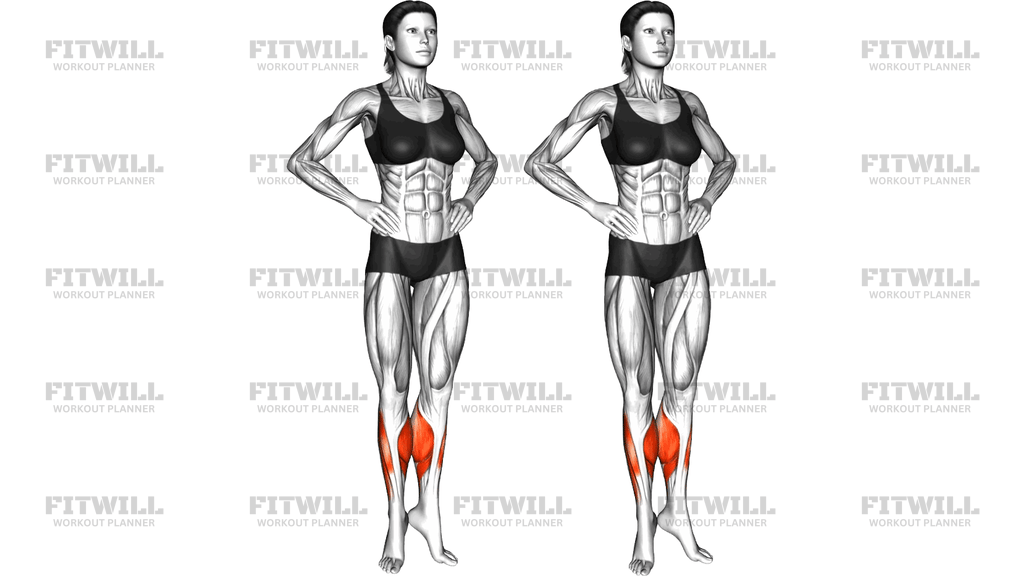
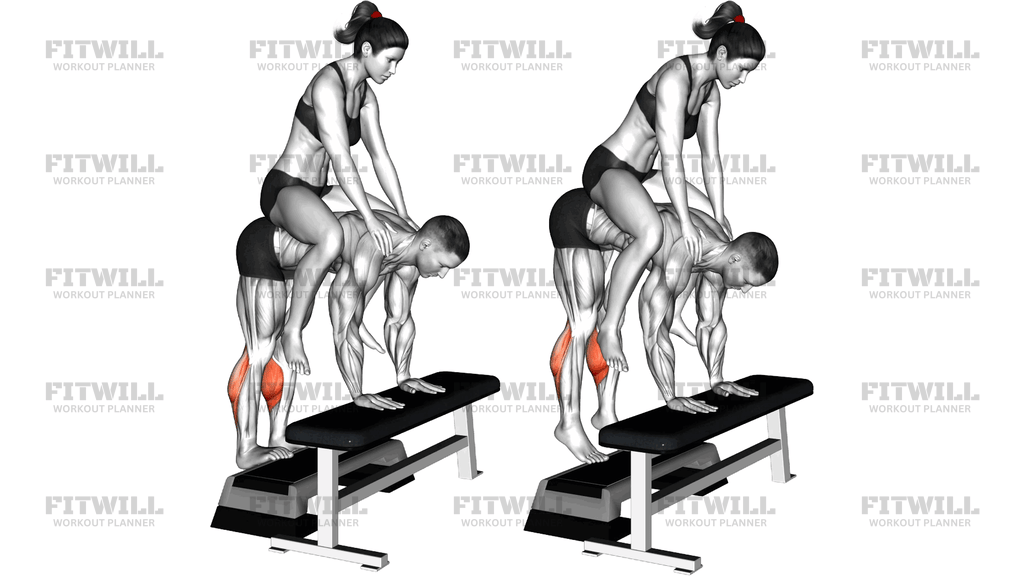
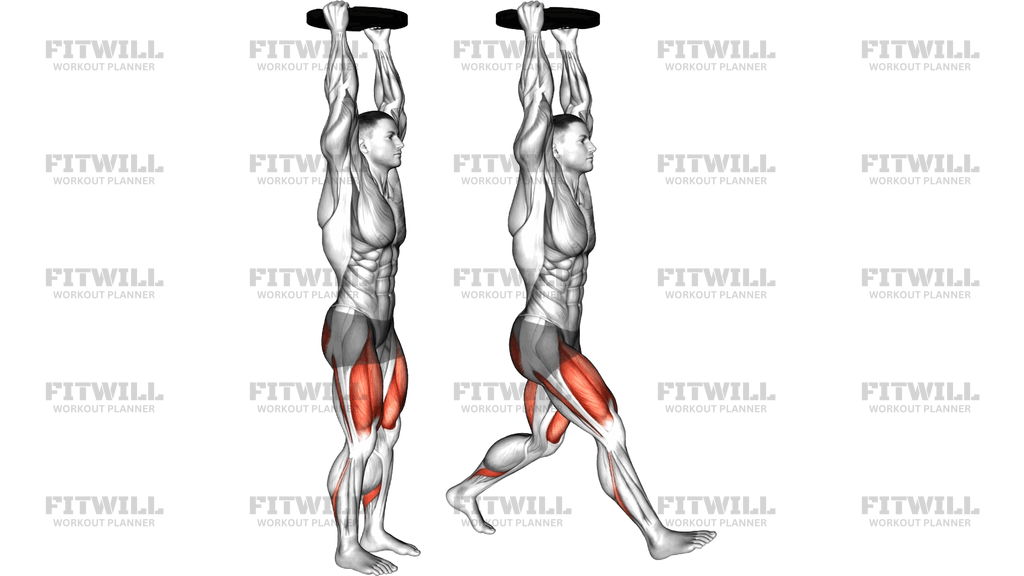
Weighted Seated Calf Raise Version 2
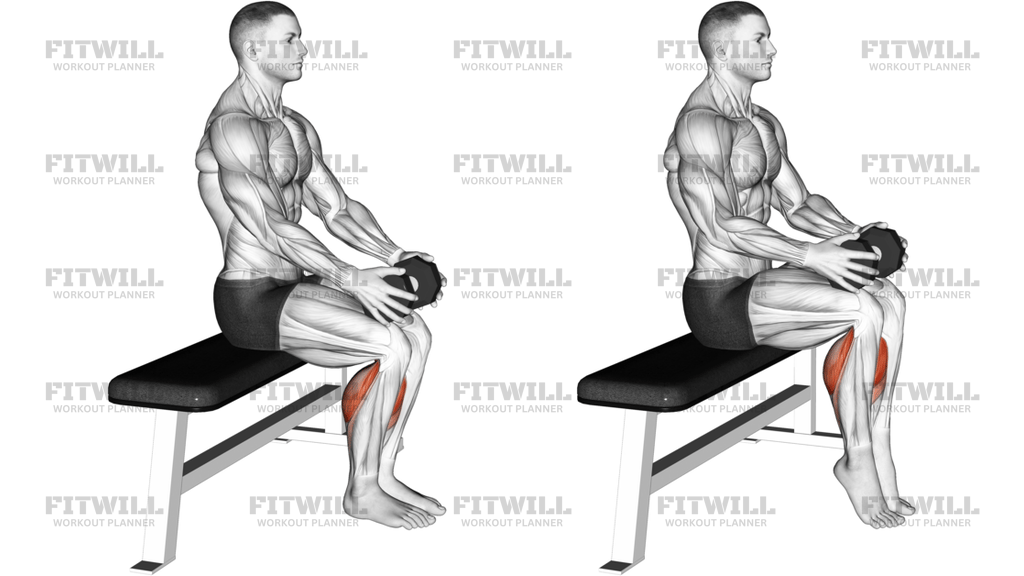
Weighted Seated Calf Raise Version 2 is a bench-based lower-leg exercise that loads the calves while your knees stay bent. In this version, the weight sits on the thighs and the feet stay planted so the calves, especially the soleus, do the work through a short but very focused range. It is a practical choice when you want direct calf training without needing a dedicated calf machine.
The setup matters because the line of force changes the whole exercise. Sit tall on a flat bench, keep the balls of the feet on the floor, and position the load securely across the upper or mid-thighs so it does not slide toward the knees. A stable torso and steady hand position help you keep the weight quiet while the ankles do the moving.
Each rep should come from the ankles, not from bouncing the thighs or leaning the torso. Lower the heels until you feel a controlled stretch through the calves, then drive up through the balls of the feet and finish with a hard squeeze at the top. A small pause at both ends makes the movement cleaner and keeps the calves under tension instead of letting momentum do the work.
Because the calves are used to repeated daily loading, this exercise often works well with moderate to higher reps, controlled tempo, and a load that lets you own the full range. It fits well in lower-body sessions, accessory work, or calf-focused blocks when you want direct volume without fatiguing the rest of the body too much.
Keep the movement comfortable in the ankles and feet, and avoid letting the knees collapse inward or the weight shift abruptly. If the bench height, load position, or foot placement feels awkward, adjust them before adding weight. Clean repetitions with consistent depth will do more for calf development than forcing heavier load with partial motion.
[ Workout Log & Planner ]
Put your next workout in Fitwill
Keep your plan and training log ready when you are.


Instructions
- Sit on a flat bench with your feet about hip-width apart and the balls of your feet on the floor, leaving your heels free to move.
- Rest a dumbbell, plate, or other load securely across the upper or mid-thighs just above the knees and hold it steady with both hands.
- Sit tall with your chest up and knees bent, keeping your torso stacked over your hips.
- Start with your heels lowered under control until you feel a stretch through the calves.
- Keep the balls of your feet planted as you drive the heels upward.
- Raise the heels as high as you can without letting the knees bounce or the load shift.
- Pause briefly at the top and squeeze the calves hard.
- Lower the heels slowly back to the starting stretch and keep tension on the calves.
- Breathe out as you lift and inhale as you lower.
- Repeat for the planned number of repetitions, then reset the load before standing up.
Tips & Tricks
- Place the load closer to the middle of the thighs so it presses down on the legs without sliding into the kneecaps.
- Keep your hands on the weight the whole set; if you need to chase it around, the load is too awkward or too heavy.
- Let the heels drop only as far as your ankles can control so you do not bounce off the bottom position.
- Drive through the big toe and second toe area so the ankles move smoothly instead of rolling to the outside of the foot.
- Keep the knees fixed at roughly the same bend; turning the exercise into a mini squat removes tension from the calves.
- Use a slower lowering phase than the lifting phase to make the calves work through the full ankle range.
- Pause at the top long enough to feel the calves contract, but do not shove the knees forward to get extra height.
- Choose a bench height that lets your feet stay flat enough for balance while still allowing the heels to travel freely.
- If the weight feels unstable on the thighs, use a towel or pad under it before adding more load.
- Stop the set when the ankles stop moving cleanly or the load starts to shift from rep to rep.
Frequently Asked Questions
What muscles does the weighted seated calf raise train most?
It mainly targets the calves, with a strong emphasis on the soleus because the knees stay bent. The gastrocnemius still contributes, especially when you press hard through the top of the rep.
Where should the weight sit during this exercise?
The load should rest across the upper or mid-thighs, just above the knees, so it stays stable while the ankles move. If it slides toward the kneecaps, the setup needs to be adjusted.
Should my feet stay flat on the floor or on the balls of the feet?
Start with the balls of the feet planted and the heels able to drop and rise freely. That position lets the ankle move through the calf’s full controlled range.
How far should I lower my heels?
Lower only until you feel a clear calf stretch without losing control or letting the weight shift. A small controlled drop is better than bouncing into a deep bottom position.
Can I do this without a seated calf machine?
Yes. This version is designed to work with a bench and a free weight placed on the thighs, which makes it easy to do in a gym or at home.
What is the biggest mistake with the bench setup?
Sitting too far back or too high so the heels cannot move cleanly usually turns the rep into a partial. The bench should let you sit tall and move the ankles without the load wobbling.
Is this more of a strength or hypertrophy exercise?
It can serve both, but most people use it for hypertrophy and endurance-style calf work because the calves respond well to controlled volume and pauses.
What should I do if the weight hurts my knees or slides around?
Reduce the load, move the weight slightly higher on the thighs, or use a pad under it for comfort and stability. The rep should feel like an ankle exercise, not a battle to hold the weight in place.